Whether the Birman Was Bred in Europe From the Start
It's quite a common experience for new Birman owners to be captivated by the romantic tales of this breed's ancient origins, picturing them gracefully gracing Burmese temples for millennia. While these legends are certainly enchanting and add to the mystique of the "Sacred Cat of Burma," the truth about their breeding and development tells a rather different story—one that is largely rooted in the dedicated efforts of European cat fanciers. This guide aims to peel back the layers of myth to reveal the fascinating, and at times challenging, journey the Birman undertook to become the cherished companion we know today.
The Enduring Myth of Ancient Origins vs. European Development
The allure of a cat breed with a long, mystical history is incredibly powerful. Many people are drawn to the Birman precisely because of the captivating narrative surrounding its origins, which often paints a picture of ancient devotion and spiritual significance in faraway lands. This backstory makes the breed feel exceptional, as if each Birman carries a piece of timeless history within its gentle soul. It's a wonderful part of the Birman's identity, but it's important to differentiate between charming legend and documented fact when it comes to their actual breeding history.
The Allure of the Birman's Sacred Legend
The Birman's most famous origin story is truly the stuff of legends, placing its genesis within the opulent and sacred confines of the Temple of Lao-Tsun in Burma. This tale tells of Sinh, a revered temple cat, whose deep blue eyes mirrored those of the goddess T'sun-Kyan-Kse. Upon the death of his master, Mun-Ha, during a temple raid, Sinh is said to have undergone a miraculous transformation: his white fur turned golden, his eyes deepened to sapphire, and his paws, which touched his master, remained pure white, signifying his purity and devotion. This legend eloquently explains the Birman's distinctive physical traits, particularly its striking blue eyes, golden-toned body, and pristine white "gloves." It's an emotionally resonant narrative that beautifully intertwines the breed's physical appearance with a tale of loyalty and spiritual connection, making it utterly unforgettable.
This powerful and poetic story has done wonders for the Birman's mystique and popularity. It lends an air of ancient wisdom and nobility to every individual cat, making the experience of owning a Birman feel like sharing your home with a creature of profound historical significance. When you gaze into those deep blue eyes or admire the perfectly symmetrical white paws, it's easy to get lost in the romance of the legend. This emotional connection often helps cement the Birman in the hearts of those who encounter them, fostering a deep appreciation for the breed's perceived heritage. It's truly what makes the Birman feel like The Birman Is the Sacred Cat of Burma, and the Story Is a Legend in more ways than one.
However, while these legends are beautiful and enduring, they lack concrete historical or scientific evidence to support them as the literal origin of the breed's development. As much as we'd love to believe in miraculous transformations, the reality of selective breeding and genetic inheritance offers a more grounded, albeit equally fascinating, explanation for the Birman's unique characteristics. The sacred cat of Burma, as a bred entity, owes more to the careful hands of human fanciers than to ancient deities, a fact that in no way diminishes their charm or sanctity.
Unpacking the Historical Records and Early Imports
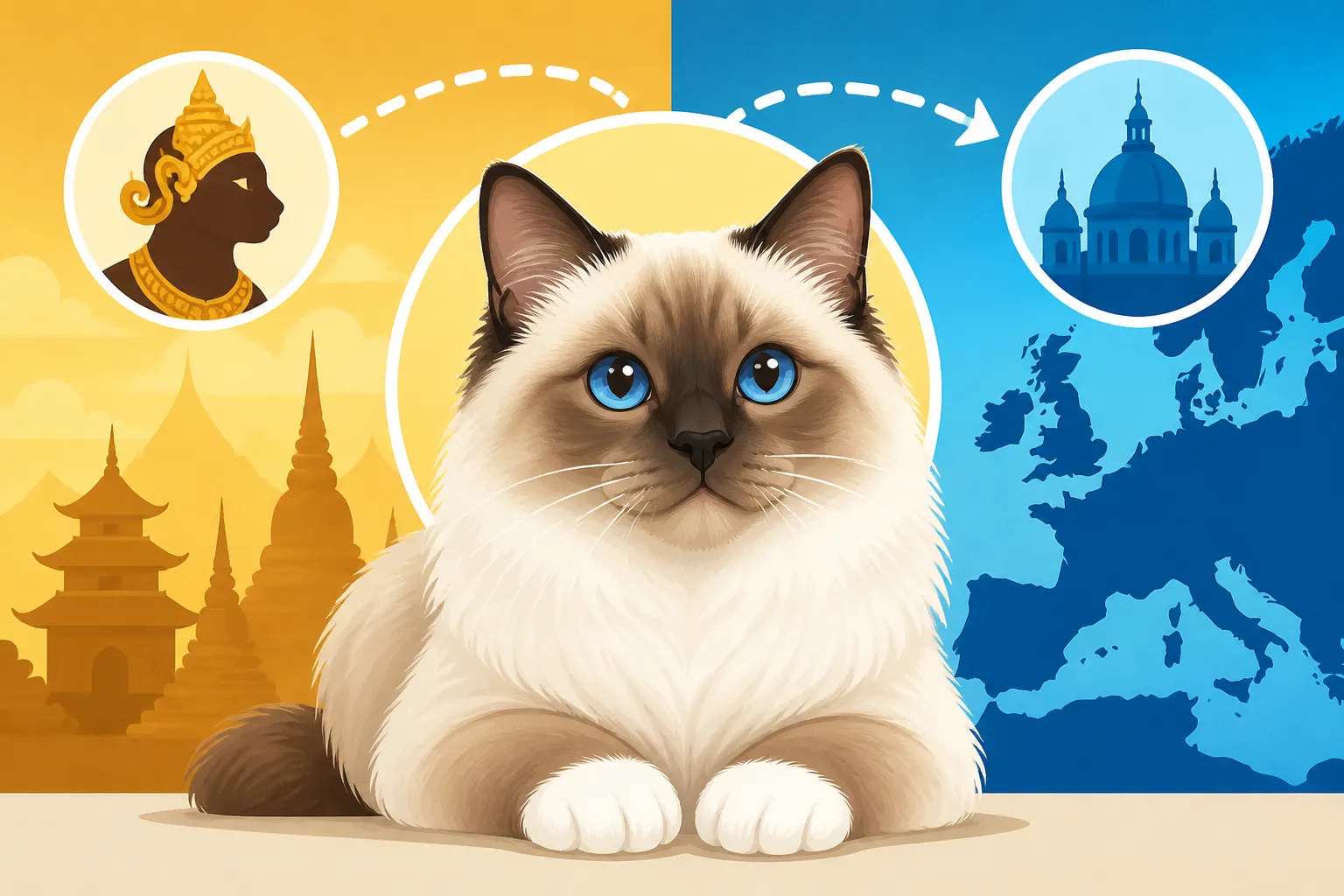
Shifting from the enchanting world of legend to the tangible realm of historical records reveals a different, yet equally compelling, narrative for the Birman's origins: its true development took place in Europe. While stories suggest that Birmans originated in Burma, the actual establishment and formal recognition of the breed occurred far from Southeast Asia. The most widely accepted historical accounts pinpoint France as the cradle of the modern Birman breed, dating back to the early 20th century. This is where the breed began to take its distinct form and gain official recognition.
The foundation of the European Birman lines is often traced back to a specific pair of cats that were reportedly How a Pair of Birmans Left Burma in 1919. These cats, a male and a female, were said to have been smuggled out of Burma and shipped to France. Tragically, the male cat did not survive the journey, but the female, named Sita, was purportedly pregnant and gave birth to a litter upon her arrival. From this litter, a female kitten named Poupee de Madalpour is widely regarded as a pivotal figure in the breed's establishment, alongside another cat named Manou de Madalpour. It was through these early individuals and the dedicated efforts of French breeders, particularly during the 1920s, that the breed was carefully cultivated and its unique traits stabilized.
This period was marked by rigorous selection and breeding programs aimed at consistently reproducing the Birman's distinctive appearance, including the crucial white 'gloves' and 'laces,' the pointed coloration, and the serene temperament. The first official registration of the "Sacre de Birmanie," as it was known in France, took place in 1925, solidifying its status as a recognized breed. This formal documentation and structured breeding process in France are undeniable evidence that the Birman, as a distinct breed, was indeed bred in Europe from the start, rather than simply imported as a fully formed ancient lineage. The intricate work involved in stabilizing the breed during these foundational years is a testament to the foresight and dedication of those early European fanciers.
The Post-War Bottleneck and Essential Outcrossing
The journey of many purebred cats through the 20th century was fraught with peril, especially during times of global conflict. For the Birman, the period of the Second World War represented an existential threat, nearly bringing the nascent breed to its knees. This catastrophic event forced breeders to make difficult decisions that profoundly shaped the Birman's genetic blueprint, highlighting its incredible resilience and the human determination required to preserve it.
From Near Extinction to Rebuilding the Birman
The Second World War was a devastating period for many things, and purebred cat populations across Europe were no exception. Catteries were disrupted, resources became scarce, and the luxury of maintaining breeding programs quickly vanished. The impact on the Birman breed was particularly severe, pushing it to the brink of extinction. It's a sobering thought that, by the war's end, the entire Birman population was believed to have dwindled to an incredibly small number of individuals. Some historical accounts suggest that the entire breed was reduced to just The Birman Came Out of the War With Two Cats Left. Imagine that—the fate of an entire breed resting on the shoulders of so few!
This extreme genetic bottleneck posed an immense challenge. With such a limited gene pool, breeders faced the daunting task of preventing inbreeding depression, which can lead to weakened immune systems, reduced fertility, and an overall decline in health. To save the Birman from disappearing entirely, a radical but necessary decision was made: Why Birman Breeders Had to Outcross. This meant introducing new genetic material from other breeds to broaden the gene pool and ensure the viability of future generations. It was a painstaking and controversial process, as it involved temporarily stepping away from the "pure" Birman ideal to ensure the breed's very survival.
The reconstruction of the Birman was not an overnight success; it was a multi-generational project of careful, selective breeding. Breeders meticulously chose outcross partners, often other longhaired, pointed breeds, and then painstakingly bred back to Birman-type cats, selecting offspring that retained the core Birman characteristics while benefiting from the introduced genetic diversity. This monumental effort, driven by unwavering passion, slowly but surely brought the Birman back from the precipice, demonstrating an extraordinary act of conservation and dedication within the cat fancy.
The Role of Other Breeds in the Birman's Genetic Makeup
The desperate need for outcrossing after World War II meant that other established breeds played an indispensable role in the Birman's survival and genetic renewal. To restore the population numbers and genetic diversity, breeders strategically introduced new bloodlines, focusing on breeds that could contribute desirable traits without completely eroding the Birman's distinct appearance. The most prominent contributors during this critical phase were typically other long-haired and pointed cats, such as the Persian and the Siamese. Each of these breeds brought specific genetic gifts to the rebuilding effort, shaping the Birman we recognize today.
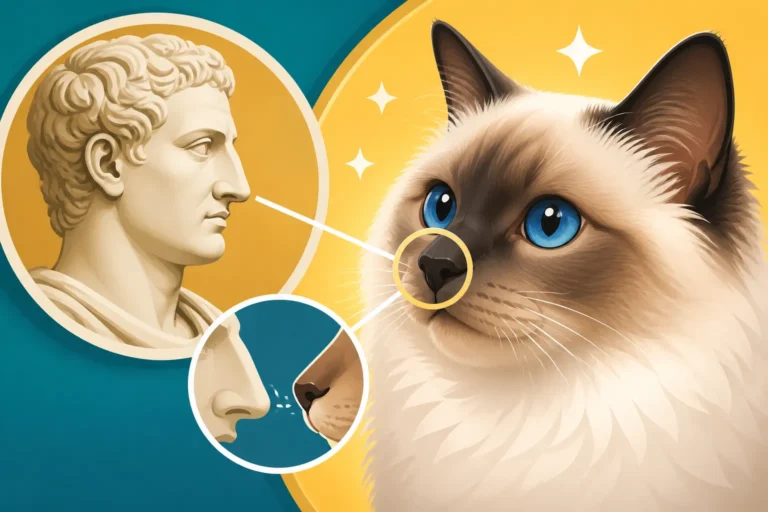
The influence of the Persian cat, for example, was crucial in reinforcing the Birman's luxurious, silky coat and its sturdy, well-boned body structure. What Persian Blood Brought Into the Birman included a more robust physique and a dense, flowing coat, but also required careful selection to avoid undesirable traits such as the extreme brachycephalic (flattened) facial features that characterize some Persian lines. Breeders had to navigate this delicate balance, extracting the beneficial coat and body type while maintaining the Birman's unique head shape and Roman nose profile. This selective infusion helped to solidify the Birman's physical presence and its iconic fur.
Similarly, the Siamese played a vital role, primarily contributing to the maintenance of the Birman's pointed coat pattern and its striking blue eyes. What Siamese Blood Brought Into the Birman would have strengthened the genetics for the colourpoint trait, ensuring the clear contrast between the Birman's body and its darker extremities. While the Birman famously has a much softer voice than the often-vocal Siamese, this outcross helped cement the point coloration that is central to the breed's standard. Through generations of careful back-crossing and selection, the traits from these outcrosses were integrated, creating a Birman that was genetically sound, phenotypically consistent, and once again able to breed true. This complex genetic mingling underscores that the modern Birman is a testament to calculated breeding strategies, rather than a direct, unaltered descendant of ancient temple cats.
Genetic Insights: What DNA Tells Us About Birman Ancestry
In our modern age, genetic science provides an unparalleled tool for understanding the true lineage and development of animal breeds. For the Birman, DNA analysis offers objective insights that beautifully complement the historical narratives, revealing the scientific artistry behind its creation. These genetic insights allow us to move beyond anecdotal accounts and appreciate the precise genetic foundations of the Birman's most beloved characteristics.
The Science Behind Birman Traits and Heritage
Contemporary genetic studies consistently place the Birman among the more recently developed cat breeds, confirming its origins as a product of intentional breeding within the last century or so, primarily in Europe. Unlike breeds with extremely ancient and diverse genetic profiles, the Birman's DNA markers typically show a relatively tighter genetic bottleneck and a clear relationship to the breeds known to have contributed to its post-war revival. This indicates a focused period of development and stabilization, rather than an untouched, centuries-old lineage from its legendary homeland.
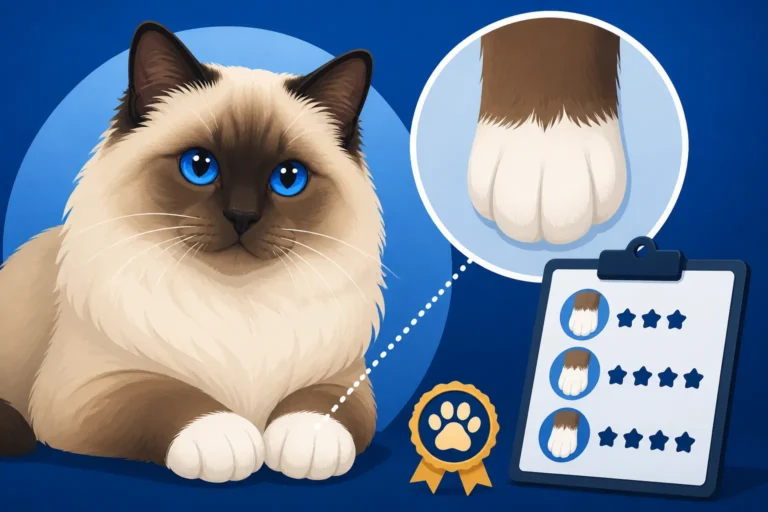
One of the Birman's most defining features, those immaculate white 'gloves' and 'laces' on its paws, has a clear genetic basis. Scientific research has identified a specific genetic variant, often associated with the KIT gene, responsible for this unique white spotting pattern. This gene is so thoroughly integrated into the breed that The Gloving Gene Every Birman Carries Two Copies Of, making it a universal trait. The widespread fixation of this particular gene across the entire Birman population is compelling evidence of intense selective breeding. Breeders painstakingly chose cats that exhibited the desired gloving pattern and worked to ensure its consistent inheritance, a hallmark of modern breed development.
This genetic evidence not only supports the historical accounts of the Birman's European development but also highlights the remarkable precision with which breeders can shape a breed's characteristics. Understanding that traits like the distinctive white paws are the result of specific genetic selection, rather than mysterious ancient processes, deepens our appreciation for the human ingenuity involved. It transforms the Birman's story from one of mythical creation to one of dedicated scientific breeding, a story equally, if not more, impressive in its own right.
The Fixed Gloving Gene: A European Development
The story of the Birman's distinctive white gloves provides one of the clearest genetic indicators of its European development. While legends speak of divine intervention, the scientific truth is that these pristine paws are the product of a specific genetic mutation that was carefully selected for and fixed within the breed. The gene responsible for these characteristic markings is so prevalent that every Birman carries two copies of it, ensuring that the trait is passed down. How the Gloving Gene Interacts With the Point Pattern is a complex dance of genetics, but the result is consistently beautiful.
This universal presence of the gloving gene within the Birman population is a strong indicator of a deliberate breeding program rather than a natural, ancient evolution. If the breed had simply existed in isolated Burmese temples for centuries without active human intervention, one might expect a wider variation in the expression of white markings, or perhaps that not every individual would carry the gene. Instead, its fixed nature points to a relatively concentrated period of selective breeding where cats exhibiting this precise pattern were chosen to perpetuate the line. This type of genetic consolidation is characteristic of breed development efforts undertaken in Europe during the 20th century, where specific traits were honed and standardized.
The Birman's gloving pattern is also quite distinct from other forms of white spotting seen in various cat breeds. The specific, symmetrical white markings on the front paws and the higher 'laces' on the back paws are a hallmark of the Birman. This unique and consistently expressed trait further reinforces the idea that it was not a random occurrence but a carefully cultivated feature, intrinsic to the breed's European origins. Ensuring that these beautiful traits, alongside overall health, are maintained is paramount, which is why many Birman owners turn to trusted retailers like Chewy for their high-quality, breed-appropriate food and enrichment toys.
Why Understanding Its History Matters for Today's Birman Owner
Delving into the Birman's true history, beyond the romantic legends, offers more than just factual correctness; it provides a profound appreciation for the breed you share your home with. This understanding informs responsible ownership, fosters a deeper connection to their journey, and underscores the ongoing importance of ethical breeding practices. It transforms the way we perceive these gentle giants, recognizing them as products of both dedication and resilience.
Appreciating the Breed's Resilience
Knowing that your Birman descends from such a precious handful of cats after World War II, and that it was saved from oblivion by dedicated fanciers, truly elevates your appreciation for them. It’s a testament to incredible resilience – not just of the cats themselves, but of the human spirit that refused to let such a beautiful breed vanish. This history should inspire awe for the journey these cats have endured, reminding us that every Birman is a living link to a lineage almost lost. It underscores the fragility of purebred lines and the monumental effort required to sustain them.
This narrative of survival also highlights the incredible dedication of breeders who undertook the arduous task of rebuilding the breed. They faced immense challenges, not least of which was managing the genetic implications of a severely bottlenecked population. The careful process of outcrossing and then breeding back to type was a delicate dance, designed to reintroduce vital genetic diversity while preserving the Birman's distinct characteristics. This means that when you welcome a Birman into your home, you're not just adopting a pet; you're becoming a steward of a legacy, inheriting a piece of history that embodies triumph over adversity. You’re part of ensuring that What a Century Has Not Changed About the Birman continues for generations to come.
This appreciation for their resilience also translates into a commitment to their well-being. Understanding the breed's history, including its genetic origins, can prompt owners to be more vigilant about their Birman's health, recognizing the importance of good nutrition, regular veterinary care, and an enriching environment. It’s a continuous thread of care that connects current owners to the founding breeders who worked so hard to keep the Birman alive.
Connecting with Responsible Breeding Practices
The documented history of the Birman's European development and its subsequent salvation through careful outcrossing is a powerful argument for seeking out and supporting responsible, ethical breeders. A breeder who understands and respects this history will be transparent, knowledgeable, and genuinely committed to the health and future of the breed. They will prioritize genetic diversity, meticulous health testing, and stable temperaments over quick profits or perpetuating unsubstantiated myths. This stands in stark contrast to backyard breeders who might exploit the breed's beauty without understanding its deeper history or genetic needs.
Responsible breeders conduct essential health screenings, such as genetic testing for known predispositions like Polycystic Kidney Disease (PKD1) and screening for Hypertrophic Cardiomyopathy (HCM), a common heart condition in many cat breeds. They provide documentation of these tests, along with comprehensive pedigrees that trace back through the breed's history, demonstrating a clear commitment to inherited health. They understand that the striking white gloves, while beautiful, are a genetic trait that needs to be carefully managed for both appearance and overall health. Furthermore, a reputable breeder will always discuss the true origins of the breed with you, emphasizing the hard work that went into creating and preserving the Birman. They might even recommend specific high-quality food options available through stores like Chewy, knowing that proper nutrition is crucial for the Birman's distinctive coat and long-term health.
Engaging with such breeders not only ensures you bring home a healthy, well-socialized kitten but also contributes to the ongoing preservation of the Birman breed in a responsible manner. It honors the efforts of those who rebuilt the breed decades ago and safeguards its future. By choosing a breeder who exemplifies these principles, you play an active role in maintaining the integrity and well-being of these magnificent cats, ensuring that Why Every Standard Calls the Birman a Gentle Breed holds true for generations to come.
Here's a comparison of the Birman's perceived mythical origins versus its historically and genetically supported European development:
| Aspect | Mythical/Legendary Origin | Documented/Genetic Origin |
|---|---|---|
| Primary Location | Ancient temples in Burma (Southeast Asia) | France, then wider Europe (early 20th century) |
| Earliest Development | Centuries of natural or divine lineage | Early 1900s with initial imports and breeding |
| Core Ancestry | Unadulterated, sacred lineage from Burma | Initially unclear, then defined by European efforts and outcrossing |
| Post-WWII Impact | Not applicable (implies continuous existence) | Near extinction, requiring extensive outcrossing for survival |
| Key Contributing Breeds | None (implies pure, ancient stock) | Persian and Siamese cats (post-WWII reconstruction) |
| Gloving Trait Origin | Miraculous transformation/divine blessing | Fixed KIT genetic variant, selectively bred in Europe |
| Formal Recognition | Implicit ancient reverence by temple priests | First registered in France in 1925 |
Understanding this nuanced history allows us to appreciate the Birman not just for its beauty, but for the remarkable story of its creation and preservation.
Disclaimer
This article is for general informational purposes only and does not constitute professional advice. Laws, prices and regulations vary by location and change over time. Consult a qualified professional for guidance on your specific situation.