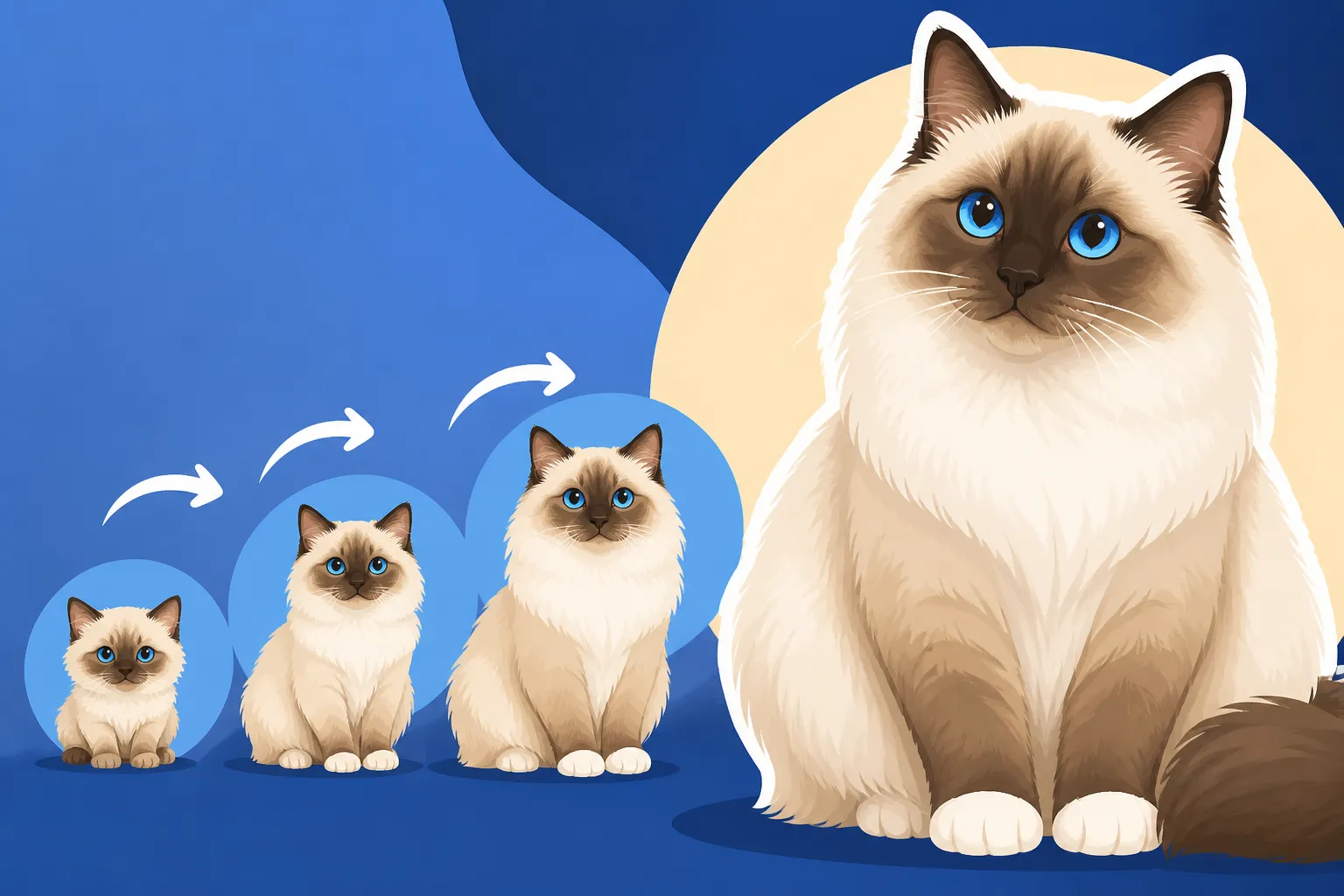
Why a Birman Is Still Filling Out at Three
It can be quite a surprise for new Birman parents to realize that their precious kitten isn't done growing once they hit their first birthday. Unlike many cat breeds that reach their full adult size and weight within a year, the Birman is truly a slow bloomer, often continuing to "fill out" and mature well into their second and even third year of life. This guide will walk you through what to expect during this extended growth period, ensuring you understand the unique developmental timeline of your Birman companion.
The Birman's Unhurried Growth Journey
When you bring home a fluffy Birman kitten, you might expect them to hit their full stride around the one-year mark, just like the quick-growing domestic shorthairs we often encounter. However, the Birman breed operates on its own luxurious timeline, taking its sweet time to reach its full majestic form. This isn't a flaw; it's simply part of what makes these cats so special and, frankly, a little different from the norm.
The Myth of the "Fully Grown" One-Year-Old Cat
For many cat owners, a one-year-old cat is considered an adult. They've usually reached their maximum height, their playful kitten energy might have mellowed a bit, and they often look like a miniature version of their adult selves. This expectation is often set by breeds with rapid development, leading to a mild surprise when a Birman continues to look rather adolescent. You might find yourself wondering why your Birman still seems to be growing and changing, even after celebrating their first birthday. It’s a common misconception that applies to many large or long-haired breeds, but it's particularly noticeable in Birmans due to their substantial frame and distinct coat characteristics.
Genetic Predisposition to Slower Maturation
The Birman's extended growth period isn't just a quirk; it's deeply rooted in their genetics and breed history. Like some other larger cat breeds, Birmans have a predisposition to mature at a more gradual pace. This slow development allows their bones, muscles, and internal organs more time to grow and strengthen properly. It's a contributing factor to their generally robust health and impressive lifespan. This slower maturation also helps explain Why a Birman Takes Three Years to Finish, allowing for a more harmonious development of their unique physical characteristics. It’s part of the charming patience you learn when sharing your life with one of these sacred cats.
Beyond Kittenhood: What "Filling Out" Really Means
When we talk about a Birman "filling out" at three years old, we're not just talking about getting taller. It’s a multifaceted process involving subtle yet significant changes to their physique, from muscle development to the luxurious quality of their coat and the deepening of their point colors. It's a period of refinement where the kitten matures into the stately, elegant Birman we know and love.
Gaining Muscle and Bone Density
Even if your Birman has reached its approximate adult height by its first birthday, the structural development continues for much longer. Think of it like a human teenager who grows tall quickly but takes years to build muscle mass and fill out their frame. Your Birman's bones continue to solidify and become denser, and their musculature continues to develop and tone. This isn't about dramatic growth spurts, but rather a gradual thickening and strengthening that contributes to their impressive, rectangular build. You'll notice they go from being a lanky youngster to having a more substantial, powerful presence. This gradual development is why you'll see a noticeable difference between What a Birman Weighs at One With Two Years Still to Grow and their weight at three years old.
The Development of the Signature Birman Coat
The Birman's semi-long coat is one of its most defining features, and it, too, takes its time to reach its full glory. While a kitten might have a soft, fluffy coat, it’s around two to three years of age that the Birman's luxurious, silky single coat truly comes into its own. This means the fur becomes denser, longer, and even more plush, especially around their magnificent ruff and their beautiful plume-like tail. This isn't just about length; it's about texture and volume too. The coat will acquire that distinctive, flowing quality that's so characteristic of the breed, a dream to run your fingers through. You might even find yourself adding more grooming tools to your collection from places like Chewy to keep up with their developing luxurious mane.
Point Color Deepening and Facial Features Refining
The Birman’s stunning point colors – the darker shades on their ears, face, paws, and tail – also undergo a significant transformation during these maturing years. Birman kittens are born almost entirely white, and their points gradually develop as they age and are exposed to cooler temperatures. This process doesn't stop at one year; in fact, the point colors will continue to deepen and intensify well into their second and third years. A seal point that looked like a light chocolate as a kitten will become a rich, deep brown, while a blue point will transition from a soft grey to a distinct slate hue. This deepening is a fascinating aspect of their growth, and it’s a direct response to temperature, with cooler environments promoting darker pigmentation. Along with this, their facial features, such as their Roman nose and their distinct eye shape, will also become more pronounced and refined, completing the classic Birman look. This continued development is why Why a Birman's Point Color Deepens With Age is such a recognizable trait.
Factors Influencing a Birman's Development
While genetics lay the groundwork for a Birman's extended maturation, several external factors play a crucial role in supporting this growth and ensuring your cat reaches its full, healthy potential. From the food they eat to when they're spayed or neutered, these elements all contribute to how gracefully your Birman fills out.
The Role of Nutrition in Extended Growth
Just like human children, growing cats need appropriate nutrition to support their developing bodies. During these extended maturation years, it's vital to provide a high-quality, balanced diet. While they might transition from "kitten food" around their first birthday, they still need nutrient-dense food that supports muscle development, bone density, and a healthy coat. Look for formulas specifically designed for "adult" or "all life stages" that feature real meat as the first ingredient and provide a good balance of protein, fats, and essential vitamins and minerals. It's important to monitor their weight and body condition closely. Overfeeding can lead to obesity, which puts undue stress on their still-developing joints and organs, while underfeeding can hinder their ability to properly fill out. High-quality food can be found at retailers like Chewy, offering a variety of options to suit your Birman's needs. Remember that How Many Calories a Birman Needs to Hold Its Coat will also fluctuate during this period of development.
Hormonal Influence and Spay/Neuter Timing
The timing of spaying or neutering can also subtly influence a cat's growth, including Birmans. Hormones play a role in the closing of growth plates in bones. When cats are spayed or neutered at a very young age (before sexual maturity), their growth plates may remain open for a slightly longer period, potentially leading to a slightly taller or longer cat, though not necessarily a "bigger" or more muscular one. Conversely, waiting until a Birman is closer to full maturity (often around 18 months to two years, in consultation with your vet) might allow for more natural bone and muscle development before the hormonal changes occur. This is a complex topic and requires discussion with your veterinarian to determine the best approach for your individual cat's health and development goals.
Environmental Impact
A Birman's environment can also play a subtle but significant role in their overall development. A stress-free, loving home with consistent routines supports healthy growth. Chronic stress can impact a cat's immune system and appetite, diverting energy away from growth and development. Similarly, providing ample opportunities for gentle play and activity helps build strong muscles and maintain a healthy weight. Birmans are not typically high-energy, wild climbers, but they do enjoy interactive play that allows them to stretch and use their bodies. Regular, gentle exercise contributes to good circulation and muscular development, helping them "fill out" in a healthy, well-proportioned way. A good cat tree and various interactive toys, perhaps from Chewy, can encourage this activity.
Recognizing Healthy Growth vs. Concerns
Understanding the Birman's unique growth timeline is key to distinguishing healthy, prolonged maturation from potential health issues. While a three-year-old Birman might still be gaining a bit of muscle or deepening its coat color, there are benchmarks to look for and signs that might warrant a vet visit.
Benchmarks for Birman Weight and Size
Birmans are a medium to large-sized cat breed, known for their substantial yet elegant frame. While individual cats will vary, a fully mature Birman queen (female) typically weighs between 6 to 10 pounds, and a tom (male) can range from 10 to 15 pounds, sometimes a little more. Their body should be long and rectangular, not cobby or overly slender. How Long a Birman Is Nose to Tail is quite impressive, adding to their majestic appearance. It's important to focus on body condition rather than just a number on the scale. You should be able to feel their ribs easily without seeing them, and they should have a discernible waist when viewed from above. Their muscle tone should be firm. Comparing your Birman's development to these general ranges can help you understand if they are on a healthy trajectory for How Heavy a Full Grown Birman Tom Gets or How Much Smaller a Birman Queen Finishes.
| Birman Age (Approx.) | Expected Growth Stage | Key Characteristics |
|---|---|---|
| 0-12 months | Rapid growth, reaching near adult height | Initial point color development, lanky appearance, high energy. |
| 12-24 months | Continued filling out, muscle development, coat thickening | Gaining weight in muscle, coat becoming denser and longer, point colors deepening significantly. |
| 24-36 months | Refinement, full maturity reached | Final muscle definition, luxurious coat density and length achieved, full point color intensity, facial features settled. |
When to Consult Your Vet About Growth
While Birmans mature slowly, there’s a difference between gradual development and a failure to thrive. If your Birman seems unusually small for its age, is excessively thin, or shows signs of lethargy, poor coat quality (beyond just being a younger, less dense coat), or a persistent lack of appetite, it’s always best to consult your veterinarian. These could be indicators of underlying health issues that need attention. Sudden or dramatic weight loss, or a complete stagnation in growth after the first year, are also red flags. Your vet can assess their overall health, rule out any medical conditions, and provide tailored advice on nutrition and care to support healthy development. Regular check-ups are always a good idea, especially during these formative years.
Supporting Your Maturing Birman
Providing consistent, thoughtful care throughout your Birman’s extended maturation phase is crucial for their well-being. This includes carefully managing their diet, encouraging appropriate activity, and maintaining a regular health check schedule with your veterinarian.
Tailoring Diet for a Growing Adult
As your Birman transitions from kitten to a maturing adult, their dietary needs will subtly shift. While they still require high-quality nutrients, the sheer caloric density needed for rapid kitten growth eventually decreases. You'll likely move from a kitten-specific food to an adult formula. However, remember they're still "filling out," so their needs might be a bit higher than a cat that has fully matured by one year. Monitor their weight and body condition closely. If they seem too lean, slightly increase their food portions or opt for a food with a slightly higher protein and fat content. If they start to gain too much weight, you might need to slightly reduce portions or choose a less calorie-dense option. Always provide fresh water, perhaps even a fountain, to encourage hydration, which is important for overall health, especially with a breed that can sometimes be prone to kidney issues later in life. Brands like Chewy often carry a wide range of premium adult cat foods that can cater to these specific needs. This careful approach helps avoid both obesity and stunted growth, ensuring your Birman gets the necessary building blocks for How Long a Birman Keeps Adding Coat and Weight.
Encouraging Play and Activity
Birmans are known for their gentle and placid nature, but they still need regular opportunities for play and physical activity to develop strong muscles and maintain a healthy weight. Since they aren't typically high-energy acrobats, focus on interactive games that engage their minds and bodies without being too strenuous. Wand toys, laser pointers (used responsibly and always ending with a tangible reward), and gentle retrieving games are often big hits. Provide vertical spaces like sturdy cat trees or shelves, though remember Birmans don't usually climb to the very top, preferring mid-height perches. How Little Play a Birman Needs to Stay Content is usually less than for more active breeds, but it's still essential. Daily play sessions, even short ones, help to build muscle tone and promote overall physical fitness, contributing to that "filled out" look rather than just adding fat.
Regular Vet Checks During Maturation
Throughout this extended growth period, maintaining a regular schedule of veterinary check-ups is incredibly important. Your vet can monitor your Birman's weight, assess their body condition score, and listen for any heart murmurs or other indicators of potential health concerns. This is particularly crucial because Birmans, like many purebreds, have certain predispositions, such as Hypertrophic Cardiomyopathy (HCM) or Polycystic Kidney Disease (PKD), even if their specific line has been health-tested. While a young cat might not show symptoms, early detection is key for managing these conditions effectively. Your vet can confirm that your Birman is indeed filling out healthily and not exhibiting signs of any developmental problems. These regular visits also allow for discussions about appropriate diet changes and activity levels as your Birman progresses towards full maturity. What a Birman's Yearly Panel Should Include After Eight is a conversation for later, but establishing a baseline health record early on is invaluable.
Disclaimer
This article is for general informational purposes only and does not constitute professional advice. Laws, prices and regulations vary by location and change over time. Consult a qualified professional for guidance on your specific situation.