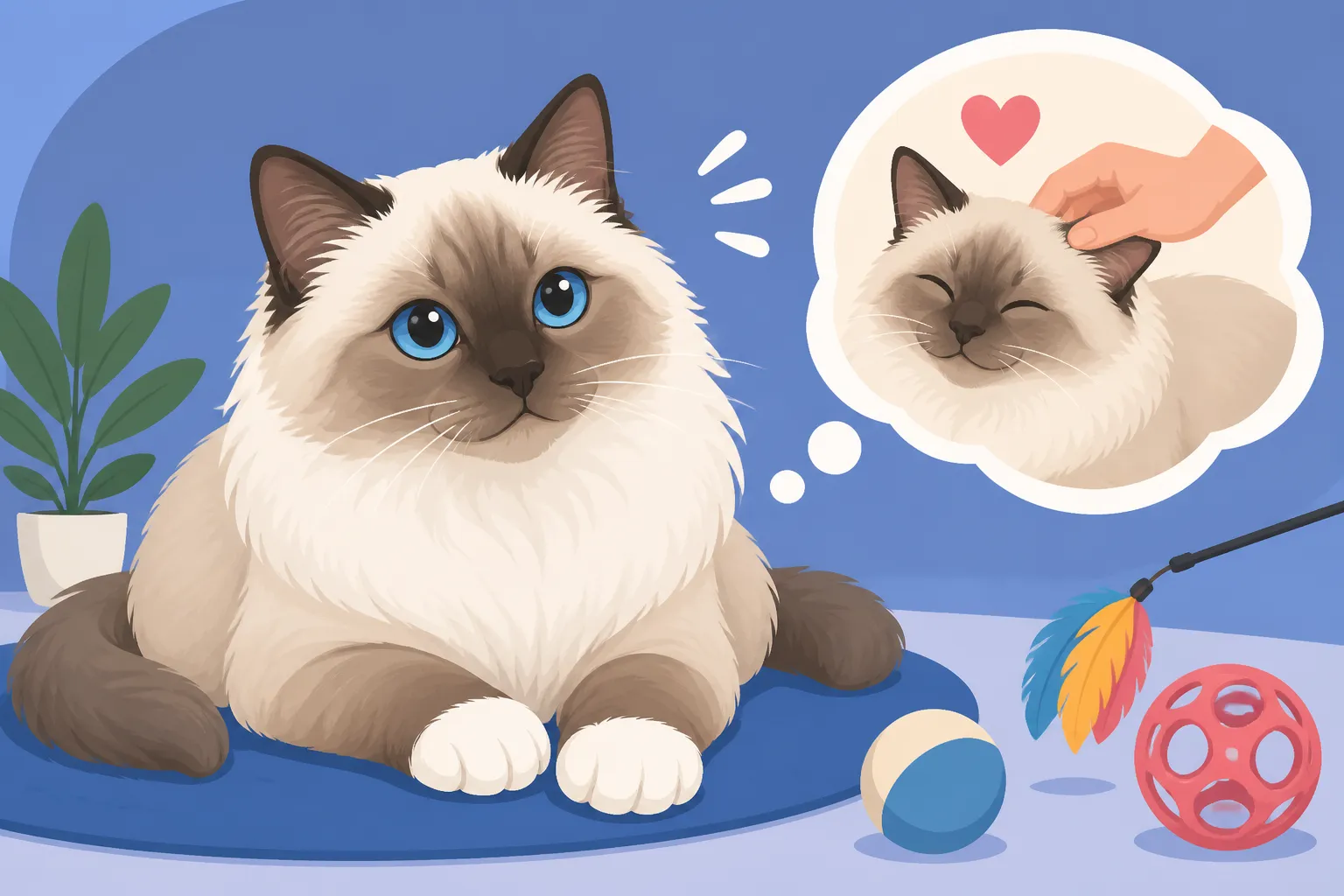
How Little Play a Birman Needs to Stay Content
Many Birman parents find themselves wondering if their incredibly placid, often quiet companion is truly getting enough stimulation. It’s a common worry – we see other breeds tearing around the house, scaling drapes, and demanding endless rounds of fetch, and then we look at our serene Birman, napping gracefully on the sofa, and a tiny voice in our head asks, "Are they bored?" This comprehensive guide is here to reassure you and to show you exactly how to understand and meet the unique, often surprisingly low, play needs of your beloved Birman, ensuring they stay content and cherished without feeling the pressure to be a perpetual motion machine.
The Birman's Gentle Play Ethos: Understanding Their Nature
It’s easy to project our human or even other cat breed expectations onto our Birmans, but these "Sacred Cats of Burma" have a distinct temperament that truly sets them apart. They’re not known for scaling the highest shelves or performing acrobatic feats; instead, their play style is often a reflection of their calm, affectionate, and intelligent nature. They are truly the middle ground between the high-energy Siamese and the utterly serene Persian, a beautiful blend that manifests in a thoughtful approach to play.
The Birman's Gentle Nature and Activity Levels
If you’re used to more boisterous breeds, a Birman's activity level might initially seem low. They're often described as having a moderate energy level, which means they aren't typically inclined to zoomies that last for hours or endless rough-and-tumble games. Instead, their energy is often channeled into more refined, interactive pursuits. They love to be near you, following you from room to room, observing your activities with keen interest. This close companionship is a form of enrichment for them.
Their placid temperament means they're not usually driven by a frantic need for constant action. They appreciate calm, predictable routines and often prefer to conserve their energy for short bursts of focused play rather than sustained exertion. Think of it less as a lack of energy and more as a sophisticated preference for quality over quantity when it comes to playtime. It’s part of Why a Birman Plays Gently, a trait that makes them wonderfully suited to quiet homes or families who want an engaged but not overwhelming feline presence.
Why the Birman Prefers Quiet Engagement
Birmans thrive on connection, and their play often reflects this desire for gentle interaction. They prefer toys that allow for shared experiences with their human companions, rather than solitary, high-impact activities. For example, a laser pointer might hold their attention for a few minutes, but a wand toy that you actively manipulate, making the 'prey' dart and hide, will engage their hunting instincts and their desire for interaction.
They're not typically ones to launch themselves off furniture or sprint through the house just for the fun of it. Instead, you might see them engage in more subtle forms of play – batting at a toy mouse from a comfortable perch, gently pouncing on a crinkly ball, or even just chasing a feather teaser for a few minutes before settling back down beside you. This isn't laziness; it's just how they're wired. They appreciate being included, being involved, and having your gentle attention, even if the "game" itself isn't incredibly intense. It's about companionship as much as it is about the hunt.
Crafting the Perfect Play Experience for Your Birman
So, if your Birman isn't bouncing off the walls, how do you ensure they are happy and stimulated? The key is to tailor your approach to their unique personality. It’s not about how much play they need in terms of hours, but about the quality and type of play that genuinely engages their minds and bodies without overwhelming them. You want to make those play sessions count, focusing on interaction and gentle challenges.
Short, Frequent Sessions Over Long, Exhausting Ones
Instead of trying to squeeze in one long, exhausting play session a day, which might leave your Birman feeling more bewildered than invigorated, aim for several shorter, more frequent bursts of activity. Think five to ten minutes, two to three times a day. These short sessions can be incredibly effective at satisfying their play drive without draining their moderate energy reserves.
For instance, a quick wand play session before breakfast, another in the afternoon, and a final one before bed can make a huge difference. This mimics the natural hunting patterns of cats, where bursts of activity are followed by periods of rest. Your Birman will appreciate the predictability and the chance to engage without feeling pressured to perform for extended periods. This approach also helps keep them interested, as the 'game' never goes on long enough to become monotonous.
Toys that Resonate with a Birman's Instincts
When it comes to toys, Birmans often prefer simple, interactive options over complex gadgets. Think about toys that mimic natural prey or allow for shared engagement with you. The ideal toys are ones you can manipulate, making them appear lifelike, or ones that offer a gentle challenge.
Here’s a breakdown of what often works best:
- Wand Toys: These are gold for Birmans! Look for wands with feathers, crinkly attachments, or even small plush toys on the end. The movement is key – you can make the toy "fly," "skitter," or "hide," tapping into their natural hunting instincts. Many excellent options are available on Amazon that allow you to vary the "prey" to keep things fresh. Which Toys Suit a Birman That Plays Quietly often highlights these interactive tools.
- Small, Lightweight Toys: Think soft balls, crinkly balls, and lightweight plush mice. Birmans enjoy batting these around and carrying them. If they're particularly attached to a specific small toy, they might even bring it to you, though Whether a Birman Brings a Toy Back or Just Carries It points out they often just carry them around like trophies.
- Puzzle Feeders: While Birmans aren't always the most food-motivated, a simple puzzle feeder can offer mental stimulation, especially when you're not around. This encourages them to "work" for their treats or kibble, engaging their problem-solving skills gently. There are many starter-level puzzle feeders you can find on Amazon that aren't too challenging.
- Scratching Posts/Pads: While not strictly "play," having appropriate scratching surfaces is vital for their physical and mental well-being. A sturdy, tall scratching post allows them to stretch and flex their muscles, fulfilling an innate need. Many Birmans are not huge climbers, so a mid-height post or a horizontal scratching pad will suffice, tying into Why a Birman Prefers Mid Height to the Ceiling.
- Interactive Solo Toys: Occasionally, a battery-operated toy that moves unpredictably can capture their attention for a bit, especially if you need to leave them for a while. However, these should complement, not replace, human-led play.
Avoid overly aggressive or loud toys, as these might startle or simply disinterest your calm Birman. The goal is gentle engagement, not high-octane excitement.
| Toy Type | Birman Engagement Level | Best For | Key Benefit |
|---|---|---|---|
| Wand & Feather | High | Interactive play with owner | Mimics prey, strengthens bond |
| Small Plush/Ball | Medium | Solo batting, gentle chasing | Satisfies mild hunting instinct |
| Puzzle Feeder | Low to Medium | Mental stimulation, slow eating | Problem-solving, extends mealtime |
| Laser Pointer | Medium (short bursts) | Quick chase, gets them moving | Exercise, but ensure a "catch" at the end |
| Cat Tree/Scratcher | Medium (specific types) | Stretching, observation, quiet perching | Physical health, sense of security |
Recognizing Signs of Under-Stimulation vs. Contentment
One of the biggest anxieties for Birman owners is deciphering whether their cat’s calm demeanor is a sign of contentment or a subtle cry for more engagement. Because Birmans are not typically vocal or demanding, their signs of distress or boredom can be very subtle. Learning to read these cues is essential to ensuring their happiness and well-being.
Subtle Cues Your Birman Needs More Engagement
A Birman that isn't getting enough mental or physical stimulation might not tear up your furniture or yowl incessantly like some other breeds. Instead, their signs of boredom or mild anxiety can be much more nuanced:
- Excessive Grooming: If your Birman starts overgrooming, particularly in specific areas, it could be a sign of stress or boredom. They might develop bald patches or skin irritation from constant licking. This is a common displacement behavior in cats feeling a lack of stimulation or experiencing anxiety.
- Changes in Appetite: A Birman might become less interested in food, or conversely, start to eat more out of boredom. Pay attention to sudden shifts in their eating habits, especially if they are usually quite regular. Why a Birman Will Not Tell You It Is Hungry also reminds us how stoic they can be, making these changes harder to spot.
- Increased Clinginess or Withdrawal: While Birmans are affectionate, an unusual level of clinginess, where they follow you with a mournful trill, might indicate they're seeking more interaction. On the flip side, some Birmans might become withdrawn, hiding more often, or showing less interest in their surroundings. What a Lonely Birman Does often touches on these subtle shifts in behavior.
- Targeted Misbehavior: Instead of widespread destruction, a bored Birman might fixate on one particular thing – perhaps persistently trying to get into a specific cupboard, batting at something they usually ignore, or scratching a piece of furniture they normally leave alone. It's often an attempt to create their own stimulation.
- Lack of Interest in Existing Toys: If their favorite wand toy no longer sparks any joy, or they simply gaze blankly at a rolling ball, it might be time to introduce new elements to their play routine or increase the frequency of interactive sessions.
It's important to remember that these signs can also indicate underlying health issues, so if you notice persistent changes, a vet visit is always the first step to rule out medical causes.
The Difference Between Content Relaxation and Boredom
The line between a content, relaxed Birman and a bored one can be thin, especially for new owners. The key is observation and understanding their baseline behavior.
A content Birman will:
- Spend a good portion of the day napping in various sunny spots, often near where you are.
- Happily greet you at the door with a soft trill or a gentle rub.
- Engage readily in short play sessions, showing enthusiasm and focus.
- Maintain a healthy appetite and grooming habits.
- Be generally curious about their environment, even if they aren't actively interacting with everything. They might watch you prepare food or observe birds outside the window.
- Seek out quiet attention, like a head scratch or a gentle comb through their silky fur.
A bored Birman, on the other hand, might exhibit some of the subtle cues mentioned above, even if they aren't acting "hyper." The difference lies in the quality of their calm. A content Birman's calm is an active, peaceful state, whereas a bored Birman's calm might feel more listless, unfocused, or even a little sad. They might simply exist rather than truly "be."
The great news is that because Birmans are so appreciative of interaction, even small adjustments to their routine can make a big difference. Just a few minutes of dedicated, interactive play with a wand toy from Amazon, or a new puzzle feeder, can reignite their spark and reinforce their natural contentment. Remember, your Birman doesn't need to be an acrobat; they just need to feel connected, engaged, and loved.
Disclaimer
This article is for general informational purposes only and does not constitute professional advice. Laws, prices and regulations vary by location and change over time. Consult a qualified professional for guidance on your specific situation.