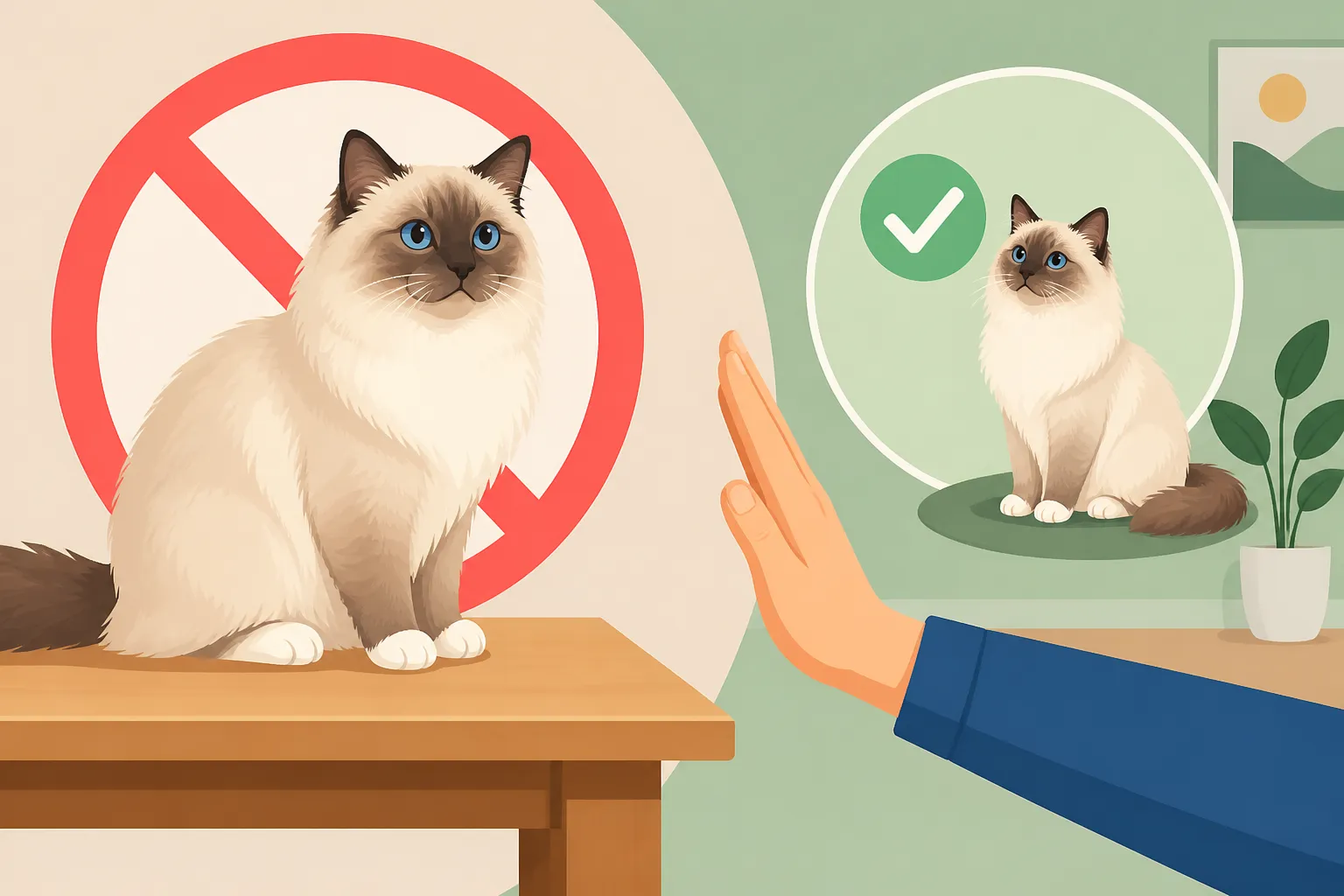
Whether a Birman Can Be Trained to Stay Off the Table
It's incredibly frustrating when your sweet, usually well-behaved Birman decides that every kitchen counter or dining table is their personal observation deck, isn't it? You love their calm demeanor, but suddenly they're defying gravity and rules. This guide will help you understand why your Birman might be drawn to forbidden surfaces and, more importantly, how to gently and effectively train them to stay on solid ground.
Understanding Your Birman's Motivation for Table-Jumping
Before we can even begin to think about training, we first need to get into the mind of our beloved Birmans. Cats, by nature, aren't trying to be mischievous; they're simply acting on instinct and what makes sense to them. When your Birman leaps onto the kitchen counter, they're not necessarily trying to annoy you, but rather seeking something they perceive as valuable from that vantage point.
The Birman's Natural Curiosity and Love for High Perches
Birmans are famously gentle and relatively placid cats, often described as a wonderful middle ground between the active Siamese and the serene Persian. They aren't typically known for scaling curtains or living life exclusively from the highest shelf, but don't let their calm disposition fool you. They are still cats, and cats are inherently curious creatures who love to survey their domain from above. Your kitchen counter or dining table offers a prime view of the household action, especially if it's near a window or where the family gathers.
While they might not be the most athletic jumpers, Birmans appreciate being part of the family without necessarily being on you. They enjoy being close to their humans, watching what's going on, and absorbing the household energy. A table offers a fantastic perch for observing everything from a safe, elevated distance. It's a place where they can feel included in your activities—whether you're preparing dinner or hosting a game night—without having to be directly in the fray. This inclination towards comfortable, mid-height observation points is often why you might notice your Birman preferring a sofa back to a wall shelf, or why a Birman Prefers Mid Height to the Ceiling when choosing a napping spot. It's not about reaching the absolute highest point, but finding a strategic, comfortable elevation.
Seeking Attention and Resources
Even the most independent cats appreciate attention, and Birmans are no exception. They might be quiet about their needs, but they certainly have them. If your Birman jumps on the table and you immediately react—even if it's to shoo them off—that's a form of attention. For a cat that rarely uses its voice, this can be a powerful motivator. You might notice that a Birman Rarely Meows, preferring a small trill or a soft purr, but a leap onto the table is a clear, visual statement: "I'm here! Notice me!"
Beyond attention, tables and counters are often where food appears. Even if your Birman isn't typically one to beg for food—and truly, a Birman Never Wakes You for Food in the way some breeds might—the scent of delicious meals being prepared or leftover crumbs can be an irresistible draw. If they've ever found a forgotten morsel of food on a surface, that single "win" can be enough to establish a habit. They learn quickly: tables sometimes equal tasty treats. This makes clearing food away immediately after meals crucial, because even the smallest crumb can reinforce the idea that the table is a place of culinary opportunity.
Gentle Deterrents and Environmental Management
When it comes to training a Birman, harsh punishments are absolutely out of the question. Not only are they ineffective in the long run, but they can damage the deep bond you share with your gentle companion. The key is to make the undesirable behavior unrewarding and to make the undesirable areas unappealing, all while offering more attractive alternatives.
Making Tables Unappealing
The goal here is to create an environment where the table is no longer a pleasant or rewarding place for your Birman to be. This means using deterrents that work even when you're not actively supervising.
- Tactile Deterrents: Cats generally dislike sticky or uncomfortable surfaces. You can try laying down double-sided sticky tape, aluminum foil, or specially designed "scat mats" that have a slightly uncomfortable bumpy surface. The idea is that the first few times your Birman jumps up, they encounter something unpleasant, making them less likely to try again. Make sure the deterrent covers the entire surface they might land on. You can find many effective options like these sticky mats on online retailers like Amazon, ensuring you get something specifically designed for pets.
- Motion-Activated Sprays or Alarms: For those particularly stubborn counter-surfers, motion-activated air blasters can be surprisingly effective. These devices emit a harmless, startling spray of air or a loud noise when triggered by movement. The key is that the cat associates the unpleasant sensation with the table itself, not with you. This is crucial for them to learn when you're not around. Again, these are readily available through various pet supply channels.
- Consistency is Key: Whichever deterrent you choose, consistency is paramount. If you only put foil down some of the time, your Birman will learn that it's a gamble, and they might still try their luck. Every surface, every time, is the mantra until the habit is broken.
Removing Temptations and Reinforcers
This is perhaps the simplest, yet most effective, form of environmental management. If there's nothing on the table that your Birman wants, they'll have less reason to jump up there.
- Clear the Clutter: Empty counters and tables are less interesting. Remove anything that could be knocked over, batted around, or perceived as a toy. This includes keys, mail, decorative items, and especially food.
- Eliminate Food Scraps Immediately: This is non-negotiable. Any food left on the table, no matter how small, is a potential reward for your Birman. Wipe down surfaces thoroughly after every meal and put away all food, even crumbs. Remember, a Birman might not outwardly express hunger, but their natural instincts will lead them to investigate if food is present. While a Birman Will Quietly Eat Everything You Leave Down, they won't necessarily tell you they're hungry. That makes it your responsibility to remove the temptation.
- Don't Reward with Attention: This one is tough, because our instinct is often to immediately shoo the cat away or pick them up. But even negative attention is attention. If your Birman jumps on the table, try to calmly remove them without making eye contact or speaking. Place them gently on the floor. If you yell or chase them, they might learn that jumping on the table is a great way to get you to interact with them, even if it's "bad" interaction.
Providing Acceptable Alternatives and Positive Reinforcement
Just telling your Birman "no" isn't enough; you need to provide them with a clear "yes." Offer attractive, appropriate places for them to fulfill their natural feline desires for height, observation, and comfort.
Investing in Appealing Vertical Spaces
Cats love to be elevated, and Birmans are no different in this regard, even if they aren't daredevils. They thrive when they have their own designated spaces that are more appealing than your kitchen island.
- Cat Trees and Condos: Invest in a sturdy, multi-level cat tree. For a Birman, who appreciates comfort and a good view without necessarily needing extreme height, a medium-sized tree with cozy perches and platforms will be perfect. Place it near a window or in a room where you spend a lot of time, so they can still observe the action from their own approved spot. Think about features that align with How Tall a Birman's Cat Tree Should Be – they don't need to reach the ceiling, but a good sturdy perch is invaluable.
- Window Perches: A soft, comfortable window perch offers a great view of the outside world, fulfilling their observational needs without them needing to jump on your furniture. Securely mounted window perches that offer a soft sleeping surface are usually a big hit.
- Shelves and Cat Walkways: If you're handy, consider installing cat-friendly shelves or walkways. These can provide vertical exploration and perching spots that redirect their climbing instincts to approved areas. Just ensure they are wide and stable enough for your Birman's long, rectangular frame.
Remember, the goal is to make these alternatives far more interesting and comfortable than the forbidden surfaces. Entice your Birman to these spots with treats, toys, or a soft blanket.
Redirecting Behavior with Play and Training
Positive reinforcement is incredibly powerful, especially with intelligent and people-oriented breeds like the Birman. You can actively teach them where to go and reward them for making good choices.
- Interactive Play Sessions: Ensure your Birman gets enough mental and physical stimulation each day. A bored cat is a mischievous cat. Engage them with wand toys, laser pointers (ending with a physical toy catch to prevent frustration), or even retrieve games. Directing their energy toward appropriate play means they're less likely to seek "entertainment" on your counters. How Much Play a Birman Needs Daily might surprise you; even these calm cats benefit greatly from regular, engaging play.
- Clicker Training "Off" and "Place": Birmans are smart and respond well to positive reinforcement. You can use a clicker to train an "off" command. When your Birman is on the counter, gently lure them off with a treat, and as soon as all four paws are on the floor, click and reward. Repeat this consistently. You can also teach a "place" command, rewarding them for going to their cat tree or bed. Teaching a Birman Its Name and Getting It to Answer can be a great first step in building a foundation for more complex commands.
- Puzzle Feeders: Instead of just putting food in a bowl, use puzzle feeders for some of their meals. This engages their minds and hunting instincts, providing enrichment on the floor rather than seeking it on tables. There's a wide range of puzzle feeders available, including many on Amazon, that can keep your Birman mentally stimulated and focused on ground-level activities. While a Birman Solves a Treat Ball quite readily, finding one that slows their eating can also be beneficial.
The key is to reward the behavior you want to see. When your Birman is on their cat tree or a window perch, go over and give them praise, a gentle stroke, or a small treat. They will quickly learn that good things happen when they're in their designated spots. Why Praise Motivates a Birman More Than Food for these sensitive cats.
Consistency, Patience, and Realistic Expectations
Training a cat, particularly when it comes to breaking an established habit, takes time and unwavering dedication. You might not see results overnight, but with persistence, you absolutely can guide your Birman towards better habits.
The Importance of a United Front
If you live with other people, everyone in the household needs to be on the same page. This is absolutely critical. If one person uses deterrents and redirects, but another occasionally leaves food out or offers attention when the cat jumps on the table, your Birman will quickly become confused. They won't understand why the rules vary and might just decide to try their luck with the "lenient" family member. Sit down with everyone, explain the training plan, and ensure consistency in actions and reactions. A cat thrives on predictability, and inconsistent rules are incredibly frustrating for them.
When Table-Jumping is a Symptom of Something Else
Sometimes, an increase in undesirable behaviors like table-jumping isn't just about curiosity or a food drive; it can be a sign that your Birman is feeling stressed, bored, or unwell. Birmans are known for their placid temperament, and a Quiet Birman Is Easy to Misread when it comes to subtle signs of distress.
- Stress or Anxiety: If there have been recent changes in the home – a new pet, a new baby, moving house, or even just rearranging furniture – your Birman might be feeling unsettled. A sudden shift in behavior could indicate stress. For example, What a Stressed Birman Does often involves hiding, overgrooming, or a change in appetite. Jumping on tables could be an attempt to find a "safe" observation point or a way to seek comfort. Remember, How Many Weeks a Birman Takes to Own a New House is often longer than you'd expect, so new environments can cause prolonged stress.
- Boredom: While Birmans aren't hyperactive, they still need mental and physical engagement. If they're not getting enough interactive play or environmental enrichment, they might invent their own "games," which can include exploring forbidden surfaces. What a Lonely Birman Does can range from excessive sleeping to destructive behaviors, and table-jumping could fall into this category.
- Medical Issues: Rarely, a sudden change in behavior can indicate an underlying medical issue. If your Birman is persistently seeking out new high places or acting unusually, and you've ruled out environmental factors, a vet visit is always a good idea. They can help ensure there's no pain or discomfort driving the behavior.
Training takes time, but it's important to approach it with empathy for your Birman's natural instincts and their deep connection with you. With patience and consistency, you can teach them that there are plenty of wonderful places to be, and the kitchen table isn't one of them.
| Strategy | Method | Effectiveness (Birman) | Considerations |
|---|---|---|---|
| Deterrents | Double-sided sticky tape | Moderate to High | Needs consistent application; residue possible. |
| Aluminum foil | Moderate | Crinkly noise can be effective; aesthetic drawback. | |
| Motion-activated air blaster | High | Startles, but doesn't punish. Can be costly initially. | |
| Commercial scat mat | High | Uncomfortable texture deters jumping; must cover area. | |
| Management | Clear food/clutter | High | Requires diligence from all household members. |
| Ignore jumps, calmly remove | High | Prevents reinforcement with attention. | |
| Alternatives | Sturdy cat tree (mid-height) | High | Place near activity; encourage with treats/toys. |
| Window perch | High | Offers outdoor view; ensure comfort and stability. | |
| Puzzle feeders / Interactive toys | High | Engages mind, burns energy; redirect focus. | |
| Reinforcement | Clicker training "off" / "place" | High | Builds positive associations; requires consistency. |
| Praise and treats for good behavior | High | Birmans respond well to positive attention. |
Disclaimer
This article is for general informational purposes only and does not constitute professional advice. Laws, prices and regulations vary by location and change over time. Consult a qualified professional for guidance on your specific situation.