Whether Any Other Breed Carries Birman Gloving
It's completely understandable to look at a beautiful Birman cat, with those distinctive white "gloves" on their paws, and wonder if any other breed shares this truly unique characteristic. Many cat breeds have gorgeous coats, some even with white markings, but the Birman's gloving is a genetic marvel that truly sets them apart, and it’s easy to get confused when you see other cats with white feet. This guide will delve deep into the fascinating genetics behind the Birman's gloves and explore why, despite superficial similarities in other breeds, this trait remains quintessentially Birman.
The Unmistakable Signature of the Birman: Its White Gloves
There's something incredibly elegant about the Birman's white gloves. They look like the cat has dipped its paws into fresh snow, perfectly contrasting with the deeper "points" of color on their face, ears, legs, and tail. This isn't just a random splash of white; it's a precisely defined feature that is a hallmark of the breed and a source of immense pride for breeders and owners alike.
What Makes Birman Gloves So Distinctive?
When you talk about Birman gloves, you're describing a specific pattern of white on the paws that extends evenly up the front legs, tapering to a point. On the back legs, the white goes higher, forming what are called "laces" or "gauntlets," which ideally end in an inverted "V" shape. It’s not simply white fur; it's the pattern and symmetry that make it so special. Imagine trying to paint that on a cat – it’s that precise! This intricate detail is what immediately tells you, "Ah, that's a Birman!" from across the room. The way these white markings frame their delicate paws against their striking point coloration is what makes them so visually captivating. It's truly a thing of beauty, and it's something breeders work incredibly hard to maintain and perfect.
The Genetic Blueprint: The KIT Gloving Variant
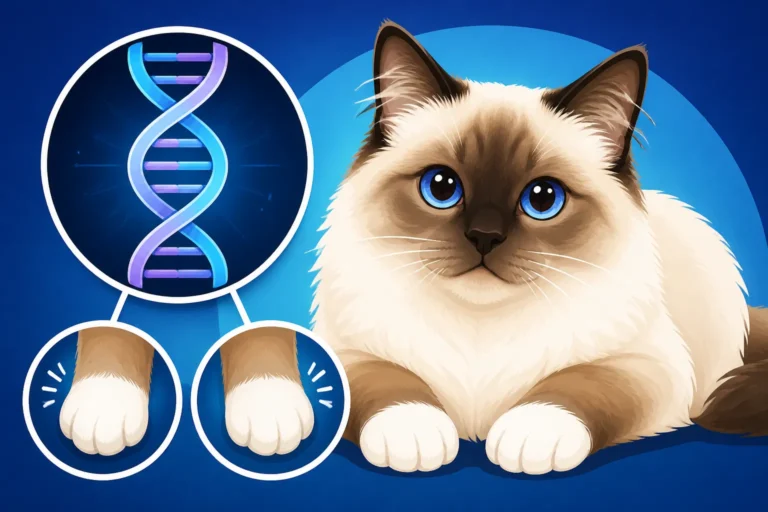
So, what's the secret behind these perfect little mittens? It all comes down to a specific genetic mutation. The Birman's white gloves are caused by a unique variant on the KIT gene. This isn't just any old white spotting gene; it's a very specific one that causes white on the extremities in a precise pattern. In essence, this gene "tells" the pigment cells (melanocytes) where not to go during development, specifically affecting the paws. It's a recessive gene, meaning a Birman kitten needs to inherit two copies of this variant—one from each parent—to display the characteristic gloves. And guess what? What the KIT Gloving Variant Does is something truly remarkable in the world of cat genetics. This particular gene has been meticulously studied, and its role in creating the Birman's signature look is well understood by geneticists and breeders.
Understanding the Birman's Genetic History and Its Uniqueness
To truly appreciate why Birman gloving is unique, we need to take a quick trip back in time and understand the breed's fascinating, and at times precarious, history. Like many beloved breeds, the Birman faced significant challenges that shaped its genetic makeup, making its distinct traits even more precious.
The Birman's Post-War Bottleneck and Outcrossing
The Birman breed, as we know it today, almost didn't make it. The Second World War devastated many cat breeds in Europe, and the Birman was hit particularly hard. By the end of the war, the breed's numbers were critically low, so low that it's often said only two cats remained to rebuild the entire lineage. This created what's known as a genetic bottleneck. To prevent the breed from vanishing altogether and to broaden the gene pool, breeders had to carefully outcross Birmans with other breeds. This monumental effort meant meticulously selecting cats that could contribute to the breed's recovery while trying to maintain its distinctive characteristics. It was a painstaking process, but it was absolutely essential for the survival of the breed. The Birman Was Rebuilt From Two Cats and It Shows highlights just how close we came to losing this wonderful breed entirely.
Why the Gloving Gene Became Fixed in the Birman
Despite the outcrossing, breeders were incredibly focused on preserving the Birman's signature white gloves. Through careful selection and dedicated breeding programs, they ensured that the unique KIT gloving variant became "fixed" within the breed's gene pool. This means that virtually every Birman cat carries two copies of this specific gene, which is why all registered Birmans display the gloves. It wasn't by chance; it was a deliberate and determined effort. When you see a Birman today, you're seeing the result of generations of selective breeding aimed at maintaining this iconic feature. Why Every Birman Carries Two Copies of the Gloving Gene is a testament to the dedication of those early breeders who worked tirelessly to safeguard the breed's identity. This commitment to genetic purity, especially for the gloving, is what truly sets them apart from other breeds that might have some white on their paws.
Examining Other Pointed Breeds: Similarities and Crucial Differences
It’s easy to look at a variety of pointed cats and feel a little lost trying to distinguish them. Many breeds have similar color patterns, and some even have white on their feet. But when it comes to true Birman gloving, it’s not just about the presence of white, but the type of white marking and its genetic origin. Let’s clear up some common confusions.
The Himalayan (Persian Pointed): A Case of Superficial Resemblance
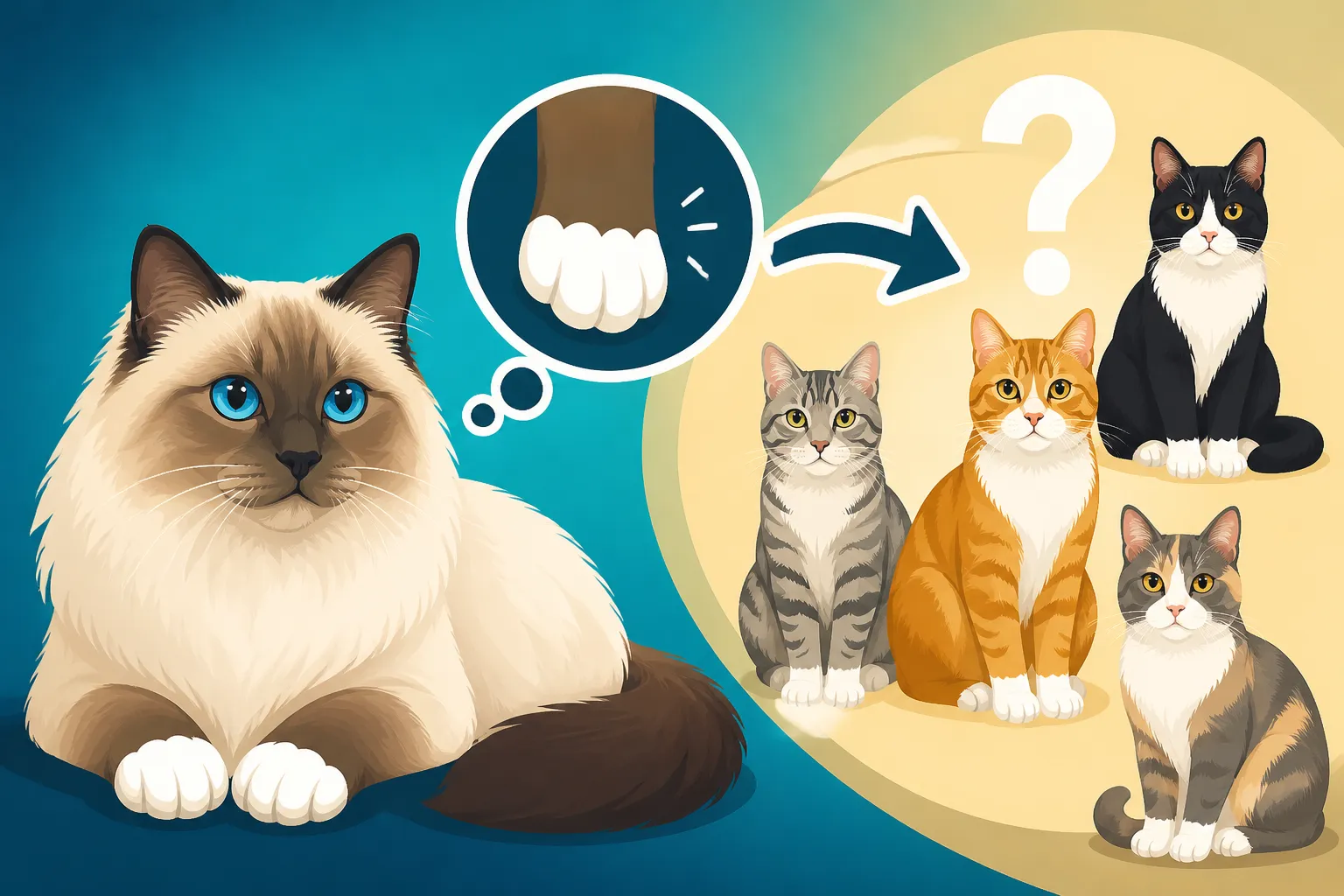
The Himalayan, often called a Persian Pointed cat, shares the stunning colorpoint pattern with the Birman—darker extremities and a lighter body. And yes, sometimes a Himalayan might have white on its paws. However, this white is almost never the distinct, symmetrical "gloving" seen in Birmans. Instead, any white on a Himalayan's paws is usually due to general white spotting genes, which produce random patches of white, rather than the specific, consistent pattern of the Birman's gloves. It's like comparing a carefully crafted pair of gloves to a splash of paint. The genetic mechanism is entirely different. While beautiful in their own right, Himalayans simply don't have the Birman gloving gene. The outcrossing that brought What Persian Blood Brought Into the Birman also introduced the challenges of distinguishing between true Birman features and general Persian traits.
The Ragdoll: Often Confused, But Genetically Different
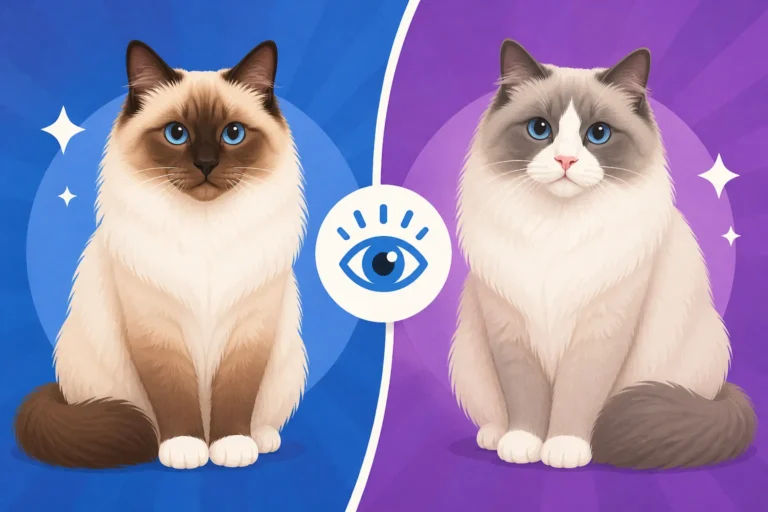
Ah, the Ragdoll! Another incredibly popular and beautiful long-haired, blue-eyed, pointed cat that is often confused with the Birman. Many Ragdolls also have white markings, especially on their chins, chests, and often their paws. Indeed, some Ragdolls even have "mitted" patterns that look remarkably similar to Birman gloves to the untrained eye. However, the white markings on a Ragdoll are caused by a different genetic mechanism—a gene for piebald spotting, which expresses differently than the Birman's KIT gloving variant. The key difference lies in the genetic origin and the consistency of the pattern. While Ragdolls can have white feet, they don't have the Birman gloving gene itself. This is a subtle but important distinction. When trying to tell them apart, How to Tell a Birman From a Ragdoll by Its Feet is often the quickest way to make the identification.
The Snowshoe: White Paws, But Not Birman Gloves
The Snowshoe cat is another breed that often catches attention with its white paws, sometimes leading people to wonder if it shares genetics with the Birman. Snowshoes are known for their striking tuxedo-like appearance, with white on their muzzle, chest, and paws, contrasting with their pointed bodies. This breed originated from crosses between Siamese and bicolor American Shorthairs, and their white markings come from the general white spotting genes inherited from their American Shorthair lineage. Again, while they have white feet, it's not the same specific genetic mutation that creates the Birman's precise, symmetrical gloves and laces. The patterns tend to be more variable and less consistently defined than the Birman's trademark markings. It's a beautiful look, but genetically, it's a different story.
The Science of White Markings in Cats: Beyond the Birman Gene
Understanding the specific mechanics of the Birman's gloves requires a brief foray into the broader world of feline genetics, where various genes control coat color and patterns. It's a complex dance of DNA, and the Birman has its own unique choreography.
Piebald Spotting Genes and Their Effects
Most white markings you see on cats—like a white chest, belly, or even random white paws on a non-Birman breed—are typically due to piebald spotting genes (often denoted as the 'S' locus). These genes essentially prevent pigment cells from migrating to certain areas of the body during embryonic development, resulting in patches of white fur. The extent of the white can vary greatly, from just a small locket on the chest to a nearly all-white cat. This is a very common genetic trait found across countless cat breeds and mixed breeds. However, the effect of the piebald spotting gene is generally less precise and less consistently patterned than the Birman's gloves. It's more of a "paint splatter" effect, whereas the Birman's gloves are a "surgical strike" of white.
How Birman Gloving Differs from Other White Spotting
The key differentiator for the Birman is that its gloving isn't simply a manifestation of the common piebald spotting genes. As mentioned, it's a specific variant of the KIT gene. This variant specifically and almost exclusively affects the extremities, creating the iconic white "mittens" and "laces" in a highly predictable and symmetrical pattern. While general white spotting can occur in any location and vary wildly in extent, the Birman gloving is consistently expressed on the paws in a very particular manner. Think of it this way: many rivers flow to the sea (general white spotting), but only one river flows exactly through your town square in a predetermined path (Birman gloving). The genetic pathway and outcome are distinct. How the Gloving Gene Works in a Birman is a fascinating subject for anyone interested in feline genetics.
The Implications for Birman Breeders and Owners
The unique genetic nature of Birman gloves has significant implications, not just for the breed's appearance, but for breeding practices and how owners understand their beloved companions. It’s a trait that requires careful stewardship.
Why Birman Gloves Vary Despite the Fixed Gene
Even though every Birman carries the "gloving gene," you might notice that not all Birman gloves look absolutely identical or "perfect" according to breed standards. Some might have "gauntlets" (white running too high up the back of the leg) or uneven "laces" (the inverted 'V' on the back paws isn't symmetrical). This variability happens because while the core gloving gene is fixed, other "modifier genes" can influence its expression. These modifiers can subtly alter how high the white extends or how evenly it's distributed. This is why breeding for "perfect" gloves is still an art and a science, requiring breeders to carefully select their breeding pairs to achieve the ideal presentation. Why Birman Gloves Vary Despite the Fixed Gene is a constant topic of discussion and careful consideration within the breeding community, and it's also Why a Mismarked Birman Is a Pet Price Cat even if they are otherwise a healthy, wonderful companion.
| Feature | Birman Gloves | Ragdoll Mitting/White Spotting | Himalayan White Spotting | Snowshoe White Markings |
|---|---|---|---|---|
| Genetic Basis | Unique KIT gloving variant (recessive, fixed) | Piebald spotting genes (variable expression) | Piebald spotting genes (variable expression) | Piebald spotting genes (variable expression) |
| Appearance | Symmetrical white "gloves" on front, "laces" on back. Precise, distinct. | White "mitts" or extensive white spotting on paws, chest, face. Variable. | Random white patches, rarely symmetrical. | White on paws, face, chest, variable patterns. |
| Consistency | Highly consistent, though modifiers exist. | Highly variable, can be minimal or extensive. | Generally random, not a breed hallmark. | Variable, but generally present on paws. |
| Breed Hallmark | DEFINING characteristic of the breed. | Common, but not the defining characteristic. | Not a defining feature of the breed. | Defining characteristic for the "Snowshoe" name. |
| Registries | Standardized and judged rigorously. | Accepted variations within breed standard. | Any white often considered a fault. | Standardized for specific patterns. |
Genetic Testing and Breed Integrity
For Birman breeders, maintaining the integrity of the breed's unique traits, including the gloves, is paramount. While the gloving gene itself is largely fixed, genetic testing plays a crucial role in ensuring overall breed health and purity. Reputable breeders will test for other genetic conditions that can affect Birmans, such as Polycystic Kidney Disease (PKD1) or Hypotrichosis (FOXN1). These tests provide vital information, allowing breeders to make informed decisions about mating pairs and prevent the passing on of harmful traits, ensuring healthy kittens. As an owner, when you're considering bringing a Birman into your home, always ask about the health testing done on the parents. How to Spot a Birman Breeder Selling Untested Kittens is essential knowledge for anyone looking for a healthy companion. Many breeders proudly share their results, often posted on their cattery websites or available upon request. When selecting supplies like nutritious food or engaging toys for your Birman, trusted retailers like Chewy often provide detailed product information and reviews, helping you make informed choices that support your cat's health and well-being.
Protecting the Birman's Legacy and Unique Characteristics
The Birman's distinct appearance and gentle temperament are a legacy built over generations. Ensuring these qualities endure requires ongoing commitment from everyone involved in the Birman world.
The Importance of Reputable Birman Breeders
Reputable Birman breeders are the guardians of the breed's future. They don't just breed for looks; they breed for health, temperament, and adherence to the breed standard, which, of course, includes those beautiful gloves. They understand the intricacies of Birman genetics, the importance of health screening, and the need to responsibly manage their breeding lines. A good breeder will be transparent about their cats' health history, proudly show you their pedigrees, and welcome questions about their practices. They are passionate about the Birman and committed to producing healthy, well-socialized kittens that will bring joy to their new families for years to come. Such breeders are a priceless resource, and their dedication ensures that the Birman's unique characteristics, like the gloving, continue to thrive. You'll often find they're a wealth of information on everything from grooming tools, which you can often find on Chewy, to diet, ensuring your Birman's coat remains silky and those gloves stay pristine.
Educating Future Owners About the Birman's Distinctive Traits
For prospective Birman owners, education is key. Understanding what makes a Birman unique—from its specific gloving pattern to its incredibly docile and affectionate nature—helps set realistic expectations and fosters a deeper appreciation for the breed. Don't be shy about asking questions when you're looking for a kitten. Learn about the breed standard, especially concerning the gloves. Know that while the genetic basis is fixed, the aesthetic "perfection" of the gloves can vary, and a slightly mismarked Birman is still 100% Birman in every other wonderful way. Embracing these distinctive traits means you'll be better equipped to care for your Birman, appreciate its unique beauty, and even help educate others who might mistake its gloves for ordinary white paws. When you get a Birman, you're not just getting a cat; you're becoming part of a tradition that cherishes this "Sacred Cat of Burma" and its truly singular white gloves.
Disclaimer
This article is for general informational purposes only and does not constitute professional advice. Laws, prices and regulations vary by location and change over time. Consult a qualified professional for guidance on your specific situation.