How the Birman Standard Divides Its Hundred Points
Anyone who's ever looked into getting a purebred cat, especially a Birman, knows that the world of breed standards can feel like deciphering an ancient scroll. It's not just about looking at a pretty picture; breeders, judges, and even devoted owners refer to these detailed documents to ensure the integrity and health of the breed. If you've ever wondered what a Birman judge is actually looking for, beyond just general cuteness (which, let's be honest, all Birmans have in spades!), this guide will break down the intricate point system that defines the ideal Birman, helping you understand what makes a champion and why those precious white paws are such a big deal.
Understanding the Purpose of a Breed Standard
When you first hear "breed standard," you might picture a stuffy rulebook, far removed from the loving purr of your own feline companion. But in reality, a breed standard is the foundational document for any purebred animal. It’s what guides breeders, informs judges, and educates prospective owners about the unique characteristics and desired traits of a specific breed. For the Birman, this document isn't just about aesthetics; it's a living history, reflecting decades of dedication to maintaining what makes this "Sacred Cat of Burma" so special.
More Than Just a Beauty Contest
Think of the breed standard as a comprehensive genetic blueprint, a detailed description of the physical appearance, temperament, and even specific health markers that breeders strive to achieve and maintain. It's not just about which cat is "prettiest" on a given day, but which cat most closely embodies the ideal representation of the breed. Judges use the point system within the standard to objectively evaluate each cat, assigning scores to various features. This process helps ensure that breeding efforts are directed toward producing healthy, well-tempered cats that consistently adhere to the breed's established type, preventing random breeding that could dilute distinct characteristics or introduce undesirable traits.
Moreover, the standard often describes traits that are intrinsically linked to the cat's well-being and function. For instance, a particular coat texture might be specified because it's less prone to matting, or a specific body type might be favored for its health implications. It’s about preserving the overall robustness and unique charm of the Birman, ensuring that future generations can enjoy these wonderful companions with all the qualities that make them so beloved.
The Blueprint for Birman Preservation
The Birman breed, like many others, faced near extinction after World War II. Its survival and resurgence relied heavily on a handful of dedicated individuals who meticulously rebuilt the lines. The Birman Was Rebuilt From Two Cats and It Shows and How Two Cats in 1945 Shaped the Birman's Health delve into this fascinating history. In such times, a clear, widely agreed-upon breed standard becomes absolutely critical. It acts as a compass, guiding breeders through careful selection and outcrossing programs, ensuring that the essence of the Birman wasn't lost. Without this defined blueprint, the breed could have fragmented, leading to significant variations or the loss of its distinctive features.
Every time a breeder decides which cats to mate, they are, in essence, trying to produce kittens that will come as close as possible to the ideal described in the standard. This isn't just about winning ribbons at a show; it's about safeguarding the genetic heritage of the breed. It ensures that the placid temperament, the deep blue eyes, the luxurious single coat, and those iconic white gloves continue to be hallmarks of the Birman for years to come. For potential owners, understanding this standard gives insight into the dedication behind a well-bred Birman and helps them appreciate the careful work involved in bringing these beautiful animals into the world.
The Hundred Points: A Detailed Breakdown of Birman Conformation
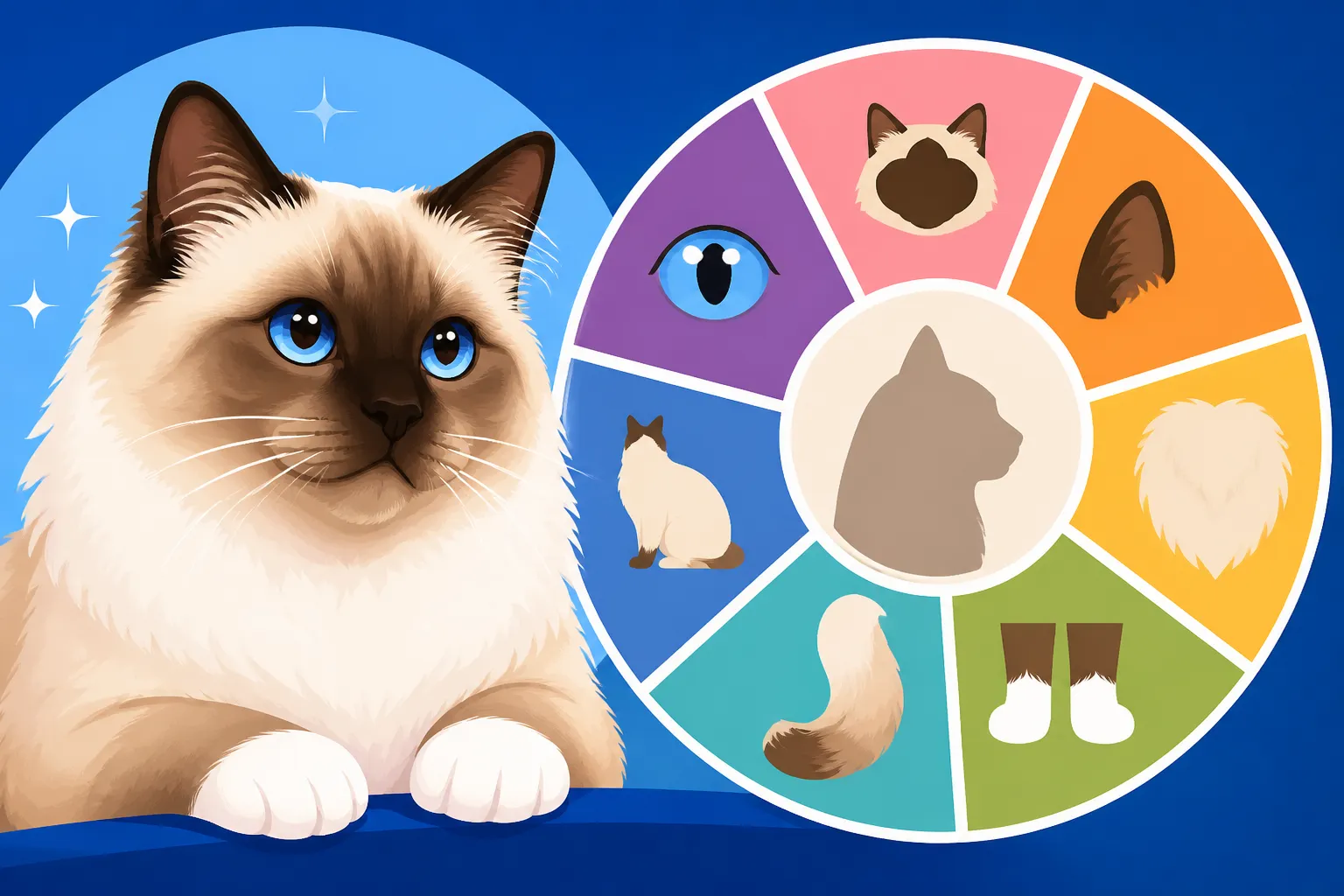
Imagine you're at a cat show, watching a Birman glide across the judging table. Every feature, from the tip of its nose to the curl of its tail, is under scrutiny. The breed standard allocates a total of 100 points across various categories, each meticulously evaluated to determine how closely a cat aligns with the ideal Birman. This isn't a subjective glance; it's a systematic assessment that considers everything from head shape to coat quality. Let's delve into how these points are typically distributed by major registries like CFA (Cat Fanciers' Association) or TICA (The International Cat Association), though specific point values might vary slightly between organizations.
Head, Ears, and Eyes
The head of a Birman is a significant component of its overall score, often accounting for a substantial portion of the 100 points. Judges are looking for a strong, broad, rounded head with a full face, reflecting a balanced expression. The muzzle should be medium in length, not too pointed like a Siamese nor too flat like a modern Persian. A distinguishing feature is the "Roman nose," which should have a gentle curve rather than a break or a straight line. The chin needs to be strong and well-developed, aligning with the nose and upper lip to create a harmonious profile. Why a Birman's Nose Is Called Roman explores this unique feature in more detail.
The ears are also crucial; they should be medium-sized, set wide apart, and slightly rounded at the tips. They shouldn't be too large or too small for the head. Inside, the ears should be well-furnished with fur, a lovely complement to their longhaired glory. As for the eyes, they are one of the Birman's most captivating features. They must be blue, with the deeper and more vivid shades being preferred. Their shape should be almost round, with a sweet, open expression. Any hint of green or yellow in the eyes would be considered a serious fault, as would eyes that are too small, almond-shaped, or crossed. The intensity of their blue gaze is often a highlight for judges and owners alike.
Body, Legs, and Tail
Moving down from the head, the Birman's body, legs, and tail are assessed for balance, strength, and elegance. The body itself is described as long and substantial, neither cobby (stocky) nor svelte (slender). This is a medium-to-large cat with a muscular, well-built frame. The chest should be broad, and the overall impression should be one of power without bulk. The legs are medium in length and sturdy, in proportion to the body. They should be well-boned and muscular, leading down to large, round paws – the canvas for those famous white gloves.
The tail is also an important element, adding to the Birman's flowing appearance. It should be medium in length, in proportion to the body, and carried gracefully. It needs to be full and bushy, resembling a plume or a bottlebrush. A short, kinky, or poorly plumed tail would detract from the overall score. The entire body structure is judged on its balance and harmony, ensuring that all parts come together to form a cohesive, elegant, and sturdy cat. A Birman that is still growing and developing, perhaps not fully mature until three years old, might present slightly differently at different stages, but the underlying structure should always be evident.
Coat and Condition
The Birman's coat is undeniably one of its most striking features, often drawing people to the breed. The standard emphasizes a medium-long to long coat that is silky in texture and should not mat easily. This is largely due to the Birman's unique characteristic of having no undercoat. No Undercoat Is What Makes a Birman Easy to Groom explains why this is such a blessing for owners. While the coat is longest around the neck, forming a magnificent ruff, and on the tail, it should flow gracefully over the body, legs, and britches.
Judges assess the coat for its texture, density, and overall presentation. It should feel like silk to the touch, not woolly or coarse. A well-groomed Birman will have a clean, shining coat, reflecting good health and diligent care. Points are also given for overall condition, which includes muscle tone, weight, and general health. A cat that is clearly underweight, overweight, or showing signs of poor health would lose points here, regardless of how perfectly marked its gloves might be. This category truly highlights that the breed standard is also a measure of a cat's vitality and well-being. Keeping a Birman's coat in top condition often involves high-quality nutrition, and brands available on Chewy offer specialized diets that support skin and coat health with essential omega fatty acids.
The All-Important Birman Gloves and Pointing
Ah, the white gloves! This is arguably the most iconic and defining feature of the Birman, the very trait that sets it apart from other pointed breeds. The legend tells us these white markings are a sacred blessing, and the breed standard certainly treats them as such, dedicating a significant portion of the total points to their precise placement and symmetry. This is where the magic (and sometimes the heartbreak for breeders) truly happens, as achieving those perfect gloves is a genetic lottery even with the best planning.
The White "Gloves": Precision and Symmetry
The Birman's front paws must have pure white "gloves" that ideally end in an even, straight line across the paw at the metacarpal-phalangeal joint (the equivalent of a human knuckle). Precision here is paramount. The white should not extend too far up the leg, nor should it be patchy or uneven. Judges look for crisp, clean white that contrasts sharply with the cat's point color. Symmetry between the two front paws is also highly desirable; uneven gloves on the front feet are considered a significant fault and can drastically reduce a cat's show potential. Why Perfect Birman Gloves Are Almost Impossible to Breed delves into the complexities of this genetic trait.
For many, the charm of the Birman lies precisely in this elegant white trim, making it a unique feature in the cat world. Breeders work tirelessly to achieve these markings, understanding that even a slight deviation can mean the difference between a top show cat and a beloved pet. For pet owners, while a slightly uneven glove doesn't diminish the cat's personality or health, it's fascinating to understand the rigorous standards that shape the breed's ideal.
The Back "Laces" and "Gauntlets": Where Perfection Lies
If the front gloves are important, the back paws introduce an even greater level of complexity and nuance. The white on the back paws must extend higher up the back of the leg, forming "laces." These laces should ideally terminate in a clean, inverted 'V' shape on the hocks (the cat's ankle joint). Crucially, the white on the soles of the back feet should extend up the back of the legs in a "gauntlet" shape, ideally ending at the same height on both hind legs. The white of the gloves and laces should never extend beyond the hock on the hind legs.
Again, symmetry is key. Both back paws should have laces that rise to the same height and form a similar 'V' shape. Any white extending higher than the hock on the rear or appearing unevenly like "boot-tops" or "stockings" is considered a fault. A lack of laces, or conversely, white markings that extend too far up the leg (often called "gauntlets"), will significantly impact the cat's score. What Laces and Gauntlets Mean on a Birman's Price Tag explains how these markings affect valuation. The distinctness of these markings is so specific that judges are trained to spot even the slightest irregularity, reinforcing the idea that the Birman standard is incredibly detailed and demands a high degree of precision in its physical manifestation.
Point Color and Its Nuances
Beyond the white gloves, the Birman is a pointed breed, meaning its color is concentrated on the cooler extremities: face, ears, legs, and tail. The main body color should be an even, pale shade, ideally golden beige, with a warm undertone, providing a gentle contrast to the darker points. There should be no shading or mottling on the body. The standard recognizes several distinct point colors, each with its own specific hue and depth.
Common point colors include Seal Point (a very dark brown, almost black), Blue Point (a soft, cool grey-blue), Chocolate Point (a warmer, lighter brown), and Lilac Point (a delicate pinkish-grey). Rarer colors like Red Point, Cream Point, and various Tortie or Tabby Points are also recognized by most registries. The depth and evenness of the point color are judged – a strong, clear point color without streaking or fading is preferred. The contrast between the body color and the point color is important, and a Birman kitten is famously born almost pure white, with its points developing over several weeks or months as it's exposed to cooler temperatures. When a Birman Kitten's Points Start to Show describes this fascinating process. As a Birman ages, its points naturally darken due to temperature-sensitive enzymes, a phenomenon also accounted for by the standard. Why a Birman's Points Darken as It Ages elaborates on this natural progression.
Here's a simplified breakdown of how points are often allocated in major breed standards, though actual percentages can vary slightly by registry:
| Category | Typical Point Allocation (Approximate) | Key Features Judged |
|---|---|---|
| Head (including Eyes/Ears) | 25-30 points | Shape, width, muzzle, chin, profile (Roman nose), ear size/set, eye shape/color (deep blue preferred). |
| Body & Tail | 20-25 points | Size, substance, boning, muscularity, chest, legs, feet, tail length/plume. Overall balance and proportion. |
| Coat Texture & Condition | 10-15 points | Silkiness, length (medium-long to long), density, lack of undercoat, general health, grooming. |
| Color & Marking | 30-35 points | Point Color: Evenness, contrast, depth of color. Gloving: Front gloves (even, straight line), back laces (inverted V, appropriate height), gauntlets (even length up back of hock). Symmetry is critical. |
Minor Faults, Major Faults, and Disqualifications
Understanding the point system isn't just about what makes a Birman ideal; it's also about recognizing what deviates from that ideal. Breed standards don't just describe perfection; they also list faults and disqualifications. These categories serve to guide breeders away from undesirable traits and maintain the overall health and characteristic appearance of the breed. It’s a bit like learning the rules of a game; you need to know what earns you points and what takes them away.
What Judges Overlook (Slight Imperfections)
Minor faults are those small imperfections that might cost a few points but don't severely impact a Birman's overall quality or show career. These could be things like a slightly lighter shade of blue in the eyes (though still blue), a less-than-perfectly straight glove line on one front paw, or a tail that's a touch less plumed than ideal. Perhaps a slightly uneven rise in the back laces, where one side is just a hair higher than the other, but still within acceptable limits. These are the kinds of subtle distinctions that experienced judges are trained to observe and factor into their scoring, often meaning the difference between a cat placing first or second in its class.
A Birman might have one or two minor faults and still be an excellent example of the breed, perhaps even a Grand Champion, if its other features are exceptional. Breeders will always strive for perfection, but they understand the genetic variability involved. For a pet owner, these minor imperfections are often unnoticeable and certainly don't detract from the loving, gentle personality that makes the Birman so cherished. Even a Birman with slightly uneven gloves can be a wonderful, affectionate companion, often sold at a pet price rather than a show price.
What Will Cost Points (Significant Deviations)
Major faults are more serious deviations from the breed standard and will significantly impact a Birman's chances in the show ring. These are traits that breeders actively try to avoid in their breeding programs. Examples include eyes that are not a true blue, or even worse, have flecks of green or yellow. A muzzle that is too pointed or too cobby for the broad, rounded head would be a major fault. Significant asymmetry in the white gloves, such as one glove extending much higher than the other, or a patch of color intruding into a glove, would also fall into this category. Similarly, back laces that run too high, forming full gauntlets that extend above the hock, are a major flaw. Why a Birman With Gauntlets Cannot Be Shown is a good read if you're curious about this specific fault.
A woolly or matted coat, rather than the silky, non-matting single coat, would also be a major fault, as would any indication of poor physical condition. These faults aren't just cosmetic; they can sometimes indicate a deviation from the desired genetic type that breeders are trying to preserve. A cat with one or more major faults might still be a beautiful pet, but its career in the show hall would be severely limited.
When a Birman Cannot Be Judged (Disqualifications)
Disqualifications are traits that are so far outside the breed standard that the cat cannot be judged or awarded any points in a show. These are serious issues, often indicative of an outcross that didn't take, or a fundamental departure from the breed's core characteristics. For the Birman, common disqualifications include any color other than blue in the eyes, such as green or yellow eyes, or a crossed gaze. Any white markings anywhere on the body other than the gloves and laces are also disqualifying. This means no random white spots on the chest or belly.
Physical deformities, such as a kinked or abnormally short tail, or polydactyly (extra toes), would also lead to disqualification. Other disqualifying factors include evidence of illness, lameness, or extreme shyness and aggression – temperament is a crucial part of the Birman standard. Importantly, the complete absence of white gloves would also disqualify a Birman. Why a Gloveless Birman Kitten Cannot Be Registered highlights the severity of this. These disqualifications protect the integrity of the breed, ensuring that only cats that genuinely represent the Birman standard are recognized in the show ring. While such a cat could still be a beloved family pet, it wouldn't contribute to the show lines or the official registry as a Birman.
Why the Standard Matters for Owners, Not Just Breeders
You might think that such detailed rules only apply to the serious breeders and show enthusiasts. But honestly, understanding the Birman breed standard is incredibly valuable for every single owner, or even just someone dreaming of bringing a Birman into their home. It helps you appreciate the breed's heritage, make smarter decisions, and truly cherish the unique qualities of your furry family member.
Understanding Your Birman's Heritage
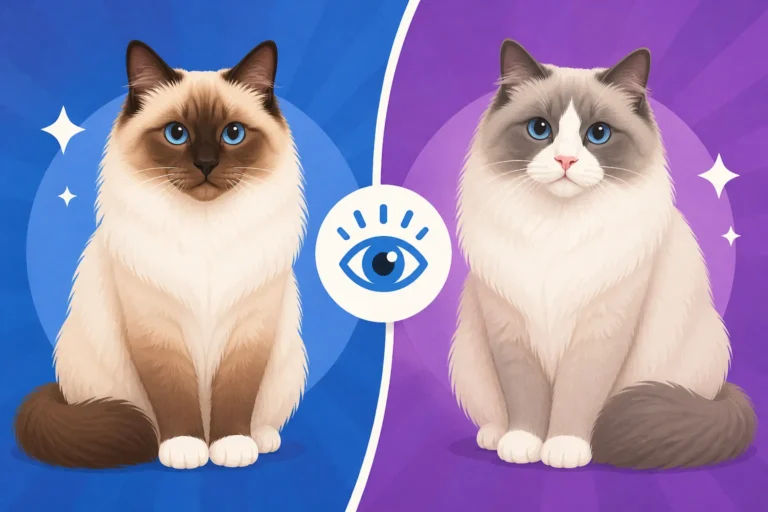
Every Birman you meet is a testament to careful breeding and generations of dedication to a specific ideal. When you learn about the breed standard, you begin to grasp the incredible journey your cat's ancestors undertook. You'll understand why its magnificent blue eyes are so deeply prized, or why the silky texture of its coat is a signature trait, distinguishing it from other longhairs. How a Birman's Coat Differs From a Ragdoll's is a great comparison. This knowledge allows you to connect with your Birman on a deeper level, recognizing the historical and genetic legacy it carries.
It’s like looking at a piece of art and knowing the story behind its creation – it adds so much more meaning and appreciation. You’ll recognize why your Birman has that placid, gentle temperament that makes it such a joy to live with, traits that are explicitly mentioned in the standard’s ideals. It transforms your cat from just "a cat" into a living embodiment of a rich history and a carefully preserved lineage, making every purr and every gentle head-butt all the more special.
Making Informed Choices About Breeders
When you're looking for a Birman kitten, choosing a reputable breeder is paramount. A breeder who truly understands and adheres to the breed standard is not just trying to win shows; they are committed to producing healthy, well-socialized kittens that embody the best qualities of the breed. Knowing the standard yourself empowers you to ask the right questions. You can inquire about the parents' conformation, their genetic testing results (for conditions like HCM and PKD, which are related to the breed's health history), and how closely their offspring are expected to meet the standard. What to Ask About a Birman Line's Heart Scans and Why a Birman Breeder Still Tests for PKD are vital reads for this.
A good breeder will be transparent about their cats' pedigrees and any minor faults that might be present, especially if the kitten is destined for a pet home. They will never try to sell you a "rare" color that isn't recognized by the standard, or make excuses for obvious disqualifying faults. Being knowledgeable about the standard helps you avoid unscrupulous sellers and ensures you bring home a kitten that has been ethically and responsibly bred. You can also compare pricing, knowing that a Birman with perfect gloves will often command a higher price due to the breeding difficulty. Why a Birman With Four Matching Gloves Costs the Most explains this perfectly.
Appreciating the Breed's Unique Qualities
Finally, understanding the Birman standard simply deepens your appreciation for these magnificent creatures. You'll marvel at the perfect placement of those white gloves, the depth of their sapphire eyes, and the luxurious feel of their single coat. You’ll also understand why their temperament is so famously gentle and undemanding – these are not accidental traits but actively sought-after qualities outlined in the standard. The Birman Sits Between the Siamese and the Persian describes their balanced temperament.
Even if your Birman isn't a show cat, knowing the effort that goes into preserving these traits allows you to celebrate every aspect of its unique beauty and personality. It helps you recognize that the Birman is not just any longhaired, pointed cat, but a distinct breed with a carefully curated set of characteristics. This appreciation also extends to recognizing specific care needs, such as finding low-dust litter to keep those white gloves pristine – something you might find at Chewy, ensuring your Birman's unique markings stay bright and clean. Ultimately, the breed standard is a roadmap to celebrating everything that makes the Birman the cherished companion it is today.
Disclaimer
This article is for general informational purposes only and does not constitute professional advice. Laws, prices and regulations vary by location and change over time. Consult a qualified professional for guidance on your specific situation.