What to Ask About a Birman Line’s Heart Scans
Bringing a beautiful Birman kitten home is an absolute joy, but for many prospective owners, there's an underlying worry about hidden health issues, especially those genetic conditions that can surface later in life. One of the most serious concerns for cat breeds, Birmans included, is hypertrophic cardiomyopathy (HCM), a heart condition that can be devastating. This guide will walk you through exactly what questions to arm yourself with when speaking to a Birman breeder, focusing specifically on their heart screening practices, so you can confidently choose a kitten from a truly healthy line.
Understanding Hypertrophic Cardiomyopathy HCM in Birmans
When you fall in love with a Birman, with their soulful blue eyes and gentle nature, it's easy to overlook the potential health challenges that can affect any purebred cat. Hypertrophic Cardiomyopathy, or HCM, is one of those conditions that conscientious breeders work hard to minimize, and informed owners need to understand. It's a disease that causes the muscular walls of a cat's heart to thicken abnormally, making it harder for the heart to pump blood effectively.
What HCM Actually Is and How It Affects Your Birman
Imagine your cat's heart as a beautifully designed pump, tirelessly working to circulate blood throughout its body. In a cat with HCM, the walls of the ventricles, particularly the left ventricle, become much thicker than they should be. This thickening reduces the volume inside the heart chambers and makes the heart stiffer, preventing it from relaxing and filling with blood properly between beats. Essentially, the pump becomes less efficient.
For a Birman, the impact can range from subtle to severe. Early stages might show no outward signs at all, which is particularly concerning because Birmans are known for their stoic and placid temperament. They are absolute masters at masking discomfort or illness, making it incredibly difficult for even the most observant owner to spot early symptoms. Why a Birman Hides Illness Behind a Placid Temperament As the disease progresses, signs might include lethargy, difficulty breathing, a decreased appetite, or even sudden collapse. In some tragic cases, the first sign of HCM is sudden death, or the formation of blood clots that can cause paralysis, often in the hind legs. It’s a truly frightening prospect, highlighting why preventative measures and thorough screening are so critically important.
Why HCM Screening is Crucial for the Birman Breed
HCM is unfortunately prevalent in many purebred cat breeds, and while Birmans are generally considered a robust breed, they are not immune. While some breeds have a known genetic marker for HCM that can be tested with a simple cheek swab, Birmans do not currently have such a test. This means that even if a breeder tells you their cats are "genetically clear," that statement cannot fully apply to HCM in Birmans in the same way it might for some other breeds and diseases. The absence of a specific DNA test makes regular physical examinations and, most importantly, cardiac imaging, absolutely vital for identifying affected cats and preventing their use in breeding programs.
The goal of screening isn't just to identify cats with HCM, but to remove them from the breeding pool to reduce the incidence of the disease in future generations. A responsible breeder understands that even if their current breeding cats appear healthy, HCM can be a silent carrier or develop later in life. Ignoring this risk means perpetuating a serious health problem. How HCM Shows Up in a Birman It’s a continuous effort, a commitment to the long-term health of the breed, and it relies heavily on transparent, consistent screening practices within a cattery.
The Gold Standard: Echocardiogram Screening
Given the seriousness of HCM and the lack of a simple DNA test for Birmans, selecting a breeder who prioritizes proper cardiac screening is paramount. There is one definitive method that stands above all others for diagnosing HCM in living cats: the echocardiogram.
Why an Echocardiogram is the Only Reliable Test
An echocardiogram, often simply called an "echo," is a non-invasive ultrasound of the heart. It allows a veterinary cardiologist to visualize the heart's structure in real-time, assessing the thickness of the heart walls, the size of the chambers, the function of the valves, and the overall pumping efficiency. This is literally looking inside the heart to see what's going on.
Why is this the only reliable test? Because other methods fall short. A veterinarian listening to a cat's chest might detect a heart murmur, which is an abnormal sound caused by turbulent blood flow. While a murmur can be a sign of HCM, many healthy cats have innocent murmurs, and conversely, many cats with HCM have no audible murmur at all, especially in the early stages. Relying solely on a stethoscope is like trying to diagnose a complex engine problem just by listening to it idle; you need to look under the hood. Similarly, genetic tests, as mentioned, don't exist for Birman HCM. Blood tests can indicate general heart stress, but they can't diagnose the specific structural changes of HCM. Only the direct visualization provided by an echocardiogram can truly confirm or rule out the disease. Why an Echo Is the Only Way to Screen a Birman It's the difference between guessing and knowing.
What the Vet Looks For During an HCM Scan
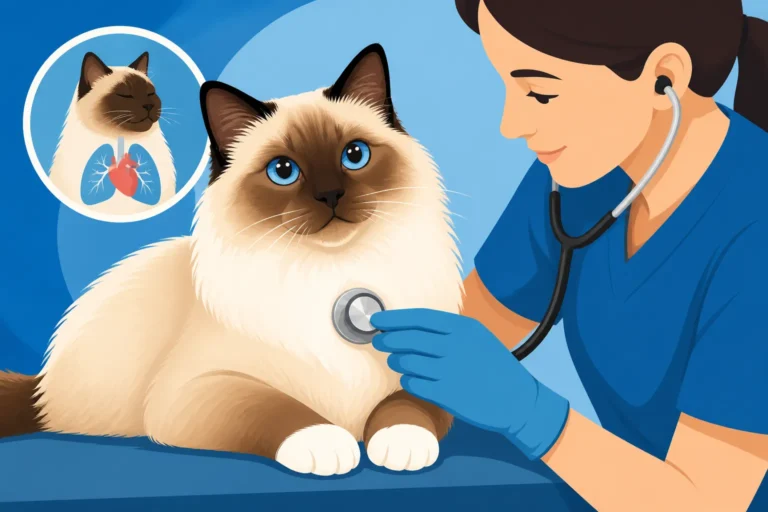
During an echocardiogram, your Birman will lie comfortably, usually on their side, while a qualified veterinary cardiologist or specialist gently moves a transducer (a small probe) over their chest. The sound waves generated by the transducer create detailed images of the heart on a screen. The cardiologist is looking for several key indicators:
- Ventricular Wall Thickness: This is the primary diagnostic criterion. They'll measure the thickness of the left ventricular free wall and the interventricular septum (the wall between the two lower chambers). Abnormal thickening is a hallmark of HCM.
- Left Atrial Enlargement: As the left ventricle becomes stiff and struggles to fill, blood can back up, causing the left atrium (the upper chamber that feeds blood into the left ventricle) to enlarge.
- Diastolic Function: This refers to how well the heart relaxes and fills with blood. A stiff, thickened heart will have impaired diastolic function.
- Dynamic Left Ventricular Outflow Tract Obstruction (LVOTO): In some cases, the thickened muscle can obstruct the outflow of blood from the left ventricle, leading to additional turbulence and stress on the heart.
- Valve Integrity: While not directly HCM, the cardiologist will also assess the heart valves to ensure they are functioning correctly.
A result will typically classify the cat as "clear," meaning no signs of HCM are detected; "borderline," indicating some mild changes that warrant re-evaluation; or "affected," meaning HCM is present. What a Cardiologist Measures on a Birman's Heart Wall These precise measurements and expert interpretation are why an echocardiogram performed by a board-certified veterinary cardiologist is the absolute gold standard for HCM screening in Birmans.
Crucial Questions to Ask Your Birman Breeder About Heart Scans
When you’re looking for a Birman kitten, choosing a reputable breeder is about so much more than just getting a cute companion. It’s about ensuring you’re bringing home a healthy family member. That means asking pointed, informed questions about their health screening protocols, especially regarding HCM. Don’t be shy; a good breeder will welcome your diligence.
"Are Both Parents of the Kitten Scanned Clear for HCM?"
This is arguably the most critical question you can ask, and you should not accept anything less than a resounding "yes" with verifiable proof. HCM is a tricky disease; it's considered autosomal dominant with incomplete penetrance, meaning a cat only needs one copy of an affected gene (if there were a test) to be predisposed, but not every cat with the gene will develop the disease, or develop it to the same degree. Since there’s no DNA test for Birmans, visual screening of both parents is the only way to try and ensure you're getting a kitten from the healthiest possible lineage.
It's not enough for just the mother or just the father to be clear. Both breeding cats contribute equally to the genetic makeup of the kittens. If one parent has undiagnosed HCM, or develops it later, there’s a significant chance that the kittens could inherit the predisposition. A responsible breeder will have detailed records for both parents, showing multiple clear scans over time. They should be transparent about their entire breeding program's history. Remember, you're not just looking at the kitten, but the entire genetic legacy behind it. This question is fundamental to understanding the commitment of the breeder to the breed's health.
"What is the Frequency of Scanning for the Breeding Cats in Their Line?"
HCM can develop at any age, but often manifests in middle age. A single clear scan at a young age, while a good start, isn't enough for a breeding cat. Breeding Birmans, especially those actively used in a program, should undergo regular echocardiograms. Most veterinary cardiologists recommend annual or biennial (every two years) scans for breeding cats in at-risk breeds like the Birman, particularly until they reach about five or six years of age. Some may even continue scanning longer.
Why is this frequency important? Because a cat can scan clear at two years old and then develop signs of HCM by four or five. If a breeder only scans their cats once, and then continues to breed them for several years, they could inadvertently be passing on the predisposition to numerous litters. Ask about their long-term scanning schedule for all their breeding animals, not just the current parents. This demonstrates a deep understanding of the disease's progression and a commitment to ongoing monitoring. How Often a Breeding Birman Needs Scanning It shows they are truly invested in mitigating risk over time, rather than just doing the bare minimum.
"At What Age Were the Parents Last Scanned, and By Whom?"
The timing and expertise behind the scan are just as crucial as the scan itself. A clear scan performed when a cat was very young (e.g., under 1 year) might not be as reassuring as a clear scan performed more recently, especially on an older breeding cat. HCM can develop slowly, so a current, clear scan on a mature breeding cat is far more valuable.
Furthermore, it's vital to know who performed the scan. Ideally, echocardiograms for breeding purposes should be performed and interpreted by a board-certified veterinary cardiologist. These specialists have advanced training and expertise in diagnosing cardiac conditions, ensuring the most accurate assessment. A scan performed by a general practice veterinarian, while potentially useful for general health, might not be as thorough or authoritative for breeding clearance. The cardiologist will provide a detailed report, often submitted to a central database for breed health monitoring. Ask for the name of the specialist and the date of the most recent scan. This specificity weeds out vague claims and ensures professional standards.
"Can I See the Official Scan Reports and Pedigrees?"
Never, ever take a breeder's word alone when it comes to health screenings. Verbal assurances are simply not enough. A reputable Birman breeder will be proud to share official documentation for their breeding cats. This includes not only the individual echocardiogram reports but also their pedigrees. The pedigree helps you trace the lineage and potentially identify any history of HCM further back in the line, although this becomes harder without published results from previous generations.
What should you look for in the scan reports? They should clearly state the cat's name, date of birth, the date of the scan, the name and credentials of the veterinary cardiologist who performed it, and the official interpretation (e.g., "clear," "normal," or "no evidence of HCM"). Many breed clubs and registries work with screening programs that provide official certificates or list results publicly. For instance, the OFA (Orthopedic Foundation for Animals) in North America maintains a public database of cardiac screenings. While HCM in Birmans isn't always listed on a public database like OFA in the same comprehensive way as, say, hip scores for dogs, many dedicated breeders still submit results or provide certificates directly. If a breeder is hesitant or refuses to show you actual paperwork, or only provides blurry photos from years ago, consider it a serious red flag. Why a Birman Breeder Publishes Echo Results You are making a significant investment, both emotionally and financially, and you deserve complete transparency regarding the health of your future kitten's parents. Which Results a Birman Breeder Must Put in Writing
Interpreting Breeder Responses and Red Flags
Navigating conversations with breeders can feel a little intimidating, especially when discussing sensitive topics like genetic health. However, how a breeder responds to your questions about heart scans is incredibly telling. You're looking for honesty, transparency, and a deep commitment to the welfare of their cats and the breed as a whole.
What a Good Answer Sounds Like
A truly responsible and ethical Birman breeder will not only answer your questions with confidence and clarity but will also likely anticipate many of them. They will readily provide you with copies of official echocardiogram reports from board-certified veterinary cardiologists for both the queen and the stud, and these reports will be recent and clearly state "clear" or "normal." They will be able to articulate their ongoing screening protocol, explaining how often their breeding cats are scanned and why.
Furthermore, a good breeder will be knowledgeable about HCM, acknowledging that it is a concern in the breed and explaining the steps they take to minimize risk. They might discuss the challenges of a lack of a DNA test for Birman HCM and why this makes physical screening even more important. They should show a willingness to discuss the health history of their entire line, not just the immediate parents, and express genuine concern for the long-term health of the kittens they produce. They should also be happy to offer references from previous kitten buyers who can vouch for their practices. This kind of open dialogue and verifiable proof builds immense trust and confidence.
Recognising Evasive Answers or Red Flags
On the flip side, certain responses should raise immediate red flags. Be wary of breeders who:
- Offer vague assurances: Phrases like "all my cats are healthy" or "we've never had a problem with HCM" without providing specific documentation.
- Claim it's not an issue in their lines: No reputable breeder can guarantee a genetic disease will never appear, especially one without a direct DNA test. Such a claim suggests either ignorance or dishonesty.
- Blame other breeds: Saying "HCM is really a problem for Ragdolls or Maine Coons, not Birmans" minimizes a legitimate concern. While prevalence may vary, Birmans are not immune.
- Provide only a general vet check-up or a murmur exam: As discussed, these are not sufficient for HCM screening for breeding purposes.
- Refuse to show paperwork: This is perhaps the biggest red flag. There is no legitimate reason to withhold official health certificates.
- Offer a significantly lower price point for a kitten: While cost isn't the only factor, very low prices often indicate corners have been cut, and health testing is frequently one of the first things to be skipped because it's expensive. Why a Cheap Birman Is Usually Untested Remember, health testing is an investment that contributes to the kitten's price, and it's an investment well worth making.
A breeder who acts defensively, gets annoyed by your questions, or tries to rush you through the process is likely not one you want to do business with. Your questions are valid and necessary for responsible pet ownership.
The Importance of a Health Guarantee and Contract
Beyond asking about heart scans, a comprehensive health guarantee and a clear contract are essential components of purchasing a Birman kitten. This document should outline the breeder's commitment to the health of their kittens and what recourse you have if a significant genetic health issue, like HCM, arises.
A strong health guarantee should typically cover genetic conditions for a specified period, often one or two years, sometimes even longer for life-threatening conditions like HCM. It should clearly state what happens if a kitten is diagnosed with HCM within that timeframe, such as a partial or full refund, or a replacement kitten. It's crucial to read this contract carefully and understand all its terms before you commit to a purchase. Does it require a diagnosis from a board-certified specialist? What are the timelines for reporting issues?
While a health guarantee doesn't prevent HCM, it provides a layer of protection and demonstrates the breeder's accountability and confidence in their breeding program. Whether a Birman Guarantee Covers HCM It shows that they stand behind the health of the kittens they produce, understanding that even with the best screening, nature can sometimes surprise us. If a breeder doesn't offer a written contract or guarantee, or if it's vague on critical health issues, proceed with extreme caution.
| Question to Ask Breeder | Ideal Response & Evidence | Red Flag Responses |
|---|---|---|
| Are both parents HCM clear? | "Yes, here are the recent echo reports for both." | "All my cats are healthy." "We don't have HCM in our line." |
| Frequency of scans? | "Annually/Biennially by a cardiologist, for all breeding cats until X age." | "Scanned once as a kitten." "Only when I hear a murmur." |
| Age of last scan & Who performed it? | "Within the last year by Dr. Cardiologist Name, DVM, DACVIM (Cardiology)." | "My regular vet did it years ago." "I'm not sure, I'd have to check." |
| Can I see reports and pedigrees? | Provides copies of official reports and detailed pedigrees. | "I'll email them later." "I don't keep copies." |
| Health Guarantee for HCM? | Written contract outlining genetic health guarantee, including HCM. | No written guarantee or vague terms. |
Beyond the Breeder: Lifelong Cardiac Care for Your Birman
Even after finding a breeder who performs impeccable health screening, your role in your Birman's cardiac health continues throughout their life. Responsible ownership means consistent veterinary care and a watchful eye, because health is a lifelong journey.
Regular Vet Check-ups and Monitoring
Bringing your Birman home doesn't mean you can forget about heart health. Regular veterinary check-ups are essential, at least once a year, and often more frequently as they age. During these visits, your veterinarian will listen to your cat's heart for any murmurs or irregular rhythms. While a murmur doesn't automatically mean HCM, it definitely warrants further investigation, usually starting with an echocardiogram. Why a Murmur in a Birman Sends You Straight to an Echo
It’s also crucial to mention that as Birmans age, typically after eight years old, yearly heart checks become even more important, even for pets from well-screened lines. The Age a Birman Starts Needing Yearly Heart Checks Your vet will monitor their general health, weight, and energy levels, all of which can be subtle indicators of underlying issues. Maintaining a good relationship with your vet and discussing any changes in your cat's behavior, no matter how minor, is vital for early detection of any health concerns.
Diet, Exercise, and Stress Management
While there's no specific diet or exercise regimen that can prevent HCM, a healthy lifestyle undeniably supports overall cardiovascular health. Providing a high-quality, balanced diet is fundamental. Look for cat foods with high-quality protein and appropriate fat content. Ensuring your Birman stays at a healthy weight is also crucial, as obesity puts extra strain on the heart and other organs.
Birmans are not intensely high-energy cats, but they do enjoy gentle play and interaction. Encourage regular, moderate exercise through interactive toys, feather wands, or gentle chase games. This helps maintain muscle tone and a healthy heart. Furthermore, Birmans thrive on routine and companionship. They are deeply bonded to their humans and can become stressed if left alone for long periods or if their environment is constantly changing. Minimizing stress by providing a stable, loving home environment contributes to their overall health and longevity.
Preparing for the Unexpected: Insurance and Specialist Access
Even with the most responsible breeding practices and diligent home care, unforeseen health issues can arise. This is where pet insurance can be a real lifesaver, especially for conditions like HCM which can incur significant diagnostic and ongoing treatment costs. It’s wise to consider pet insurance from an early age, ideally before any pre-existing conditions (like a detected murmur) could be excluded. Providers like Healthy Paws offer comprehensive plans that can help cover unexpected veterinary expenses, giving you peace of mind that you can provide the best care without financial strain. Why to Insure a Birman Before Its First Echo
Additionally, know where you can access a board-certified veterinary cardiologist in your area. While you hope you'll never need one, having this information readily available can save precious time if a heart issue is ever suspected. Being proactive about your Birman's health, from choosing a breeder to lifelong care, is the best way to ensure your cherished companion lives a long, happy, and healthy life.
Disclaimer
This article is for general informational purposes only and does not constitute professional advice. Laws, prices and regulations vary by location and change over time. Consult a qualified professional for guidance on your specific situation.