Why a Murmur in a Birman Sends You Straight to an Echo
Hearing that your beloved Birman has a heart murmur can feel like a punch to the gut. It's an unnerving discovery, often made during a routine vet check, and it immediately brings up a wave of worries about your cat's health and future. This guide is here to walk you through exactly why a murmur in a Birman isn't something to wait and see about, and why a rapid trip to the specialist for an echocardiogram is the most crucial next step you can take.
Understanding Heart Murmurs in Cats
First off, let's talk about what a heart murmur actually is. It's essentially an extra, abnormal sound heard when listening to the heart, beyond the familiar "lub-dub" of the valves closing. These sounds are caused by turbulent blood flow within the heart or major blood vessels, and they can range from very faint to quite loud. While a murmur doesn't automatically mean a death sentence, especially in some breeds, for a Birman, it warrants immediate, serious attention.
It's natural to panic a little when your vet mentions the word "murmur." Many cat owners might think, "Oh, it's probably nothing, cats get those sometimes." And while it's true that some murmurs in cats can be innocent or physiological – meaning they aren't tied to underlying heart disease – the stakes are much higher when we're talking about a Birman. Their genetic predisposition to certain heart conditions means we can't afford to take a wait-and-see approach.
What a Murmur Sounds Like
When your vet listens to your cat's chest with a stethoscope, they're listening for the rhythmic opening and closing of the heart valves. A murmur manifests as a whooshing, swishing, or even rumbling sound that interrupts or accompanies this normal rhythm. It’s the sound of blood not flowing smoothly through the heart's chambers or arteries, perhaps because of a narrowed opening, a leaky valve, or even an increased volume of blood moving at speed.
The exact sound and its location can sometimes give a vet an initial clue about what might be going on, but these are just educated guesses without further imaging. For example, a murmur heard loudest over the left side of the chest might suggest a problem with the mitral valve or the aortic valve, whereas one on the right could point to issues with the tricuspid valve. However, these are generalities, and in cats, particularly Birmans, the specific location isn't always a definitive diagnostic tool on its own.
Grading the Severity of a Murmur
Vets often grade heart murmurs on a scale from 1 to 6, with 1 being very faint and 6 being extremely loud – so loud, in fact, that you might even feel the vibration (known as a "thrill") just by placing your hand on your cat's chest. This grading system gives an indication of how turbulent the blood flow is.
However, and this is a crucial point, the grade of the murmur doesn't always correlate with the severity of the underlying heart disease. A cat with a very mild, barely audible Grade 1 murmur could still have significant heart disease, while another with a loud Grade 4 murmur might have a less severe issue or even an innocent murmur. This is why solely relying on the murmur's loudness for diagnosis is dangerous, especially in a breed like the Birman where conditions like hypertrophic cardiomyopathy (HCM) can be quite advanced with only a faint murmur.
Causes of Murmurs Beyond Heart Disease
While a murmur usually raises an immediate red flag for heart disease, it's worth knowing that not all murmurs are pathological. Sometimes, a murmur can be "physiological" or "innocent," meaning it's not caused by a structural problem with the heart. These are more common in younger, active kittens or cats who are stressed, feverish, or anemic.
For instance, a cat with severe anemia might have a murmur because their blood is thinner and flowing faster, creating turbulence. Overactive thyroid (hyperthyroidism) can also cause a functional murmur due to the increased heart rate and metabolism. These situations are important to rule out, but for a Birman, the priority swiftly shifts to investigating primary heart disease due to the breed's known predispositions. Your vet will consider your cat's overall health, age, and breed history, but for a Birman, even in these scenarios, an echo is still the gold standard to ensure there isn't an underlying, silent heart issue.
The Birman's Predisposition to Heart Conditions
Birmans are stunning cats, known for their gentle nature and beautiful point coloration and white paws. But beneath that calm exterior and silky coat, like many purebred cats, they carry certain genetic vulnerabilities. When it comes to heart health, Birmans are unfortunately counted among the breeds that have a higher incidence of hypertrophic cardiomyopathy, or HCM. This fact alone changes the entire approach to a murmur detection in a Birman.
It’s not fair, I know. You choose a breed for its wonderful temperament and beauty, and then you discover these hidden risks. But understanding these predispositions isn't about fostering fear; it's about empowering you to be the best advocate for your Birman's health. Knowledge truly is power when it comes to managing a breed with specific health considerations.
HCM: The Primary Concern for Birmans
Hypertrophic cardiomyopathy (HCM) is the most common heart disease in cats, and for Birmans, it's the biggest worry when a murmur is detected. HCM is a condition where the muscular walls of the heart, particularly the left ventricle, become abnormally thickened. This thickening reduces the chamber's capacity and impairs its ability to pump blood effectively, leading to a host of problems.
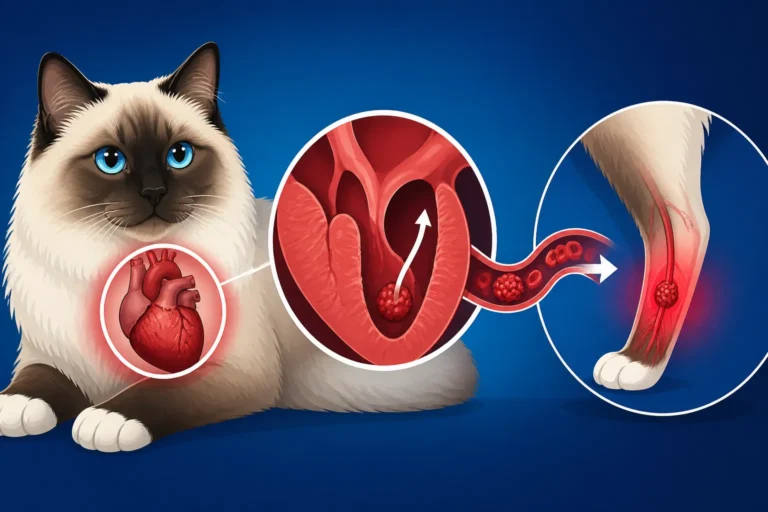
The cruel irony of HCM is that it often progresses silently for a long time. Cats are masters at hiding illness, and a Birman's placid temperament can make it even harder to spot subtle changes. This means that by the time overt symptoms like lethargy, difficulty breathing, or hind leg paralysis (due to a blood clot) become apparent, the disease can be quite advanced. This is precisely why a murmur, even a faint one, in a Birman, acts as a critical early warning signal that demands immediate investigation. Many owners wonder How HCM Shows Up in a Birman. It's often not in obvious ways until it's severe.
Genetic Links and Ancestry
The increased prevalence of HCM in Birmans, much like in Maine Coons and Ragdolls, points strongly to a genetic component. While a specific genetic marker for HCM in Birmans hasn't been identified and widely tested for in the same way it has for some other breeds, the statistical evidence across the breed indicates an inherited susceptibility. This genetic lineage is a direct result of their breeding history, including a very narrow founder base after World War II.
Breeding practices, even with the best intentions, can inadvertently concentrate certain genes within a population. When a breed is re-established from a small number of individuals, as the Birman was, any genetic vulnerabilities present in those founders can become widespread. This means that a murmur in your Birman isn't just a random event; it could be a manifestation of this inherited predisposition. This history underscores why comprehensive screening, including knowing What a Narrow Founder Base Left in the Birman, is paramount for Birman health.
The Silent Nature of Birman Illness
One of the most endearing qualities of the Birman cat is their gentle, calm, and often undemanding personality. They are known for being quiet companions, preferring to be near you rather than constantly in your lap or demanding attention. While this makes them wonderful pets, it also poses a significant challenge when it comes to detecting illness. Birmans are incredibly stoic and will often hide pain or discomfort until it becomes severe.
This "silent illness" trait is a common feline survival instinct, but in a Birman with potential heart disease, it can be particularly dangerous. A cat might be experiencing early signs of heart failure, such as subtle lethargy or a slight decrease in appetite, but their placid nature might lead an owner to dismiss these as just "being a cat" or "getting older." The detection of a heart murmur is often the only early warning sign you'll get for a developing heart condition in a Birman, making that echocardiogram a non-negotiable step. It's a key reason Why a Birman Hides Illness Behind a Placid Temperament.
Why an Echocardiogram is Crucial for a Birman
Okay, so you've heard the 'M' word – murmur. And your vet, knowing you have a Birman, immediately recommends an echocardiogram. Why skip straight to this expensive, specialized test? Why not just monitor? The answer is simple: an echo is the only definitive way to truly understand what's happening inside your Birman's heart.
Think of it this way: a stethoscope is like listening to the engine of a car. You can hear if it's sputtering or making unusual noises. But you can't see if a piston is failing or if a hose is blocked. An echocardiogram, on the other hand, is like getting a full diagnostic scan and a real-time video of that engine working. It allows the cardiologist to see the actual structure and function of the heart, which is essential for accurate diagnosis and effective management, especially for a breed with such specific risks.
What an Echocardiogram Reveals
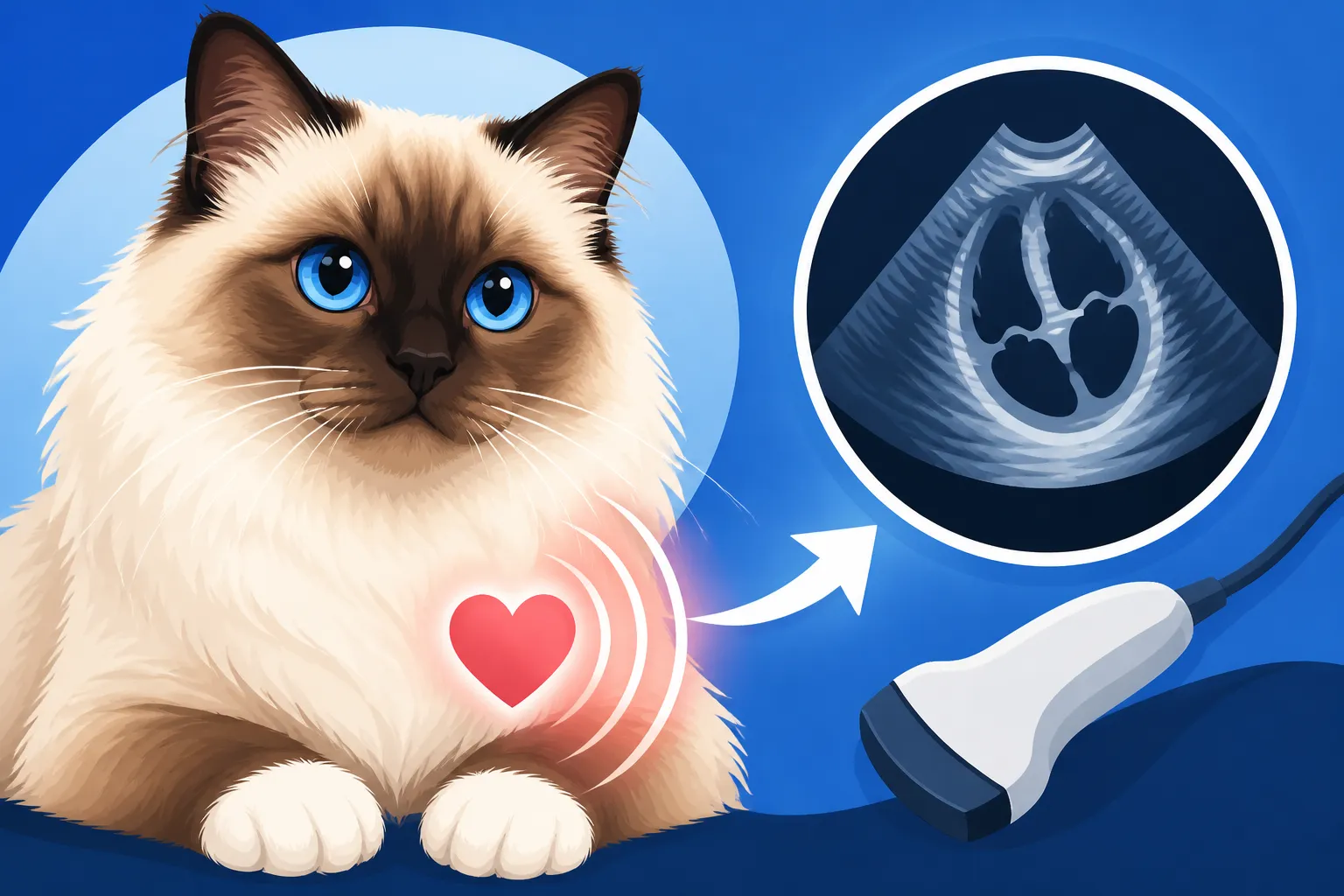
An echocardiogram is a non-invasive ultrasound of the heart. It uses sound waves to create moving images of your Birman's heart in real-time. This sophisticated imaging allows a veterinary cardiologist to visualize the heart's chambers, valves, and major blood vessels. They can measure the thickness of the heart muscle walls, assess the size of the chambers, and observe how well the valves are opening and closing.
More importantly, it allows them to calculate blood flow velocity and detect any abnormalities that might be causing the murmur. For a Birman suspected of HCM, the cardiologist will be meticulously measuring the left ventricular wall thickness and assessing for changes in the papillary muscles. This level of detail is simply impossible with a stethoscope or even an X-ray. It's the difference between hearing a problem and seeing it with your own eyes, making it clear Why an Echo Is the Only Way to Screen a Birman.
Distinguishing Pathological from Physiological Murmurs
One of the most critical functions of an echocardiogram in a Birman with a murmur is to differentiate between a truly problematic "pathological" murmur and an "innocent" or "physiological" one. As we discussed, not all murmurs signify disease. However, without an echo, there's no way to definitively tell if your Birman's murmur is benign or indicative of a serious, progressive condition like HCM.
Imagine opting to just "monitor" a murmur that turns out to be early-stage HCM. Valuable time would be lost, during which the disease could advance, making treatment more challenging and potentially shortening your cat's lifespan. By getting an echo, you gain certainty. If it's an innocent murmur, you can breathe a sigh of relief. If it's pathological, you have the information needed to start appropriate treatment and manage the condition proactively.
The Process of a Birman's Echo Scan
Taking your Birman for an echocardiogram might sound intimidating, but it's usually a very calm and straightforward procedure. Typically, your cat won't need sedation unless they are unusually anxious, which is rare for the generally placid Birman. They'll be gently placed on a special table, often with a cut-out section, allowing the cardiologist to access their chest. A small patch of fur might be shaved on their chest to ensure good contact for the ultrasound probe, and a coupling gel will be applied.
During the scan, the cardiologist will move the probe over different areas of your Birman's chest, capturing images and video of the heart from various angles. The entire process usually takes between 20 to 45 minutes, depending on the cat's cooperation and the complexity of the findings. Most Birmans handle it very well, often purring through the entire procedure. It's a truly remarkable tool that provides immense insight into their heart health, allowing the cardiologist to measure What a Cardiologist Measures on a Birman's Heart Wall.
Interpreting Echo Results and Next Steps
Once the echocardiogram is complete, the veterinary cardiologist will review the images and provide you with a detailed report of their findings. This is often the most nerve-wracking part for owners, as you're finally getting concrete answers. Regardless of the outcome, whether your Birman has a perfectly healthy heart or an early diagnosis of HCM, knowing is always better than guessing. It allows you to make informed decisions about your cat's care and future.
If your Birman's heart is clear, congratulations! You can breathe a huge sigh of relief, though your vet might still recommend periodic checks, especially if the murmur was initially concerning. If HCM or another heart condition is diagnosed, it's certainly upsetting, but it's not the end of the world. Many cats with heart disease can live long, comfortable lives with proper management.
Understanding an HCM Diagnosis
If your Birman is diagnosed with hypertrophic cardiomyopathy, the cardiologist will explain the severity and extent of the thickening, as well as any other associated issues like left atrial enlargement or evidence of congestive heart failure. They'll classify the disease into stages, from asymptomatic (Stage B1 or B2, depending on risk factors) to more advanced stages where symptoms are present (Stage C) or end-stage (Stage D).
This staging is crucial because it dictates the treatment plan. An asymptomatic Birman might be prescribed medication to slow the progression of the disease and prevent complications, even if they aren't showing any symptoms yet. For cats with more advanced disease, medications will focus on managing symptoms, improving heart function, and preventing complications like blood clots. It’s a lot to take in, but remember you’re not alone in navigating this.
Managing a Birman with Heart Disease
Living with a Birman diagnosed with heart disease means committing to a new routine of care, but it’s entirely manageable. The cardiologist will develop a tailored treatment plan, which typically includes daily medications. These might include beta-blockers, ACE inhibitors, or diuretics, depending on the specific findings and stage of the disease. You'll need to learn how to administer these medications, often hidden in treats or food, which Birmans typically take well.
Regular follow-up appointments with the cardiologist will be essential, usually every 6-12 months, to monitor the progression of the disease and adjust medications as needed. This often includes repeat echocardiograms to see how the heart is responding to treatment. Dietary changes might also be recommended, particularly focusing on heart-healthy foods and ensuring adequate hydration. Keeping your Birman calm and minimizing stress is also important, as sudden stressors can impact heart function. It's good to understand Which Drugs a Birman Goes On After an HCM Diagnosis.
The Importance of Regular Monitoring
Beyond specialist appointments, you, as the owner, become a vital part of your Birman's ongoing care. Daily monitoring at home is incredibly important. This involves watching for subtle changes in their behavior, appetite, activity level, or breathing. Signs like increased lethargy, coughing, difficulty breathing (especially with an open mouth), or sudden weakness in the hind legs are emergencies that require immediate veterinary attention.
Your vet might also recommend learning how to count your Birman's resting respiratory rate at home. This simple, non-invasive check can be an early indicator of fluid accumulation in the lungs (a sign of congestive heart failure). By being vigilant and reporting any changes to your veterinary team promptly, you play a huge role in maintaining your Birman's quality of life and potentially extending their time with you. Remember, How Long a Birman Lives After Its Heart Is Diagnosed can depend a lot on early detection and consistent management.
Here's a quick overview of what to expect during a Birman's heart check:
| Procedure | Purpose | Birman Specific Importance | Frequency (General) |
|---|---|---|---|
| Auscultation | Listen for murmurs, abnormal rhythms | Initial screening, often first indicator in a predisposed breed | Every veterinary visit |
| Echocardiogram | Visualize heart structure & function; confirm HCM | Crucial for Birmans due to HCM predisposition and silent nature | Annually for breeding cats; as needed for pets with murmur |
| X-rays | Check for lung congestion, heart enlargement | Assess for congestive heart failure, fluid in lungs | As needed based on symptoms |
| Blood Pressure | Detect hypertension | Can be associated with heart disease or other conditions | Annual for older cats; as needed |
| Blood Tests | Rule out hyperthyroidism, kidney disease | Helps identify other causes of murmurs or co-existing conditions | Annual wellness panels |
Proactive Measures and Breeder Responsibility
While the discovery of a heart murmur is often a shock, it also highlights the critical importance of proactive health measures and responsible breeding practices. As an owner, you want to do everything you can to ensure your Birman lives a long, healthy life. This includes staying informed and establishing a strong partnership with your veterinary team. If you're considering getting a Birman kitten, understanding the breeder's screening protocols is paramount.
For breeders, the responsibility is even greater. They are the guardians of the breed's health, and their commitment to screening can significantly reduce the incidence of inherited diseases like HCM. By working together, owners and breeders can contribute to a healthier future for this wonderful breed.
Breeder Screening Protocols
Reputable Birman breeders understand the genetic risks associated with HCM and take proactive steps to minimize them. This includes regular echocardiogram screenings of all their breeding cats, typically on an annual basis. They should be transparent about these results and be willing to share documentation from a board-certified veterinary cardiologist. Always ask breeders about How Often a Breeding Birman Needs Scanning.
A responsible breeder will not breed any cat diagnosed with HCM, regardless of how mild the condition might seem. They should also be careful about breeding cats from lines with a high incidence of HCM. While there isn't a genetic test for Birman HCM yet, consistent echo screening remains the gold standard for reducing the disease's prevalence in the breed. If a breeder hesitates to provide health certificates or seems dismissive of heart screening, consider that a major red flag. In fact, if you're looking for a kitten, you should inquire Why a Birman Breeder Publishes Echo Results.
Lifelong Veterinary Care for Your Birman
Beyond breeder screening, consistent and thorough veterinary care throughout your Birman's life is essential. This starts with regular kitten check-ups and continues with annual wellness exams. During these routine visits, your vet will perform a thorough physical examination, including listening carefully to your Birman's heart. These annual checks are the primary way a murmur might be detected early.
As your Birman ages, their veterinary needs will evolve. For Birmans, specifically, vets often recommend starting more intensive screenings for heart health around middle age, even if no murmur has been detected. This proactive approach helps to catch any developing issues before they become symptomatic. Knowing The Age a Birman Starts Needing Yearly Heart Checks can help you plan with your vet. Many cats can live many years How Many Years a Birman From Echo Scanned Lines Lives if health is prioritized.
Financial Planning for Heart Health
Let's be realistic: specialized veterinary care, like an echocardiogram and ongoing management of heart disease, can be expensive. An echocardiogram performed by a board-certified cardiologist can cost several hundred dollars, and ongoing medications and follow-up scans can add up over time. This is a common worry for cat owners, and it's completely understandable to feel overwhelmed by the potential costs.
This is where planning ahead can make a huge difference. Pet insurance, like that offered by companies such as Healthy Paws, can be an invaluable investment. Comprehensive pet insurance plans often cover a significant portion of diagnostic tests, specialist consultations, medications, and emergency care related to heart conditions. While policies vary, getting insurance when your Birman is young and healthy, before any pre-existing conditions are diagnosed, is the best way to ensure you have financial support if a health issue like HCM arises. Even without insurance, having a dedicated savings fund for unexpected veterinary expenses is a responsible choice for any pet owner, especially with a breed like the Birman.
Disclaimer
This article is for general informational purposes only and does not constitute professional advice. Laws, prices and regulations vary by location and change over time. Consult a qualified professional for guidance on your specific situation.