How a Birman’s Thickened Heart Throws a Clot to Its Legs
One of the most terrifying things a Birman parent can experience is seeing their beloved cat suddenly unable to use their back legs, cold to the touch, and clearly in immense pain. This often happens without much warning, leaving you scrambling to understand what's gone wrong. This guide aims to shed light on how a serious heart condition common in Birmans, Hypertrophic Cardiomyopathy (HCM), can lead to blood clots that travel to and block circulation in their legs, and what you need to know about this critical situation.
Understanding Hypertrophic Cardiomyopathy (HCM) in Birmans
When we talk about HCM in cats, especially Birmans, we're discussing a condition that often develops silently, hidden beneath their placid and undemanding nature. It’s a primary disease of the heart muscle, meaning it’s not caused by another underlying illness, but rather a thickening of the left ventricular wall. This thickening reduces the heart's ability to pump blood effectively, impacting their overall health and setting the stage for more severe complications.
The Silent Threat of HCM in Birman Cats
It's heartbreaking to think that a cat can be living with a serious heart condition without showing any obvious symptoms. Birmans are notoriously good at masking illness, a trait that goes back to their evolutionary roots where showing weakness made them vulnerable. This means that by the time overt signs of HCM appear – like lethargy, difficulty breathing, or a sudden loss of appetite – the disease might already be quite advanced. Many Birmans live with mild to moderate HCM for years, with owners being completely unaware until a crisis hits. This is why regular veterinary check-ups are so crucial, especially for breeds like the Birman. Early detection through routine screenings, even when your cat seems perfectly healthy, can make a world of difference. You can read more about how HCM shows up in a Birman to better understand the nuances.
How HCM Impacts the Heart's Function
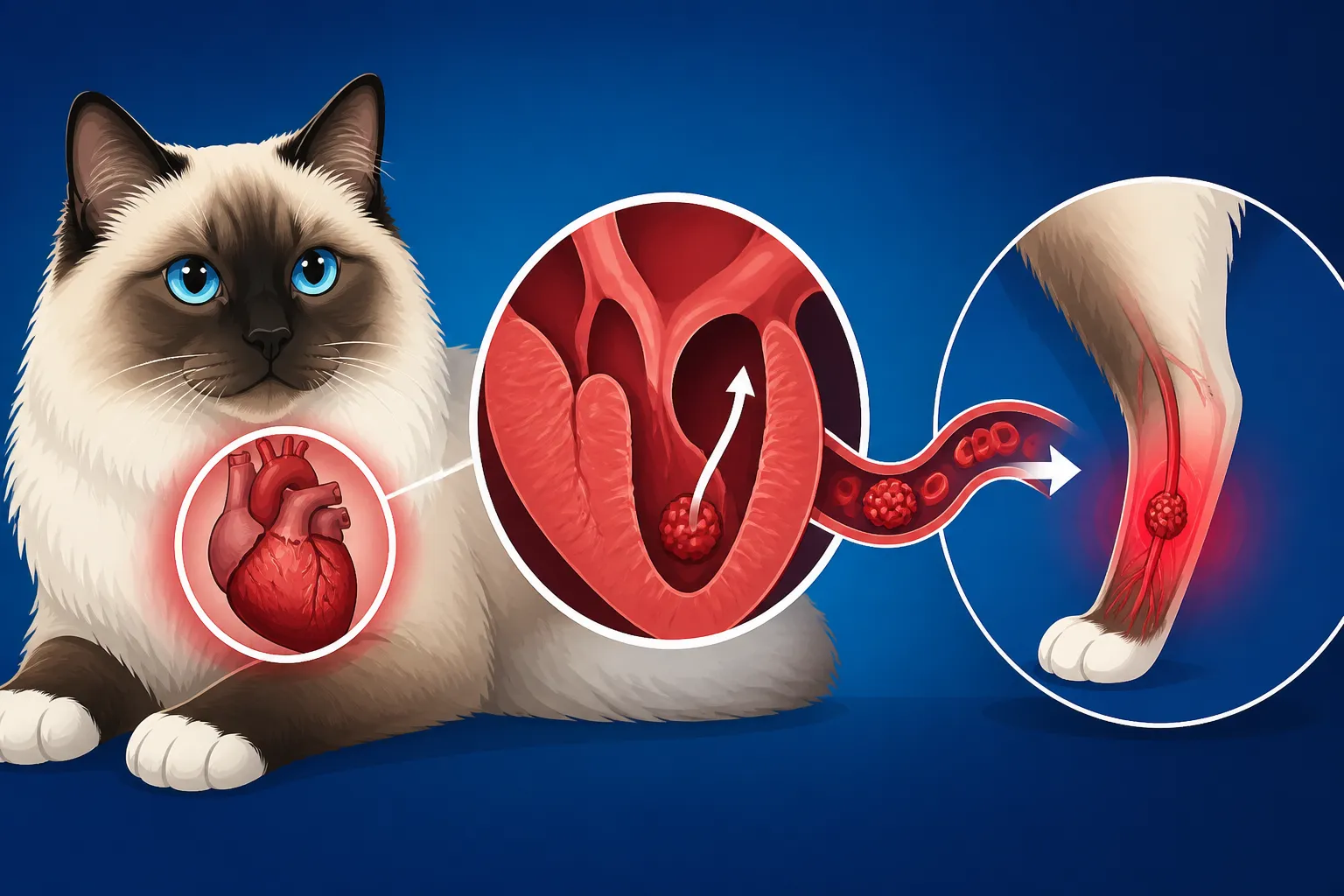
At its core, HCM makes the heart muscle, specifically the left ventricle, abnormally thick. Imagine a robust, flexible balloon that’s supposed to inflate and deflate easily with each beat. In a cat with HCM, that balloon becomes stiff and thick-walled, making it much harder to fill with blood between beats. This reduces the amount of blood the heart can pump out to the rest of the body, leading to a host of problems. The heart has to work much harder to move blood through the narrowed chambers, which can eventually lead to heart failure. The enlarged muscle also means there's less space for the blood to flow through efficiently, and the turbulence created by this abnormal flow can contribute to the formation of blood clots, which is where things can become critically dangerous.
The Formation and Journey of a Blood Clot
The connection between a thickened heart and a blood clot in the legs might seem a bit abstract, but it's a very real and devastating progression that Birman owners must be aware of. The irregular blood flow within an HCM-affected heart creates the perfect environment for these clots to form.
Why Blood Clots Form with HCM
When the heart's chambers are enlarged or the blood flow is turbulent due to the thickened muscle, blood can become stagnant in certain areas, particularly in the left atrium. Stagnant blood, combined with the often irregular inner surface of a diseased heart, provides an ideal breeding ground for clots to develop. These clots, medically known as thrombi, are essentially clumps of blood cells and fibrin that solidify. While they start small, they can grow over time. Once formed, there's always a risk that a piece of this clot can break off and travel through the bloodstream, becoming what we call an embolus. This is a ticking time bomb within your cat's circulatory system.
The Saddle Thrombus and Its Devastating Effects
When an embolus breaks away from the heart, it's carried by the arterial blood flow to various parts of the body. However, in cats, a particularly common and devastating event occurs when the clot travels down the aorta, the body's main artery, and lodges at a point where the aorta branches into smaller arteries supplying the hind legs. This location is called the aortic bifurcation, and the clot is known as a "saddle thrombus" because it often "saddles" this crucial junction, blocking blood flow to both back legs.
The immediate effect is catastrophic: blood supply to the muscles and nerves of the hind limbs is severely compromised. Without oxygen and nutrients, the tissue begins to die, leading to immense pain, paralysis, and the characteristic coldness in the affected limbs. This is why a Birman's back legs go cold and useless in an hour when this happens. It's a sudden, acute crisis that demands immediate action.
Recognizing the Signs and Immediate Actions
Knowing the signs of a blood clot is paramount for any Birman owner, as swift action can be the only chance your cat has. This isn't a situation where you can "wait and see"; it's an emergency.
Sudden Onset: A Critical Indicator of a Clot
The hallmark of a saddle thrombus is its sudden and dramatic onset. One moment your Birman might be walking around, perhaps a bit slower than usual if they have undiagnosed HCM, and the next they are in extreme distress. You might observe:
- Sudden Lameness or Paralysis: Typically affecting one or both hind legs. Your cat might drag their legs, be unable to stand, or fall over.
- Intense Pain: They may cry out, pant, hide, or become unusually aggressive due to the excruciating pain. They might also excessively lick or bite at their hind legs.
- Cold Limbs: The affected legs will feel noticeably cold to the touch compared to the rest of their body, due to the lack of blood flow.
- Firm Leg Muscles: The muscles in the affected legs may feel very hard and tense.
- Absence of Femoral Pulses: A veterinarian will check for a pulse in the femoral artery (inner thigh), which will be weak or absent.
This situation is incredibly distressing for both cat and owner. Remember that even a quiet Birman will struggle to hide this level of pain. If you suspect a clot, every second counts.
Emergency Veterinary Care and Prognosis
If you ever witness these symptoms, drop everything and get your Birman to an emergency veterinary clinic immediately. This is a life-threatening event. There isn't time to call your regular vet for an appointment; you need an emergency vet who can provide critical care.
At the vet, they will confirm the diagnosis through physical examination, possibly Doppler ultrasound to check blood flow, and blood tests. Treatment typically involves aggressive pain management, medication to dissolve the clot (thrombolytics, though these carry risks and are not always used), and anti-coagulants to prevent further clot formation. Supportive care, including IV fluids and careful monitoring, is also essential.
The prognosis for a cat with a saddle thrombus is unfortunately guarded to poor, especially if treatment is not initiated very quickly. Even with successful clot management, there is a risk of recurrence, and the underlying HCM still needs long-term management. This is a profound moment where you might consider the options, understanding that How Long a Birman Lives After Its Heart Is Diagnosed with such a severe complication can be quite limited. Insurance providers like Healthy Paws often cover emergency veterinary care, but it’s always best to check your specific policy details for conditions like HCM and its complications.
Managing HCM and Preventing Clots
While the thought of a saddle thrombus is terrifying, there are proactive steps Birman owners can take to manage HCM and reduce the risk of clot formation.
Regular Screening for Early Detection
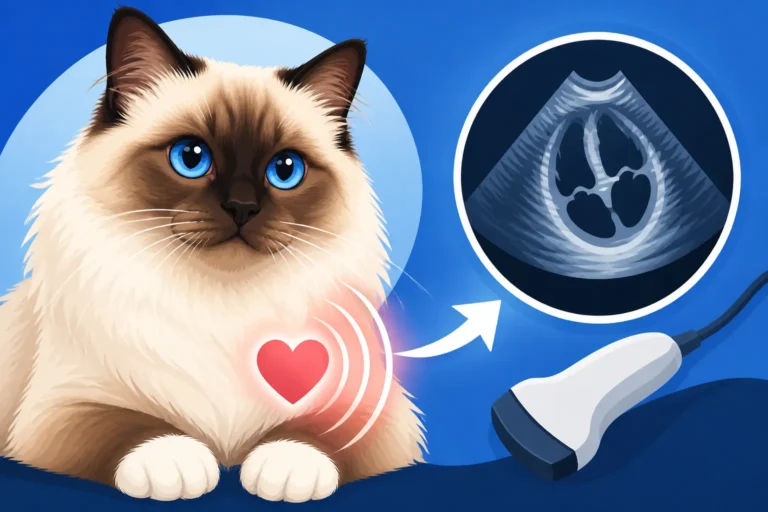
The single most important thing you can do for your Birman's heart health is to ensure regular screening, especially if they are part of a breeding program. The gold standard for diagnosing HCM is an echocardiogram, a specialized ultrasound of the heart. This allows a veterinary cardiologist to visualize the heart's structure and function, measure wall thickness, and assess blood flow.
Sadly, HCM in a Birman Has No DNA Test, Only an Echo, which means regular physical examinations and cardiac auscultation (listening to the heart) are also crucial. If a vet hears a heart murmur, it's a strong indicator that an echo is needed. This is why a murmur in a Birman sends you straight to an echo, not just a watchful waiting period. For breeding Birmans, this becomes even more critical, and you can learn more about how often a breeding Birman needs scanning to maintain healthy lines. Even if your Birman is a cherished pet and not part of a breeding program, regular check-ups that include heart evaluations are vital, particularly as they reach The Age a Birman Starts Needing Yearly Heart Checks.
Medical Management and Supportive Care
Once HCM is diagnosed, your veterinarian, often in consultation with a veterinary cardiologist, will develop a treatment plan. The goal of medical management is to improve heart function, alleviate symptoms, and critically, reduce the risk of blood clot formation.
Common medications include:
- Beta-blockers or Calcium Channel Blockers: These help the heart relax and fill more effectively, and reduce the heart rate.
- Diuretics: If fluid buildup (congestive heart failure) is present, diuretics help remove excess fluid from the body.
- ACE Inhibitors: These medications help to relax blood vessels and reduce the workload on the heart.
- Anti-coagulants (e.g., Clopidogrel): These are often prescribed to high-risk cats with HCM to reduce the likelihood of blood clot formation. They work by making the platelets less sticky, thus inhibiting clot development.
Supportive care also plays a role. Maintaining a healthy weight, providing a low-stress environment (as stress can exacerbate heart conditions), and ensuring a diet that supports heart health can contribute to your Birman's well-being. Keeping up with these recommendations can be daunting, but organizations like Healthy Paws can often help with the financial burden of chronic condition management, which can be considerable when a Birman goes on multiple medications. It's a continuous journey of care and observation, aiming to give your beloved companion the best quality of life possible.
Here's a quick reference table to help distinguish symptoms:
| Symptom | Mild Discomfort (General Illness/Arthritis) | Acute Saddle Thrombus (Emergency) |
|---|---|---|
| Onset | Gradual, worsens over hours/days | Sudden, catastrophic (minutes to an hour) |
| Pain Level | Moderate, may vocalize when touched | Extreme, incessant crying/yowling, panting |
| Leg Function | Limping, reluctance to jump/move, stiffness | Complete paralysis of one or both hind legs |
| Leg Temperature | Normal or slightly cool | Ice cold to the touch |
| Leg Appearance | Normal, possibly some swelling/tenderness | Often firm, discolored (pale/bluish) |
| Femoral Pulse | Present and strong | Weak or absent in affected leg(s) |
| Behavior | Hiding, less playful, reduced appetite, quiet | Thrashing, biting at legs, severe agitation, distress |
Always remember, if you're in doubt, err on the side of caution and consult your veterinarian immediately. When it comes to a Birman's heart health, especially with the risk of clots, proactive care and rapid response are absolutely key to their survival and quality of life.
Disclaimer
The information provided in this guide is for informational purposes only and does not constitute veterinary advice. Always consult with a qualified veterinarian for any health concerns or before making any decisions about your pet's medical care.