How Long the Birman Took to Breed True Again
The Birman almost disappeared during the Second World War, leaving breeders with a tiny foundation from which to rebuild the breed. Getting recognizable Birmans again was not a matter of pairing two surviving cats once; it required careful outcrossing, selection across generations, and time for the breed’s defining traits to appear consistently.
What “breeding true” meant for the Birman
A recognizable breed, not just a pair of similar cats
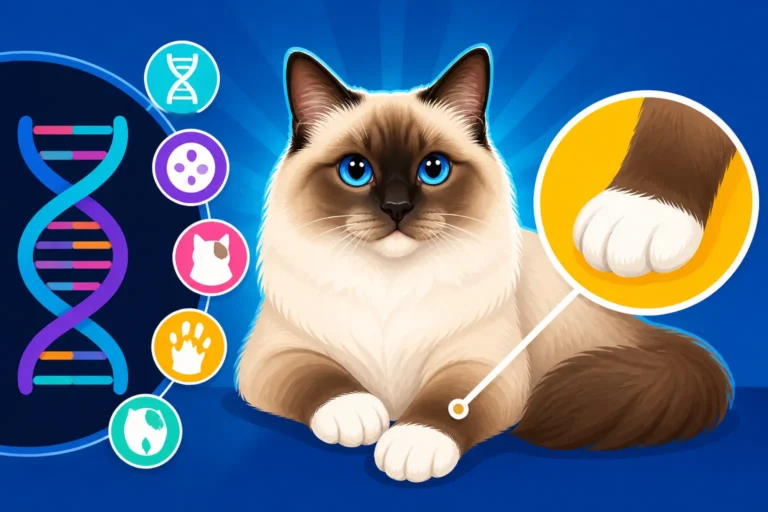
When breeders say a cat breed “breeds true,” they mean that its kittens reliably show the traits associated with that breed. For Birmans, those include a pointed coat, blue eyes, white feet, and a particular longhaired appearance and body type. A litter need not be identical in every detail, but the kittens should consistently fit the breed’s recognizable pattern.
That consistency takes more than looks. Breeders also need to preserve sound health, temperament, and a workable range of genetic diversity. After a near-collapse, those aims can pull in different directions: a very small group of related cats may share the desired appearance, but relying on them alone can narrow the gene pool further.
So “breeding true again” does not mean that every cat immediately became genetically identical or that all outside ancestry vanished. It means breeders gradually produced generations that reliably met the Birman type and could be bred as Birmans under the rules and expectations of the time. The distinction matters when reading claims about the breed’s postwar recovery.
Why the Birman needed rebuilding
The war disrupted catteries, breeding records, and the ordinary ability to keep cats alive and reproduce them. The Birman’s already limited population was hit especially hard. Historical accounts commonly describe only a pair of Birmans remaining available to breeders in France after the conflict, often named Orloff and Xenia de Kaabaa. The details of the surviving population are not always presented identically, but the central point is clear: there were too few unrelated cats to rebuild a healthy, stable breed using only the survivors.
The scale of that loss helps explain why postwar breeders had to make difficult choices. A breeder cannot create a broad, healthy population from a handful of cats simply by waiting for more kittens. Without other suitable cats, the same close relationships would recur in the pedigrees, increasing the risk of concentrating inherited problems as well as desired features.
For a deeper look at the small group at the center of the recovery, see The Birman Came Out of the War With Two Cats Left and Which Two Cats Rebuilt the Birman. These accounts help put the phrase “bred true again” in context: the process began with survival and reconstruction, not with a large, established population.
How postwar breeders restored the breed
Outcrossing supplied options the survivors could not
To expand the available breeding pool, breeders used cats from outside the remaining Birman population. Historical breed accounts describe outcrosses to other longhaired cats, including Persians, and also refer to Siamese ancestry in the rebuilding period. The exact combinations and individual pedigrees can be difficult to reconstruct from brief summaries, so it is safer to think of the recovery as a breeding program rather than a single, neat cross.
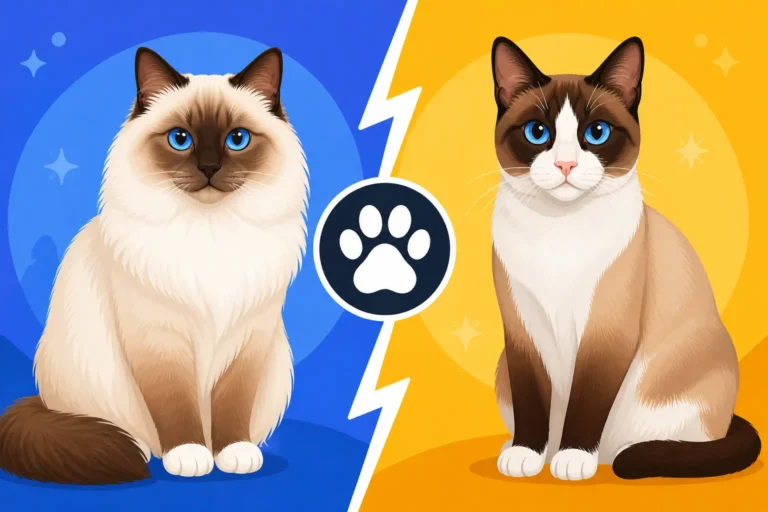
Outcrossing gave breeders more possible pairings and helped prevent the entire recovery from depending on repeated close matings among a tiny number of survivors. But it also meant that the early generations did not automatically look exactly like the Birman standard. Kittens could inherit combinations of coat, body, head, and color traits that breeders did not want to retain in the emerging breed.
That is why outcrossing was only the beginning. Breeders had to select which offspring would continue in the program, choosing cats that carried the desired Birman appearance while also being suitable to breed. The history is explored further in Why Birman Breeders Had to Outcross and Which Longhairs Rebuilt the Birman After 1945.
Selection brought the Birman type back into focus
A planned recovery depends on repeated choices across litters. Breeders would retain or use cats that best matched the desired type, then pair them with other suitable cats. Over successive generations, this kind of selection can make key traits more consistent. It is not an instant transformation, and not every kitten in every litter will look like a show-quality Birman.
Imagine a litter in which some kittens have the coat and points breeders want, while others show more obvious traits from an outcross ancestor. A breeder focused on rebuilding the breed would assess the whole cat, not just one attractive feature. The question would be whether a kitten could contribute to a stable Birman type in future generations, alongside considerations such as health and temperament.
This also explains why “a Birman was crossed with another breed” does not mean that the modern breed is simply that cross. A cross introduces variation; sustained selection shapes the population that follows. For a related look at how the breed’s postwar history affected its ancestry, read Whether Persian Blood Is in Every Modern Birman and What Persian Blood Brought Into the Birman.
How long did it take to breed true again
The answer is measured in generations, not one decisive date
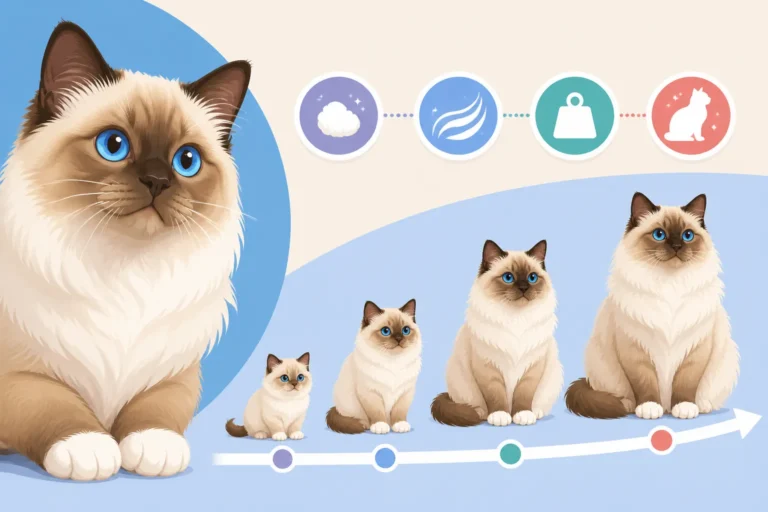
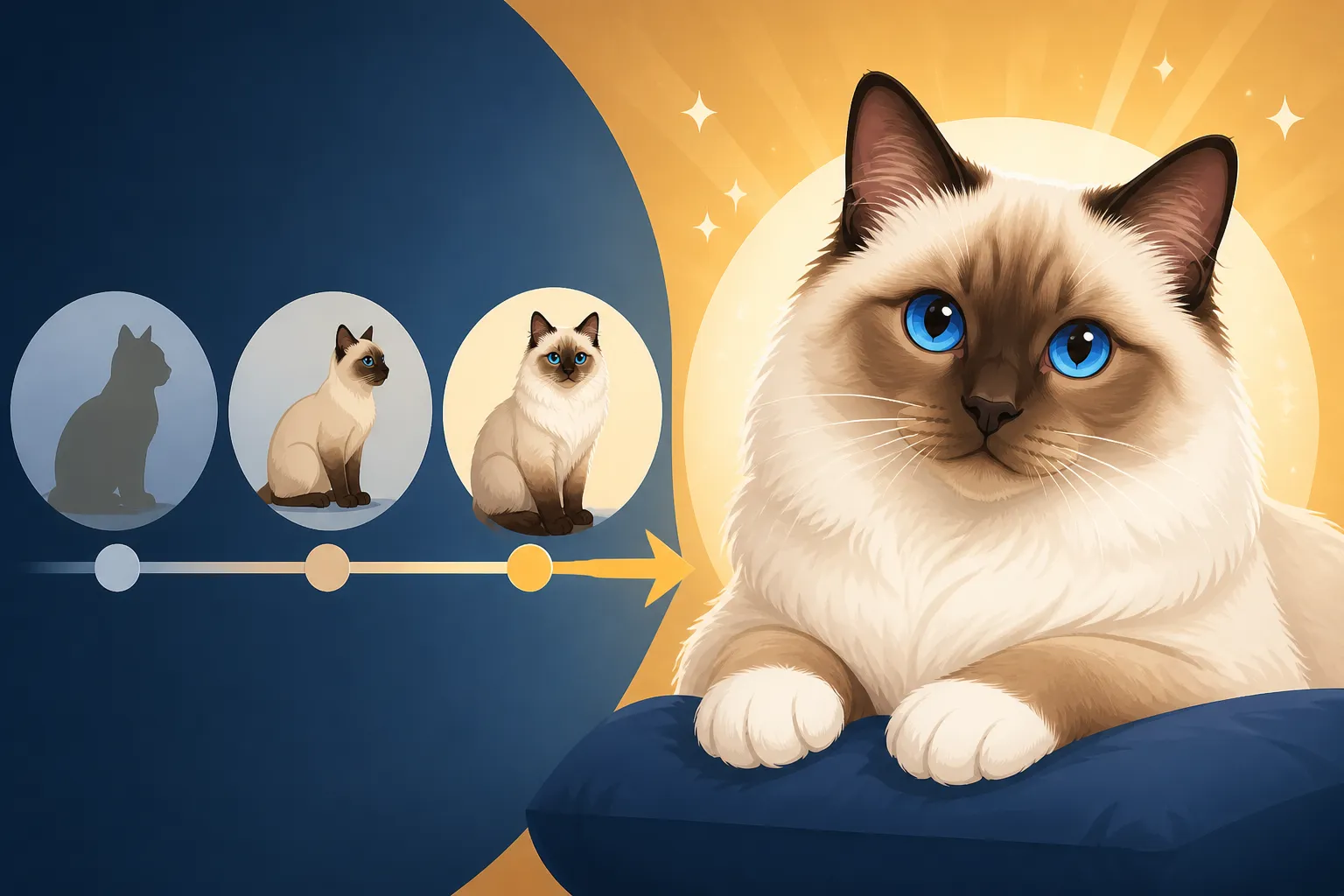
There is no single day on which the Birman suddenly became a stable breed again. The rebuilding took place over multiple generations after the war, as breeders selected cats that increasingly matched the expected Birman type. The most useful answer is therefore “several years and successive generations,” rather than a precise number of months or one universally agreed cutoff.
Milestones can still help orient the timeline. The breed was recognized in France before the war, but that earlier recognition did not mean it remained intact through the conflict. In the postwar period, breeders had to re-establish a population capable of producing consistent Birman litters. Accounts place the return to reliable, recognizably Birman breeding in the years following the war, with formal recognition and expansion following as the population recovered.
The distinction between a breeding milestone and a registry milestone is important. A registry may formally recognize a breed at a particular point, while breeders may have been producing increasingly consistent cats before that decision. Conversely, recognition alone does not mean every cat in the population suddenly had the same ancestry or identical features. When Pure Birman Litters Resumed is useful for understanding that practical stage of the recovery.
Why sources may describe the timeline differently
Different accounts may focus on different parts of the process: the war’s survivors, the first postwar pairings, the return of litters that looked consistently like Birmans, or official recognition. Those events are related, but they are not interchangeable. A short account that gives one date may be referring to a registry decision, while another may be describing breeders’ progress.
The term “pure Birman litter” also needs care. In breed histories, it generally refers to cats regarded as Birmans within the developing breeding program and registration system. It does not necessarily mean that every ancestor in the early reconstruction was a Birman. That would be an impossible standard for a population that had to be rebuilt through outcrossing.
| Milestone | What it tells you | What it does not necessarily mean |
|---|---|---|
| A small number of survivors remained | The breed faced an urgent population bottleneck | That those cats alone could safely rebuild the breed |
| Breeders used outcrosses | New genetic options entered the program | That the resulting kittens immediately matched the Birman type |
| Breeders selected suitable offspring | Desired features became more consistent over generations | That every kitten in every litter was identical |
| Pure-looking litters resumed | Breeders were again producing cats recognized as Birmans | That all outside ancestry had disappeared |
| A registry recognized the breed | The breed reached an official administrative milestone | That recognition and genetic recovery happened on the same date |
The safest summary is that the Birman took a number of postwar generations to recover a consistent breed type. The process was gradual, and the surviving evidence does not support reducing it to a single magical pairing or a universally agreed exact duration.
What the recovery means for the Birman today
A restored appearance does not erase the bottleneck
The Birman’s recovery shows how careful breeding can restore a recognizable type after a population crash. It does not mean that the genetic consequences of a narrow founder base vanish. When a population is rebuilt from very few animals, later generations may still share ancestry more closely than a casual look at their pedigrees suggests.
That is one reason responsible breeding involves more than selecting cats with beautiful blue eyes and neat white gloves. Breeders also consider health information, family history, and appropriate pairings. A pedigree can describe ancestry, but it cannot by itself guarantee a cat’s health. For the broader question of whether the breed’s population is genetically secure, see Whether the Birman's Gene Pool Is Safe Now.
For someone choosing a kitten, this history is a reason to ask calm, specific questions rather than assume that the breed’s recovery automatically settled every health concern. Ask what health screening is appropriate for the line, whether results are available, and how the breeder makes mating decisions. Clear answers and records are more useful than a sweeping claim that a whole breed is “healthy” or “risk-free.”
The history is separate from ordinary day-to-day care
A Birman’s postwar history does not change the basics of living with one now: routine veterinary care, a balanced diet, enrichment, and regular coat checks still matter. The breed’s silky coat can look demanding, but many owners find that a steady combing habit is easier than waiting until a small tangle becomes a frustrating mat.
If you are preparing for a Birman, make a practical list of what your household needs: a comb suited to fine coat, a carrier, litter supplies, and places to rest and perch. Chewy is one retailer where owners may look for routine pet supplies, but check that any item suits your cat’s size and needs rather than choosing by breed label alone. A comb that works for one coat may not be comfortable for another.
Chewy may also be a convenient place to compare ordinary grooming and feeding supplies, while a veterinarian or breeder can help with questions specific to your cat. For example, if you are unsure whether a grooming tool is too harsh for a Birman’s coat, ask someone familiar with the breed before using it regularly. A sensible setup is less about buying a long list of products and more about having a few tools you can use gently and consistently.
The breed took generations to regain a consistent type because rebuilding a population is slow, deliberate work. That history helps explain both the Birman’s resilience and why responsible breeding still depends on thoughtful records, sound health decisions, and care that goes beyond appearance.
Disclaimer
This article is for general informational purposes only and does not constitute professional advice. Laws, prices and regulations vary by location and change over time. Consult a qualified professional for guidance on your specific situation.