How a Birman Differs From a Snowshoe
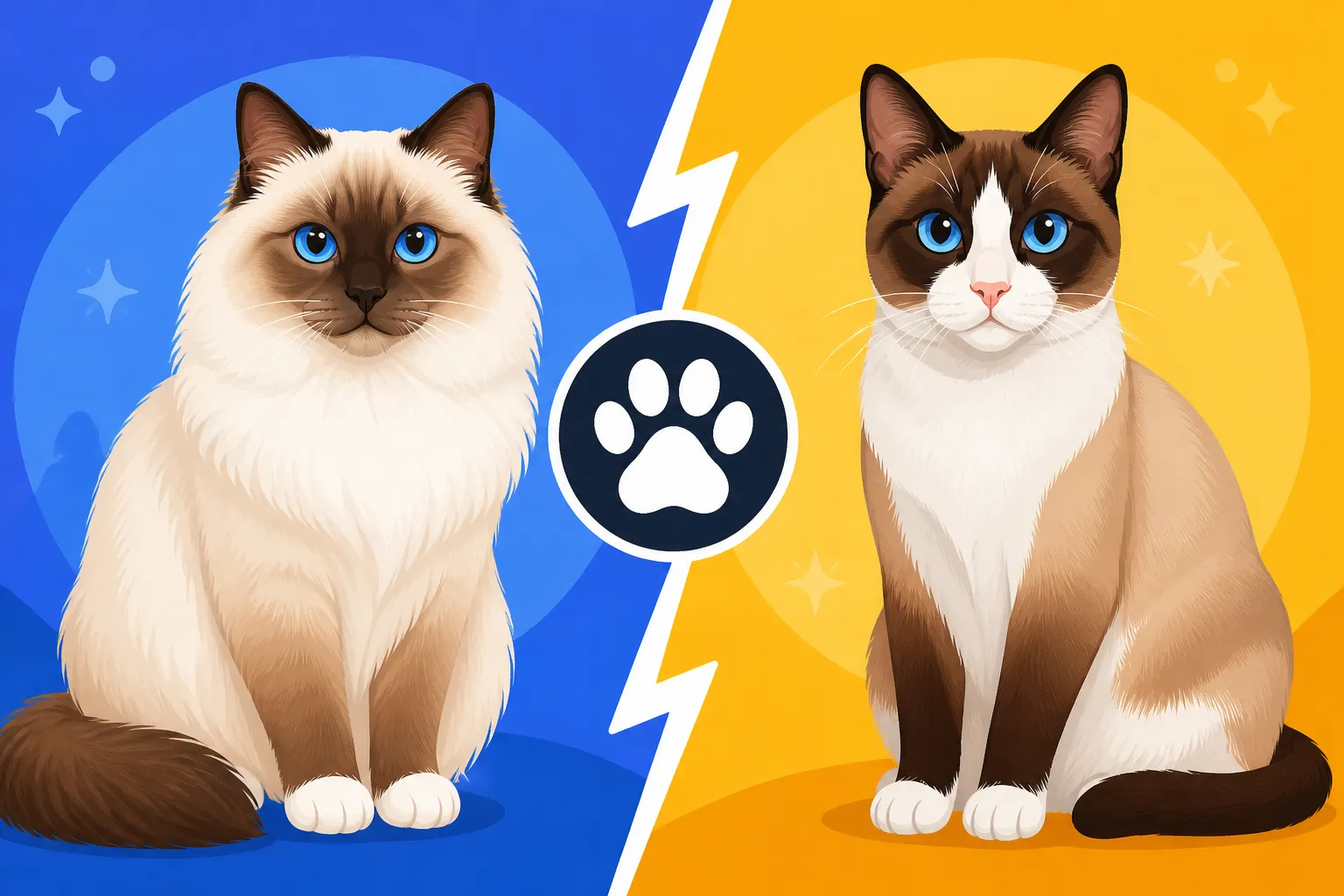
One common point of confusion for cat lovers, especially when looking at pictures online or visiting a new cattery, is distinguishing between pointed breeds with white markings. It’s easy to glance at a photo and wonder if you're looking at a Birman or a Snowshoe, as both breeds possess stunning blue eyes and striking color point patterns. This guide is here to untangle those visual similarities and explore the distinct characteristics that truly set the Birman apart from the Snowshoe, helping you appreciate the unique beauty and personality of each.
Understanding the Birman: A Brief Overview
The Birman, often called the "Sacred Cat of Burma," carries with it a rich history steeped in legend and grace. It's a breed that has captivated hearts for generations with its gentle nature and striking appearance. When we talk about the Birman, we're discussing a cat whose very essence is defined by a beautiful balance of elegance and serenity.
Origins and Temperament
The Birman's origins are famously shrouded in the mystic legends of Burmese temples, where these cats were said to be companions to priests, guardians of sacred places. The tales speak of a white temple cat named Sinh, whose transformation gave the breed its distinctive features. While the historical accuracy of these legends is debated, they certainly paint a vivid picture of a cat revered for its beauty and calm demeanor. Modern genetic studies actually suggest a more European origin, likely involving crosses with Siamese and Persian cats to develop the breed we know today. You can learn more about its journey in Which Cats the First French Birmans Were Crossed With.
Temperamentally, the Birman is renowned for being incredibly placid and gentle. They are not typically boisterous or demanding, preferring to be near their human companions rather than constantly in their laps. A Birman will often follow you quietly from room to room, settling into a comfortable spot nearby, content just to be in your presence. They are known for their sweet, affectionate nature, making them wonderful family pets. This calm disposition is one of their most defining traits, leading many to say that Why a Birman Is the Cat Families Are Told to Get.
Signature Physical Traits
The Birman's appearance is nothing short of breathtaking, characterized by its color-pointed coat, deep blue eyes, and, most distinctively, its pure white "gloves" on all four paws. The body is typically a golden fawn, with points (ears, face, legs, and tail) in various shades like seal, blue, chocolate, lilac, red, or cream. Each kitten is born almost entirely white, with its points gradually darkening as it matures, a process influenced by temperature.
The "gloves" are paramount to the Birman standard. These are specific white markings on the paws: perfectly symmetrical white socks on the front feet, and white "laces" running up the back of the hind legs, ideally ending in a neat V-shape. The strictness of these markings is a hallmark of the breed, and breeders dedicate considerable effort to achieving them. These unique white markings are not just random white spots; they are a genetic trait that every Birman carries two copies of, known as The Gloving Gene Every Birman Carries Two Copies Of.
Introducing the Snowshoe: A Unique American Breed
Across the ocean, in the United States, another beautiful pointed cat breed emerged, also sporting white feet, but with a very different lineage and personality: the Snowshoe. This breed, while sharing some visual similarities with the Birman, tells a completely different story.
History and Personality
The Snowshoe breed is a relatively modern creation, originating in the 1960s in Philadelphia, Pennsylvania. A Siamese breeder noticed three kittens in a litter with white feet, and, intrigued by their unique look, decided to develop a new breed. These original kittens were then crossed with American Shorthairs and other Siamese lines to establish the desired traits: a color-pointed coat with white markings and stunning blue eyes, combined with a robust, well-muscled body. The name "Snowshoe" itself is a clear nod to their distinctive white paws.
In terms of personality, Snowshoes tend to be quite different from the Birman's quiet grace. They are often described as active, intelligent, and quite vocal cats. While not as loud or insistent as some traditional Siamese, they definitely have a voice and aren't shy about using it to "chat" with their human companions. They thrive on interaction and often form strong bonds with their families, enjoying games, puzzles, and even learning tricks. If you're looking for a cat that's always involved in your activities and ready to play, a Snowshoe might be a perfect fit. They're often compared to dogs in their loyalty and playful spirit.
Distinguishing Features
Like the Birman, the Snowshoe is a color-pointed breed with brilliant blue eyes. Their body color can also range from fawn to cream, with points in various shades like seal, blue, chocolate, or lilac. However, the nature and presentation of their white markings are distinctly different from the Birman's highly specific "gloves."
Snowshoes have white markings that can appear on their face, chest, and paws. These white markings on the paws, which give them their "snowshoe" name, are much more variable than the Birman's strict standard. They might have white socks of varying lengths, or larger white patches. There isn't the same emphasis on symmetrical front gloves and precise back laces. The facial markings often include an inverted white "V" blaze, but this isn't a mandatory trait, and many Snowshoes have a solid-pointed face. Their body type is generally more athletic and medium-built, leaning towards the Siamese's svelter frame rather than the Birman's semi-cobby structure.
The Defining Difference: White Markings and Genetics
When placed side-by-side, the most immediate and striking difference between a Birman and a Snowshoe lies in their white markings. While both breeds sport white on their paws, the genetics, uniformity, and breed standards governing these markings are worlds apart. This distinction isn't just cosmetic; it reflects fundamental differences in how these breeds were developed and how their unique appearances are maintained.
Birman Gloves: A Fixed Trait
For the Birman, the white "gloves" are not merely a desirable trait; they are an absolute defining characteristic of the breed, enshrined in every official breed standard around the globe. These aren't just random white spots. On the front paws, the white must be symmetrical and extend just to the base of the toes. On the hind paws, the white forms distinct "laces" that run up the back of the leg, ideally tapering to a point in a V-shape, and should also be as symmetrical as possible. Any deviation from this precise pattern, such as gauntlets that extend too high or uneven markings, is considered a fault in the show ring. What Judges Look For on a Birman's Paws First elaborates on the meticulous detail involved in judging these markings.
The genetics behind the Birman's gloves are fascinating. Every Birman cat carries two copies of the "gloving gene," which is a specific mutation on the KIT gene. This means that all Birmans, by their very genetic makeup, must express these white markings. While environmental factors and other modifier genes can influence the quality and symmetry of the gloves – making them longer or shorter, more or less even – the presence of the white on the paws is non-negotiable. This fixed genetic trait ensures that if you have a registered Birman, it will have these signature white feet. This is why a Birman without gloves simply does not exist in the breed standard sense; it would be considered an outcross or a cat of unknown parentage.
Snowshoe's White Markings: Varied and Unique
In contrast, the Snowshoe's white markings, while central to its identity, are much more varied and less strictly defined by breed standards. A Snowshoe can have white mittens, boots, or even white extending up the legs and chest, often forming a striking blaze on the face. The emphasis is on the presence of white markings, particularly on the paws, but not on the precise symmetry or length that is demanded of a Birman. This variability is part of the Snowshoe's charm and makes each individual cat truly unique in its pattern.
Genetically, the Snowshoe's white markings are typically attributed to the white spotting gene, which is common in many cat breeds. Unlike the Birman's fixed "gloving gene," the white spotting gene can express itself in many ways, from small patches (like mittens) to extensive white (like a tuxedo cat). This means that Snowshoe kittens can have a wide range of white patterns, even within the same litter. Some might have almost no white, while others are heavily marked. Breeders aim for a balanced distribution, but the strict symmetrical "gloves" of the Birman are neither expected nor required. This difference highlights the distinct breeding goals and foundational genetics of each breed; the Birman prioritizes a very specific, uniform marking, while the Snowshoe embraces a broader spectrum of white patterning that originated from its American Shorthair crosses.
Beyond the Markings: Other Physical Contrasts
While the white paws are the most obvious differentiator, looking deeper into their physical characteristics reveals even more ways the Birman and Snowshoe diverge. From the texture of their fur to the shape of their heads, these breeds offer distinct visual experiences that go beyond their color points and white accents.
Coat Type and Grooming Needs
The Birman is famously a long-haired cat, yet its coat is surprisingly easy to maintain. This is because the Birman possesses a single coat, meaning it lacks the dense, woolly undercoat that often causes matting in other long-haired breeds like Persians. Their fur is silky, soft to the touch, and tends to lie flat against the body, making it less prone to tangles. Regular combing, perhaps three times a week, is usually sufficient to keep a Birman's coat in pristine condition, preventing the occasional mat that might form in areas like the ruff or britches. This single coat is a blessing for owners, as No Undercoat Is What Makes a Birman Easy to Groom. You might notice some shedding, particularly during seasonal changes, but generally, it's manageable. For grooming supplies, many Birman owners find good quality combs and brushes at retailers like Chewy.
The Snowshoe, on the other hand, sports a short, dense coat. This smooth, sleek fur is much easier to care for than any long-haired variety. It lies close to the body and requires minimal grooming – a weekly brush to remove loose hairs and keep it shiny is typically all that's needed. Despite being short-haired, the Snowshoe's coat is often surprisingly soft. Their minimal grooming needs make them a great choice for owners who love the look of a pointed cat with white feet but prefer a low-maintenance coat. This contrast in coat length and texture is a significant physical difference, impacting both their appearance and the time commitment for their care.
Body and Head Shape
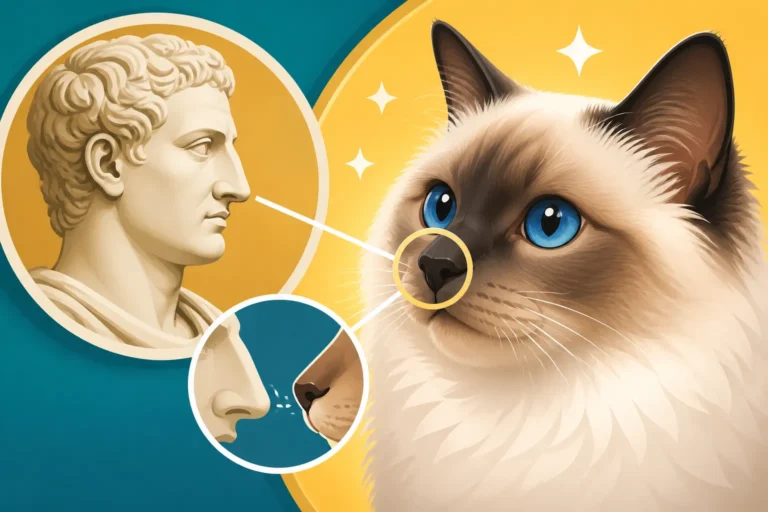
The Birman has a distinctive body type that is often described as semi-cobby or medium-long. They are solid, muscular cats with a sturdy build, but not as extreme as a truly cobby breed like the Persian. Their frame is rectangular, with a broad chest and a relatively short, strong neck. The head is broad and rounded, with full cheeks, a strong chin, and a medium-length "Roman" nose, which has a slight bump or dip rather than being perfectly straight or dished. Their ears are medium-sized and set fairly wide apart, with rounded tips. These features contribute to their overall gentle and somewhat substantial appearance.
The Snowshoe’s body is generally more athletic and refined, a clear nod to its Siamese ancestry combined with the American Shorthair's robustness. They have a medium-sized, muscular body, often described as having a "modified wedge" head. This means the head is wider at the top and tapers slightly towards the muzzle, but without the extreme wedge shape of the modern show Siamese. Their profile is gently contoured, without the distinct Roman nose of the Birman. The ears are medium to large, set in proportion to the head. Their eyes are typically a more oval shape compared to the Birman's slightly rounder, almost almond-shaped eyes. Overall, the Snowshoe presents a more lithe and active silhouette, reflecting its energetic personality, contrasting with the Birman's softer, more substantial build.
Temperament and Lifestyle: A Tale of Two Personalities
Beyond their physical differences, the Birman and the Snowshoe offer distinct temperaments and energy levels, which means they thrive in different types of households and lifestyles. Understanding these personality nuances is crucial for any potential owner to ensure a harmonious match.
The Birman's Quiet Companionship
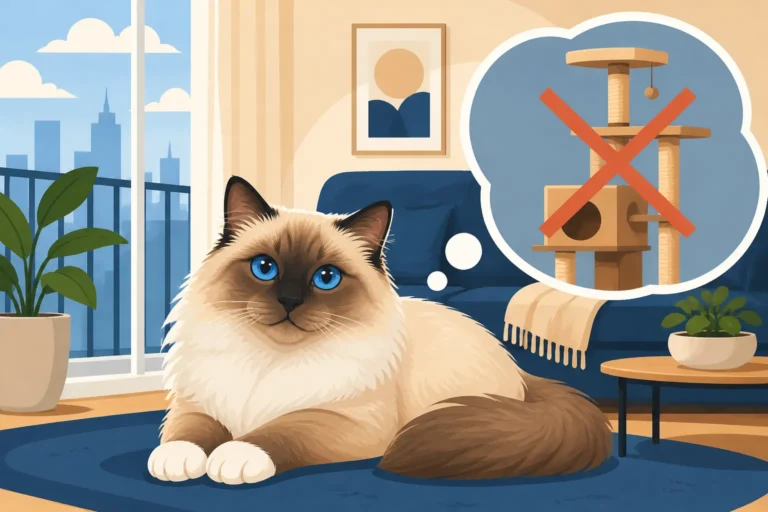
The Birman is known for its exceptionally gentle and calm disposition. They are often described as "lap cats by proxy" – they love to be in the same room as you, often settling close by on the sofa or a nearby chair, rather than directly on your lap for extended periods. They enjoy affection and a quiet cuddle, but they are rarely demanding. A Birman will often greet you at the door with a soft purr and a gentle rub against your legs, then follow you quietly as you move through the house. Their vocalizations are typically soft trills or quiet meows, quite unlike the loud conversations some other pointed breeds engage in. In fact, Why a Birman Rarely Meows is a well-known characteristic of the breed.
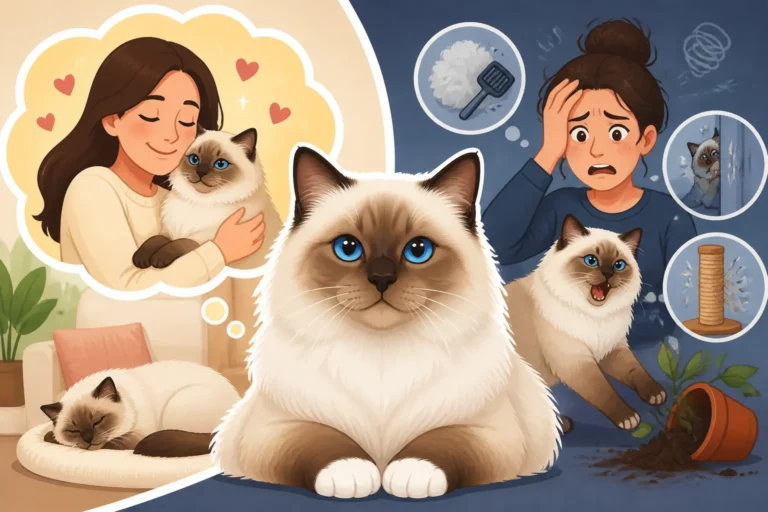
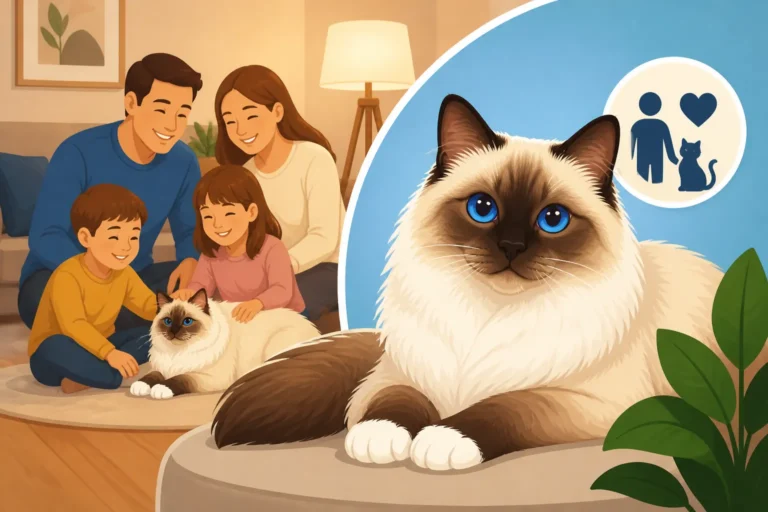
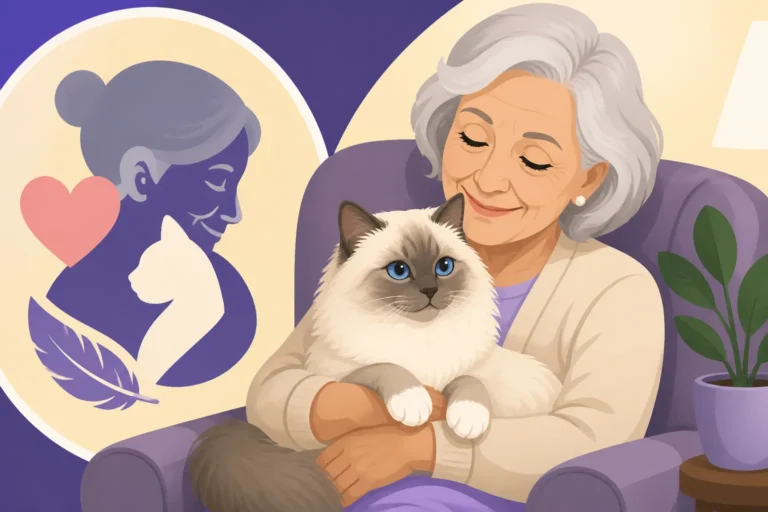
This placid nature makes the Birman an ideal companion for families with children, other pets, or older individuals who appreciate a serene presence. They are highly adaptable and generally get along well with everyone, including respectful dogs and other cats. They aren't prone to frantic energy bursts or destructive behavior, preferring quiet play with a favorite toy or simply observing the world around them from a comfortable perch. They are highly sensitive to their environment and can become withdrawn if feeling unwell or stressed, so it’s important to pay attention to subtle changes in their behavior. For a happy Birman, consistent companionship and a predictable routine are far more important than constant stimulation. If you're someone who appreciates a calm, affectionate presence that doesn't demand constant attention but offers unwavering loyalty, the Birman is a wonderful choice. They are perfectly content to be near you, sharing your space and offering quiet comfort.
The Snowshoe's Playful and Vocal Nature
The Snowshoe, while also affectionate, brings a much more energetic and vocal presence to the home. These cats inherited a lively intelligence and a love for interaction from their Siamese ancestors, coupled with the easygoing nature of the American Shorthair. They are often quite playful, enjoying games that challenge their minds, like puzzle toys or fetch. If you're looking for a cat to engage with actively, a Snowshoe will likely be thrilled. They love to be involved in whatever their humans are doing and will often follow you around, "talking" to you with their distinct voices. Their meows are typically softer than a traditional Siamese but definitely more frequent and expressive than a Birman's quiet trills.
Snowshoes thrive on companionship and can become quite lonely or even destructive if left alone for extended periods without adequate mental and physical stimulation. They form strong bonds with their families and often pick a favorite person, though they are usually friendly with everyone. Their curious nature means they enjoy exploring and might be more inclined to climb or investigate high places than the more ground-oriented Birman. A Snowshoe might be a good fit for an active household where there's always someone home to interact with them, or where they have another playful pet for company. They appreciate interactive toys and can often be clicker-trained to perform tricks. Their zest for life and communicative personality make them incredibly engaging companions for those who enjoy a more interactive and vocal feline friend.
Health Considerations and Lifespan
Understanding the general health predispositions of any breed is vital for responsible pet ownership. Both Birmans and Snowshoes are generally robust cats, but like all purebreds, they can have tendencies towards certain genetic conditions. Being aware of these helps owners provide the best possible care throughout their cats' lives.
Birman Health Tendencies
Birmans are generally a healthy breed with a good lifespan, typically living between 12 to 16 years, and sometimes even longer. However, there are a few genetic conditions that responsible Birman breeders screen for to ensure the health of their lines.
One of the most significant concerns for Birmans is Hypertrophic Cardiomyopathy (HCM), a common heart disease in cats where the heart muscle thickens. This condition has no DNA test in Birmans, making regular echocardiogram screenings by a veterinary cardiologist essential for breeding cats. You can read more about this in HCM in a Birman Has No DNA Test, Only an Echo. Another condition, though rarer, is Polycystic Kidney Disease (PKD), which causes cysts to form in the kidneys. While the Birman breed has largely been cleared of PKD through diligent DNA testing thanks to its Persian outcross history, some breeders still test for it. Why a Birman Breeder Still Tests for PKD explains the importance of this. Lastly, there's a serious genetic condition called Feline Hypotrichosis with Thymic Aplasia, often referred to as FOXN1 or "Birman hypotrichosis" or "short life expectancy." This recessive gene causes kittens to be born bald or with very sparse coats and to have a compromised immune system due to an underdeveloped thymus gland, often leading to death in early kittenhood. Thankfully, a DNA test exists for this condition, allowing breeders to prevent affected kittens by carefully screening their breeding cats.
Snowshoe Health
The Snowshoe breed is generally considered healthy and hardy, benefitting from its diverse foundation of Siamese and American Shorthair cats. They typically enjoy a good lifespan, often living into their mid-to-late teens, similar to the Birman. As a newer breed, there isn't as extensive a history of breed-specific genetic diseases widely documented for the Snowshoe compared to some older, more established breeds.
However, because the Snowshoe does have Siamese in its background, it can potentially share some of the health issues occasionally seen in Siamese cats, such as certain dental problems or slightly higher risks for some types of cancer, though these are not necessarily prevalent. Similarly, from their American Shorthair lineage, they are generally robust, but conditions like HCM can occur in any cat breed, including mixed breeds, and not just purebreds. Regular veterinary check-ups, a balanced diet, and a stimulating environment are key to keeping a Snowshoe healthy and happy. Any responsible breeder will provide health guarantees and be transparent about the health history of their breeding lines. While there aren't the same set of specific genetic tests routinely performed for Snowshoes as there are for Birmans (like the FOXN1 gene), careful screening for common feline ailments is always prudent.
Here's a quick comparison of the two breeds:
| Feature | Birman (Sacred Cat of Burma) | Snowshoe |
|---|---|---|
| Origins | Europe (post-WWII), legend from Burma | Philadelphia, USA (1960s) |
| Primary Ancestry | Siamese, Persian | Siamese, American Shorthair |
| Coat Length | Long, silky, single coat (no undercoat) | Short, dense, sleek |
| White Markings | Strict, symmetrical "gloves" on all paws; hind laces | Variable white "socks" or patches; facial blaze common |
| Head Shape | Broad, rounded, full cheeks, "Roman" nose | Modified wedge, gently contoured profile |
| Body Build | Semi-cobby, sturdy, muscular, rectangular | Medium, muscular, athletic |
| Eye Color | Deep, vivid blue | Brilliant blue |
| Vocalization | Quiet, soft trills, rarely meows | Vocal, chatty, expressive meows |
| Temperament | Placid, gentle, affectionate, calm, follows | Active, playful, intelligent, interactive |
| Grooming Needs | Moderate (3x week combing for long coat) | Low (weekly brushing for short coat) |
Remember that individual personalities can vary within any breed, and this table provides a general overview. Both breeds are incredibly loving and beautiful, but they certainly offer different experiences for their human companions. When choosing between them, consider not just the looks, but the lifestyle that best suits you and your home. For any specific cat care items, including grooming tools suitable for different coat types, or puzzle feeders that a lively Snowshoe might enjoy, online retailers like Chewy offer a wide selection.
Disclaimer
This article is for general informational purposes only and does not constitute professional advice. Laws, prices and regulations vary by location and change over time. Consult a qualified professional for guidance on your specific situation.