Why the War Nearly Ended the Birman
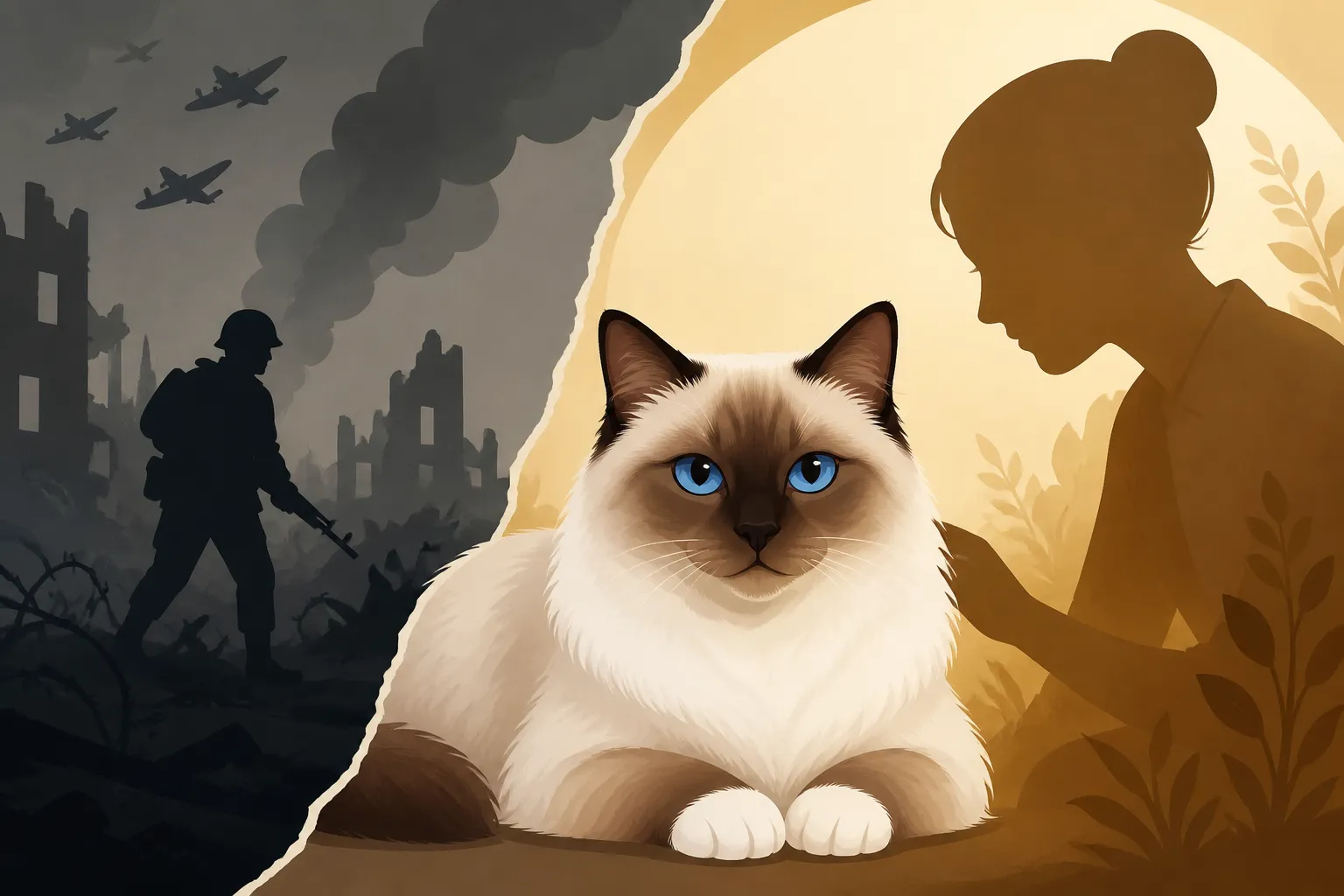
The Birman nearly disappeared because wartime Europe disrupted the small breeding network that sustained the breed. By the end of the Second World War, very few Birmans remained, and the cats left could not simply be paired to restore a healthy, stable population. This guide explains what the war changed, why breeders had to rebuild the breed through careful outcrossing, and how long that recovery took.
Why the war put the Birman at risk
A young breed depended on a small number of cats
The Birman was still a relatively young, uncommon breed in Europe when war reached the continent. Its early history was already tied to a limited group of cats and breeders, rather than a broad population spread across many countries. That made the breed vulnerable: if a few key cats or catteries were lost, the available breeding pool could shrink dramatically.
The war disrupted ordinary life in ways that mattered directly to breeding. People were displaced, homes and catteries were damaged, and food, veterinary care, transport, and space were difficult to secure. Maintaining a breeding program requires more than keeping a cat alive. Breeders need suitable mates, records, time, and the ability to care for queens and litters. In wartime conditions, those needs were often pushed aside by immediate survival.
Birmans were not alone in facing these pressures. Many domestic animals and organized breeding programs across Europe were affected by shortages and upheaval. But a rare breed with a narrow founder base had less room to absorb losses than a common population. If a large number of unrelated cats disappear, a widespread breed may still have enough animals to continue. A small breed can lose most of its options with only a handful of setbacks.
That is why the phrase “nearly ended” is not just dramatic shorthand. The war did not erase every Birman, but it left the breed so depleted that breeders had to reconstruct it. For the wider story of the remaining cats, see How Many Birmans Survived the Second World War.
Why surviving cats were not enough to restore the breed
A surviving cat is not automatically a viable foundation for a breed. It needs to be healthy, able to reproduce, and compatible with the remaining cats. Breeders also need to consider how closely related the available animals are. Pairing close relatives repeatedly may preserve a recognizable look in the short term, but it can increase the chance that inherited health problems will become more common.
The Birman’s situation was especially difficult because so few breeding choices remained. If only a small number of cats are available, a breeder cannot simply select unrelated partners from a large population. Even when a cat survives and can produce kittens, there may be no suitable unrelated Birman to mate it with. The immediate challenge is keeping a population going; the longer-term challenge is restoring consistency without narrowing it further.
Records from this period and later breed histories describe a very small number of cats as central to the recovery. The details are sometimes simplified in popular retellings, so it is best not to imagine a tidy, complete registry of every animal that lived through the war. The important point is that the surviving population was extraordinarily limited. Which Two Cats Rebuilt the Birman looks more closely at the cats most often named in the rebuilding story.
That small starting point also shaped the breed’s later history. When a modern Birman pedigree reaches back through a limited set of founders, it reflects the fact that the postwar population had to be rebuilt from very few branches. The war was not only a temporary interruption. It left a genetic and historical imprint that breeders had to manage long afterward.
How breeders rebuilt the Birman after the war
Outcrossing helped restart a nearly lost population
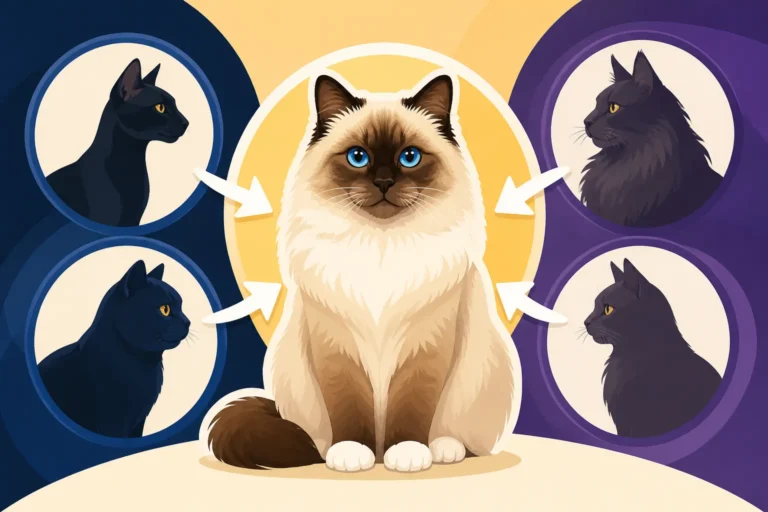
When there were too few Birmans to breed safely and sustainably with one another, breeders needed other cats to help rebuild the population. This is called outcrossing: mating a cat to an animal from another breed or population, then selecting descendants over generations for the traits the breeders wanted to retain.
Outcrossing was a practical response to a difficult situation, not a shortcut that instantly produced the modern Birman. A kitten from an outcross is not automatically a Birman in the full historical or breed-standard sense. Breeders had to make choices over multiple generations, balancing the need for enough healthy breeding animals with the goal of keeping the distinctive Birman appearance and temperament recognizable.
The process could also introduce traits breeders did not want. Coat texture, body shape, head type, color pattern, and other characteristics might vary among descendants. Rebuilding meant observing the kittens as they matured and choosing which ones best supported the developing breed. A single mating could contribute to the recovery, but it could not settle every question about what the breed should look like.
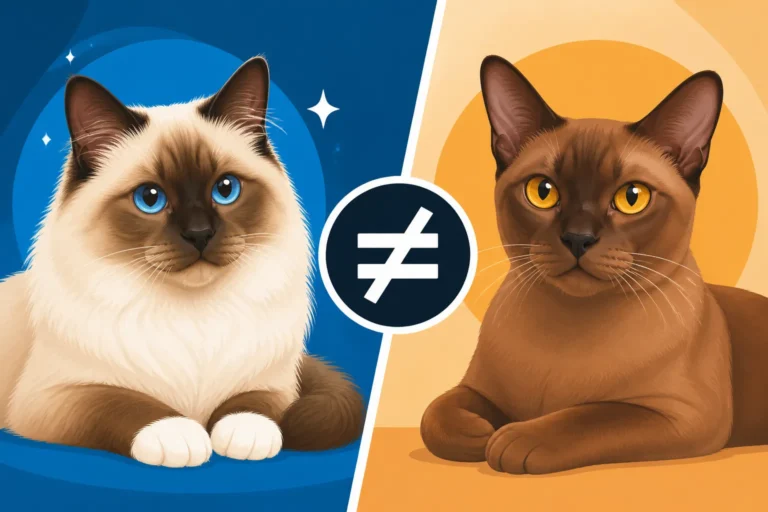
The breed’s recovery is commonly associated with the use of longhaired cats, including Persian-type cats, and cats with Siamese ancestry. Histories differ in how they describe particular matings and contributions, so it is more accurate to talk about the general rebuilding process than to claim every modern Birman descends in the same simple way from one specific cross. For more on the outcrossing itself, see Why Birman Breeders Had to Outcross and Which Longhairs Rebuilt the Birman After 1945.
Breeders had to select for the Birman’s defining features
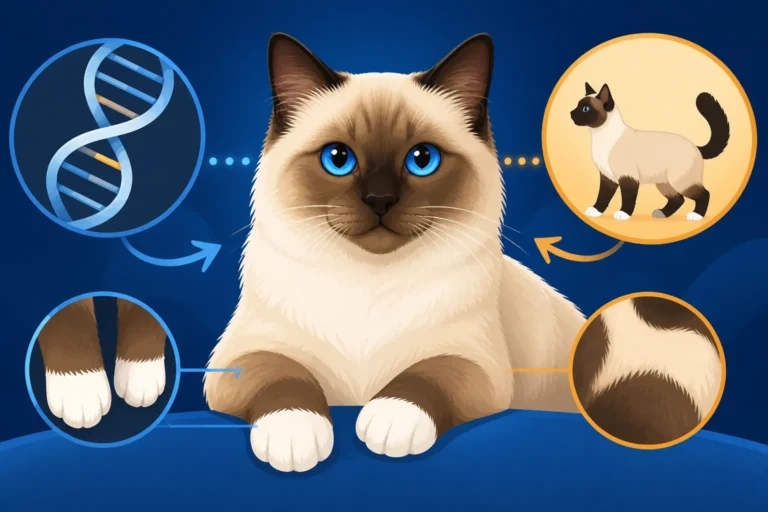
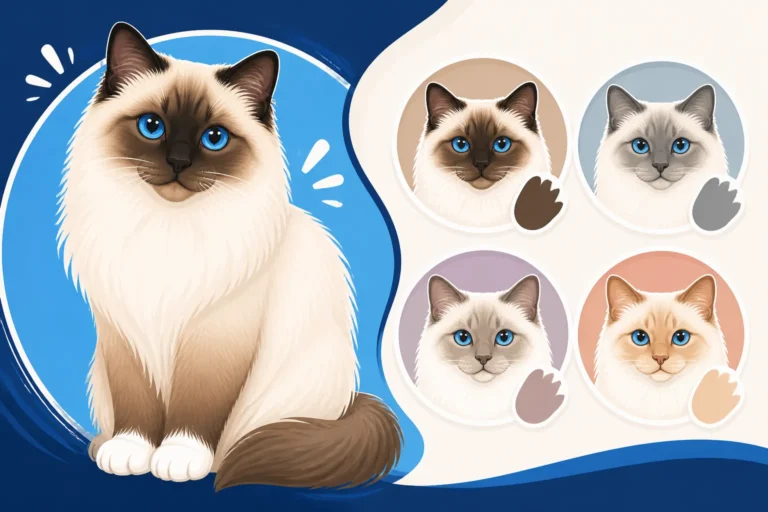
The challenge was not simply producing more kittens. Breeders needed descendants that increasingly matched the Birman’s defining features, including its pointed coat pattern, blue eyes, long coat, and white feet. The white gloves are particularly distinctive, but their appearance can vary from cat to cat. A breed recovering from a bottleneck could not be made uniform in a single generation.
Selection required patience. Breeders had to assess how kittens developed, decide which animals should be bred, and avoid relying on one attractive feature while overlooking overall health and soundness. A kitten might have a pleasing coat but markings that did not meet the desired standard. Another might have excellent feet but differ in body type. Rebuilding meant weighing a collection of traits rather than selecting for one detail alone.
This is also why the modern breed should not be thought of as a perfect replica of an untouched prewar population. The postwar Birman was rebuilt through the cats that remained and the deliberate choices breeders made afterward. Its history includes both continuity and change: the aim was to preserve what made the Birman recognizable while creating a population large and consistent enough to continue.
| Recovery challenge | Why it mattered | What breeders needed to do |
|---|---|---|
| Very few surviving Birmans | There were too few unrelated cats for a broad breeding program | Find suitable breeding partners outside the small remaining group |
| Risk of close matings | Repeatedly breeding related cats can narrow a population further | Expand the available breeding base and plan matings carefully |
| Variation among outcross descendants | Kittens could differ in coat, type, and markings | Select over generations for the Birman’s defining traits |
| Disrupted records and conditions | War made ordinary breeding work difficult to maintain | Reestablish catteries, breeding plans, and consistent lines |
Why the recovery took generations
Breed type does not return in one litter
People sometimes picture a breed being “saved” when a few surviving cats produce kittens. In reality, that is only the beginning. Those kittens must grow up, be assessed, and in some cases enter carefully planned breeding programs. Their offspring then need to be evaluated in turn. A stable, recognizable population emerges through repeated decisions, not through one fortunate litter.
This process is slow partly because cats take time to mature. Breeders cannot know the full adult appearance of every kitten at birth. Coat, body, and point coloration develop as a cat grows, and a young animal’s future breeding value may not be obvious immediately. Meanwhile, each generation has a limited number of potential breeding cats, so the choices made at every stage can affect what is possible next.
There is also a difference between a population that looks broadly similar and one that reliably produces the same general type. A few kittens may show Birman-like features, yet the next generation can still vary. Breeders have to choose animals that can pass on the desired traits while maintaining a workable population. That is why the return to consistent, pure Birman litters is described as a gradual process rather than a quick postwar fix.
The story of the breed’s return to consistency is explored in How Long the Birman Took to Breed True Again. It helps explain why “the Birman survived” and “the Birman was fully rebuilt” are not quite the same statement. Survival came first; a stable breeding population required continued work.
The small founder base remained part of the breed’s story
Even after a breed becomes established again, a narrow founder base does not vanish from its history. If many later cats descend from a limited number of founders, their genes can be represented widely in the population. That can make responsible record-keeping and thoughtful breeding important, particularly when a breed has faced historical bottlenecks.
This does not mean every modern Birman is unhealthy or that the breed’s survival was a mistake. It means that the recovery involved trade-offs. Breeders had to increase numbers and reestablish breed type while paying attention to relatedness and inherited traits. No single breeder or mating could solve every long-term issue; careful choices across generations mattered.
The larger history is covered in The Birman Came Out of the War With Two Cats Left and What Genetics Say About the Birman's Origin. These topics also help put simplified accounts in context. Breed histories often turn complicated, gradual events into a memorable sentence. That can be useful as an introduction, but the actual recovery involved more cats, more decisions, and more uncertainty than a single line can convey.
For present-day owners, this history is a reason to ask thoughtful questions when choosing a kitten, not a reason to assume the worst. A breeder should be willing to discuss pedigree, health screening relevant to the line, and how kittens are raised. A kitten’s white feet or blue eyes alone cannot tell you whether its breeding background is carefully managed.
What the Birman’s near disappearance means today
The history explains why careful breeding matters
The Birman’s postwar recovery shows how vulnerable a rare breed can be when its population is small and geographically concentrated. It also illustrates why healthy breeding is about more than producing kittens that look right. A responsible program considers the health and compatibility of potential parents, maintains accurate records, and avoids treating one appealing feature as the only measure of quality.
If you are speaking with a breeder, ask how they describe the breed’s history and how they make breeding decisions now. You do not need to be an expert in genetics to notice whether answers are clear and open. It is reasonable to ask about health screening, the kitten’s parents, and the paperwork that will accompany the kitten. A breeder who treats those questions as normal is making the process easier to understand.
For owners bringing home a Birman, the war story is a reminder that the breed’s history is not a care manual. It does not mean your cat needs unusual treatment because of its ancestry. Your individual cat’s health, behavior, and veterinary advice matter most. Routine preventive care and a stable home are more useful than trying to infer an individual cat’s needs from a breed’s past.
There is a practical side to keeping a cat settled during disruption, too. If a move or emergency interrupts your routine, having familiar food, a carrier, and basic supplies ready can make the change less stressful. Chewy is one place owners may use to restock familiar pet essentials; the important thing is to keep your cat’s usual items accessible rather than changing everything at once. If an unfamiliar product or diet is needed, introduce it thoughtfully and ask your veterinarian about any health concerns.
A modern owner can learn from the breed’s resilience
The Birman survived because people kept caring for the cats that remained and made deliberate choices about the next generation. That history is a human story as much as a breeding story: catteries and routines were disrupted, yet the breed was not abandoned. Its recovery took time, and it depended on continued attention rather than a dramatic one-day rescue.
For a household with a Birman, the lesson is less about recreating the past and more about being prepared for ordinary changes. Keep veterinary records together, make sure your cat is comfortable with its carrier, and have a plan for who will care for it if you need to leave home unexpectedly. Chewy may be useful for replacing familiar supplies when access to a local shop is difficult, but a simple written list of your cat’s food and care needs can be just as valuable.
If you are planning for travel or a move, pack familiar bedding and food before adding new items. Keep the carrier out where your cat can investigate it, rather than bringing it out only when it is time for a stressful trip. When arranging supplies through Chewy or another retailer, check that the food and litter match what your cat already uses. Consistency is especially helpful during transitions, when a cat may already be adjusting to new sounds, rooms, or people.
The Birman’s near disappearance was a severe interruption, but it was not the end of the breed. Its survival depended on a small group of cats, careful outcrossing, and generations of selection. Knowing that history makes the Birman’s familiar features more meaningful—and makes clear why patience, sound records, and thoughtful care have always mattered.
Disclaimer
This article is for general informational purposes only and does not constitute professional advice. Laws, prices and regulations vary by location and change over time. Consult a qualified professional for guidance on your specific situation.