What a Birman’s Coat Texture Should Be
Birman coat texture explained through softness, silky smooth movement, seasonal variations, and proper care methods.
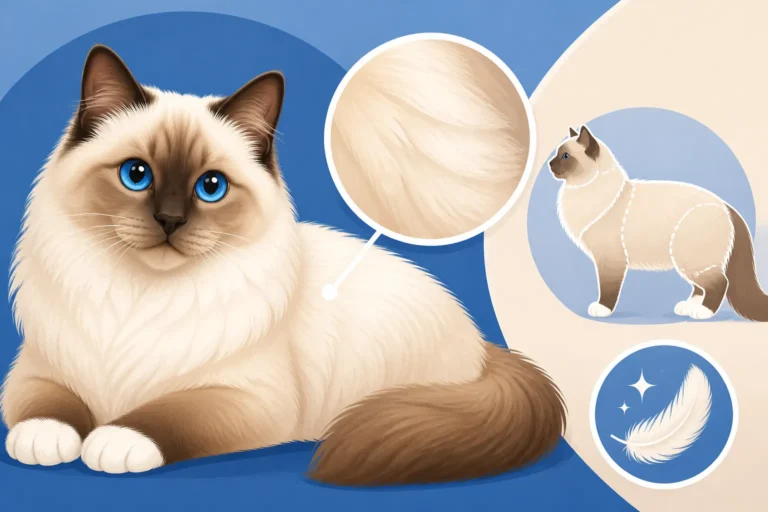
Birman coat texture explained through softness, silky smooth movement, seasonal variations, and proper care methods.
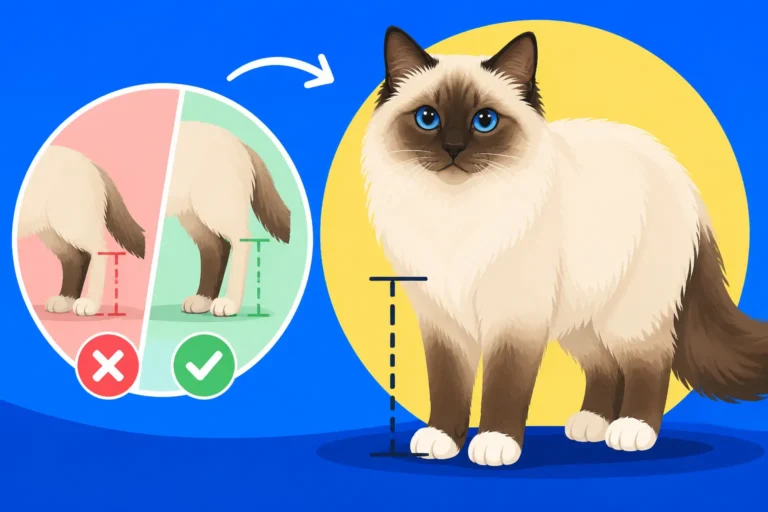
Birman cat leg proportions, medium length standards, and balanced body structure explained for evaluating growing kittens.

Birman cat proportions explain why the breed is neither cobby nor foreign, detailing how body and bone create a balanced build.

Birman cat chin evaluation involves assessing strength, fullness, and proportion to create a balanced, rounded facial expression in show rings.

Birman ear set position, head shape, and camera angle effects determine how to assess cat ear placement fairly.

A Birman cat nose shape called Roman means a gentle curve on the bridge rather than a straight line or flat face.
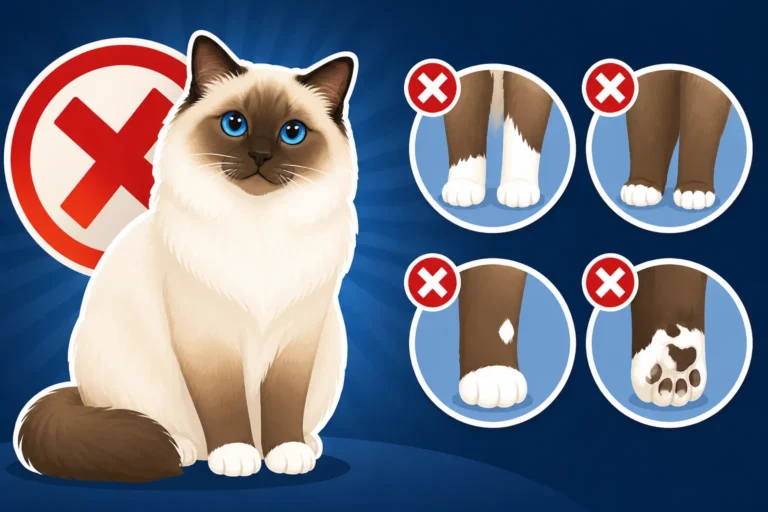
Birman glove faults and formal disqualifications explained, detailing white paw standards, front glove symmetry, and registry rules.

A Birman cat rear leg lace height assessment requires checking the white marking shape, endpoint, symmetry, and leg balance.
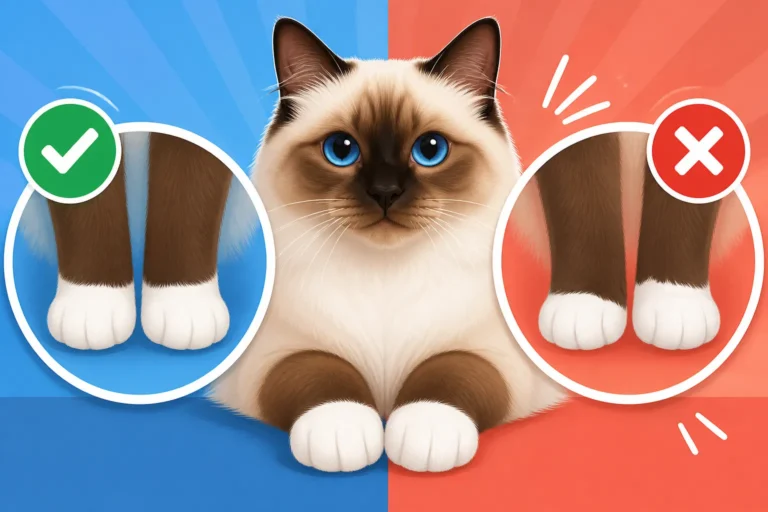
Birman front gloves require even white markings and matching heights so paws appear balanced for show judges evaluating coat patterns.

Birman white gloves account for twenty points under the Cat Fanciers Association standard and shape show ring scores.