Whether a Birman Can Be Cross Eyed
It’s perfectly natural to look into your Birman’s beautiful blue eyes and sometimes wonder if they’re quite looking in the same direction. Many of us have noticed a slight deviation or "cross-eyed" appearance in these charming cats, and it can certainly raise questions about their health or vision. Rest assured, you’re not alone in observing this, and it’s a specific trait that has fascinating genetic roots within the breed. This comprehensive guide will explore why Birmans might appear cross-eyed, what it means for their health, and when you should really be concerned.
The Genetic Connection Between Birman Blue Eyes and Eye Alignment
The captivating sapphire blue eyes of the Birman cat are one of their most distinctive features, often drawing you in with their serene gaze. But did you know that the very genetics responsible for their stunning eye color are also linked to why some Birmans might appear cross-eyed? It’s a fascinating aspect of their unique breed characteristics.
Why Birman Cats Have Striking Blue Eyes
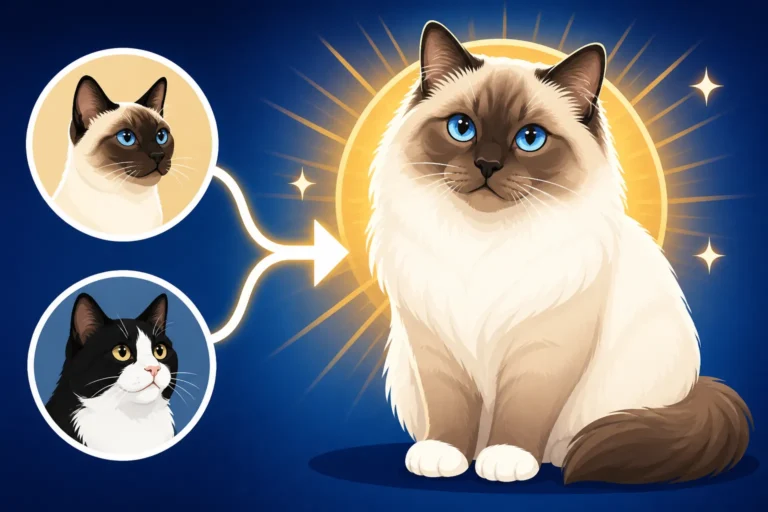
The glorious blue eyes that are so characteristic of the Birman breed are directly tied to their "pointed" coloration. This color pattern, where the cooler extremities (paws, ears, tail, and face) are darker, is due to a specific genetic mutation in the tyrosinase enzyme. This enzyme is crucial for melanin production, which dictates pigmentation. In pointed cats, this enzyme is temperature-sensitive, meaning it only fully functions in cooler parts of the body. In warmer areas, like the torso, it’s less active, resulting in lighter fur.
The same genetic pathway that gives Birmans their beautiful points also affects their eyes. The gene responsible for this partial albinism, often referred to as the Siamese allele, reduces pigment in the iris, allowing the underlying blue light to scatter and reflect. This is why all Birmans, regardless of their specific point color (seal, blue, chocolate, lilac, etc.), will always have those mesmerizing blue eyes. In fact, Why a Birman's Blue Eyes Are Not a Health Risk is a topic we often discuss, as their blue eyes are a perfectly normal and healthy part of their breed standard. The deeper and more vivid the blue, the more prized they often are in the show ring, but any shade of blue is genetically inherent.
Understanding Strabismus in Pointed Breeds
Now, here’s where the "cross-eyed" phenomenon comes into play. The genetic mutation that causes the point coloration in Birmans, and other pointed breeds like Siamese, has a curious side effect on the development of the optic nerves. In non-pointed cats, the optic nerves from each eye cross over in a very specific way at the optic chiasm, ensuring that visual information from both eyes is correctly processed by the brain. However, in pointed cats, this crossover can be slightly abnormal.
Because of this altered neurological wiring, the brain receives slightly jumbled visual signals. To compensate for this, the cat's eyes may naturally turn inward, a condition known as esotropia, which is the technical term for being "cross-eyed." So, to directly answer the question, yes, Birmans can be cross-eyed, and it's largely due to this genetic predisposition linked to their beautiful point coloration. It's not a defect in the traditional sense, but rather a common, inherited trait within the breed. This means that a mildly cross-eyed Birman isn't necessarily unhealthy; it's just a visual manifestation of their unique genetic makeup. This is a characteristic that sets them apart from many other breeds, whose eyes are typically expected to be perfectly aligned.
Recognising and Assessing Strabismus in Your Birman
When you first notice your Birman's eyes don't seem perfectly aligned, it can be a bit startling. However, understanding what different types of strabismus look like and differentiating between a quirky genetic trait and a serious health concern is key. It's all about careful observation and knowing when to consult your veterinarian.
Types of Strabismus and What They Look Like
Strabismus is essentially a misalignment of the eyes, meaning they don't look in the same direction at the same time. While it might sound alarming, it’s important to remember that it manifests in different ways. In pointed breeds like the Birman, the most common form is esotropia, which is when one or both eyes turn inward, giving that classic "cross-eyed" appearance. You might notice your Birman seems to be looking at its own nose, especially when it's focusing intently on something close up, like a toy, or even just thinking deeply. It can be quite subtle, a gentle drift of one eye, or more pronounced, where the crossing is very obvious.
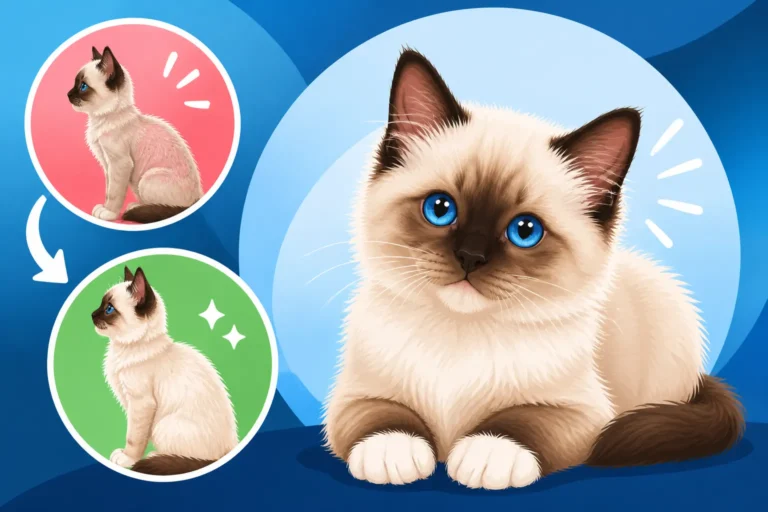
Less commonly, cats can also exhibit exotropia (eyes turning outward) or vertical strabismus (one eye turning up or down), but these are not typically associated with the colorpoint gene and would immediately raise more concern for an underlying issue. For a Birman with inherited esotropia, the misalignment is usually present from kittenhood and remains stable. Observing your kitten during A Birman Kitten's First Year, From White to Pointed can help you note when this characteristic develops. You might see it more clearly when they are relaxed or just waking up, and less so when they are actively engaged and compensating.
Is It Just a Quirky Trait or a Problem?
For many Birmans, particularly those with a mild form of the inherited esotropia linked to their point genetics, the "cross-eyed" trait is just that—a quirky, endearing characteristic. Most cats with this genetic strabismus adapt remarkably well, and it doesn't significantly impair their vision or quality of life. They learn to compensate, perhaps by tilting their head slightly or relying more on peripheral vision. It's often more noticeable to us than it is a problem for them. In these cases, it's considered a breed-specific cosmetic trait rather than a serious health issue.
However, it is absolutely crucial to differentiate this inherited, stable strabismus from other causes. If your Birman suddenly develops strabismus, or if an existing misalignment rapidly worsens, this is always a cause for concern and warrants immediate veterinary attention. Sudden onset strabismus can be a symptom of a neurological problem, an injury, inflammation, or even a tumor. A cat that previously had perfectly aligned eyes and suddenly develops a cross-eyed appearance is telling you something is wrong. Similarly, if you notice any other signs of discomfort, pain, or significant vision impairment alongside the strabismus, it's time to get it checked out. Remember that Why a Quiet Birman Is Easy to Misread extends to subtle signs of illness or discomfort, so pay close attention to any behavioral changes.
Comprehensive Eye Health for Your Birman
While it's reassuring to know that a slightly cross-eyed appearance can be a normal genetic quirk in Birmans, maintaining overall eye health is paramount. Their eyes are not only beautiful but also vital to their well-being, and they can be susceptible to various conditions, just like any other cat. Regular check-ups and attentive home care are key to keeping those sapphire eyes sparkling.
Routine Eye Checks and What to Look For
Regular veterinary check-ups are essential for every Birman, and that includes a thorough examination of their eyes. Your vet will not only look for signs of disease but also assess the alignment and overall health of their vision. We’ve covered How a Birman's Eyes Should Be Checked at Every Visit previously, and it’s a topic that can’t be stressed enough. Beyond strabismus, Birmans can be prone to other eye conditions. For example, some may develop What a Corneal Dermoid Is on a Birman, which is a piece of skin-like tissue on the surface of the eye. While often benign, it can irritate the eye and might require surgical removal.
Other common issues to watch for include conjunctivitis, which presents as redness, swelling, and discharge (often referred to as "pink eye"), or other infections. You might also notice excessive tearing, cloudiness in the eye, or changes in pupil size or reactivity. Keep an eye out for Why a Birman's Third Eyelid Should Not Show, as a visible third eyelid can often be an indicator of general illness or discomfort, not just an eye problem. Getting into a routine of gently examining your Birman's eyes at home can help you spot subtle changes early on. Just look for clarity, brightness, and a lack of discharge or redness.
When to Seek Professional Veterinary Advice
It's tempting to think that because Birmans can be cross-eyed due to genetics, any eye issue is nothing to worry about. This couldn't be further from the truth. While a mild, stable, inherited strabismus might be harmless, any new, worsening, or painful eye symptom needs immediate veterinary attention. If your Birman suddenly develops an eye turn, starts rubbing their eyes frequently, shows signs of pain (like squinting or reluctance to open an eye), or if you notice any discharge, redness, swelling, or cloudiness, do not delay. These could be indicators of anything from an infection to an injury, or even a more serious underlying health condition impacting the nervous system.
Your veterinarian will perform a comprehensive ophthalmic exam, which might include checking pupil responses, looking for corneal damage, and assessing the internal structures of the eye. They may also conduct a neurological assessment if the strabismus appears to be new or unusual. Having pet insurance, such as a plan from Healthy Paws, can provide immense peace of mind when these unexpected vet visits arise, covering a significant portion of diagnostic tests and treatments for various eye conditions and general health concerns. Birmans are generally known for The Twelve to Sixteen Years a Birman Usually Gets of companionship, but health challenges can still arise. A proactive approach to their health, coupled with good insurance, ensures they get the best possible care throughout their long and happy lives. Remember, How to Tell a Quiet Birman From an Unwell One is a critical skill for any Birman owner, and changes in eye appearance can be a key indicator.
Here's a quick summary of Birman eye traits and potential concerns:
| Characteristic | Normal Birman Eye | Inherited Strabismus (Often Normal) | Concerning Eye Symptoms (Vet Needed) |
|---|---|---|---|
| Eye Color | Deep sapphire blue | Deep sapphire blue | Any color change, cloudiness, discharge |
| Eye Shape | Almond to oval | Almond to oval | Squinting, bulging, abnormal size |
| Alignment (Resting/Focusing) | Generally straight, slight convergence possible | Mild, stable inward turning (esotropia) | Sudden onset, worsening, outward/vertical turn |
| Vision | Excellent | Usually good, cat adapts well | Impaired vision, bumping into objects |
| Discharge | Minimal clear tearing, especially with yawns | Minimal clear tearing | Thick, colored, excessive, constant discharge |
| Third Eyelid | Not visible or only briefly during sleep/waking | Not visible or only briefly | Permanently visible, covers part of eye |
| Pain/Discomfort | None | None | Rubbing, squinting, sensitivity to light |
| Related Health Issues | Healthy, How Many Years a Birman From Echo Scanned Lines Lives | Healthy, genetic trait, not a disease itself | Underlying infection, injury, neurological issue |
Disclaimer
This article is for general informational purposes only and does not constitute professional advice. Laws, prices and regulations vary by location and change over time. Consult a qualified professional for guidance on your specific situation.