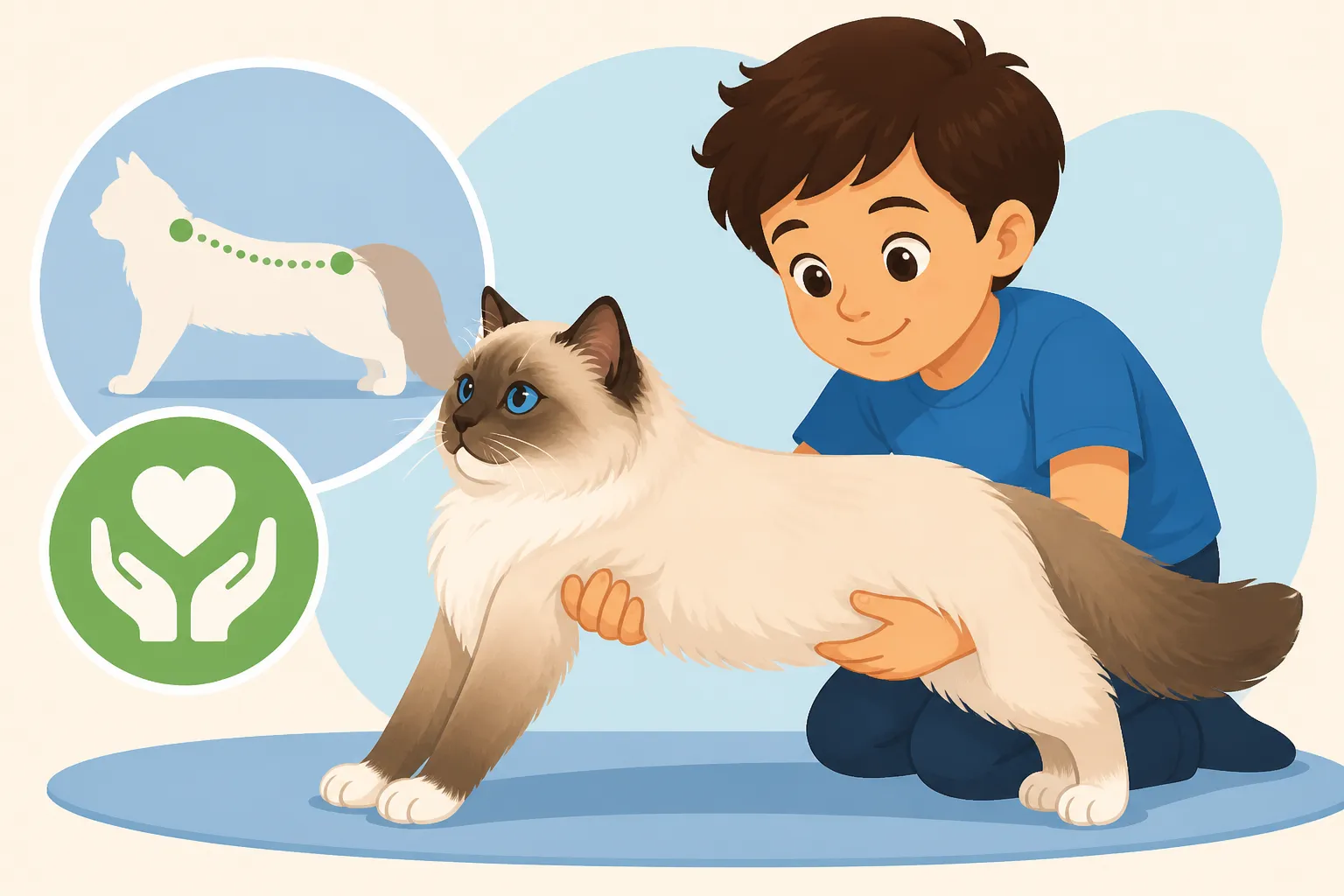
Teaching a Child to Support a Birman’s Long Back
Bringing a beautiful Birman cat into a home with children is often a wonderful experience, but it comes with a unique responsibility, especially when it comes to how little ones interact with their new furry friend. One of the biggest concerns for any Birman owner is ensuring that the cat's long, graceful back is always supported, particularly when children are learning how to pick them up or cuddle them. Improper handling can lead to discomfort, fear, and even injury for your Birman, which is something no one wants. This guide will walk you through the essential steps and compassionate techniques to teach children how to safely and respectfully support a Birman's long back, fostering a loving and secure bond for everyone.
Understanding the Birman's Unique Anatomy and Why Support Matters
Before we even talk about how to lift a Birman, it’s crucial to understand why their back needs such careful consideration. Unlike some of their more compact feline cousins, Birmans possess a distinctive long, rectangular body structure. This isn't just a stylistic preference; it's a key part of their breed standard and a physical trait that demands respect.
The Graceful Length of a Birman's Spine
Think of your Birman's back as a delicate bridge. It's strong, yes, but it’s designed to be supported evenly along its length. When a child, or even an adult, attempts to pick up a Birman by only placing hands under their armpits, the entire weight of their hindquarters and tail hangs unsupported. This puts immense strain on their spine, potentially causing discomfort, muscle strain, or even more serious issues over time. Imagine trying to carry a long plank of wood by holding only one end – it's awkward, ungainly, and risks snapping or bending in the middle. Your Birman's back isn't quite that fragile, but the principle of even distribution of weight is absolutely paramount. Their long, flowing coat, while beautiful, can sometimes mask this underlying vulnerability, making it even more important for children to learn proper technique from day one. You'll notice How Long a Birman's Legs Should Be and how this contributes to their overall elongated appearance.
The Risks of Improper Handling
The consequences of consistently lifting a Birman incorrectly aren't just theoretical; they can manifest in several ways. At best, your Birman will simply dislike being picked up by a child, leading them to avoid interaction. This is heartbreaking when you want a loving bond between your pet and your kids. At worst, repeated incorrect handling can lead to physical injury. This could range from minor muscle soreness and stiffness, which a stoic Birman might try to hide due to their placid temperament (remember Why a Quiet Birman Is Easy to Misread), to more serious spinal issues that could require veterinary intervention. A Birman's spine is flexible, but it's not invincible. Moreover, a cat that feels unsafe or hurt when handled by a child may react defensively, even if rarely, creating a negative association that can be difficult to overcome. This is why a proactive, gentle approach to teaching is so vital.
Laying the Groundwork: Gentle Interaction and Reading Cues
Before any lifting takes place, children need to understand the fundamentals of interacting with a cat respectfully. Birmans are known for their gentle and tolerant nature, making them excellent family pets, but even the most placid Birman has limits. Teaching kids to respect a cat's boundaries and read its body language is the first, and perhaps most important, step in preventing accidental injury and fostering a trusting relationship.
Approaching Your Birman with Kindness
A Birman will often How a Birman Follows You Room to Room and be keen to be near you, but that doesn't mean they want to be grabbed. Teach children to approach the Birman calmly and slowly. Instead of rushing in, encourage them to offer a gentle hand, palm down, for the cat to sniff. If the Birman rubs against their hand or bumps it with its head, that's an invitation for a gentle stroke. Remind children to stroke along the back and head, avoiding sensitive areas like the belly, tail, or paws, especially when they are first getting to know each other. The goal is to build a positive association with human touch, making any subsequent handling much easier and less stressful for the cat.
Understanding Your Birman's Body Language
Birmans are not typically vocal cats; they're more likely to communicate through subtle body language. This means children need to learn to "listen" with their eyes. A relaxed Birman will have ears forward or slightly to the side, a soft gaze, and a loosely held tail. If the tail starts thumping, the ears flatten, or the cat tries to move away, it's a clear signal that they've had enough or are feeling uncomfortable. Teach children that when a Birman walks away, it's not being rude; it's communicating a boundary. Respecting this boundary is key, and it reinforces Why a Birman Walks Away Instead of Swiping rather than using claws. It teaches children that they can trust their Birman, and the Birman can trust them.
Here's a quick guide to Birman body language for kids:
| Body Part | Happy/Relaxed Birman | Unhappy/Stressed Birman |
|---|---|---|
| Ears | Forward or slightly to the side | Flattened against head, swiveling nervously |
| Eyes | Soft, blinking slowly | Wide, pupils dilated, staring hard |
| Tail | Held high with a slight curve, gently swaying | Thumping, tucked low, bristled ("bottle brush") |
| Body | Loosely stretched out, rubbing against you | Tense, hunched, attempting to hide or move away |
| Vocal | Soft trills or purrs | Hissing, growling (very rare for Birmans), no sound |
Mastering the "Birman Hold": A Step-by-Step Guide
Now that children understand the importance of gentle interaction and reading their Birman's cues, we can move on to the actual technique for picking them up safely. This method focuses on providing full, even support to their long body, mimicking how a professional would handle them.
Step 1: Practice with a Stuffed Animal
Before any child attempts to lift your actual Birman, use a long, soft stuffed animal – perhaps a plush cat or even a long pillow – to practice. This removes the risk of accidental harm and allows the child to focus purely on the technique without the distraction of a wiggling, purring creature.
Instructions for the child:
- Approach Gently: Remind them to approach the "toy cat" slowly and speak in a soft voice.
- One Hand Forward: Place one hand under the toy cat's chest, right behind its front legs. This will be the primary support for the front half of the body.
- Second Hand Under the Rump: Slide the second hand all the way under the toy cat's hindquarters, supporting its bottom and back legs. This is the crucial step for a Birman's long back.
- Lift and Cradle: Gently lift the toy cat, bringing it close to their body. The toy should be cradled against their chest, with its back perfectly horizontal and fully supported by both hands and their forearm. Emphasize keeping the cat's spine straight and level, not letting the back sag or arch.
- Practice Putting Down: Carefully lower the toy cat onto a soft surface, ensuring its feet touch down before releasing the hold.
Repeat this exercise multiple times until the child feels confident and the motion becomes natural. You can even find helpful tutorials on Amazon for children's books or videos that demonstrate proper pet handling.
Step 2: Supervised Introduction to Your Birman
Once your child has mastered the stuffed animal technique, it's time for the real deal – but with strict supervision. This isn't a free-for-all; it's a calm, guided lesson.
- Choose the Right Moment: Select a time when your Birman is relaxed, perhaps napping nearby or gently asking for attention. Avoid times when they are playing rambunctiously or seem otherwise occupied or stressed.
- Lead by Example: You, the adult, should demonstrate the "Birman Hold" first. Show the child exactly how you use one hand under the chest and the other fully under the hindquarters, cradling the cat against your body. Let the child watch you put the Birman down gently.
- Guided Lift (Child): Have your child repeat the steps with your Birman, but you should be there to guide their hands.
- "Hand 1, under the chest." Guide their first hand into position.
- "Hand 2, all the way under the bottom." Gently help them slide their second hand completely under the cat's rear, making sure the entire back half is supported.
- "Lift gently, close to your body." Assist them in lifting, ensuring the Birman is snuggled against them and its back remains straight.
- Short and Sweet: The first few attempts should be very brief. Just a few seconds of holding, then gently putting the Birman back down. Praise both the child and the cat for a good job. Offer a small treat to your Birman as positive reinforcement.
- Consistency is Key: Practice this several times a day, always supervised, until the child can perform the hold independently and gently. Remind them that the Birman's spine should always be straight and never sagging.
Step 3: When Lifting Isn't Necessary
Sometimes, the best way to support a Birman's long back is to not lift them at all! Teach children that there are many ways to interact and show affection without picking the cat up.
- Floor Play: Birmans love to play, even if it's gentle. Engage them with wand toys, laser pointers (never shine directly in eyes), or small soft balls. Which Toys Suit a Birman That Plays Quietly are often excellent choices.
- Lap Cuddles: Birmans are not always classic "lap cats," but they often enjoy being near you. Encourage children to sit on the floor and invite the Birman to come to them for pets and cuddles. A soft blanket on the couch might even entice your Birman to join for a gentle snuggle. A small, cozy bed, perhaps one purchased from Amazon, can make a designated cuddle spot even more inviting.
- Pet Stairs: For places your Birman frequently jumps, like a bed or a favorite armchair, consider getting pet stairs or a ramp. This allows your cat to access elevated spots without putting strain on its joints or back, something to consider as they age too.
Creating a Birman-Friendly Environment for Children
It's not just about teaching children; it's also about setting up the home environment to support safe interactions and the well-being of your Birman. A well-designed space can minimize opportunities for improper handling and reduce stress for your cat.
Designated Safe Havens for Your Birman
Every cat, especially one as gentle as a Birman, needs a quiet place to retreat when they feel overwhelmed or simply want some alone time. This is especially true in a busy household with children.
- High Perches: While Birmans aren't generally huge climbers, they appreciate mid-height perches where they can observe the action from a safe distance. A cat tree that isn't too tall but offers cozy beds can be ideal. You might want to consider How Tall a Birman's Cat Tree Should Be to ensure it meets their needs without encouraging dangerous jumps.
- Quiet Rooms: Ensure your Birman has access to a room where children are not allowed unsupervised, or where they know to be extra quiet and respectful. This could be your bedroom, a spare room, or a dedicated "cat zone."
- Covered Beds/Dens: A soft, covered cat bed or a cozy den provides a sense of security. If your Birman chooses to retreat there, children must understand that it means "do not disturb." You can find many comfortable options on Amazon. This teaches children respect for the cat's needs and personal space.
Appropriate Play and Interaction
Children often express their love for pets through play. Guiding them towards appropriate play is essential for your Birman's safety and happiness.
- Wand Toys are Wonderful: These are fantastic for interactive play, allowing children to engage with the Birman without direct physical contact. The cat can chase, pounce, and "hunt" the toy at the end of the wand, satisfying their predatory instincts safely.
- Avoid Roughhousing: Absolutely no rough play, tugging on the tail, or sudden grabbing. Emphasize that Birmans are gentle creatures who appreciate soft pets and quiet interaction. Remind children that How Rarely a Birman Puts a Claw Into Anyone is a testament to their gentle nature, and we want to keep it that way by not provoking them.
- Supervise All Interactions: Especially in the beginning, all interactions between young children and your Birman should be closely supervised by an adult. This allows you to intervene immediately if you see improper handling or if the Birman seems stressed.
Avoiding Common Mistakes and Reinforcing Good Habits
Even with the best intentions, mistakes can happen. It's crucial to identify common errors children make when handling cats and provide gentle, consistent correction.
Recognizing and Correcting Improper Holds
Children, due to their size and lack of experience, can inadvertently use methods that are harmful to a Birman's back.
- Lifting by the Front Legs Only: This is perhaps the most common and dangerous mistake. It leaves the entire hindquarters dangling and puts extreme stress on the spine and shoulder joints. If you see this, immediately and calmly say, "Remember, we always support their bottom too!" and guide their hands.
- Squeezing Too Tightly: Sometimes, a child might squeeze a cat too tightly out of excitement or fear of dropping it. Teach them that a gentle but firm hold is all that's needed, emphasizing that the Birman needs to breathe and feel comfortable. A cat that feels trapped will be more likely to struggle, increasing the risk of injury.
- Not Supporting the Hindquarters Adequately: Even if a child remembers to put a hand near the rear, they might not place it fully under the hindquarters, leaving the lower back and tail unsupported. Show them the correct placement again and again, ensuring their hand is like a "shelf" for the cat's bottom. Remind them of Why a Birman Needs a Longer Box Than a Round Cat – their long body needs full support in all aspects of life!
Consistent Reinforcement and Positive Feedback
Learning new habits takes time and repetition, especially for children and animals.
- Praise Good Behavior: Whenever your child correctly handles the Birman, offer enthusiastic verbal praise: "That's it! You're being so gentle and supportive!" This positive reinforcement will encourage them to repeat the desired behavior.
- Reward the Birman: After a successful, gentle interaction, give your Birman a small treat or a favorite stroke. This helps the cat associate being handled by the child with positive experiences.
- Be Patient, Be Calm: Yelling or scolding a child for making a mistake can make them anxious around the cat and less likely to learn. Instead, calmly redirect their hands and re-demonstrate the correct technique. Similarly, if your Birman resists, don't force it. Let them go and try again later when they are more receptive. Remember, your Birman is generally Why a Birman Tolerates Toddlers and patient, so you need to be too!
- Lead by Example: The most powerful lesson you can give your children is to consistently handle your Birman correctly yourself. Children learn by observing, so let them see you model respectful and supportive interaction every single time.
Teaching a child to support a Birman's long back is a journey, not a single lesson. It requires patience, consistency, and a deep understanding of both your child's learning process and your Birman's unique needs. By investing this time and effort, you're not just preventing potential injury; you're building a foundation of mutual respect and love between your children and your cherished Birman, ensuring a harmonious home for everyone.
Disclaimer
This article is for general informational purposes only and does not constitute professional advice. Laws, prices and regulations vary by location and change over time. Consult a qualified professional for guidance on your specific situation.