How to Move House With a Birman
Moving house with a Birman requires gradual box packing, a quiet safe room, and carrier training to reduce stress and anxiety.

Moving house with a Birman requires gradual box packing, a quiet safe room, and carrier training to reduce stress and anxiety.

Birman cat transition timelines after moving, including subtle stress signs like hiding, appetite changes, and litter box habits.
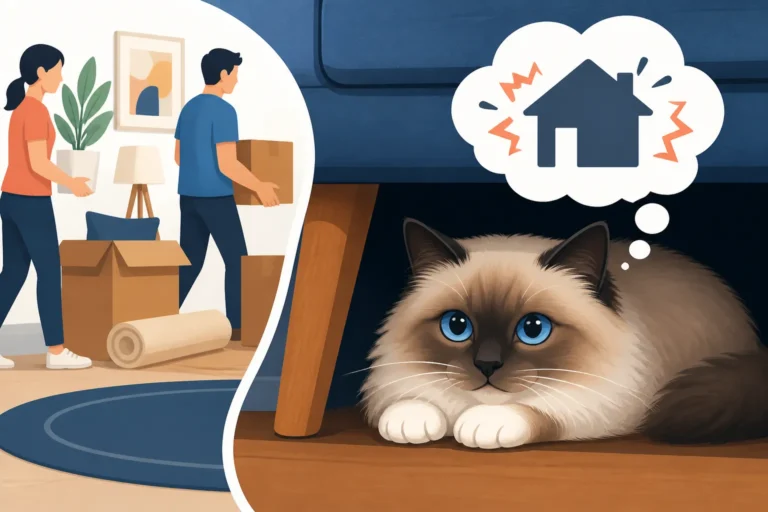
Birman hiding behavior occurs when environmental disruptions like furniture changes or new guests trigger stress and a need for security.

Birman overgrooming involves compulsive licking and hair loss. This text explains the signs, coat changes, and medical causes.

Birman cats losing their appetite often indicates underlying stress, environmental changes, or broken routines rather than mere fussiness.

Pet camera footage reveals how a home alone Birman spends the day resting, napping and quietly observing the surroundings.

Birman room setups reduce stress and anxiety during solitude by transforming empty spaces into safe, comforting, and enriching havens.

Birman cats left alone during long workdays can thrive by following specific environmental planning and companionship strategies.

Lonely Birman behavior signs include reduced vocalization, litter box changes, appetite loss, and sleep pattern disruptions.

What a Birman does home alone during a nine-hour workday, and why this companionable, people-oriented breed needs preparation and company.