Why a Birman Tolerates Toddlers
Birman cats possess an innate calmness and a flight instinct that helps them tolerate unpredictable toddlers without scratching.
Change the room, not the cat.
Litter box avoidance, scratching and furniture, multi-cat tension and night activity — and the vertical space, play routines and feeding puzzles that solve more than correction does.

Birman cats possess an innate calmness and a flight instinct that helps them tolerate unpredictable toddlers without scratching.

The Birman cat provides gentle, patient companionship for new parents because of its placid temperament and quiet demeanor.
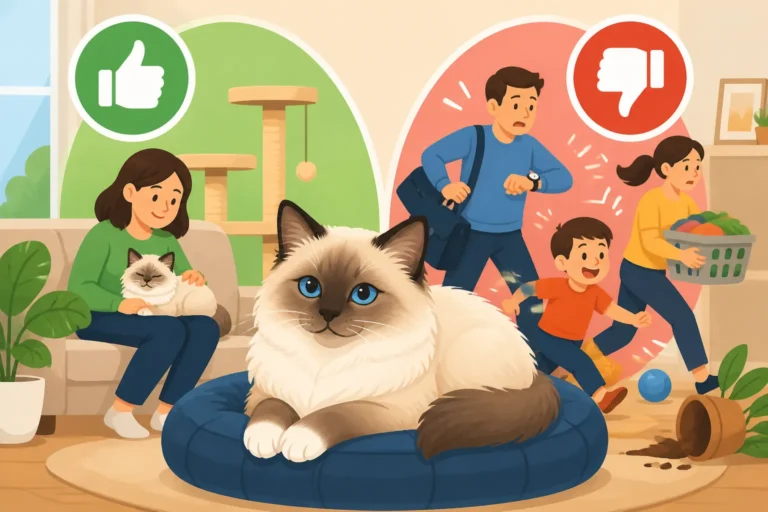
Birman cat temperament in a busy household, explaining how this calm and quiet breed adapts to children and active family life.
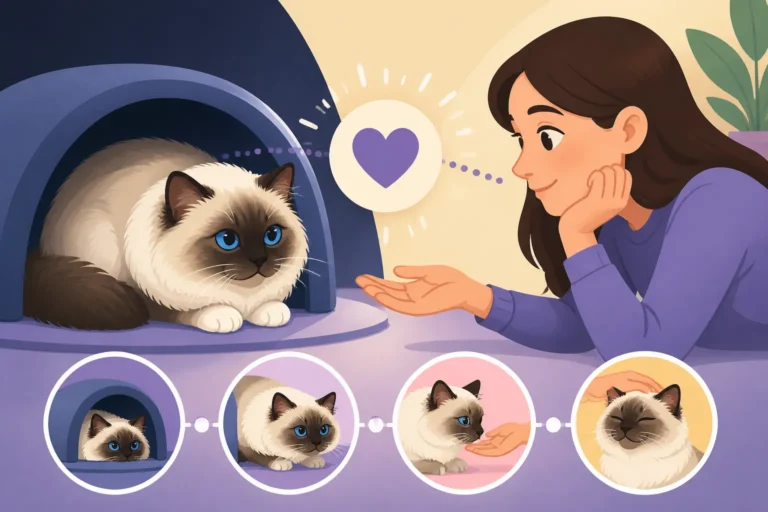
How long a Birman takes to trust someone new, a gradual process shaped by the breed’s gentle, placid nature, cautious observation and preference for routine.

The gentle Birman cat temperament explains why this social feline greets strangers instead of hiding away under the bed.

Birman cat behavior with visitors involves a calm mix of curiosity and polite reserve during initial meetings with strangers.

Birman cats watch people eat quietly instead of begging because their docile temperament makes them gentle and undemanding.

Birman cat temperament explains why this gentle and quiet breed waits patiently for breakfast without waking owners at dawn.

Birman cats use subtle signals like silent vigils, gentle paw taps, and strategic blocking to ask for doors to be opened.

Birman cat vocal communication involving the short trill explains the subtle greeting sound meant to connect with owners.