Why a Birman Comes Out to Meet Strangers
Many cat parents know the familiar drill: the doorbell rings, and their beloved feline companion instantly vanishes, only to reappear much later once the coast is clear. But if you share your home with a Birman, you've likely experienced a delightful deviation from this norm. This guide explores the fascinating temperament of the Birman cat, shedding light on why these enchanting creatures so consistently choose to emerge and greet strangers, rather than making a swift exit for the nearest hiding spot.
The Birman's Inherently Open and Social Nature
The Birman isn't just a pretty face with striking blue eyes and luxurious fur; they possess a personality that truly sets them apart in the feline world. Unlike some breeds that carry a deeply ingrained sense of cautious independence, the Birman has been selectively bred over generations for companionship and a profoundly gentle disposition. This inherent nature is the foundation of their willingness to engage with new people.
A Breed Shaped by Affection and Trust
The very history of the Birman breed suggests a cat destined for close human bonds. Legend has it that they were sacred temple cats, revered and cherished, and while the exact origins are debated, their development in human households points to a lineage where sociability was a valued trait. They weren't bred for hunting prowess or solitary living but for their calm presence and affectionate demeanor. Think about The Birman Is the Sacred Cat of Burma, and the Story Is a Legend – even in their mythical past, they are depicted as deeply connected to people. This long-standing connection to human companionship means that trust and interaction are often their default settings, rather than fear or aloofness.
Their temperament often places them somewhere wonderful in the feline spectrum, a beautiful balance. They possess the intelligence and engagement found in breeds like the Siamese, but without the insistent vocal demands, offering instead a soft, melodious trill. At the same time, they carry the placid, affectionate qualities of a Persian, yet with far less grooming needs and a more interactive spirit. This unique blend makes them approachable and curious, especially when new faces appear.
The Desire for Presence, Not Just a Lap
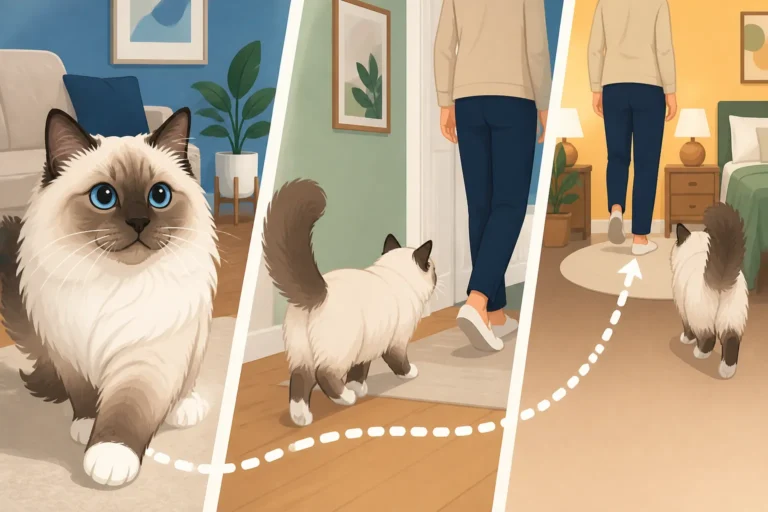
A Birman often expresses affection through proximity rather than constant physical contact. They are the cats who will follow you from room to room, settling quietly nearby, a comforting presence. This isn't about demanding attention, but about wanting to be part of the action, to share your space. This trait, beautifully described in Why a Birman Follows You Without Demanding Anything, extends to their interactions with visitors. When a stranger enters their territory, it's not a threat but an opportunity for another calm presence in their sphere. They're often too curious and too comfortable in their own home to simply vanish. They want to assess the new person, to understand their energy, and potentially to welcome them into their ever-expanding circle of "people who exist in my space."
This isn't to say they are indiscriminate. They still have preferences and will likely gravitate more strongly to those who offer gentle strokes or quiet attention. But the initial impulse is rarely to hide; it's to observe and, more often than not, to introduce themselves.
The Art of the Birman Greeting
When a stranger arrives at your door, you can almost anticipate the Birman's predictable, yet charming, sequence of actions. It’s a masterclass in feline social engagement, far removed from the dash-and-hide routine many other cats employ.
Curiosity Triumphs Over Caution
For many cats, an unfamiliar person signals potential danger, triggering an instinct to retreat. For the Birman, however, curiosity often outweighs this primal caution. Instead of bolting under the bed, they'll typically make a slower, more deliberate approach. You might notice them peeking around a corner first, or perhaps watching from the top of their favorite cat tree – one they might have found on Amazon, offering a perfect vantage point. This initial observation phase isn't born of fear, but of a genuine desire to understand and integrate the new stimulus into their world. They want to know who this person is, what they're doing, and if they're a source of potential gentle interaction.
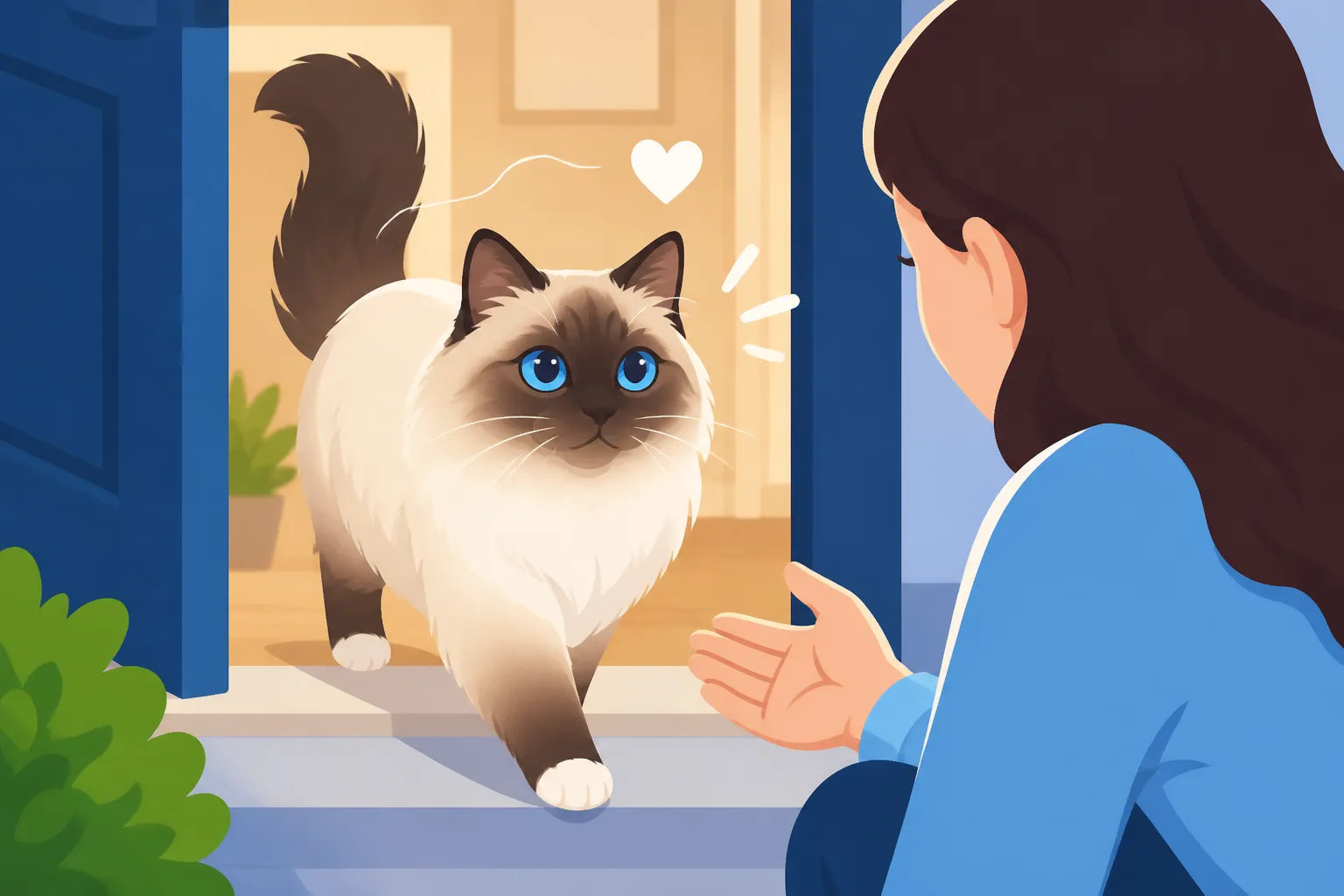
Once they've decided the coast is clear, they might emerge fully, perhaps with a soft tail wave or a quiet trill, indicating their readiness for engagement. This isn't a bold, demanding approach, but a polite, inquisitive one. They're inviting interaction, not demanding it, which makes them incredibly endearing to guests.
Reading the Room: A Birman's Intuition
Birmans are remarkably perceptive when it comes to human emotions and energy. They often seem to intuitively understand the difference between a boisterous, overwhelming guest and a calm, quiet visitor. A stranger who approaches slowly, speaks in soft tones, and extends a gentle hand is far more likely to receive an immediate, positive response. This keen intuition is part of what makes them such wonderful companions in a family setting, as discussed in Why the Birman Suits a Household With Children. They're not easily spooked by unexpected movements or loud noises as long as the underlying energy is benign.
Their desire to meet strangers isn't just a random act; it's often a calculated risk assessment based on the energy presented. They are not prone to aggressive displays or fear-based swatting. Instead, they prefer to keep their interactions peaceful and positive, mirroring their own gentle temperament. This means that if a guest is respectful, a Birman will often reward them with a friendly rub or a comfortable presence nearby.
Practicalities for the Birman Owner
While your Birman's social nature is undoubtedly a joy, it does come with a few considerations for responsible ownership. Knowing your cat is likely to greet everyone can influence how you introduce them to new people and ensure their continued safety and well-being.
Guiding Interactions and Ensuring Comfort
Even the friendliest Birman needs their boundaries respected. It's important to educate guests, especially those unfamiliar with cat etiquette, on how to properly interact. Advise them to let the Birman approach first, to offer a finger for sniffing, and to avoid sudden movements or loud noises. While Birmans are generally tolerant, like all cats, they appreciate being given control over the interaction. Having a comfortable, safe retreat available for your Birman, such as a cozy cat bed or a secure room, is still important. Even if they rarely use it with guests, knowing it's there can add to their overall sense of security.
For new visitors, a gentle pat on the head or a scratch under the chin, once the Birman has initiated contact, is usually welcome. Some Birmans might even enjoy a short play session with a feather wand toy, easily found on Amazon, as a way to bond with a new person. This supervised interaction allows them to build positive associations with new faces.
Managing a Social Butterfly
A Birman's enthusiasm for company means they genuinely thrive on interaction. If you have a busy household with frequent visitors, your Birman will likely be in their element. However, if you live alone and frequently have friends over, be prepared for your Birman to want to be part of the conversation. This breed genuinely dislikes being left out. They don't just "tolerate" company; they often actively seek it. This gregariousness also highlights why Why a Birman Does Badly as an Only Cat is a common piece of advice among breeders and enthusiasts. Their need for companionship is profound, making them excellent candidates for multi-pet households.
You might find your Birman settling near your guests, observing with keen interest, or even approaching for a gentle head bunt. Their undemanding nature means they rarely interrupt conversations but will soak up any positive attention offered. This makes them truly delightful hosts!
Comparing the Birman's Sociability to Other Felines
It’s truly in their nature to be friendly, a trait that stands out when you compare them to the general feline population. Their social inclinations are a cornerstone of their personality and a key reason why they are often recommended for various living situations.
A Cat That Breaks the Mold of Aloofness
Many cats are stereotyped as aloof, independent creatures, perfectly content to ignore their human companions and certainly any strangers. While this can be true for many breeds, the Birman is a refreshing exception. Their tendency to greet visitors isn't a rare occurrence; it's a hallmark of the breed. This contrasts sharply with the often shy or even fearful reactions seen in other cats when confronted with unfamiliar people. Where a domestic shorthair might dash for cover, a Birman is more likely to slowly amble into the living room, tail high, ready to sniff out the new scents and sounds.
They embody the phrase "gentle giant" in spirit, if not always in immense size. Their confidence around people is a testament to their calm demeanor and deep trust in their human environment. They rarely perceive strangers as a threat, but rather as interesting novelties to investigate, which is a rare and cherished trait in a cat.
The Deep Need for Companionship
This readiness to interact with strangers isn't just a quirk; it's an extension of their profound need for companionship. A Birman thrives on being part of the family, whether that family includes permanent residents or temporary guests. This is why neglecting their social needs can lead to issues; Why a Birman Should Not Be Left in an Empty House addresses the potential for loneliness and stress when these social cats are deprived of interaction for extended periods. They truly do better with company, whether it's another Birman, a calm dog (as explored in Why a Birman Settles Next to a Dog Within a Week), or simply a household that is often bustling with people.
Their social nature makes them less prone to behavioral problems stemming from boredom or isolation, assuming their basic needs for company are met. They are generally adaptable and forgiving, making them ideal companions for those who appreciate a cat that is truly part of the social fabric of the home.
The Birman's inclination to emerge and greet strangers is one of their most endearing and defining characteristics. It stems from a rich history of human companionship, a naturally gentle and curious temperament, and an inherent need for social connection. For Birman owners, this means welcoming guests into a home that often feels more complete with a furry, four-legged greeting committee.
| Trait | Birman's Approach to Strangers | Typical Cat's Approach to Strangers |
|---|---|---|
| Initial Reaction | Curiosity, observation, slow approach | Retreat, hiding, cautious assessment from afar |
| Engagement Level | High; often seeks interaction | Low; avoids direct contact |
| Vocalization | Soft trills, quiet greetings | Silence, occasional hiss/growl if cornered |
| Body Language | Relaxed, tail up (questioning or friendly) | Tense, flattened ears, tail tucked |
| Trust Factor | High; assumes benign intent | Low; assumes potential threat |
| Adaptability | Easily adapts to new people | Requires long adjustment periods |
Disclaimer
This article is for general informational purposes only and does not constitute professional advice. Laws, prices and regulations vary by location and change over time. Consult a qualified professional for guidance on your specific situation.