Which Brush Head Fits a Birman’s Small Mouth
We all know the struggle: you love your Birman dearly, and you want to do everything right for their health, but the idea of sticking a toothbrush into their elegant, refined mouth can feel like trying to negotiate with a tiny, furry diplomat. Many Birman parents worry about finding a toothbrush that isn't too large or awkward for their cat's delicate features, and this guide is here to help you navigate the options and make dental care a stress-free part of your routine.
Understanding Your Birman's Unique Oral Anatomy
Before we even get to picking out a brush, it’s really helpful to understand why your Birman's mouth might feel different when you try to get in there. They aren't built like a big, sturdy dog, and even compared to some other cat breeds, Birmans have a distinct oral structure that influences your choice of tools. It’s not just about getting the brush in; it’s about being effective and comfortable for your cat.
The Birman Jawline and Tooth Spacing
Birmans are known for their beautiful, medium-sized, semi-longhaired build, but their facial structure is quite refined. Their head is broad and rounded, yet their muzzle tends to be shorter and more delicate than, say, a domestic shorthair. This means their jawline can be narrower, and the space between their teeth can sometimes feel a bit more cramped. It’s not necessarily a "small" mouth in terms of overall size, but rather a more compact and elegant arrangement that requires a bit more precision when brushing.
Think about it: when you try to maneuver a standard-sized cat toothbrush, you might find it bumping against their canines or struggling to reach those back molars because the brush head itself is just too wide. This isn't a fault of your Birman; it's simply their natural build, and it's why choosing the right brush head is paramount. If you try to force a brush that's too big, you'll not only be ineffective at cleaning, but you'll also make the experience unpleasant, leading to resistance down the line. We really don't want to make dental time a wrestling match, especially with such a Why a Quiet Birman Is Easy to Misread and gentle breed.
Why Dental Care Is Crucial for Birmans
Just like us, cats can develop plaque and tartar buildup, which can lead to gingivitis, periodontal disease, and even more serious health issues if left unchecked. What makes this particularly poignant for Birmans, with their wonderfully placid temperaments, is that they are masters at hiding discomfort. A Birman might be suffering from significant dental pain, but instead of yowling or swating, they might just become a little more withdrawn, eat a bit less enthusiastically, or stop playing as much. It's so important to be proactive because they won't always tell you directly when something is wrong.
Regular brushing, even just a few times a week, can drastically reduce the risk of these problems. It helps scrub away that daily accumulation of bacteria and food particles before it hardens into tartar, which can only be removed by a vet under anesthesia. If you ignore it, you’re not just risking bad breath (though that’s certainly a consequence!); you're risking severe gum inflammation, tooth loss, and even systemic infections when bacteria from the mouth enter the bloodstream. Nobody wants that for their beloved companion. Getting ahead of Why Gum Disease Creeps Up on a Birman is a huge part of being a responsible Birman parent.
Deciphering the World of Cat Toothbrush Heads
So, with that delicate Birman mouth in mind, what are our options for brush heads? It can feel overwhelming with all the different shapes and sizes out there, but let’s break down the most common types and figure out which one might be your Birman’s new best friend. Remember, the goal is effective cleaning without causing any discomfort.
Finger Brushes: A Gentle Start
Finger brushes are often the first thing people reach for when starting out, and for good reason. They're typically soft silicone or rubber, designed to slip over your finger, with little nubs or bristles that you can gently rub along your cat's teeth and gums.
Pros:
- Ease of Introduction: For a kitten or a cat new to dental care, a finger brush is fantastic because it allows for a very tactile, gentle introduction. Your cat gets used to your finger being in their mouth, which is a big first step. It feels less imposing than a traditional toothbrush.
- Control: You have a lot of direct control over the pressure and angle, making it easier to be gentle in sensitive areas.
- Accessibility: They're inexpensive and widely available. You can grab a pack on Amazon without much fuss.
Cons:
- Limited Effectiveness: While great for getting cats accustomed to brushing, the nubs or soft bristles on many finger brushes aren't as effective at removing plaque as traditional nylon bristles. They do more massaging than scrubbing.
- Size: Paradoxically, while they feel less imposing, some finger brushes can still be quite bulky inside a smaller cat's mouth, especially if you have larger fingers. It can be hard to reach the back teeth without causing a gag reflex.
- Durability: They can wear out quickly or be chewed through by a determined feline.
How to Use: Start by just letting your Birman lick off some pet-safe toothpaste from the finger brush. Then, very gently, try to rub the outside surfaces of their front teeth. Don't worry about the inside surfaces or back teeth at first. The aim is positive association. This is a brilliant stepping stone, especially for a kitten at twelve weeks (Introducing a Toothbrush to a Birman at Twelve Weeks).
Dual-Headed Brushes: Reaching All Angles
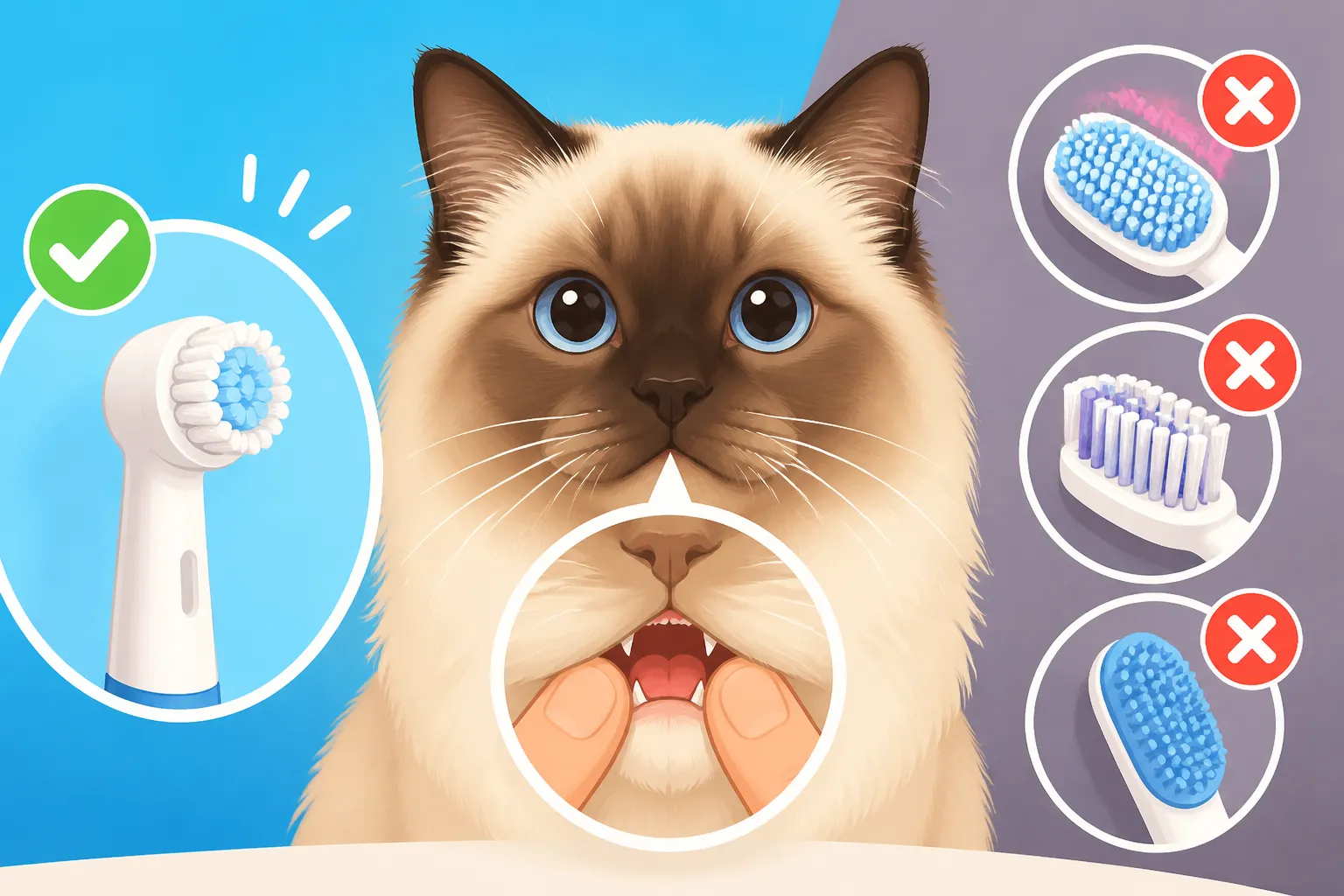
These are arguably the most popular type of cat toothbrush for ongoing dental care. They often feature two small brush heads at opposite ends, angled differently. One head is usually slightly larger, and the other is smaller.
Pros:
- Tailored Sizes: The presence of two heads gives you options. The smaller head is often perfect for a Birman's more compact jawline, allowing you to get into tighter spots without overstretching their mouth.
- Improved Reach: The different angles of the heads make it easier to reach both the front and back teeth, as well as the outer surfaces where plaque tends to accumulate most. You can swap ends as needed to get the best angle.
- Effective Cleaning: With soft, nylon bristles, these brushes are much more effective at disrupting and removing plaque than silicone finger brushes.
Cons:
- Initial Acceptance: Some cats might be more wary of a bristled brush than a soft finger brush, so a gradual introduction is still key.
- Still Can Be Bulky: Even with smaller heads, if your Birman has a particularly tiny mouth, some dual-headed brushes might still feel a bit large. It’s all about finding the right brand and model.
How to Choose Sizes: Look for brands that specifically market "small breed" or "kitten" sized dual-headed brushes. The smaller the brush head circumference, the better. You want it to be able to comfortably reach the molars without you having to pry your Birman's mouth wide open, which they absolutely detest. Many pet supply stores like Chewy carry a good variety, so you can compare options.
Single-Headed (Human Child-Sized) Brushes: Sometimes the Best Fit
This might sound counterintuitive, using a human toothbrush for a cat, but hear me out. For some Birmans, especially those with particularly narrow mouths, a very soft-bristled, single-headed toothbrush designed for human infants or toddlers can be an excellent choice.
Pros:
- Very Small Head: These brushes often have the smallest heads available, which can be a game-changer for really getting into those tight spaces around a Birman’s premolars and molars without causing discomfort.
- Ultra-Soft Bristles: Human infant toothbrushes are designed to be extremely gentle on delicate gums, which is exactly what you want for your cat to avoid irritation.
- Precision: The single head allows for very precise maneuvering, letting you target specific teeth or problem areas.
Cons:
- Less Angled: Unlike specialized cat brushes, they aren't typically angled for a cat's mouth, so you might need to adjust your grip and approach to get to certain spots.
- Perception: It might feel a bit odd to use a human product, but if it works for your cat, that's what truly matters!
Emphasize Softness as Key: If you go this route, always, always choose an "extra-soft" or "baby soft" bristle. Never use a medium or hard-bristled brush on your cat's delicate gums. You’re aiming to gently sweep away plaque, not scour their enamel or irritate their gum line. The bristles should feel like silk against your own fingertip.
Here’s a quick overview to help you compare:
| Brush Type | Pros for Birman's Mouth | Cons for Birman's Mouth | Ideal For |
|---|---|---|---|
| Finger Brush | Gentle introduction, good control, widely available on Amazon | Less effective cleaning, can be bulky for smaller mouths | Kittens, cats new to brushing, establishing routine |
| Dual-Headed Brush | Small head option, improved reach, effective plaque removal | Can still be bulky if not specifically "kitten" sized | Regular maintenance, reaching all tooth surfaces (look on Chewy) |
| Human Infant Brush | Smallest head size, ultra-soft bristles, precise targeting | Not cat-angled, requires careful selection of "extra-soft" | Very narrow mouths, precise cleaning, cats resistant to larger brushes |
When you're trying to figure out Which Brush Head Fits a Birman's Small Mouth, it often comes down to trying a couple of different options to see what your individual cat tolerates best. What works for one Birman might not be perfect for another.
Practical Tips for Birman Dental Hygiene
Choosing the right brush head is a fantastic start, but it’s only one piece of the puzzle. Successful dental hygiene for your Birman involves patience, consistent technique, and making the experience as positive as possible. Remember, you’re building a habit for a lifetime, and for a cat that Whether a Birman Keeps Its Teeth Into Its Teens, those habits really pay off.
Gradual Introduction and Positive Reinforcement
This is absolutely crucial, especially with a placid but sometimes sensitive Birman. You can’t just shove a toothbrush into their mouth one day and expect success. It’s a multi-step process that can take days, weeks, or even a couple of months.
Steps to Success:
- Introduce Toothpaste First: Start by letting your Birman just lick a tiny bit of pet-safe, enzymatic toothpaste (never human toothpaste!) off your finger. Make it a tasty treat. Chicken or fish flavored toothpastes are usually a big hit. Do this for a few days until they eagerly anticipate it. This teaches them that "dental time" means yummy treats. Which Flavored Toothpaste a Birman Will Accept is often a matter of trial and error!
- Finger Massage: Once they love the toothpaste, put a tiny dab on your finger and gently rub it along their gum line and the outside of their teeth. Focus on the canine teeth and the front incisors first, as these are easiest to access. Again, short sessions, lots of praise, and maybe another lick of toothpaste afterwards.
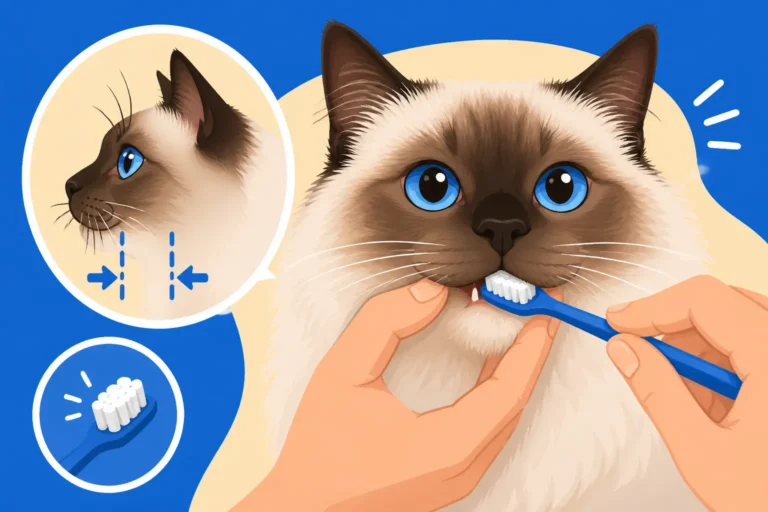
- Introduce the Brush: Once they are comfortable with your finger, introduce your chosen brush head. Let them lick toothpaste off the brush itself. Then, very gently, start by repeating the same motion you did with your finger – brushing the canines and front teeth.
- Gradually Increase Duration and Reach: Over time, slowly work your way towards the back teeth and try to brush for longer periods. Aim for 30 seconds per side, if possible, but any brushing is better than none! Always end with praise and a reward. Remember, your Birman is generally quite amenable to gentle handling, and What a Birman Will Work For During Grooming is often just your affection and a tasty reward.
The key here is consistency and positive association. If they resist, stop and try again later. Never force it, as that will create a negative association that’s very hard to undo. Make it a calm, predictable part of your routine.
Choosing the Right Toothpaste and Technique
While we’ve talked about the brush, the toothpaste is equally important.
- Pet-Specific and Enzymatic: Always use a toothpaste formulated for cats. These contain enzymes that help break down plaque, and they are safe for your cat to swallow (unlike human toothpaste, which can contain xylitol or fluoride that is toxic to pets).
- Flavor is Key: As mentioned, chicken, fish, or malt flavors are typically well-received.
- Gentle Technique: When brushing, hold the brush at a 45-degree angle to the gum line, aiming the bristles towards the gum. Use small, gentle circular motions. Focus on the outside surfaces of the teeth, as these are where plaque mostly accumulates. You don't need to scrub vigorously; gentle but thorough strokes are more effective and less irritating.
- Reach the Back: Once your Birman is comfortable, try to gently lift their lip to reach the molars at the back. These are often the hardest to get to, but they're crucial. The smaller brush heads we discussed earlier will shine here. Remember, your Birman has a pretty narrow jaw (How Often a Birman's Narrow Jaw Needs a Scale and Polish) already, so gentle care is key.
Beyond Brushing: Other Dental Health Support
While brushing is the gold standard for at-home dental care, there are other tools that can complement your efforts. Think of them as supplemental, not replacements.
- Dental Diets: Some prescription dental diets are specifically designed with kibble that has a unique texture or coating to help scrape plaque off teeth as your cat chews. Others contain ingredients that help reduce plaque accumulation. These can be helpful additions, especially if your Birman is resistant to brushing.
- Water Additives: Certain water additives contain ingredients that can help reduce bacteria in the mouth and freshen breath. Simply add them to your cat's drinking water. Again, these are not a substitute for mechanical brushing, but they can offer an extra layer of protection.
- Dental Chews/Treats: Some treats are formulated to help clean teeth through mechanical action as your cat chews them. Look for veterinary-approved dental treats, as not all treats marketed for "dental health" are truly effective.
- Regular Vet Check-ups and Professional Cleanings: No amount of at-home care can completely prevent all dental issues. Your veterinarian will check your Birman's teeth during their annual exams. If significant tartar buildup or gum disease is present, they may recommend a professional dental cleaning. This procedure, performed under anesthesia, allows the vet to thoroughly clean, scale, and polish the teeth, as well as address any extractions or other issues. Don’t delay if your vet recommends it; it’s an investment in your cat’s overall health. A Birman, with their lovely placid nature, might hide pain well, so How Often a Birman's Teeth Come Off the Vet's List at the vet is vital. Early detection of issues is always better. As your Birman gets older, around the age of eight, What a Birman's Yearly Panel Should Include After Eight often starts including more comprehensive dental assessments, because just like us, their teeth and gums can start to show their age.
By combining the right tools, a gentle approach, consistent effort, and professional veterinary care, you can ensure your Birman enjoys a healthy mouth and a long, comfortable life free from dental pain. It’s a commitment, but one that’s absolutely worth it for these wonderful companions.
Disclaimer
This article is for general informational purposes only and does not constitute professional advice. Laws, prices and regulations vary by location and change over time. Consult a qualified professional for guidance on your specific situation.