Why a Birman Costs Less to Groom Than a Persian
It's a common fear, isn't it? You fall head over heels for a gorgeous long-haired cat, picturing elegant fluff and serene cuddles, only to be met with the terrifying reality of daily matting, endless brushing, and potential professional grooming bills that can empty your wallet. Many aspiring cat parents shy away from breeds like the Persian, convinced that a life of constant detangling is their only option. But if you've been eyeing the magnificent Birman, you might be surprised to learn that their grooming needs are significantly less demanding, and thus less costly, than their famously fluffy Persian cousins. This guide will walk you through exactly why the Birman offers a much more manageable grooming experience, saving you time, effort, and money.
The Birman's Coat: A Silky Dream, Not a Tangled Nightmare
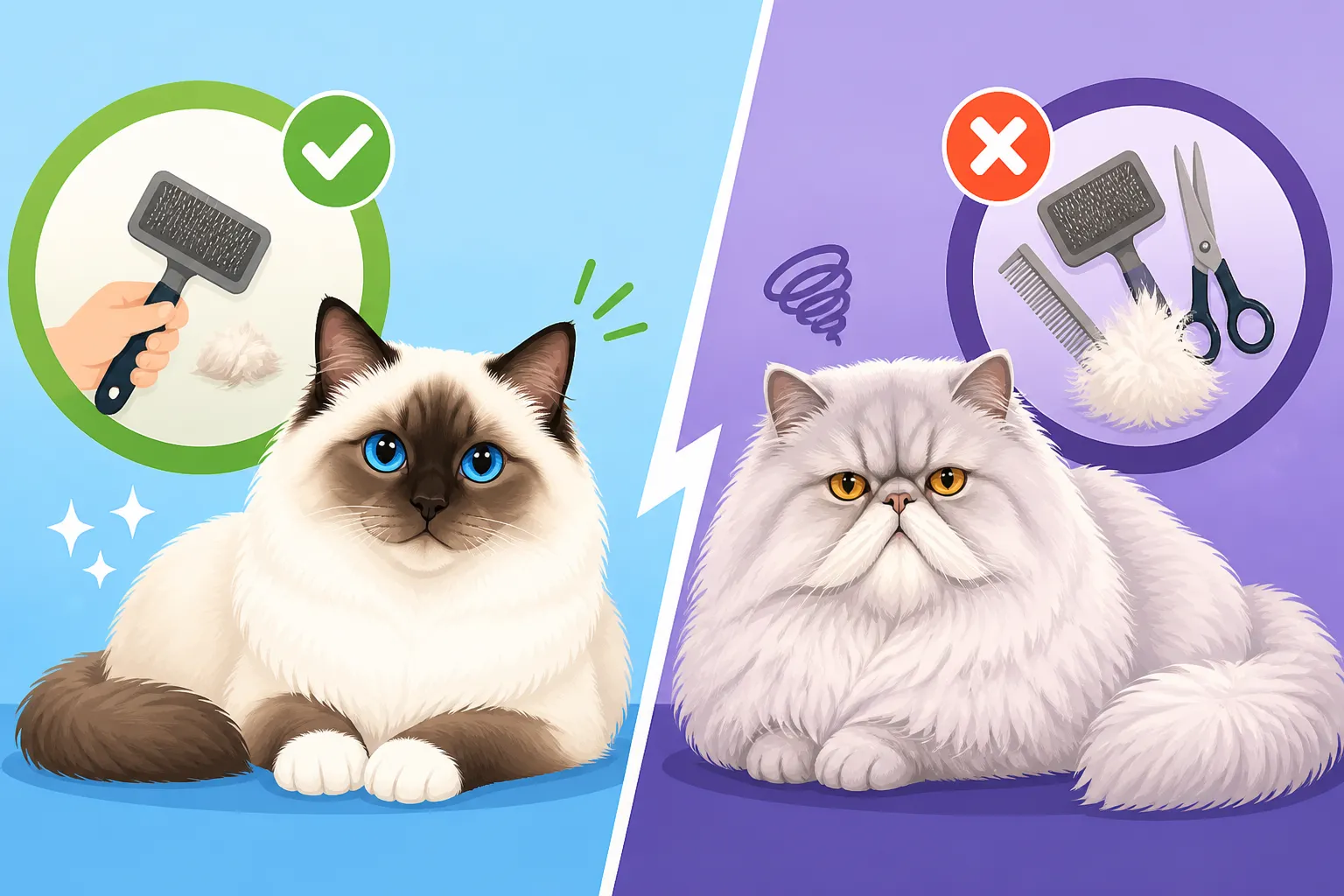
When you think of a long-haired cat, often the image that comes to mind is a Persian with its gloriously dense, flowing locks. It’s a beautiful sight, but that beauty comes with a hefty grooming price tag. The Birman, on the other hand, manages to achieve that same stunning long-haired elegance without the associated high maintenance. The secret lies in its unique coat structure, a distinguishing feature that makes all the difference in daily care and overall cost.
The Single-Layered Secret: No Undercoat, No Problem
The most critical factor in the Birman's easier grooming is its lack of a dense undercoat. Unlike many other long-haired breeds, the Birman has a single coat of silky, medium-long guard hairs. What does this mean in practical terms for you, the owner? It means significantly less matting. Picture running your fingers through a Birman's fur; it glides smoothly, almost like silk ribbons. There's no woolly, cotton-like layer underneath to trap loose hairs, dirt, or moisture and quickly felt into tight, painful mats against the skin.
This single layer also means that dirt and debris are far less likely to become embedded deep within the coat. A Birman's fur often feels surprisingly light and airy despite its length. You'll find that a quick, gentle comb through is usually all it takes to remove any stray bits of litter or outdoor detritus (if your Birman has a safe, enclosed outdoor space like a catio). This ease of brushing translates directly into less time spent wrestling with your cat and fewer expensive de-matting sessions at the vet. For more insights on this unique coat, check out No Undercoat Is What Makes a Birman Easy to Groom.
Shedding: Manageable, Not an Avalanche
While no cat is truly non-shedding, the Birman's shedding is generally quite manageable, especially when compared to a Persian. Because they lack that dense undercoat, there isn't a massive volume of fine, woolly hairs to drop all over your furniture and clothes. Birmans will still shed, particularly during seasonal changes, but you're not likely to encounter the veritable "fur-nado" that a Persian can create.
The hairs they do shed are typically longer and softer, making them somewhat easier to spot and clean up with a lint roller or vacuum. Regular combing, perhaps two or three times a week, is usually sufficient to capture most loose hairs before they become airborne. This routine not only keeps your home tidier but also significantly reduces the risk of hairballs for your Birman, which can lead to digestive upset and vet visits. You might be surprised to learn How Much a Coat With No Undercoat Actually Sheds.
Maintaining the Glorious Ruff and Tail Plume
Even with their easy-care coat, Birmans still boast magnificent features like their substantial ruff around the neck and their impressive, plumed tail. These areas are where the fur is longest and most luxurious, naturally requiring a bit more attention. However, "more attention" for a Birman is still far less demanding than a Persian's overall grooming needs.
For the ruff, a comb with widely spaced teeth is often enough to keep it free of tangles and looking pristine. You'll want to gently work through this area, paying attention to behind the ears where a little friction might occur. The tail plume, while stunning, also benefits from a regular, gentle comb-through to prevent any stray hairs from tangling, especially if your Birman enjoys trotting around with its tail held high. The good news is that these specific areas are still comprised of that same silky, non-matting hair, so while they are longer, they rarely present a significant challenge. If you're wondering about the best tools, you'll find helpful advice in Which Comb Gets Through a Birman's Ruff Without Pulling.
The Persian's Double Coat: A Grooming Marathon
Now, let's pivot to the Persian. While undeniably beautiful with their luxuriant, flowing coats, they represent the polar opposite of the Birman in terms of grooming demands. The very features that give them their iconic look are also the source of an almost constant battle against mats and tangles.
The Double Trouble: Dense Undercoat and Matting Nightmares
The hallmark of a Persian's coat is its extreme density and length, comprising both a long, glossy outer coat and an incredibly thick, woolly undercoat. This undercoat is what creates that plush, opulent feel, but it's also a magnet for trouble. Loose hairs from the undercoat, shed but unable to fall free, quickly intertwine with the longer guard hairs, forming dense, painful mats. These mats aren't just an aesthetic problem; they pull at the skin, causing discomfort, irritation, and can even lead to skin infections if left untended.
Common areas for mats on a Persian include behind the ears, in the armpits, on the belly, and around the hindquarters (often called the "britches"). These areas experience a lot of friction and are prone to accumulating moisture or debris, accelerating the matting process. It's not uncommon for a Persian owner to spend a significant portion of their day meticulously combing and brushing, only to find new mats forming within hours.
Daily Commitment: Time and Tools
Managing a Persian's coat is truly a daily commitment, often requiring multiple grooming sessions throughout the day. Skipping even one day can mean a snowball effect where small tangles quickly become large, impenetrable mats. The tools required are also more specialized and extensive than those for a Birman. You'll likely need a combination of wide-toothed combs, fine-toothed combs, slicker brushes, and even dematting rakes or shears designed specifically for tackling dense undercoats without damaging the topcoat or irritating the skin.
Many Persian owners quickly realize that professional grooming is not an occasional indulgence but a regular necessity. If you're working full-time or have other demanding responsibilities, finding the hours each day to adequately groom a Persian can feel impossible. Professional groomers have the specialized tools, expertise, and often the patience to tackle difficult coats, but these services come at a significant, recurring cost.
Shedding Season: An Avalanche of Fur
When a Persian "blows its coat" during seasonal shedding, be prepared for an interior snowstorm. The sheer volume of undercoat that can be shed is astounding. This means a constant battle against fur accumulating on furniture, carpets, and clothes. While regular grooming helps mitigate this, it's virtually impossible to completely contain the shedding of a dense double-coated breed.
This intense shedding requires more frequent vacuuming and cleaning, and can be a particular challenge for individuals with allergies. Furthermore, the amount of ingested fur during self-grooming means Persians are more prone to hairballs, which can range from a minor annoyance to a serious health concern requiring veterinary intervention if they cause blockages.
Practical Differences in Grooming Regimens and Costs
Now that we've explored the fundamental differences in their coats, let's break down what that means for your grooming routine and, most importantly, your wallet. The contrast here is stark, making a clear case for the Birman's cost-effectiveness.
Frequency and Effort: A Clear Contrast
For a Birman, a grooming routine typically involves two to three quick combing sessions per week, each lasting perhaps 5-10 minutes. These sessions are usually pleasant for both cat and owner, serving as a gentle bonding experience rather than a wrestling match. The goal is primarily to remove loose hairs and prevent the very occasional small tangle that might form in high-friction areas. For more details on this manageable schedule, see Combing a Birman Three Times a Week.
A Persian, however, demands daily, often twice-daily, attention. Each session can easily extend to 20-30 minutes, sometimes longer if mats have started to form. It’s a labor-intensive process that requires patience and a systematic approach to comb through every layer of that dense coat. Failing to keep up can quickly lead to severe matting, which may necessitate a trip to the vet for sedation and a full shave – a costly and stressful experience for everyone involved.
Tools of the Trade: Simple vs. Specialized
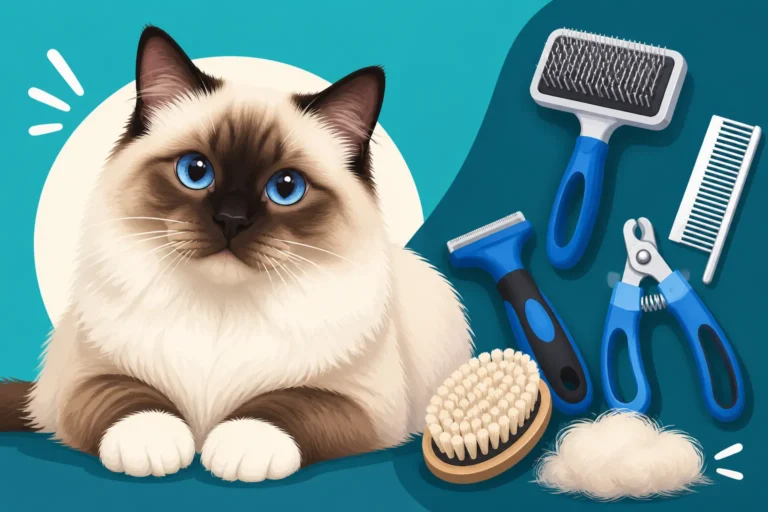
The grooming kit for a Birman is refreshingly simple and affordable. A good quality metal comb with both wide and fine teeth is usually all you need. You might add a soft bristle brush for a final shine, but truly, the comb does the heavy lifting. Brands like Chewy offer a wide range of reliable, basic grooming tools that will last you years without breaking the bank.
A Persian's grooming arsenal, however, is far more extensive and expensive. Beyond multiple types of combs and brushes (including slickers and pin brushes), you'll likely need undercoat rakes to pull out shedding undercoat, mat splitters, and even blunt-nosed scissors for carefully cutting out stubborn mats. These specialized tools are often pricier, and you might find yourself replacing them more frequently due to wear and tear from constant use. Investing in high-quality, effective tools for a Persian is non-negotiable if you want to keep their coat healthy, but it adds to the initial and ongoing cost. To see how simple the Birman's needs are, consider What a Comb for a Birman's Silky Coat Costs.
Professional Grooming: A Necessity vs. a Luxury
This is perhaps where the cost difference truly skyrockets. For a Persian, regular professional grooming is often a necessity, not just a luxury. Many owners opt for professional services every 6-8 weeks to keep their cat's coat in prime condition, prevent severe matting, or even for hygienic clips (like a "lion cut") that drastically reduce grooming at home. Each of these sessions can be quite expensive, and these costs add up significantly over a cat's lifetime.
For a Birman, professional grooming is very rarely needed. Most Birman owners can easily manage their cat's coat at home with minimal effort. A professional groomer might be consulted if an elderly Birman struggles to groom itself, or if there's an unusual mat that needs careful attention, but these instances are exceptions rather than the rule. The savings here, both in terms of direct cost and the stress of transporting your cat, are substantial. Thinking about what a full session might entail for a Birman? You'll find insights in How Much a Groomer Charges for a Birman.
Long-Term Health and Related Costs
Beyond the immediate grooming expenses, the differences in coat care can also influence long-term health and associated veterinary costs for both breeds. Keeping a cat's coat healthy is not just about aesthetics; it's a vital part of their overall well-being.
Preventing Skin Issues and Discomfort
For a Persian, neglected matting can quickly lead to serious skin problems. Mats create a breeding ground for bacteria and yeast, trapping moisture and preventing air circulation. This can result in painful hot spots, skin infections, and severe irritation. If a cat is severely matted, a vet visit is essential, often involving sedation to safely shave the mats without injuring the cat's skin. The cost of such a procedure, along with any necessary antibiotics or anti-inflammatory medications, can be significant.
Birmans, with their non-matting coats, are far less susceptible to these types of skin issues stemming directly from coat neglect. Their skin can breathe, and any minor irritations are usually easily spotted and addressed during a routine comb-through. This vastly reduces the likelihood of expensive, coat-related veterinary interventions. Learning how to properly remove a mat from any cat's coat is crucial, so read How to Get a Mat Out of a Birman's Coat if you ever encounter one.
Dental Care: A Shared But Distinct Need
While not directly related to coat grooming, it's important to remember that all cats, including both Birmans and Persians, require consistent dental care, which is a significant ongoing cost regardless of breed. The Birman, with its refined, sometimes narrower jawline, can be prone to dental issues if not properly cared for. Dental disease can lead to painful infections, tooth loss, and even systemic health problems.
Routine veterinary dental cleanings under anesthesia are essential for many cats, and these procedures can be expensive. Regular at-home brushing is the best preventative measure, and with a placid Birman, this is often a much easier task than with more resistant breeds. Consider exploring ways to introduce dental hygiene early by reading Getting a Toothbrush Into a Birman's Narrow Jaw. High-quality dental treats and specialized kibble can also help.
Insurance Considerations: Covering All Bases
When budgeting for a cat, pet insurance is a wise consideration, as it can help mitigate unexpected veterinary costs. While general grooming isn't typically covered by pet insurance, health issues that arise from severe matting, such as skin infections requiring veterinary treatment or emergency sedation for extensive shaving, might be. Similarly, coverage for dental disease can be invaluable.
The overall health profile of a breed, including predispositions to certain conditions, can influence insurance premiums. While Birmans have their own considerations, the reduced risk of coat-related health problems compared to Persians is a minor financial advantage. When researching insurance, companies like Healthy Paws are popular choices, and it's always worth asking about their coverage for specific breed-related concerns. Understanding what policies cover, and what they exclude, is crucial, especially concerning issues like HCM in Birmans, as detailed in Whether a Birman Policy Is Worth It Once HCM Is Excluded.
Comparing the Grooming and Associated Costs
To really drive home the difference, let's look at a comparative table. This isn't about specific dollar amounts, as those fluctuate wildly, but about the shape of the cost and effort.
| Feature | Birman Grooming | Persian Grooming |
|---|---|---|
| Coat Type | Single, silky, medium-long | Double, long, dense, woolly undercoat |
| Matting Risk | Very Low (occasional small tangles) | Very High (constant battle, rapid formation) |
| Grooming Freq. | 2-3 times per week | Daily, often twice daily |
| Session Length | 5-10 minutes | 20-30+ minutes |
| Tools Needed | Metal comb (wide/fine teeth), soft brush | Multiple combs, slicker brush, undercoat rake, mat splitter |
| Professional Grooming | Rarely needed, usually for specific issues | Often a regular necessity (every 6-8 weeks) |
| Cost of Tools | Low initial investment, durable | Moderate to high initial investment, specialized tools |
| Vet Costs (coat-related) | Very low (rarely for skin infections from mats) | Potentially high (sedation, shaving, infection treatment) |
| Overall Effort | Low, enjoyable bonding | High, demanding, can be stressful |
As you can see, the Birman clearly stands out as the more budget-friendly and time-efficient option when it comes to grooming. While you'll still need to dedicate some time to their beautiful coat, it's a far cry from the intensive, almost professional-level commitment required for a Persian.
Ultimately, if you dream of a regal, long-haired companion but are intimidated by the legendary grooming demands and associated costs, the Birman offers a truly delightful alternative. Their silky, single coat provides all the beauty with significantly less hassle, leaving you more time for cuddles and less for untangling.
Disclaimer
This article is for general informational purposes only and does not constitute professional advice. Laws, prices and regulations vary by location and change over time. Consult a qualified professional for guidance on your specific situation.