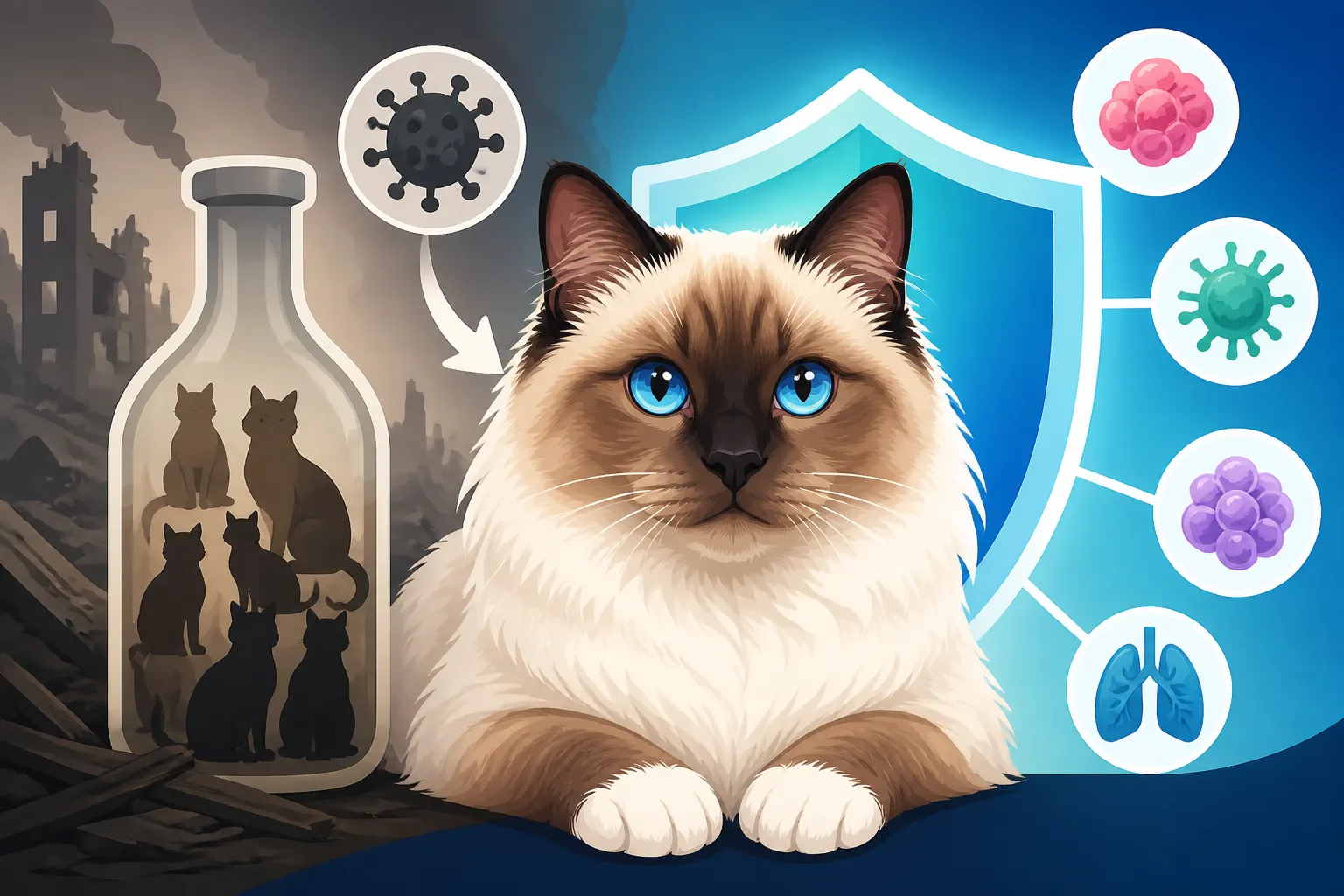
Which Diseases Survived the Birman’s Post War Bottleneck
The aftermath of World War II left many beloved cat breeds teetering on the brink, and our beautiful Birman was no exception. With drastically reduced numbers, the breed faced a severe genetic bottleneck, meaning a limited gene pool that inevitably concentrated certain hereditary health issues. This guide delves into the specific diseases that, unfortunately, managed to survive this critical period, helping you understand the genetic legacy our Birmans carry and how we can best protect them today.
The Post-War Bottleneck and Its Genetic Impact
The period following World War II was devastating for many European cat breeds, and the Birman breed was almost entirely wiped out. It's a sobering thought that the entire modern Birman population can trace its lineage back to an incredibly small number of cats. This dramatic reduction in numbers, often referred to as a genetic bottleneck, had profound and lasting consequences on the breed's health and genetic diversity.
The Catastrophic Reduction in Birman Numbers
Imagine a population shrinking from hundreds or even thousands to just a handful. That's essentially what happened to the Birman. During the war, catteries were destroyed, breeders were displaced, and the focus shifted from breeding to basic survival. Food was scarce, and veterinary care was almost non-existent. The breeding programs that had carefully cultivated the Birman for decades were shattered. Many beloved lines were lost forever, leaving behind just a precious few individuals to restart the entire breed. This meant that the genetic material available for future generations became incredibly restricted, amplifying any underlying genetic predispositions present in those few surviving cats. We often talk about how two cats in 1945 shaped the Birman's health, illustrating just how close the breed came to extinction.
The Role of Outcrossing in Survival
To pull the Birman back from the brink, breeders had to make difficult but necessary choices. To prevent further inbreeding depression and ensure the breed's survival, careful outcrossing with other longhaired breeds was undertaken. This meant introducing genetic material from cats that were not pure Birmans, primarily Persians and occasionally other longhairs, to broaden the gene pool and increase vitality. While this strategy successfully saved the breed, it wasn't without its own set of complications. The new genetic contributions brought both benefits, like increased vigor, and potential drawbacks, including the introduction of new genetic predispositions or the re-introduction of existing ones that might have otherwise been bred out. Understanding which breeds were crossed in to save the Birman helps us appreciate the complex genetic tapestry of our modern cats.
Consequences for the Gene Pool
The most significant consequence of the bottleneck and subsequent outcrossing was the reshaping of the Birman's gene pool. While outcrossing added some diversity, it was still a very controlled and limited influx. The original genetic vulnerabilities present in the few surviving Birmans, combined with any new ones introduced through outcrossing, became more concentrated. This meant that certain recessive genes, which might have been rare and hidden in a larger, more diverse population, suddenly had a higher chance of being passed down and expressed. Breeders since then have worked tirelessly to identify and mitigate these inherited conditions, but the legacy of that bottleneck remains a critical factor in Birman health management.
Genetic Diseases That Persisted
Despite the best efforts of post-war breeders, some genetic health challenges inevitably endured through the bottleneck, becoming part of the Birman's genetic blueprint. Identifying these conditions has been a long and ongoing process, relying on careful observation, veterinary science, and dedicated genetic testing.
Identifying Key Remaining Health Concerns
The primary health concerns that persisted and are still carefully monitored in the Birman breed today include forms of hereditary kidney disease, heart conditions, and specific dermatological issues. These are not necessarily unique to Birmans, but their prevalence within the breed is a direct reflection of that narrow genetic foundation. For example, conditions like Hypertrophic Cardiomyopathy (HCM) and Polycystic Kidney Disease (PKD) became particularly relevant due to their presence in the outcross breeds used to reconstruct the Birman population. Another condition, a form of hypotrichosis linked to the FOXN1 gene, also made its presence known as breeders began to observe affected kittens. The focused work of modern breeders and veterinary geneticists has allowed us to pinpoint these specific issues, enabling proactive screening and breeding decisions to improve the breed's overall health.
The Challenge of Limited Genetic Diversity
One of the biggest hurdles stemming from the bottleneck is the inherently limited genetic diversity. Even with careful outcrossing, the genetic "starter pack" for the modern Birman was small. This means that if a particular gene mutation was present in one of the foundation cats, it had a much higher probability of being perpetuated throughout the breed, even if it caused a disease. It also means that finding completely "clear" lines for all known genetic issues can be incredibly challenging, and sometimes impossible without further careful, responsible outcrossing, which is a complex process. This ongoing challenge underscores why rigorous genetic testing and transparent sharing of results among breeders are absolutely vital. Reputable breeders understand this and often work with laboratories like Optimal Selection or Orivet to screen their breeding cats, ensuring they are not unknowingly contributing to the spread of these inherited conditions.
Understanding Hypotrichosis (FOXN1) in Birmans
One of the most concerning genetic conditions identified in Birmans is a form of hypotrichosis, or hairlessness, linked to a mutation in the FOXN1 gene. This condition is particularly heartbreaking because it affects kittens at a very young age and can be life-threatening.
The Mechanisms of FOXN1 Inheritance
Birman hypotrichosis is an autosomal recessive genetic disorder. This means that a kitten must inherit two copies of the mutated FOXN1 gene—one from each parent—to be affected by the disease. Cats that inherit only one copy of the mutated gene are considered carriers. They don't show any symptoms themselves, but they can pass the gene on to their offspring. If two carriers are bred together, there's a 25% chance with each kitten that it will inherit two copies of the gene and be affected, a 50% chance it will be a carrier, and a 25% chance it will be clear. This is why it's so critical to know if a cat is a carrier, and thankfully, a DNA test is readily available. Knowing how a Birman carrier is identified is paramount for responsible breeding programs.
Clinical Signs in Affected Kittens
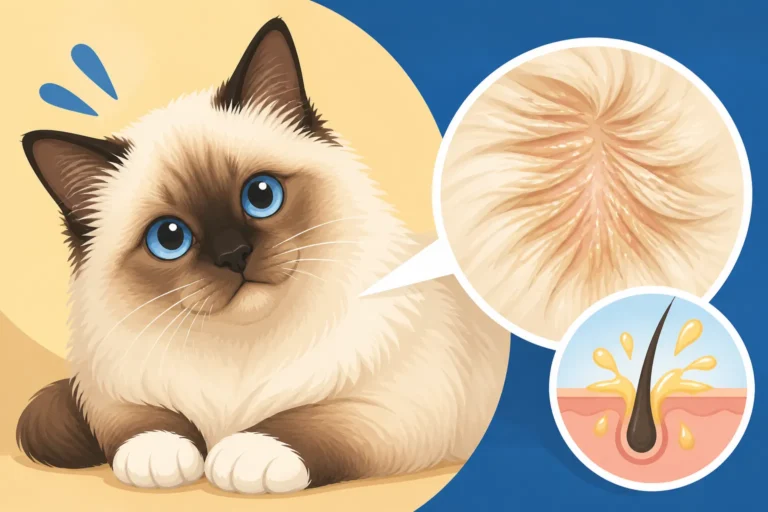
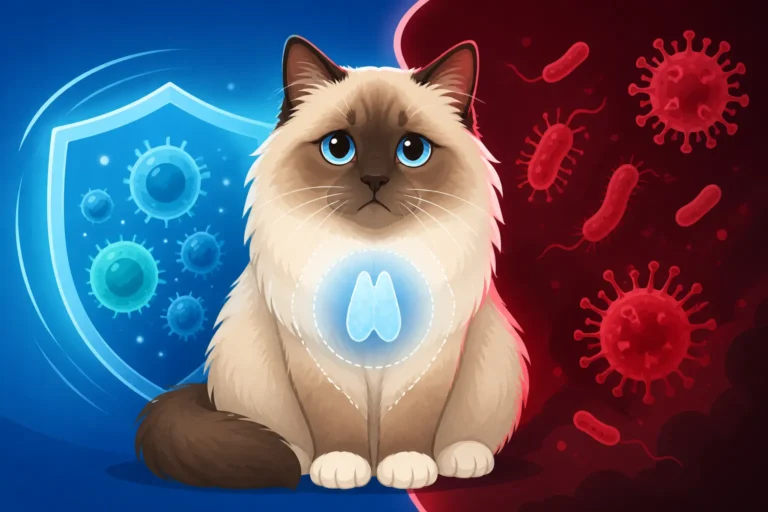
Kittens affected by FOXN1-related hypotrichosis are typically born completely bald or with an extremely thin, sparse coat. Unlike the gradual loss of fur seen in some other conditions, this is usually evident from birth or shortly thereafter. Beyond the lack of hair, these kittens often have a greasy appearance to their skin, which is very thin and fragile, making them susceptible to skin infections and temperature regulation problems. The FOXN1 gene is also crucial for the development of the thymus gland, which is a vital organ in the immune system. Therefore, affected kittens often have a compromised immune system, leaving them vulnerable to various infections. What FOXN1 does to a Birman kitten is profound; it leaves them unable to fight off common pathogens, making their prognosis very poor.
Management and Prevention Strategies
Sadly, there is no cure for FOXN1-related hypotrichosis. Most affected kittens do not survive past a few months of age due to severe immunodeficiency and complications from infections. The best, and indeed only, management strategy is prevention through responsible breeding. All breeding Birmans should be DNA tested for the FOXN1 gene. Cats identified as carriers can still be bred, but only to a cat that has been DNA tested as "clear" (meaning it has two normal copies of the gene). This ensures that no kitten in the litter will inherit two copies of the mutated gene and thus prevents the birth of affected kittens. This meticulous testing helps ensure that the beautiful Birman kittens we welcome into our homes are as healthy as possible.
Hypertrophic Cardiomyopathy (HCM) and Its Legacy
Hypertrophic Cardiomyopathy (HCM) is the most common heart disease in cats, and unfortunately, it is a significant concern within the Birman breed. While not directly a result of the post-war bottleneck, its prevalence was certainly exacerbated by the limited gene pool and the outcrossing to breeds like the Persian, which also have a high incidence of HCM.
How HCM Manifests in Birmans
HCM is characterized by a thickening of the heart muscle, particularly the walls of the left ventricle. This thickening makes it harder for the heart to pump blood effectively, leading to a range of potential issues, from subtle changes to severe heart failure. In Birmans, as with other breeds, the disease can be insidious, often progressing silently for years before any obvious symptoms appear. When symptoms do emerge, they can include lethargy, decreased appetite, difficulty breathing, or even sudden collapse. However, Birmans are known for their placid temperament, and they tend to hide illness behind a placid temperament, meaning outward signs of discomfort might be subtle or delayed.
Screening and Diagnostic Approaches
Unlike some genetic diseases, there isn't a definitive DNA test for HCM in Birmans that covers all genetic mutations. While research is ongoing, the primary and most reliable method for screening breeding Birmans for HCM is through regular echocardiograms (heart ultrasounds) performed by a board-certified veterinary cardiologist. These specialized scans allow the cardiologist to measure the thickness of the heart walls and assess heart function. A clear echo doesn't guarantee a cat will never develop HCM, as the disease can manifest later in life, but it significantly reduces the risk. This is why HCM in a Birman has no DNA test, only an echo, making regular screenings an essential part of a breeding program.
Breeding Practices and Risk Mitigation
Given the lack of a comprehensive DNA test, responsible Birman breeders adhere to strict screening protocols. This typically involves having all breeding cats scanned annually by a cardiologist, especially before mating. Cats diagnosed with HCM, or those from lines with a high incidence of the disease, should be removed from breeding programs to prevent passing on the predisposition. Even with regular screening, it's not a perfect solution, but it's currently the best tool we have to reduce the prevalence of this devastating disease. Pet insurance companies like Healthy Paws often cover diagnostic tests and treatments for HCM, which can be a huge relief for owners facing this diagnosis. Understanding how often a breeding Birman needs scanning helps ensure the health of future generations.
Polycystic Kidney Disease (PKD) and the Persian Connection
Polycystic Kidney Disease (PKD) is another significant hereditary condition that made its way into the Birman breed, primarily through the historical outcrossing to Persian cats. PKD is characterized by the development of multiple fluid-filled cysts within the kidneys, which can eventually lead to kidney failure.
The Trajectory of PKD into the Birman Line
The inclusion of Persian cats in the post-war Birman breeding programs was a necessary step for survival, but it introduced specific genetic predispositions. Persian cats have a known high prevalence of an autosomal dominant form of PKD, caused by a mutation in the PKD1 gene. Because it's an autosomal dominant trait, only one copy of the mutated gene is needed for a cat to be affected. When these Persian lines were introduced to the Birman, the PKD1 gene inevitably came along with them. This explains why PKD reached the Birman through the Persian, creating a lasting legacy that breeders have had to diligently address.
Detecting PKD and Its Impact on Health
Cats with PKD can have cysts present from birth, though they often start very small and may not cause problems for many years. As the cysts grow larger and increase in number, they gradually replace healthy kidney tissue, impairing kidney function. This progression can be slow, with cats not showing symptoms until middle or old age. Signs of kidney disease include increased thirst and urination, weight loss, poor coat quality, and lethargy. The good news is that there's an excellent DNA test for PKD1. The PKD1 test clears a Birman definitively, allowing breeders to know the genetic status of their cats. Early detection through DNA testing is key, as managing the disease often involves dietary changes and medication to support kidney function, much like human patients.
Preventative Breeding for PKD
Given that PKD1 is an autosomal dominant disease and a reliable DNA test is available, preventing its spread is straightforward. Any cat that tests positive for the PKD1 mutation should not be used for breeding, regardless of whether they show clinical signs of the disease. Only cats that test "clear" for PKD1 should be part of a breeding program. This simple, effective testing has allowed many Birman breeders to establish PKD1-free lines, dramatically reducing the incidence of this disease in the breed. This stands as a testament to how genetic testing can profoundly improve the health of a breed, helping to protect cats from the long-term impact of what kidney cysts do to a Birman.
Other Genetic Considerations
Beyond the more common inherited diseases like FOXN1, HCM, and PKD, there are other genetic considerations that Birman breeders and owners should be aware of, which also speak to the breed's genetic history.
Blood Type Incompatibility (Neonatal Isoerythrolysis)
Feline blood types are crucial, especially in breeding. Cats typically have one of three blood types: A, B, or AB. Type A is the most common, while Type B is less so but present in several breeds, including the Birman (likely an inheritance from its Persian outcrosses). The concern arises when a Type B queen (female cat) is bred to a Type A tom (male cat). If the kittens inherit Type A blood from their father, the Type B mother's colostrum (first milk) contains antibodies that will attack the Type A red blood cells of her kittens. This condition, known as neonatal isoerythrolysis, is often fatal for the kittens in the first few days of life. This is why a Birman's blood type matters at mating, and responsible breeders always test their breeding cats for blood type to avoid such tragic outcomes.
Corneal Dermoids
While less common than heart or kidney conditions, corneal dermoids are another genetic predisposition observed in Birmans. A corneal dermoid is a benign growth of skin tissue on the surface of the eye, sometimes containing hair. It's essentially skin growing where the cornea should be clear. These growths can cause irritation, discomfort, and in some cases, impair vision. They are believed to be inherited, although the exact mode of inheritance is not always clear-cut. How a corneal dermoid shows in a Birman is usually quite apparent; you might notice a small, hairy lump on the surface of the eye. While they can be surgically removed, their presence is a reminder of the careful genetic stewardship required in the breed. Good pet insurance, such as through Healthy Paws, can certainly help with the costs of such surgical interventions should they be necessary.
| Disease | Inheritance Pattern | Primary Screening Method | Common Age of Onset | Prognosis (Untreated/Severe) |
|---|---|---|---|---|
| FOXN1 Hypotrichosis | Autosomal Recessive | DNA Test (Cheek Swab) | Birth to a few months | Very poor, often fatal |
| Hypertrophic Cardiomyopathy (HCM) | Complex, polygenic (likely) | Echocardiogram by Cardiologist | Mid-life (can be earlier/later) | Varies, can lead to heart failure/SATE |
| Polycystic Kidney Disease (PKD1) | Autosomal Dominant | DNA Test (Cheek Swab), Ultrasound | Cysts from birth, symptoms mid-late life | Progresses to kidney failure |
| Neonatal Isoerythrolysis | Blood Type Incompatibility | Blood Typing of Parents | Kittens (first few days) | Fatal for affected kittens |
| Corneal Dermoids | Likely polygenic/inherited | Visual Examination | Birth to young adulthood | Good with surgical removal |
Disclaimer
The information provided in this article is for general educational purposes only and should not be considered as professional veterinary advice. Always consult with a qualified veterinarian for any health concerns or before making any decisions related to your pet's health and treatment. Breed-specific health information is constantly evolving, and your vet is the best resource for the most up-to-date and personalized guidance.