Whether a PKD Clear Birman Line Exists
When you're welcoming a beautiful Birman into your home, the thought of potential health issues can cast a shadow, especially when you hear about genetic conditions like Polycystic Kidney Disease. It's perfectly natural to wonder if you can find a Birman whose lineage is entirely free from this worry. This guide aims to shed light on the reality of PKD in Birmans and confirm whether truly "PKD clear" lines exist, helping you make informed decisions for your furry family member.
Understanding PKD in Birmans and Its Persian Connection
Polycystic Kidney Disease, or PKD, is one of those scary phrases that can pop up when researching purebred cats. It's a progressive, inherited kidney disease that leads to the formation of fluid-filled cysts within the kidneys. These cysts are present from birth, but they grow over time, eventually causing the kidneys to fail. The frustrating part is that cats can live for years without showing any symptoms, quietly battling a condition that will ultimately shorten their lives.
The connection between PKD and Birmans isn't a random one; it actually ties back to the breed's history and the challenges it faced after World War II. When the Birman population was devastated during the war, breeders had to perform outcrosses to save the breed from extinction. While these efforts were crucial for the Birman's survival, they also introduced new genetic material, including, unfortunately, the gene for PKD, which was prevalent in some of the Persian lines used for outcrossing. This is why you'll often hear about the breed's history and why we still have to be diligent about screening today. You can read more about Why PKD Reached the Birman Through the Persian.
The Mechanics of PKD1 Inheritance
PKD1, the specific gene responsible for Polycystic Kidney Disease in cats, is an autosomal dominant trait. What does that mouthful mean for you and your Birman? It means a cat only needs to inherit one copy of the affected gene from one parent to develop the disease. There's no "carrier" status where the cat is healthy but passes it on; if a cat has the gene, it has PKD, though the severity and onset of symptoms can vary widely. This is a crucial distinction when compared to other genetic conditions, like FOXN1, where carriers exist.
This dominant inheritance pattern simplifies testing outcomes significantly: a cat is either clear (does not have the gene), or it's affected (does have the gene and will develop cysts). Breeders really focus on understanding these genetics because it directly impacts breeding decisions and the health of future generations. If even one parent carries the gene, there's a 50% chance each kitten will inherit it, which is a pretty high risk.
Diagnosing PKD in Birmans
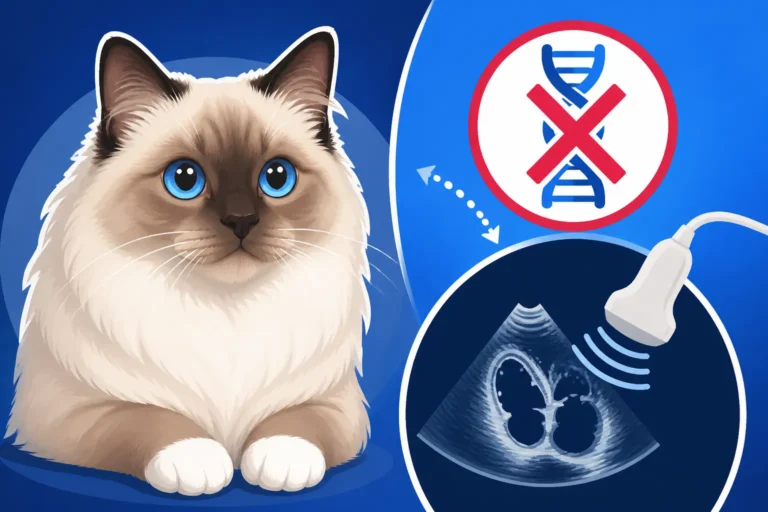
For years, the primary way to diagnose PKD was through ultrasound. A skilled veterinary ultrasonographer could identify the characteristic cysts on a cat's kidneys, often from around six to twelve months of age, though sometimes earlier or later depending on the individual cat and the size of the cysts. While ultrasound is still a valuable tool for monitoring, especially for older cats, it's not the first line of defense for breeders anymore.
Today, we have a much more definitive and proactive tool: a DNA test. This genetic test, usually performed with a simple cheek swab or blood sample, can accurately determine if a cat carries the PKD1 gene long before any cysts are large enough to be seen on an ultrasound. This is a game-changer for ethical breeding programs, as it allows breeders to make informed decisions about mating pairs and prevent the passing of the gene altogether. Understanding How the PKD1 Test Clears a Birman is incredibly empowering for both breeders and prospective owners.
The Reality of PKD Clear Birman Lines
The short, reassuring answer to whether a PKD clear Birman line exists is: absolutely, yes! Thanks to dedicated breeders and the availability of DNA testing, it is entirely possible, and indeed common, to find Birman lines that have been thoroughly screened and are clear of the PKD1 gene. This is fantastic news for anyone looking to bring a healthy Birman into their home, as it removes a significant worry from the equation.
However, it's important to understand how these lines become and stay clear, and what that means for you as an owner. A "PKD clear line" isn't just a hopeful statement; it's the result of consistent, diligent testing and careful breeding practices over many generations.
The Evolution of PKD Clearance in the Breed
In the early days, before the DNA test was widely available, breeders relied on ultrasound screenings. This was a good start, but it wasn't foolproof. Cysts could be missed if they were too small, or a cat could be misdiagnosed. It also meant that cats had to be old enough for cysts to potentially appear before they could be confidently deemed clear for breeding. This was a frustrating and slow process, and it meant that some cats unknowingly carrying the gene might have been bred.
The advent of the DNA test revolutionized the approach. Suddenly, breeders could test kittens or adult cats with 100% certainty, at any age, whether they carried the PKD1 gene. This allowed for immediate, decisive breeding choices. If a cat tested positive, it could be spayed or neutered and placed in a loving pet home, preventing the further spread of the disease within the gene pool. This proactive approach has allowed many breeders to systematically eliminate PKD from their lines over the past two decades.
What "PKD Clear" Truly Means
When a breeder states their cats are "PKD clear," it means that every breeding cat in their program has been DNA tested for the PKD1 gene and the results have come back negative. This means those cats do not carry the gene and therefore cannot pass it on to their offspring. Consequently, any kitten born from two PKD-clear parents will also be PKD-clear. This gives you a high level of confidence in your kitten's future kidney health concerning this specific genetic condition.
It's a testament to the dedication of ethical Birman breeders that so much progress has been made. They invest not only financially in these tests but also put in the time and effort to understand the genetics and ensure the long-term health of the breed. This diligence is what makes the Birman such a healthy and cherished companion today.
How Breeders Achieve and Maintain PKD Clearance
For ethical Birman breeders, genetic testing isn't just a suggestion; it's a fundamental part of their breeding program. They understand that responsible breeding goes beyond aesthetics and temperament – it's about safeguarding the health and longevity of the breed. This proactive approach is what distinguishes reputable breeders and provides peace of mind to future owners.
The goal isn't just to produce a single clear litter, but to establish and maintain entire lines that are consistently clear, generation after generation. This involves a long-term commitment and meticulous record-keeping. It's a journey, not a one-time event, and it shows a deep love and respect for the breed.
Screening Protocols for Breeding Birmans
A responsible breeder will have a clear and consistent protocol for genetic screening. This typically includes:
- DNA Testing All Breeding Stock: Every single cat used in a breeding program – both queens and studs – should be DNA tested for PKD1 before being bred. This is non-negotiable. Many breeders will use a comprehensive panel that checks for multiple genetic diseases, which might include What Testing a Birman for FOXN1 and PKD1 Together Costs.
- Verification of Results: Breeders should be able to provide documentation of these test results, usually in the form of official certificates from reputable genetic testing laboratories. Don't be shy about asking to see these papers; any ethical breeder will be happy to share them and explain what they mean.
- Careful Mating Choices: If, for some reason, a breeder still has a cat that is a PKD1 carrier (perhaps an older cat from before widespread testing, or one of exceptional quality in other areas), they would only ever mate it with a cat that is definitively PKD-clear. This ensures that no affected kittens are produced, as all kittens would at worst be carriers, but never develop the disease themselves. However, the ultimate goal for most is to breed away from carriers entirely.
- Transparency and Education: Good breeders are open about their health testing and are willing to educate prospective buyers about PKD and the steps they take to prevent it. They should be able to explain the difference between a clear cat and an affected one, and why their practices ensure you're getting a healthy kitten.
The Role of Reputable Laboratories
When it comes to genetic testing, not all labs are created equal. Reputable Birman breeders rely on established veterinary genetic testing laboratories that have a proven track record of accuracy and provide official, verifiable results. These labs use validated testing methods to identify the specific genetic mutation associated with PKD1.
Examples of such labs include UC Davis Veterinary Genetics Laboratory in the United States, or Langford Vets in the UK, among others. These institutions are often involved in research and development, ensuring that the tests they offer are at the forefront of veterinary science. Relying on such labs ensures the integrity of the "PKD clear" status. Always ask for the name of the lab and feel free to look them up yourself to confirm their credentials.
| PKD1 Genetic Test Status | Interpretation | Breeding Recommendation |
|---|---|---|
| N/N (Clear) | Does not carry the PKD1 gene. Will not develop PKD. | Can be bred to any cat. Offspring will be clear if bred to clear. |
| N/K (Affected/Carrier) | Carries one copy of the PKD1 gene. Will develop PKD. | Should not be bred. Spay/neuter recommended. |
| K/K (Affected) | Carries two copies of the PKD1 gene. Will develop PKD. | Should not be bred. Spay/neuter recommended. |
Note: For dominant traits like PKD1, N/K and K/K are both considered affected, as one copy is enough to cause the disease. Some labs might label this differently, but the implication for the cat's health and breeding is the same: they have the disease.
What You Can Do as a Birman Owner
As a prospective or current Birman owner, you play a vital role in promoting responsible breeding practices and ensuring the health of your beloved pet. While finding a PKD-clear line is a huge step, ongoing care and awareness of general kidney health remain important for any cat.
It's natural to feel overwhelmed with all the information out there, but focusing on reputable sources and communicating openly with your vet and breeder will empower you to provide the best possible life for your Birman. Remember, good health is a partnership between you, your vet, and the foundation laid by a responsible breeder.
Asking the Right Questions to Breeders
When you're speaking with a Birman breeder, don't hesitate to ask specific questions about their health testing protocols. A good breeder will welcome your inquiries and be transparent. Here are some key questions:
- "Can you provide copies of the PKD1 DNA test results for both parents of the litter?"
- "Which laboratory do you use for genetic testing?"
- "Do you screen for other genetic conditions common in Birmans, such as HCM (Hypertrophic Cardiomyopathy)?" (While HCM doesn't have a DNA test, regular echo scans are crucial). You might want to ask Why a Birman Breeder Still Tests for PKD.
- "What is your health guarantee, and does it cover genetic conditions?"
Look for breeders who are proactive in their testing, willing to show you documentation, and knowledgeable about the health issues pertinent to the Birman breed. If a breeder is vague, dismissive, or refuses to provide documentation, it's a significant red flag, and you should probably look elsewhere.
Ongoing Kidney Health Management
Even if your Birman comes from a PKD-clear line, general kidney health is something to be aware of throughout their life. Kidney disease, in various forms, can affect any cat, particularly as they age. Early detection and proactive management are key to maintaining a good quality of life. For instance, How Kidney Failure Arrives in a Birman Past Fourteen is a reality that many owners might face with any older cat, regardless of specific genetic predispositions like PKD.
Here are some tips for supporting your Birman's kidney health:
- Hydration is Key: Encourage your Birman to drink plenty of water. Wet food diets are excellent for increasing water intake. Consider a cat drinking fountain, as many cats prefer running water.
- Regular Veterinary Check-ups: Annual vet visits are crucial, especially as your Birman moves into middle age. Your vet will monitor their weight, conduct blood tests, and check urine samples to catch any signs of kidney issues early. For example, Which Blood Values a Birman's Kidney History Makes Important helps track their health over time.
- Quality Diet: Feed a high-quality, balanced diet appropriate for your cat's age and activity level. If kidney issues are detected, your vet might recommend a prescription renal diet.
- Monitor for Changes: Be observant of any changes in your cat's behavior, appetite, or litter box habits. Increased thirst, more frequent urination, weight loss, or decreased appetite can all be signs of kidney problems. A Birman's placid temperament means they often hide illness, so subtle changes are important.
Considering pet insurance can also be a smart move. Companies like Healthy Paws offer comprehensive plans that can help cover unexpected veterinary costs, including those associated with chronic conditions or age-related health issues, should they arise. While genetic conditions may sometimes have specific clauses, having a robust policy from Healthy Paws can provide significant financial relief for diagnostics and treatments over your Birman's lifespan. It's an investment in their long-term well-being, complementing the excellent foundation from a PKD-clear breeder. Knowing What a Birman Costs From Kitten to Sixteen can help you budget for these considerations.
The Importance of a Lifetime Commitment
Bringing a Birman into your life is a long-term commitment, typically spanning The Twelve to Sixteen Years a Birman Usually Gets. Throughout this journey, maintaining their health, happiness, and well-being requires continuous attention. While PKD clearance removes a specific genetic concern, it doesn't eliminate the need for general preventive care, proper nutrition, and regular veterinary oversight.
Your Birman, even from the most impeccably clear lines, will benefit from a loving home environment, appropriate mental and physical enrichment, and a watchful eye from you. A healthy foundation, coupled with responsible ownership, ensures your sacred cat of Burma lives a long, joyful, and comfortable life by your side. Remember that even How Often a Birman With Clear Papers Still Needs a Vet is an important consideration for their overall health.
Disclaimer
Please note that this guide provides general information and insights into Birman cat health. It is not a substitute for professional veterinary advice. Always consult with a qualified veterinarian regarding your specific pet's health concerns and treatment options.