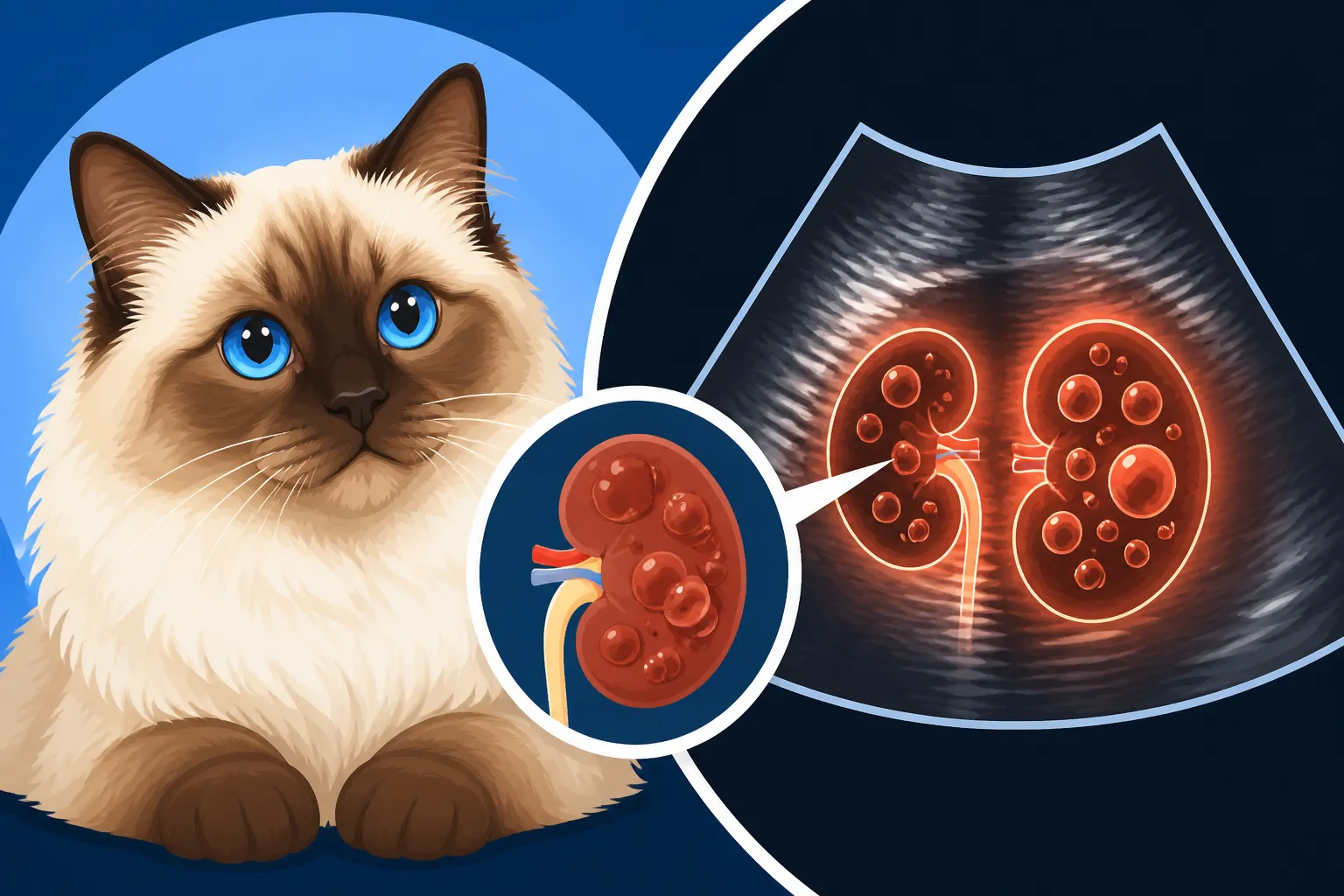
When Kidney Cysts First Show on a Birman Scan
When you welcome a beautiful Birman into your home, you envision years of quiet companionship and gentle purrs. It’s natural to want to know everything about keeping them healthy, and for many Birman parents, kidney health is a top concern. The fear of something silently developing, unseen, can be a heavy burden. This guide is here to shed light on precisely when those elusive kidney cysts, associated with Polycystic Kidney Disease (PKD), typically make their first appearance on a veterinary scan, and what you can do to stay ahead of this potential challenge.
Understanding Polycystic Kidney Disease (PKD) in Birmans
Polycystic Kidney Disease, or PKD, is a condition that sounds far more intimidating than it needs to be, especially if you’re proactive about your Birman’s health. At its heart, PKD is a genetic, progressive disorder where fluid-filled sacs, or cysts, develop within the kidneys. These cysts start tiny, microscopic even, and over time, they grow in size and number. As they expand, they gradually take over healthy kidney tissue, eventually impairing kidney function. It’s a bit like having tiny bubbles form in a sponge, slowly replacing the absorbent material. For Birman owners, this isn't just a generic cat health issue; it's something specifically relevant to the breed's history and genetic makeup.
What is PKD and Why Does it Matter for Birmans?
PKD isn't unique to Birmans, but it is unfortunately prevalent in certain cat breeds, largely due to their historical outcrossing with Persians. The Persian breed, known for its majestic long coat and sweet face, was used in various breeding programs, including the rebuilding of the Birman after the World Wars. While this brought many wonderful traits, it also inadvertently introduced certain genetic predispositions, PKD being one of them. For this reason, if you're looking to learn more about how this specific trait entered the breed, our article on Why PKD Reached the Birman Through the Persian offers a deeper dive into the historical context. This means that even if your Birman seems perfectly healthy now, understanding this genetic link is vital. The disease is often silent in its early stages, meaning your beloved companion might not show any outward signs until significant kidney damage has already occurred, which is a scary thought for any pet parent.
The insidious nature of PKD is what makes it so concerning. These cysts can sit quietly for years, causing no pain or obvious symptoms. By the time a cat starts showing signs like increased thirst, more frequent urination, lethargy, or a poor appetite, the disease is often in an advanced stage. This is why early detection, or even better, prevention through genetic screening, is so incredibly important for Birmans. Knowing your cat’s genetic status can empower you to make informed decisions about their care, diet, and overall health management, potentially adding years of comfortable life to your cherished feline friend.
The Genetic Basis and Inheritance
PKD in Birmans, like in Persians and some other breeds, is primarily caused by a mutation in the PKD1 gene. The crucial thing to understand here is its inheritance pattern: it’s an autosomal dominant trait. What does "autosomal dominant" mean for you and your Birman? It means that a cat only needs to inherit one copy of the mutated gene from either parent to develop the disease. There are no "carriers" in the traditional sense where a cat carries the gene but doesn't get the disease themselves; if they have the gene, they will develop cysts. The severity and age of onset can vary, but the presence of the gene guarantees cyst formation.
This genetic reality places a significant responsibility on breeders. Responsible Birman breeders meticulously test their breeding cats for the PKD1 gene. If a cat tests positive, they should not be used for breeding, or at the very least, they should only be bred with a genetically clear mate, and even then, great care must be taken to ensure no affected offspring are produced. Understanding this inheritance pattern is fundamental, not just for breeders, but for potential kitten owners too. Always ask a breeder for proof of PKD genetic testing for both parent cats. To delve deeper into the importance of testing, our comprehensive article Why a Birman Breeder Still Tests for PKD explains the protocols and reasons behind these crucial health checks. It's truly a testament to how far veterinary science has come in protecting our feline companions.
When Kidney Cysts Become Visible on a Birman Scan
The question of "when" is perhaps the most nerve-wracking for any Birman owner concerned about PKD. It’s not a simple answer, unfortunately, because these cysts don't just magically appear overnight at a certain age. They are there from the very beginning, microscopic and undetectable with standard imaging, slowly growing and multiplying. The journey from invisible speck to detectable cyst is a gradual one, influenced by individual genetic factors and the progression of the disease itself.
The Elusive Nature of Early Cyst Formation
Imagine tiny, perfectly clear bubbles forming inside a complex filter system. That's essentially what's happening in the kidneys of a Birman with PKD. These cysts start incredibly small, often just micrometers in diameter. At this size, even the most advanced ultrasound technology struggles to identify them. They are literally too minute to register on a scan, blending seamlessly with the surrounding healthy tissue. This can be incredibly frustrating for owners who want definitive answers right away. You might take your precious Birman kitten for an early scan, hoping for a clean bill of health, only to be told that no cysts are currently visible. This doesn't necessarily mean they're not there; it often means they haven't reached a size detectable by imaging yet.
The progression is variable. Some cats might develop larger, more numerous cysts relatively quickly, while in others, the growth is painfully slow. This unpredictability is what makes diagnosing PKD solely by ultrasound in very young kittens challenging. A "clear" scan at a few months old doesn't definitively rule out PKD for life, as those microscopic cysts could still be lurking, waiting to grow. This is precisely why genetic testing is such a powerful tool, providing a much earlier, definitive answer regardless of cyst size.
Typical Age Range for Detection via Ultrasound
So, if early detection by ultrasound is tricky, when can you typically expect a clearer picture? For Birmans, definitive detection of kidney cysts via ultrasound usually becomes more reliable as the cat matures. While some breeders or vets might recommend a screening scan as early as 6 months, it's generally between 6 months and 1 year of age when cysts are more consistently detectable, if they are present. However, it’s not uncommon for smaller cysts to still be missed even at this age. Some veterinary radiologists prefer to scan cats around their first birthday or even later to minimize the chances of a false negative result, meaning a scan that shows no cysts when they are actually present but still too small to see.
It’s a balancing act: you want to find out as early as possible, but you also need the cysts to be large enough to be seen. A truly comprehensive diagnosis often combines both methods. While a young kitten might receive an ultrasound, the gold standard for knowing for sure, regardless of age, remains genetic testing. This specific DNA test, which can be done with a simple cheek swab at any age, provides a definitive "positive" or "negative" result for the PKD1 gene. Our guide How the PKD1 Test Clears a Birman goes into detail about this crucial genetic screening and why it's a game-changer for the breed. It means you don't have to wait for those visible cysts to confirm if PKD is a concern.
The Ultrasound Scanning Process and What to Expect
Undergoing any veterinary procedure with your beloved Birman can be stressful, and an ultrasound might sound daunting. However, it's generally a non-invasive and relatively calm experience. Knowing what to expect can significantly reduce your anxiety and help you prepare your cat for the smoothest possible visit.
Preparing Your Birman for an Ultrasound
First and foremost, your veterinarian will likely advise withholding food for 8-12 hours before the scan, especially if the abdominal organs are being examined. This helps ensure that the digestive tract is less full, providing clearer visibility of the kidneys. Water is usually fine up until the appointment. When you arrive at the clinic, your Birman will usually have a small patch of fur shaved on their belly, right where the ultrasound probe needs to make good contact with the skin. This isn't painful, but it's good to be prepared for your cat to have a slightly funny-looking tummy for a while!
During the scan, your Birman will typically lie on their back in a comfortable, padded trough or on their side. Most Birmans, known for their docile and placid temperament, tolerate this surprisingly well. They're often so relaxed they might even doze off! However, if your cat is particularly anxious or squirmy, the vet might suggest a very mild sedative to ensure they remain still and comfortable throughout the procedure. This isn't done lightly, but it ensures accurate imaging and prevents unnecessary stress for your pet. Always ask your vet about their specific protocols and what they recommend for your Birman's individual temperament.
Interpreting Ultrasound Results for Cysts
Once the ultrasound is underway, the veterinarian or a specialist veterinary radiologist will use the probe to visualize your Birman's kidneys. They're looking for any anechoic (black) or hypoechoic (darker than surrounding tissue) structures within the kidney parenchyma. These dark spots represent the fluid-filled cysts. The vet will measure their size, count them if multiple are present, and note their location. Even a single, small cyst is enough to confirm a diagnosis of PKD in a Birman. It's not about how many or how big; it's about their presence.
The good news is that if cysts are detected, a diagnosis allows you and your vet to start proactive management. While PKD isn't curable, it can be managed. If you're concerned about the potential costs of diagnostics and ongoing management, it's worth noting that reputable pet insurance providers like Healthy Paws often cover diagnostic tests and treatments for chronic conditions like PKD, provided the condition isn't pre-existing. This kind of support can provide immense peace of mind. For a deeper understanding of what exactly these cysts do to a Birman's overall health and kidney function, our article What Kidney Cysts Do to a Birman provides valuable insights into the long-term impact.
Beyond the Scan: Managing PKD in Birmans
Receiving a PKD diagnosis, whether through genetic testing or an ultrasound, can feel overwhelming. It's important to remember that it's not a death sentence, especially with modern veterinary care. A diagnosis is actually a powerful tool because it allows you to take proactive steps to manage the disease and provide your Birman with the best possible quality of life. The journey shifts from detection to diligent care and monitoring.
Monitoring and Early Intervention Strategies
If your Birman is diagnosed with PKD, regular veterinary check-ups become even more crucial. Your vet will likely recommend a schedule of blood and urine tests to monitor kidney function. Key blood values like creatinine, blood urea nitrogen (BUN), and symmetric dimethylarginine (SDMA) can indicate how well the kidneys are filtering waste. Changes in these values, even subtle ones, can signal the progression of the disease, allowing for adjustments in treatment. Urine tests will check for protein loss, specific gravity (indicating kidney's concentrating ability), and any signs of infection. These checks typically start around middle age for general kidney health, but for a PKD-positive Birman, they might begin earlier and more frequently.
Dietary management is another cornerstone of early intervention. As kidney function declines, a prescription renal diet specifically formulated for kidney support can make a significant difference. These diets are typically lower in protein (but still high quality), phosphorus, and sodium, and often enriched with omega-3 fatty acids. They help reduce the workload on the kidneys and slow disease progression. Encouraging water intake is also vital. Offering plenty of fresh water, using water fountains, and feeding a wet food diet can help keep your Birman hydrated and support kidney function. Our article Which Prescription Diet a PKD Positive Birman Ends Up On offers detailed advice on navigating dietary changes for your PKD-positive Birman, which can be a real lifeline for owners.
The Role of Genetic Testing
While ultrasound is a fantastic tool for visualizing cysts, genetic testing for the PKD1 gene mutation offers a definitive answer, regardless of whether cysts are visible yet. A simple cheek swab can be sent to a specialized veterinary laboratory, and the results will clearly indicate whether your Birman is "clear," "carrier" (which for dominant traits means affected), or "affected" (meaning they have two copies, which isn't typically seen with PKD1 as one copy is enough to cause disease). This test is usually offered by reputable breeders as a standard part of their health screening.
The primary advantage of genetic testing is its early and unequivocal nature. You don't have to wait for cysts to grow to a detectable size. This means you can identify affected cats long before they show any clinical signs, allowing for early monitoring and management. For breeders, it's an indispensable tool to ensure they are not passing on the PKD gene to future generations, effectively eradicating the disease from their lines. If you're looking into the costs and benefits of combined health screenings, our post What Testing a Birman for FOXN1 and PKD1 Together Costs details how these vital tests fit into a comprehensive health plan for your Birman. It’s an investment in your cat’s future health and peace of mind.
Genetic Testing vs. Ultrasound Screening for PKD in Birmans
| Feature | Genetic Testing (DNA Test) | Ultrasound Screening |
|---|---|---|
| Method | Cheek swab (non-invasive) | Abdominal ultrasound (non-invasive, often requires shaving) |
| What it Detects | Presence of the PKD1 gene mutation | Physical presence of kidney cysts |
| Age of Detection | Any age (even newborn kittens) | Typically 6 months to 1 year for reliable detection |
| Result | Definitive: "Clear" or "Affected" | "Cysts Present" or "No Cysts Seen (at this time)" |
| Purpose | Confirm genetic predisposition, inform breeding decisions | Diagnose physical cysts, monitor progression |
| Reliability | 100% accurate for the PKD1 mutation | Can have false negatives in very young cats with tiny cysts |
| Cost | One-time lab fee (e.g., ~$50-100 per test) | Varies by clinic/specialist (e.g., $200-500 per scan) |
Disclaimer
The information provided in this article is intended for general knowledge and informational purposes only, and does not constitute medical advice. Always consult with a qualified veterinarian for any health concerns or before making any decisions about your Birman's health or treatment plan.