What the Outcrossing Brought Into the Birman
The Birman breed, as we know and adore it today, nearly vanished entirely after the devastating years of World War II. Facing a perilous genetic bottleneck and the real threat of extinction, dedicated breeders had no choice but to introduce new bloodlines to save their beloved cats. This comprehensive guide will delve deep into the critical process of outcrossing, exploring exactly what genetic gifts and challenges these new influences brought into the Birman lineage.
The Urgent Need for Outcrossing: A Post-War Reality
Imagine the horror of realizing the breed you've poured your heart and soul into, a breed with such a unique and enchanting history, is on the brink of disappearing forever. This was the stark reality for Birman enthusiasts in the aftermath of World War II. The sheer devastation of the war, both in terms of human lives and infrastructure, also decimated cat populations across Europe.
The Devastation of World War II on the Birman Population
Before the war, the Birman, often revered as the Sacred Cat of Burma, was steadily gaining recognition and a devoted following, particularly in France where its modern development began. Breeders were meticulously working to refine its distinctive features: the silky, non-matting coat, the deep blue eyes, the beautiful point coloration, and, of course, those iconic white "gloves" and "laces" on its paws. However, the conflict brought everything to a screeching halt. Catteries were destroyed, food became scarce, and many cats were simply lost to the chaos of the war.
When the dust settled, the global Birman population was in a truly desperate state. It's often said that only two known Birman cats, a male named Orloff and a female named Xenia de Kaabaa, survived in France. This staggering reduction meant that the entire future of the breed rested on these two individuals and any immediate progeny. To understand the sheer gravity of this, consider the article titled How Many Birmans Survived the Second World War. This near-extinction event wasn't just a blow; it was an existential threat, shrinking a nascent gene pool to an almost unsustainable degree. The remaining breeders were faced with an agonizing choice: let the breed die out with dignity, or introduce outside genetics to ensure its continuation, even if it meant a temporary departure from the established Birman type.
Why Outcrossing Was the Only Viable Path to Survival
With so few individuals left, the risk of severe inbreeding depression was astronomically high. Mating closely related cats, while sometimes necessary in the very early stages of a breed's development, quickly leads to a decrease in genetic diversity, making offspring more susceptible to genetic diseases, reduced fertility, weakened immune systems, and overall loss of vitality. The goal of outcrossing, therefore, wasn't just to increase numbers; it was to inject desperately needed genetic variation back into the struggling breed.
Breeders had to make strategic decisions about which other breeds possessed traits compatible with the Birman standard, while also offering a robust gene pool. The focus was on breeds that could contribute long hair, point coloration, and a placid temperament, without introducing undesirable features or severe health issues. The alternative was a genetic dead end, leaving the Birman relegated to the history books. As explored in Why Post War Outcrossing Was Unavoidable for the Birman, this was a pragmatic and essential step, a testament to the dedication of those who believed in the Birman's future. It was a tough road, involving careful selection and many generations to breed back to the original Birman type, but it was the only way forward.
The Introduction of New Bloodlines: Which Breeds Stepped In?
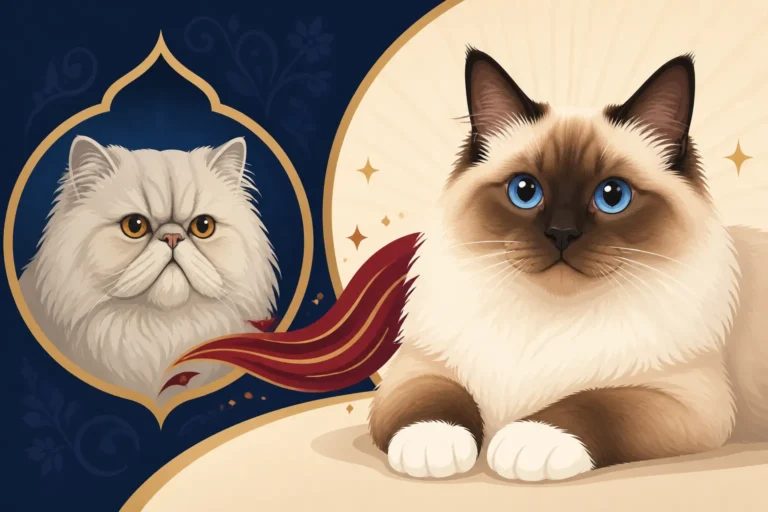
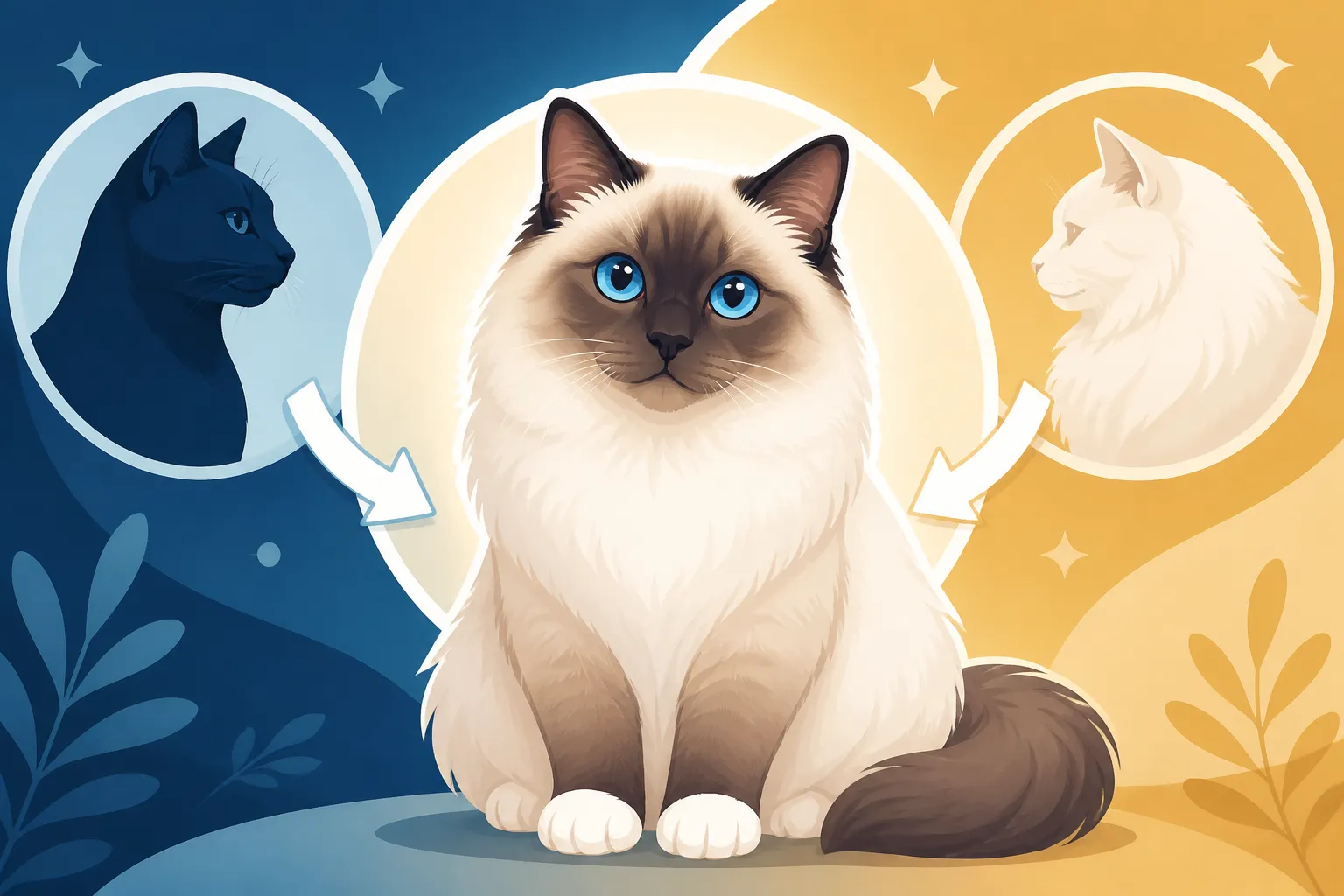
The decision to outcross was met with careful deliberation. Breeders weren't simply throwing any cat into the mix; they were trying to choose breeds that would both expand the genetic pool and maintain the Birman's aesthetic and temperament. Two breeds, in particular, played significant roles in the Birman's post-war revival: the Persian and the Siamese.
The Influence of the Persian Cat
The Persian cat was a natural choice for many reasons, primarily its luxuriant long hair and generally calm, docile temperament. Breeders hoped that introducing Persian blood would help restore the Birman's elegant coat and reinforce its gentle nature. The Persian, with its cobby body type and rounded features, contrasted somewhat with the Birman's more semi-long, rectangular build, but its long, flowing fur was definitely a valuable genetic contribution.
However, bringing in Persian genetics wasn't without its potential downsides. Persian cats are known for their distinct facial structure, which Birman breeders carefully avoided adopting, striving to maintain the Birman's more Roman nose. More significantly, the outcrossing brought with it a potential health concern: Polycystic Kidney Disease (PKD). While the Birman breed eventually managed to largely eliminate PKD through diligent testing, it's a stark reminder that genetic traits, both desirable and undesirable, travel together. The article What Persian Blood Brought Into the Birman dives deeper into these specific contributions and challenges. For pet parents, this historical outcrossing underscores the importance of thorough health screenings by breeders and, for ongoing peace of mind, considering pet insurance from providers like Healthy Paws to help cover unexpected health issues that might still arise.
The Touch of the Siamese
On the other end of the temperament and body spectrum, the Siamese also played a crucial role. Known for its svelte, athletic build, striking blue eyes, and distinctive point coloration, the Siamese offered genes that could help solidify the Birman's color points and potentially inject vigor into the new bloodlines. The Siamese's active and vocal nature, however, was something breeders aimed to temper, ensuring the Birman retained its characteristic quiet charm.
The Siamese contribution primarily focused on enhancing the distinct point patterns and eye color that are hallmarks of the Birman. While the Birman already possessed these traits, the limited gene pool meant they needed reinforcement. The challenge was to balance the Siamese's more extreme "foreign" body type and highly vocal personality with the Birman's more moderate structure and placid demeanor. The article What Siamese Blood Brought Into the Birman further elaborates on how this breed's genetics influenced the Birman's development. Despite the potential for increased vocalization, the Birman largely retained its gentle "trill" rather than the loud demands of its Siamese relatives, demonstrating the success of selective breeding in guiding specific traits.
Genetic Contributions and Physical Transformations
The deliberate introduction of new genetic material through outcrossing naturally led to some fascinating shifts in the Birman's physical characteristics. While breeders worked tirelessly to steer the offspring back towards the established Birman standard, some influences remained, shaping the look of the modern Birman.
The Evolution of Coat and Body Type
The Birman is renowned for its unique single coat – silky, medium-long, and surprisingly resistant to matting, unlike many other long-haired breeds. The Persian's heavy, double coat could have drastically altered this, but through careful selection, breeders managed to maintain the Birman's signature texture and relative ease of grooming. However, the overall length and density of the Birman's coat, especially the majestic ruff around its neck and the plume on its tail, likely received a boost from the Persian lineage, contributing to its luxurious appearance.
In terms of body type, the Birman is often described as a cat of medium build, neither cobby like a Persian nor svelte like a Siamese, but rather a sturdy, elongated, rectangular frame. The outcrossing helped solidify this "middle ground." The Siamese influence could have pushed towards a more slender, angular build, while the Persian favored a more compact, rounded physique. The successful integration maintained the Birman's balanced, robust frame, offering a compromise that celebrated its strength without sacrificing elegance. These subtle shifts are a testament to how the Birman was rebuilt from two cats and it shows.
The Deepening of Point Colors and Eye Hue
The Birman's stunning blue eyes are one of its most captivating features. While the original Birmans certainly had blue eyes, the intensity and depth of this sapphire hue may have been reinforced by the Siamese outcross. Siamese cats are known for their incredibly vivid blue eyes, and introducing those genes could have helped ensure the trait's stability and brilliance across the wider gene pool.
Similarly, the distinct point coloration – where the cooler extremities (ears, face mask, paws, tail) are darker than the warmer body core – is a hallmark of both the Siamese and Birman. The outcrossing helped to secure the genetic basis for this pattern and allowed for the reintroduction or strengthening of various point colors that might have been lost or diminished in the pre-war population. Today, we see Birmans in a beautiful array of point colors, from the classic seal point and blue point to chocolate, lilac, and red points, all vibrant and clearly defined against their light body fur. The goal was to ensure the points were rich and even, contributing to the breed's captivating aesthetic.
Behavioral Nuances and Temperament Shifts
The Birman is celebrated not just for its beauty but also for its exceptionally gentle and affectionate temperament. It's often called the "Sacred Cat of Burma," and its calm, companionable nature is a huge part of its appeal. The outcrossing process aimed to preserve and even enhance these cherished traits, despite the introduction of breeds with sometimes contrasting personalities.
Enhancing the Birman's Gentle Demeanor
The Birman is well-known for being a placid, docile companion, rarely demanding attention but always happy to be near its human family. The Persian's notoriously calm and sweet nature certainly played a role in reinforcing this trait during the outcrossing. Breeders carefully selected individuals that carried these desirable temperament genes, ensuring that the new bloodlines didn't dilute the Birman's defining gentleness. Even though the Siamese is a more energetic and assertive cat, the sheer dominance of the Birman's inherited calm nature, combined with deliberate breeding choices, ensured that its serene personality remained intact.
It's this balanced temperament that makes the Birman such a wonderful family pet, tolerant and loving without being overly boisterous. A Birman would rather be near you than on you, often content to observe from a comfortable spot nearby, soaking up the quiet companionship. This careful preservation of temperament means that the Birman remains the cat families are told to get, capable of thriving in diverse households with children and other pets, including dogs, thanks to its adaptable and easygoing nature.
Vocalization and Social Interaction Changes
While the Birman does vocalize, it's typically with a soft, melodic trill or a gentle purr, a far cry from the loud, demanding meows of some other breeds. The Siamese, on the other hand, is famously vocal, known for its strong, distinctive "talkative" nature. During outcrossing, breeders worked to ensure that the Birman's quiet, dignified vocal style was not overwhelmed by the Siamese influence. The small trill a Birman uses instead of a meow is a perfect example of how specific, desirable traits were maintained and even refined.
The Birman's social interaction patterns also benefited from the careful outcrossing. They are known for their loyalty and attachment to their human companions, often following them from room to room, a behavior that was likely reinforced by the social tendencies of both ancestral breeds. This means a Birman needs company more than stimulation, often thriving when it has a companion, whether human or feline. This social need often leads people to consider getting two Birmans, knowing they will keep each other company, especially if the humans are out during the day.
The Double-Edged Sword: Health Implications of Outcrossing
While outcrossing was essential for the Birman's survival and genetic diversity, it wasn't without its complications. Introducing new genetic material meant that, alongside desirable traits, some predispositions to certain health conditions inevitably found their way into the Birman gene pool.
Introducing New Genetic Health Concerns
One of the most notable health conditions that likely entered the Birman lineage through outcrossing with the Persian was Polycystic Kidney Disease (PKD). PKD is an inherited condition that causes fluid-filled cysts to develop in the kidneys, progressively impairing kidney function. While it's now largely managed in many Birman lines through DNA testing for the PKD1 gene, it serves as a powerful reminder of the genetic baggage that can accompany outcrossing. For a deeper understanding, the article Why PKD Reached the Birman Through the Persian provides detailed context.
Another significant health concern that requires ongoing screening in Birmans is Hypertrophic Cardiomyopathy (HCM), a common heart disease in cats characterized by the thickening of the heart muscle. While HCM isn't definitively linked to a single outcross breed in the Birman's history, the general genetic mixing and the limited post-war gene pool might have made the breed more susceptible or allowed existing predispositions to become more prevalent. Unfortunately, HCM in a Birman has no DNA test, only an echo, making regular cardiac screening crucial for breeding cats. This means that even with careful breeding, monitoring for these conditions is an ongoing responsibility for Birman owners. Having comprehensive pet insurance from a reputable provider like Healthy Paws can be incredibly reassuring, as it helps manage the costs associated with diagnosing and treating these complex conditions.
The Benefits of a Wider Gene Pool
Despite the introduction of certain challenges, the primary benefit of outcrossing – a wider gene pool – cannot be overstated. By expanding the genetic foundation, breeders effectively reduced the risk of severe inbreeding depression, which could have led to widespread infertility, compromised immune systems, and a proliferation of recessive genetic disorders that would have been devastating for such a small population. This injection of genetic diversity brought new vitality and robustness to the breed, allowing it to flourish once more.
A broader genetic base makes a breed more resilient against future challenges, reducing the chances of a single genetic flaw wiping out an entire line. It's a delicate balance, certainly, but the improved overall health and vigor seen in modern Birmans are a direct result of the difficult but necessary decisions made by post-war breeders. This foundational resilience allows Birmans to often enjoy a healthy lifespan, with many living for The Twelve to Sixteen Years a Birman Usually Gets, especially when cared for diligently and screened for inherited conditions.
Preserving the Birman's Unique Identity Amidst Change
The outcrossing period was a balancing act: saving the breed from extinction while simultaneously striving to preserve its distinctive traits. It required immense dedication and a clear vision from breeders to navigate these challenging waters.
Selective Breeding and Maintaining the Birman Standard
Following the initial outcrosses, breeders embarked on a meticulous program of back-crossing and selective breeding. The goal was to re-establish the Birman's unique characteristics, carefully selecting offspring that most closely matched the pre-war Birman standard. This meant choosing cats with the correct point coloration, the desired coat texture, the signature white gloves, the deep blue eyes, and, crucially, the gentle Birman temperament. It was a long and arduous process, spanning many generations, but it eventually succeeded in bringing the breed back to its characteristic form.
This careful selection process highlights the breeders' commitment to the Birman's identity. They understood that while new genes were necessary, the essence of the Birman had to be maintained. This is why today's Birman still embodies the elegance and placid nature that captivated enthusiasts almost a century ago, even though its genetic makeup is a patchwork of its historical journey.
The Legacy of Outcrossing on Modern Birman Health Management
The legacy of outcrossing is perhaps most evident in modern Birman health protocols. Responsible breeders today are acutely aware of the breed's genetic history and the potential for inherited conditions like PKD and HCM. This awareness drives extensive health testing, with DNA tests for PKD and regular echocardiograms for HCM being standard practice for breeding cats. This proactive approach ensures that new generations of Birmans are as healthy as possible.
The transparency around these health screenings is paramount. Breeders often publish the health results of their breeding cats, giving potential owners peace of mind. For instance, knowing that a Birman stud should be cleared before use for conditions like FOXN1 and PKD1 is vital. As pet owners, understanding this history empowers us to ask the right questions when acquiring a kitten and to prioritize regular veterinary check-ups for our Birmans throughout their lives. This includes annual wellness exams that look at their overall health, and often, for breeding cats, yearly heart checks. When considering the long-term health of your Birman, having a pet insurance plan, such as one from Healthy Paws, can provide significant financial support, helping you cover unexpected treatments and specialized vet visits related to conditions with historical genetic links.
| Feature / Trait | Potential Persian Contribution | Potential Siamese Contribution | Desired Birman Outcome |
|---|---|---|---|
| Coat Texture | Denser, woollier undercoat | Shorter, finer single coat | Silky, single, medium-long, non-matting |
| Body Type | Cobby, rounded, heavy-boned | Svelte, athletic, angular | Medium build, sturdy, elongated, rectangular |
| Facial Profile | Brachycephalic (flat) | Wedge-shaped, pointed snout | Roman nose, medium length, gentle curve |
| Vocalization | Generally quiet, soft meow | Loud, demanding, distinctive yowls | Soft trill, gentle purr, rarely loud |
| Temperament | Very placid, docile, affectionate | Active, social, intelligent, sometimes demanding | Placid, affectionate, gentle, tolerant, companionable |
| Point Color | Darker, richer points | Intense, clear point definition | Clear, well-defined points across a range of colors |
| Eye Color | Deep blue | Vivid, sapphire blue | Intense, deep sapphire blue |
| Genetic Health | PKD (Polycystic Kidney Disease) | Progressive Retinal Atrophy (less impactful in Birman) | Emphasis on screening for PKD, HCM; overall robust health |
Disclaimer
Please remember that this article provides general information and insights into the Birman cat breed based on historical accounts and genetic understanding. While every effort has been made to ensure accuracy, individual cats can vary, and veterinary advice should always be sought for specific health concerns. The genetic history of any breed is complex, and ongoing research continually refines our understanding.