Why an Echo Is the Only Way to Screen a Birman
The quiet, gentle nature of our Birman companions, while undeniably endearing, can sometimes be a double-edged sword when it comes to their health. Many Birman owners constantly worry about lurking health conditions, especially those affecting the heart, knowing how subtly these stoic cats can hide discomfort. A simple stethoscope check at the vet's office often provides only superficial reassurance, leaving critical questions about potential cardiac issues unanswered. This guide will meticulously explain why a comprehensive echocardiogram is not just a screening method, but truly the only definitive way to thoroughly assess a Birman's heart, catching potential problems early and ensuring the longest, healthiest life possible for your beloved cat.
The Limitations of Standard Veterinary Examinations for Birman Heart Health
When it comes to monitoring our Birman's heart, it's easy to assume that routine veterinary checks cover all the bases. We trust our vets, and rightfully so, but the reality is that many standard examination methods, while valuable for general health, simply don't offer the depth of insight required for specific, breed-predisposed conditions like Hypertrophic Cardiomyopathy (HCM). This can lead to a dangerous false sense of security, delaying critical interventions.
Why a Stethoscope Only Tells Part of the Story
Many owners breathe a sigh of relief when their veterinarian listens to their Birman's chest and declares their heart sounds clear. It’s a natural expectation; auscultation, the act of listening with a stethoscope, is a fundamental part of any physical exam. Vets are trained to listen for heart murmurs—turbulent blood flow that creates a whooshing sound—or irregular rhythms, both of which can indeed signal underlying heart disease. However, relying solely on a stethoscope for breeds like the Birman, which have a known predisposition to HCM, can be misleading.
A heart murmur is merely an acoustic phenomenon, a symptom that might be present when there's a problem. A Birman could have significant, progressive thickening of its heart muscle, the very definition of HCM, without producing any audible murmur whatsoever. This "occult" or hidden form of the disease is precisely why a clear listen doesn't guarantee a healthy heart. The structural changes can be quietly progressing, and by the time a murmur becomes evident, or clinical signs manifest, the disease could be quite advanced, making management more challenging.
Moreover, even if a murmur is detected, the stethoscope offers no information about its cause or severity. Is it an innocent flow murmur, benign and common in young, healthy cats, or is it a sign of severe structural damage? A stethoscope simply cannot distinguish between these possibilities. For a Birman, where cardiac health is a significant concern, this lack of detail means that a simple auscultation just doesn't provide the comprehensive assessment needed to genuinely protect their long-term well-being. This limitation is exactly why a murmur in a Birman sends you straight to an echo.
Why X-rays and ECGs Fall Short for Diagnosing HCM
Beyond the stethoscope, other commonly used diagnostic tools in veterinary practice, such as chest X-rays and electrocardiograms (ECGs), also have significant limitations when it comes to effectively screening for conditions like HCM in Birmans. While these tools serve vital roles in diagnosing other aspects of health, they are not designed to provide the detailed structural information necessary for early HCM detection.
A chest X-ray, for instance, produces a two-dimensional image of the chest cavity. It can be useful for revealing a severely enlarged heart outline (cardiomegaly) or detecting fluid accumulation in or around the lungs, which are signs of advanced congestive heart failure. However, it cannot visualize the intricate, three-dimensional details of the heart's internal structures. Your Birman could have considerable thickening of its heart muscle, a hallmark of early to moderate HCM, without the overall heart silhouette appearing significantly enlarged on an X-ray. In such cases, the X-ray might misleadingly appear normal, again delaying a crucial diagnosis.
Similarly, an electrocardiogram (ECG) measures the electrical activity of the heart. It excels at identifying arrhythmias—irregular heartbeats—or problems with the electrical conduction system. However, HCM is fundamentally a structural disease characterized by muscle thickening. While severe structural changes can eventually lead to electrical abnormalities, an ECG will not show you the actual thickness of the heart muscle, the size of the heart chambers, or the dynamics of blood flow. It’s akin to checking the wiring of a house when the very foundations are crumbling; you’re looking at secondary effects rather than the primary structural problem. For a Birman, understanding the physical architecture and pumping efficiency of the heart is paramount, and an ECG simply doesn’t offer that level of insight.
Understanding Hypertrophic Cardiomyopathy (HCM) in Birmans
Feline Hypertrophic Cardiomyopathy (HCM) represents the most prevalent heart disease affecting our domestic cats, and tragically, the beautiful Birman is among the breeds genetically predisposed to this condition. This makes understanding its nature and progression particularly critical for Birman owners and breeders alike. It's a disease that often works in the shadows, making its early detection incredibly challenging without specialized tools.
The Silent Threat of HCM in the Birman Breed
HCM is characterized by an abnormal and often progressive thickening of the muscular walls of the heart, most commonly the left ventricle. This thickening makes the heart muscle stiff and reduces the ventricle's capacity to fill adequately with blood between beats. Over time, this inefficiency can lead to a cascade of serious problems, including the formation of dangerous blood clots, the development of congestive heart failure, and, in some tragic cases, sudden cardiac death. What makes HCM such a formidable foe is its insidious nature: it frequently progresses silently, offering no outward signs or symptoms until the disease has reached an advanced stage.
This silent progression is an especially significant concern for Birman owners due to the breed’s remarkably placid and tolerant temperament. Birmans are notoriously adept at hiding illness behind a placid temperament, often enduring discomfort or weakness without complaint until their physical state makes concealment impossible. They might subtly reduce their activity levels, take more naps, or show a barely perceptible dip in appetite—changes that can easily be dismissed as normal signs of aging or minor, fleeting upsets. This natural stoicism of the Birman makes proactive, thorough screening absolutely essential to catch HCM before it becomes life-threatening.
Adding to the challenge, while a genetic component for HCM is well-established in some breeds (like the Maine Coon and Ragdoll, where specific gene mutations have been identified), the precise genetic markers for HCM in Birmans are still largely under research. This means that, unlike these other breeds, a straightforward DNA test is not yet available for HCM in Birmans. This absence of a genetic test places the burden of early detection firmly on regular, physical screening methods. Without the insight provided by an echocardiogram, the very first indication of HCM in a Birman could be a catastrophic clinical event, such as acute respiratory distress caused by fluid in the lungs, or the sudden, agonizing paralysis of a saddle thrombus, a blood clot obstructing blood flow to the hind legs.
How HCM Manifests and Progresses Without Intervention
When Hypertrophic Cardiomyopathy begins to develop in a Birman, the abnormal thickening of the heart muscle often creates an obstruction to the outflow of blood from the left ventricle. This partial blockage forces the heart to work harder to pump blood, leading to increased pressure within the heart's chambers. Over time, this chronic strain can cause the heart chambers, particularly the left atrium, to dilate and stretch. Ultimately, the heart's ability to efficiently pump blood throughout the body becomes compromised. This inefficiency leads to a backup of fluid, which can accumulate in the lungs (known as pulmonary edema) or in the space around the lungs (pleural effusion), both resulting in significant breathing difficulties.
The early symptoms of HCM are typically subtle and easy to overlook. You might notice your Birman is a little less enthusiastic about play, tires more quickly after a short burst of activity, or perhaps exhibits a slightly increased breathing rate, even when resting peacefully. As the disease advances, these subtle signs become more pronounced and harder to ignore. Your Birman might show a clear reluctance to jump onto their favorite window perch or the sofa, their breathing might become visibly labored, or they might cough more frequently. In severe, decompensated cases, your cat could experience a complete loss of appetite, profound lethargy, or, most tragically, the sudden onset of hind leg paralysis. This paralysis is caused by a saddle thrombus, a blood clot that has formed in the heart due to turbulent blood flow and then dislodged, traveling down to block the major arteries supplying the back legs.
The rate at which HCM progresses is highly variable and unpredictable, differing significantly from one individual cat to another. Some Birmans might carry a mild form of the disease for many years with minimal impact on their quality of life, while others can experience a rapid and aggressive progression to severe stages. The current lack of a specific DNA test for HCM in Birmans means that neither breeders nor pet owners can rely on genetic screening to completely eliminate the risk. This critical gap in genetic testing highlights the absolute necessity of direct, visual examination of the heart's structure and function. This is precisely what an echocardiogram offers, allowing veterinarians to precisely measure the heart walls and identify the subtle architectural changes that often precede the onset of more severe clinical symptoms, potentially extending your Birman's healthy and happy life by many valuable years. How HCM shows up in a Birman can range from silent to catastrophic.
The Indispensable Role of Echocardiography in Birman Screening
Given the limitations of other diagnostic methods and the silent, progressive nature of HCM in Birmans, the echocardiogram emerges as the undeniable cornerstone of effective cardiac screening. This advanced imaging technique provides a level of detail and real-time insight into the heart that no other non-invasive tool can match, making it an essential part of responsible Birman care.
Visualizing the Heart's Structure and Function in Real-Time
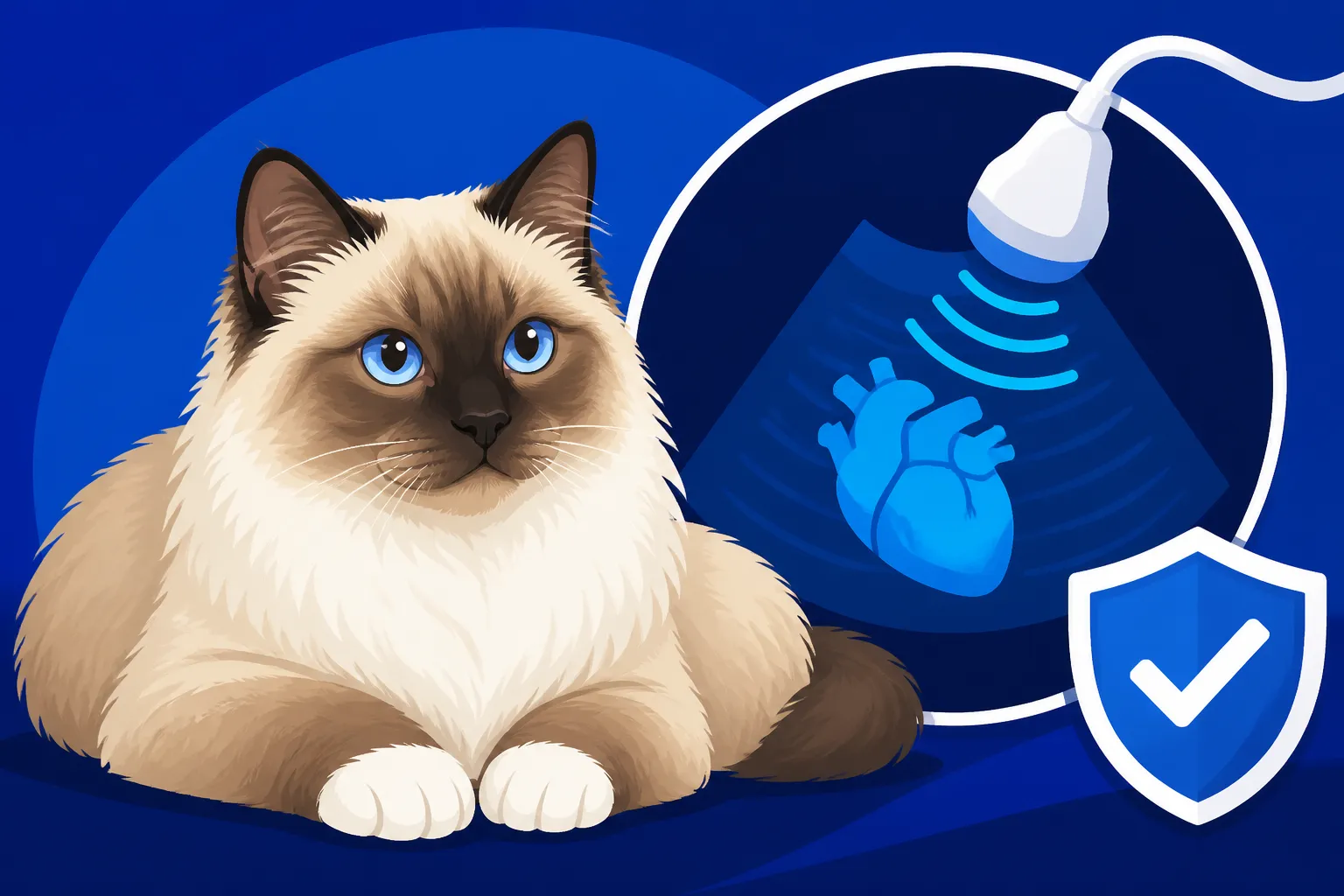
An echocardiogram, often simply referred to as an "echo," is a highly sophisticated, non-invasive ultrasound examination of the heart. Utilizing high-frequency sound waves, it generates dynamic, moving images of your Birman's heart in action. This technology allows a veterinary cardiologist to observe the heart's intricate structures—its chambers, valves, and surrounding great vessels—as well as assess their function in real-time. Unlike static imaging techniques like X-rays, which provide only a two-dimensional silhouette, an echo offers a comprehensive, three-dimensional view, allowing direct visualization of muscle thickness, the precise opening and closing of valves, and the efficient flow of blood through the cardiac chambers.
For Birmans, this means a cardiologist can meticulously measure the thickness of the left ventricular wall, which is the primary indicator of HCM. They can also identify any abnormal enlargement of the atria (the upper chambers of the heart), which often occurs as a result of increased pressure within the heart due to the thickened muscle. Crucially, an echo allows for the detection and assessment of any outflow tract obstruction, a common feature of HCM where the thickened muscle or an abnormally moving mitral valve impedes blood flow out of the heart. This ability to dynamically visualize and precisely measure these critical parameters is paramount for early detection, often identifying the disease long before any clinical signs become apparent or even a subtle heart murmur can be detected with a stethoscope.
Furthermore, an echo incorporates Doppler flow studies. This advanced feature uses the Doppler effect to visualize and quantify the velocity and patterns of blood flow within the heart. This allows the cardiologist to detect any turbulent blood flow caused by narrowed passages (due to thickened muscle) or leaky heart valves. By measuring these flow patterns, they can also quantify the severity of any identified issues. For a breed with a predisposition to HCM, having the capability to directly observe and accurately measure these nuanced changes in exquisite detail is what establishes the echocardiogram as the definitive gold standard for cardiac screening. It provides a complete, unequivocal picture of your Birman's heart health, eliminating the need for guesswork.
Why an Echo is the Only Definitive Diagnostic Tool
When discussing the definitive diagnosis of Hypertrophic Cardiomyopathy in a Birman, the echocardiogram holds an unparalleled position. As previously mentioned, there is currently no specific DNA test for HCM available for the Birman breed. This critical absence means that a direct, visual, and measurable assessment of the heart's structure and function is the sole reliable method to confirm or definitively rule out the presence of HCM in a living cat. This goes far beyond merely detecting a murmur; it's about seeing and quantifying the actual pathological changes to the heart muscle that define the disease.
The precise measurements obtained during an echocardiogram are fundamental to diagnosis. These include, but are not limited to, the thickness of the interventricular septum (the wall between the two lower chambers), the thickness of the left ventricular posterior wall, and the size of the left atrium. These measurements are objective, quantifiable indicators of HCM, which a trained veterinary cardiologist can compare against established breed-specific reference ranges. This allows for accurate classification of a Birman's cardiac status as "normal," "equivocal" (meaning borderline changes that require re-evaluation), or "affected" with HCM. This systematic approach ensures diagnostic accuracy and consistency.
Without these meticulous measurements and the direct visualization offered by an echo, HCM remains a hidden and potentially devastating threat. Relying on anecdotal information, family history, or general physical exams, while important for identifying risk factors, simply cannot provide the diagnostic certainty that an echocardiogram delivers. This definitive diagnostic capability is precisely why a Birman breeder still tests for PKD and, critically, advocates for and performs regular echo screening for HCM. Such dedicated practices are integral to responsible breeding, aiming to improve the overall health and extend the lifespan of the entire Birman breed. For conscientious pet owners, knowing their Birman has undergone a clear echo scan provides an invaluable sense of security and peace of mind.
The Echocardiogram Process: What to Expect
The idea of your beloved Birman undergoing a specialized heart scan can understandably evoke some anxiety. However, it’s reassuring to know that the echocardiogram procedure is generally non-invasive and well-tolerated, especially for a calm and cooperative breed like the Birman. Understanding the process can help alleviate concerns and prepare both you and your feline friend for a smooth experience.
Preparing Your Birman for a Stress-Free Scan
Many Birman owners, familiar with their cat’s sensitive and intelligent nature, may worry about how their pet will handle a veterinary procedure, particularly one involving specialized equipment. The excellent news is that echocardiograms are typically very well-tolerated and often do not require sedation, especially with a naturally placid and affectionate breed like the Birman. Their generally calm demeanor and willingness to cooperate in a gentle environment often make them ideal candidates for this procedure, as they are less likely to experience significant stress.
To prepare for the appointment, your veterinarian or the veterinary cardiologist might suggest a light fast for a few hours prior to the scan. This is a precautionary measure, primarily in case any mild sedation becomes necessary, though it is frequently not required for Birmans. It’s also incredibly helpful to maintain a calm and reassuring atmosphere for your Birman both before and during the visit. Bringing a familiar comfort item, such as their favorite blanket or a beloved toy, can provide a sense of security in the new environment. The procedure itself involves gently positioning your cat on their side on a soft, padded table. A small patch of fur on their chest will be gently shaved or parted to ensure optimal contact between the ultrasound probe and the skin, allowing for clear image acquisition.
The examination room is usually kept quiet and dimly lit, purposefully designed to minimize any potential stress for your cat. Throughout the scan, the veterinary technician or assistant will typically provide continuous gentle stroking and verbal reassurance to your Birman, ensuring they remain as comfortable and relaxed as possible. It’s crucial to remember that this is a non-invasive procedure, very similar to an ultrasound examination performed on humans. The overarching goal is to obtain high-quality diagnostic images without causing undue anxiety or discomfort, making a calm approach and gentle handling absolutely essential for a positive experience.
What the Cardiologist Looks For During the Scan
During the echocardiogram, the veterinary cardiologist employs a specialized ultrasound probe to methodically examine various critical aspects of your Birman's heart. They will carefully maneuver the probe across the chest from multiple angles, capturing a comprehensive series of images to construct a thorough view of the cardiac structures. The primary objective for HCM screening is the precise measurement of the left ventricular walls, assessing their thickness during both systole (when the heart contracts) and diastole (when the heart relaxes and fills with blood). Any measurement indicating thickening beyond established normal parameters for a Birman serves as a significant indicator of potential disease.
Beyond simple wall thickness, the cardiologist will also meticulously assess the size of all heart chambers, with particular attention paid to the left atrium. Enlargement of this chamber can often indicate increased pressure within the heart, a common consequence of inefficient blood flow due to thickened muscle. The mitral valve, which separates the left atrium and left ventricle, will also be closely scrutinized for any abnormal motion or signs of leakage, which can be secondary complications of HCM. A specific finding often associated with HCM is Systolic Anterior Motion (SAM) of the mitral valve, where a leaflet of the valve inappropriately moves into the outflow tract during the heart's contraction phase, creating an obstruction to blood flow.
Crucially, blood flow patterns are also extensively evaluated using advanced Doppler ultrasound technology. This technique allows the cardiologist to detect and quantify any turbulence or high-velocity jets of blood, which are direct indicators of outflow obstruction or valve dysfunction. They will also actively search for any signs of pericardial effusion (fluid accumulating in the sac surrounding the heart) or, more critically, thrombi (blood clots), especially within the left atrium. The presence of blood clots is a severe complication of advanced HCM. The culmination of all these detailed observations and precise measurements provides the cardiologist with the necessary information for an accurate diagnosis and appropriate staging of any identified heart disease, ensuring your Birman receives the most targeted care.
Interpreting Results and Managing Birman Heart Health
Receiving the results of your Birman's echocardiogram is a pivotal moment in understanding their cardiac health. Whether the news is completely reassuring or indicates the presence of a condition like HCM, knowing the precise status allows for informed decisions and the best possible care plan moving forward.
Understanding Your Birman's Echo Results
After the echocardiogram is complete, the veterinary cardiologist will meticulously review all the captured images, video clips, and detailed measurements to generate a comprehensive report. Typically, your Birman's results will fall into one of three distinct categories: normal, equivocal, or affected with HCM. A "normal" result signifies that all heart measurements, structural integrity, and functional parameters are within the healthy and expected limits for a Birman of your cat's age and size. This outcome is, understandably, a source of immense relief and provides strong confidence in your cherished companion’s heart health.
An "equivocal" result is a designation for findings that present some borderline changes. While these changes are not yet severe enough to definitively diagnose HCM, they are significant enough to warrant concern and close monitoring. This might encompass slight thickening of the heart muscle that hasn't quite crossed the diagnostic threshold, or other subtle anatomical or functional abnormalities. In such instances, the cardiologist will typically recommend a follow-up echocardiogram in 6-12 months. This proactive re-evaluation allows for the monitoring of any progression, ensuring that if the disease does indeed develop or worsen, it can be caught at the earliest possible stage.
If your Birman is diagnosed as "affected" with HCM, the report will provide a detailed account of the extent of muscle thickening, any observed chamber enlargement, specific valve abnormalities, and other pertinent findings. This diagnosis is, understandably, deeply concerning and can feel overwhelming. However, it is profoundly important information. Armed with this knowledge, you and your veterinarian can promptly initiate appropriate medical management strategies designed to slow the disease's progression, mitigate symptoms, and significantly enhance your Birman's overall quality of life. For many Birmans, the age a Birman starts needing yearly heart checks often begins around 1-2 years for breeding cats, and later for pet cats, though individualized risk factors can adjust this timeline.
Living with an HCM Diagnosis: Management and Prognosis
Receiving an HCM diagnosis for your beloved Birman can be a profoundly upsetting experience, but it is crucial to understand that it does not necessarily represent an immediate end-of-life sentence. With diligent management and consistent veterinary care, many Birmans diagnosed with HCM can continue to live comfortably and enjoy a good quality of life for many years. The specific treatment plan will be carefully tailored to the severity of your cat's disease, the presence of any clinical symptoms, and whether they are experiencing early signs of heart failure. Medication is almost always a cornerstone of treatment, prescribed to help relax the stiffened heart muscle, improve efficient blood flow, regulate heart rate, and, critically, prevent the formation of dangerous blood clots.
For example, your veterinarian might prescribe beta-blockers such as atenolol or diltiazem. These medications work to slow the heart rate and improve the heart's ability to relax and fill with blood. If fluid is accumulating in the lungs (pulmonary edema) or around the lungs (pleural effusion), diuretics like furosemide become essential to help remove this excess fluid. Furthermore, anticoagulants, such as clopidogrel (often known by the brand name Plavix), are frequently prescribed to significantly reduce the risk of a saddle thrombus. This devastating complication of advanced HCM involves a blood clot that forms in the heart, dislodges, and then blocks the main arteries supplying the hind legs, leading to acute pain and paralysis. Regular follow-up echocardiograms are absolutely vital to monitor the disease's progression, assess the effectiveness of the medications, and allow for timely adjustments to the treatment protocol.
This is precisely where the foresight of having a robust pet insurance plan can be an absolute lifesaver. Companies like Healthy Paws can provide substantial financial assistance to manage the ongoing, often considerable, costs associated with medication, frequent follow-up veterinary visits, and the necessary regular echo screenings throughout your Birman’s life. While most pet insurance policies do not cover pre-existing conditions, insuring your Birman early in life means that if HCM is diagnosed later, you will have invaluable support for the crucial, ongoing care and management. This allows you to prioritize giving your cherished Birman the best possible quality of life, free from the constant burden of financial stress. Understanding how a vet manages a Birman whose echo came back thickened is a comprehensive, ongoing process requiring commitment.
Proactive Screening for Breeding Birmans and Peace of Mind
For dedicated Birman breeders, committing to proactive and regular echocardiogram screening is not merely a recommendation; it is an undeniable ethical imperative. Responsible breeders fully grasp that the health and genetic integrity of their breeding lines directly influence the long-term well-being and future viability of the entire Birman breed. Since, as we’ve discussed, a definitive genetic test for HCM is not yet available for Birmans, echo screening remains the singular most powerful tool they possess to identify affected cats and responsibly remove them from breeding programs. This deliberate and unwavering commitment to comprehensive cardiac screening is a defining characteristic of a truly reputable and ethical breeder.
Ideally, breeding Birmans should undergo an echocardiogram annually, performed by a board-certified veterinary cardiologist. A clear echo result signifies that they can be responsibly considered for breeding. However, it’s crucial to understand that even with parents who have consistently clear echo results, there is still a possibility that their offspring could develop HCM. This underscores why diligent pet owners should also commit to screening their Birmans. While not a guarantee, knowing your Birman descends from lines with a documented history of clear echo scans can still offer significant reassurance regarding their genetic predispositions. The frequency of how often a breeding Birman needs scanning can be adjusted based on their age, previous results, and the cardiologist’s recommendations.
For pet owners, truly understanding the profound importance of echo screening is equally vital, whether your Birman is destined for the show ring or simply to be a beloved family member. An annual or biennial echo scan (the exact frequency often guided by your vet’s recommendations and your cat’s age and history) provides invaluable peace of mind. Catching HCM early, often long before any outward symptoms begin to manifest, allows for earlier, more effective intervention and typically leads to a much better long-term prognosis. While the cost of specialized cardiac screening might seem daunting initially, it is an investment in your Birman’s potential for a long, happy, and healthy life. Many leading pet insurance plans, such as those offered by Healthy Paws, provide wellness riders or comprehensive coverage for diagnostic procedures, which can significantly help to offset these ongoing expenses. This proactive approach ensures consistent monitoring and the ability to take swift action, guaranteeing your Birman receives the best possible care from their spirited kittenhood through their serene golden years.
Comparison of Cardiac Screening Methods for Feline HCM
Understanding why an echocardiogram is superior for Birman HCM screening can be clarified by comparing it to other available methods.
| Method | What It Assesses | Effectiveness for HCM Diagnosis | Limitations | Cost (Relative) |
|---|---|---|---|---|
| Auscultation (Stethoscope) | Heart sounds (murmurs, gallop rhythms), basic heart rate | Low (detects potential issues) | Cannot detect underlying structural changes; many cats with HCM have no murmur; limited information on severity | Low |
| Chest X-ray | Overall heart size (silhouette), lung condition, fluid accumulation | Low (detects late-stage changes) | Cannot visualize muscle thickness, chamber function, or blood flow dynamics; normal X-ray doesn't rule out HCM | Medium |
| Electrocardiogram (ECG) | Electrical activity of the heart (rhythm, heart rate, conduction) | Low (detects secondary effects) | Primarily identifies arrhythmias or electrical disturbances; doesn't show structural thickening or blood flow | Medium |
| Blood Test (e.g., ProBNP) | Biomarkers indicating heart strain or stretching | Medium (indicates heart stress) | Not diagnostic for HCM; can be elevated in other conditions; requires confirmation with imaging | Medium |
| Echocardiogram (Echo) | Heart muscle thickness, chamber size, valve function, blood flow dynamics, contractility | High (definitive diagnosis) | Requires specialized equipment and a skilled, experienced veterinary cardiologist; typically higher upfront cost | High |
Disclaimer
It's important to remember that the information provided here is for educational purposes only and should not replace professional veterinary advice. Always consult with a qualified veterinarian or board-certified veterinary cardiologist regarding your Birman's specific health needs and any recommended treatment plans.