Why a Birman Kitten Is Born Almost White
It’s a moment many new Birman owners experience: you’ve seen pictures of those stunning cats with their deep, contrasting points, and then your adorable kitten arrives, looking almost entirely white. It’s natural to feel a tiny pang of confusion, wondering if there’s been a mix-up or if something isn't quite right. Rest assured, that pristine, almost pure white coat is not only perfectly normal for a Birman kitten but it’s a beautiful testament to the unique genetics that define this wonderful breed. This guide will walk you through the fascinating reasons behind this white start and how those gorgeous colors eventually blossom.
The Marvel of the Birman's Temperature-Sensitive Coat Genes
The Birman cat's striking color pattern isn't just a pretty coincidence; it's a direct result of a specific genetic trait that makes them 'color-pointed'. This trait is shared with other famous breeds like the Siamese and Ragdolls, and it's all down to a very clever enzyme in their bodies. Understanding this genetic blueprint helps explain why your little one arrived looking like a fluffy, white cloud.
Understanding the Tyrosinase Enzyme and Temperature
At the heart of the Birman's unique coloring lies a temperature-sensitive enzyme called tyrosinase. This isn't some rare, exotic substance; it's an enzyme that plays a crucial role in the production of melanin, the pigment responsible for hair, skin, and eye color. However, in color-pointed cats like the Birman, this particular tyrosinase enzyme is a bit particular. It only functions efficiently and produces pigment when the body temperature is cooler. Think of it like a little internal artist who can only paint when the studio is chilly enough.
In the warmer parts of a cat's body – primarily the torso and core – this enzyme is effectively "turned off" or significantly slowed down, meaning very little pigment is produced. This results in the lighter, often creamy or pale fawn body color we associate with Birmans. But in the extremities – the cooler areas like the ears, face, paws, and tail – the enzyme can get to work, creating those beautiful, darker points that give the Birman its distinctive look. It's a truly remarkable example of how genetics and environment interact, even within a single animal.
Why the Womb Ensures a White Start
Now, let's connect this temperature-sensitive enzyme back to why your Birman kitten was born almost pure white. Imagine the cozy, consistently warm environment of their mother's womb. Inside, the temperature is uniformly warm, much like a perfectly regulated incubator. In this setting, the tyrosinase enzyme simply cannot activate, or at least not enough to produce any noticeable pigment.
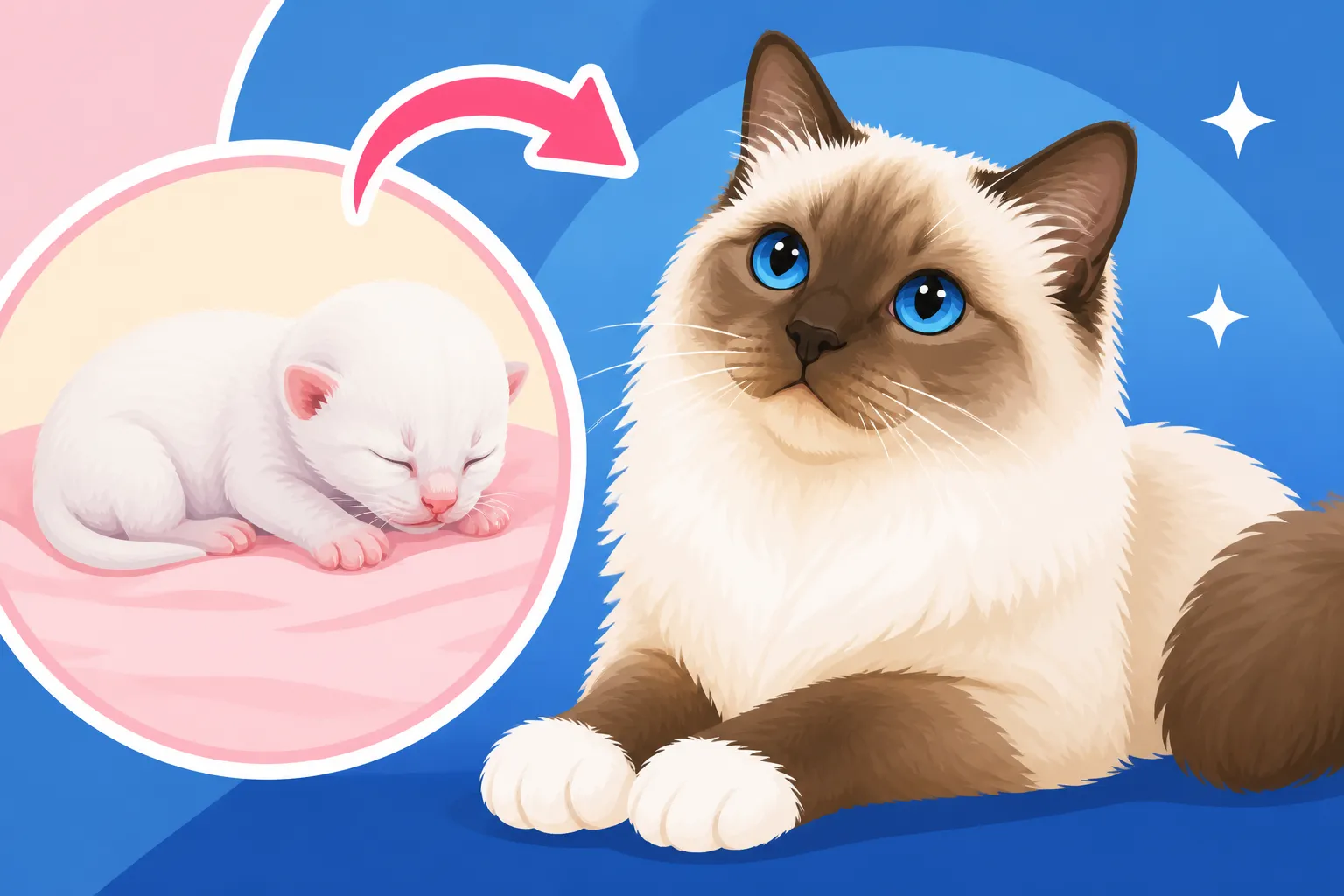
Therefore, every Birman kitten, regardless of what its adult point color will eventually be, enters the world as a tiny, un-pigmented blank canvas. Their fur is soft and white or a very pale cream, with no hint of the rich seal, blue, chocolate, or lilac points that will eventually emerge. It’s quite a spectacle for breeders and new owners alike, watching these little bundles of white slowly develop their characteristic markings. It's a reminder that beauty often unfolds over time, and patience is a virtue when you're anticipating the full glory of your Birman's coat.
The Gradual Unveiling: Point Development in Birman Kittens
The journey from a nearly white kitten to a fully pointed Birman is a slow and utterly captivating process. It’s not an overnight transformation but a gradual deepening of color that unfolds over weeks and even months. Knowing what to expect can make the experience even more enjoyable for you as an owner.
The First Hint of Color's Arrival
Typically, the very first whispers of color begin to appear within a few days to a couple of weeks after birth. You might notice a faint darkening on the nose and ear tips. It's often so subtle that you have to look closely, perhaps under good lighting, to really catch it. As the weeks progress, these areas will slowly but surely intensify. Then, you'll start to see a bit of color emerge on their tiny paws and the very tip of their tail.
It’s important to remember that every kitten is an individual. Some might show their points a little earlier, others a little later. The rate of darkening can also vary, but the general pattern is consistent: the extremities, being the coolest parts of the body, are always the first to reveal their true hue. This early stage is often a period of excited anticipation for breeders, who can begin to gauge the kitten’s future color and How a Birman Kitten's Gloves Change as It Grows.
The Continuous Journey of Darkening Points
The development of a Birman’s points isn’t a quick sprint; it's a marathon. The color will continue to deepen and enrich throughout their first year, and even subtly thereafter, as they mature. The full, rich color you see in adult Birmans, especially in their deepest points, can take a significant amount of time to fully manifest. Many Birmans aren't considered fully "finished" in their coloring until they are two or even three years old.
This means that a kitten you bring home at 12-16 weeks might still have relatively light points compared to what they will eventually become. Their beautiful masks will become more defined, their ears will darken, and their tail and legs will achieve their mature shading. This extended development period is part of the charm of the breed, offering a continuous evolution of their striking appearance. How a Birman Kitten's Points Come In is a process worth watching closely.
Environmental Factors Influencing Point Color Depth
While genetics lay the foundation for a Birman's point color, environmental factors, particularly temperature, play a significant role in how deep and rich those colors ultimately become. It's a fascinating dance between nature and nurture, if you will, concerning their coat.
For instance, a Birman living in a generally cooler climate or an indoor environment with lower ambient temperatures might develop slightly darker points than a Birman residing in a consistently warmer household. The difference might be subtle, but it's often noticeable. Think about how a cat might spend more time curled up in a sunbeam during colder months; their fur in those exposed, cooler areas will naturally deepen. Conversely, a cat that spends a lot of time in a very warm house might have slightly lighter points overall.
Beyond temperature, general health and nutrition also contribute to the overall quality and vibrancy of the coat, though they don't change the underlying genetic color. A healthy diet, perhaps through quality cat food brands available on Chewy, ensures they have the nutrients needed for a glossy, well-pigmented coat. A well-nourished Birman will have a healthier coat, which in turn can display its colors more vibrantly. Therefore, while you can't make a blue point into a seal point, you can certainly help your Birman achieve the best version of their genetically determined color. If you're wondering Why a Birman Living Somewhere Cold Gets Darker, it's all about that enzyme!
Here's a quick look at the typical progression:
| Age | Appearance | Point Development |
|---|---|---|
| Newborn to 2 weeks | Almost entirely white or very pale cream. Eyes may still be closed. | No visible points |
| 2-4 weeks | Faint smudges appear on nose, ear tips, and tail tip. Paws may show slight darkening. | Initial points |
| 4-8 weeks | Points on face, ears, tail, and paws become more defined. Body still very light. | Developing points |
| 8-16 weeks | Points continue to deepen and spread slightly. Kitten is more active and growing. | Clearly visible points |
| 6 months to 1 year | Points much darker and richer, body color often cream or fawn. Adult coloration taking shape. | Maturing points |
| 1-3 years | Full, rich point color achieved. Body color fully set. | Full adult points |
What This Means for Birman Owners and Breeders
Understanding why Birman kittens are born white is more than just a fun fact; it's crucial for managing expectations, ensuring proper care, and appreciating the full beauty of this breed. For both new owners and seasoned breeders, this knowledge shapes how they approach the first few months of a Birman's life.
Managing Expectations for New Owners
The most significant takeaway for new Birman owners is that the initial appearance of their kitten is completely normal. Don't be alarmed if your little one arrives looking like a ghost of the adult cat you envision. This is simply the Birman way! It requires a bit of patience and a lot of enjoyment watching the transformation unfold. It also means that when you’re choosing a kitten, you’re often choosing based on the quality of its parents, its temperament, and what the breeder tells you about its potential, rather than seeing its final color on day one. Why a Birman Kitten Is Born Almost White might be a question many new owners ask, and it’s a wonderful opportunity to learn about the breed's unique traits.
A reputable breeder will always explain this process to prospective owners, perhaps even showing pictures of the parents and older siblings so you can get a sense of the mature coat. They might also share how Why Birman Kittens Are Sold Late often ties into allowing more time for these critical developmental stages to become evident. It’s part of the comprehensive education that comes with adopting a purebred cat, ensuring you're prepared for every stage of your Birman's development.
The Role of Breeders in Color Prediction and Monitoring
For breeders, predicting the precise final shade and distribution of points is a combination of genetic knowledge, experience, and careful observation. While all Birman kittens start light, the specific point color (seal, blue, chocolate, lilac, red, cream, tortie, or tabby points) is genetically determined at conception. A breeder knows what colors to expect based on the parents' genetics. However, the depth and spread of that color, especially the critical "gloving" on the paws, is something they meticulously monitor over the first few weeks and months.
Breeders pay close attention to the darkening rate, as well as the emerging patterns of the gloves and laces, which are specific white markings on a Birman's paws. These markings are judged strictly in the show ring, so their development is paramount. While a kitten's color will continue to deepen, the clarity and pattern of these white markings are usually quite stable by around 8-12 weeks, which is why breeders often wait until then to make final decisions on show potential or pet placement. Monitoring overall health and development is key, and this is where robust pet insurance, with coverage from providers like Healthy Paws, can be a real asset for both breeders and eventual owners, covering unexpected vet visits.
The Enduring Beauty of a Fully Developed Birman Coat
The beauty of a Birman cat truly comes into its own once its points have fully developed. The contrast between the rich, dark extremities and the silky, pale body is simply breathtaking. Whether it’s the classic deep brown of a Seal Point, the elegant slate grey of a Blue Point, or the warm, creamy tones of a Lilac Point, each color has its own distinct charm. What a Seal Point Birman Looks Like is a common question, and seeing the mature coat is often more impressive than imagining it.
This gradual color transformation means that owning a Birman is a journey of discovery. You get to witness your cat evolve from a fluffy, white sprite into the majestic, color-pointed companion they are destined to be. It’s a subtle but profound change that adds another layer to the unique bond you share with this gentle, sacred cat. The quality of their coat, from its silken texture to its vibrant color, is a hallmark of the breed and a source of constant admiration.
Disclaimer
This article is for general informational purposes only and does not constitute professional advice. Laws, prices and regulations vary by location and change over time. Consult a qualified professional for guidance on your specific situation.