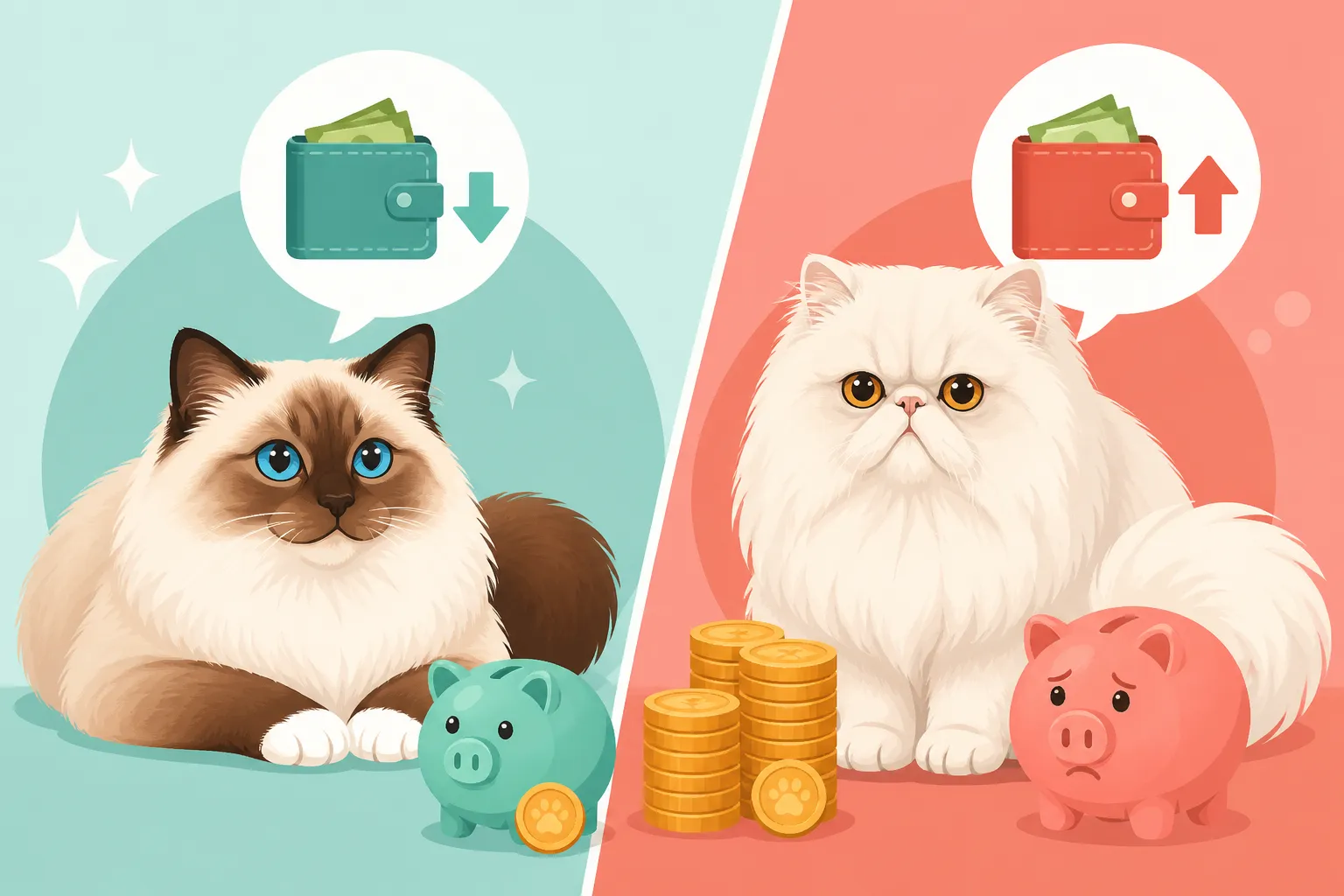
Why a Birman Costs Less to Keep Than a Persian
Many cat lovers dream of a beautiful long-haired companion, but often worry about the ongoing commitment and costs. For those considering a Birman versus a Persian, it's a pleasant surprise to discover that Birmans generally come with a more manageable long-term budget, largely due to their unique physical traits, coat type, and calmer disposition. This guide will explore the key differences in care and associated expenses, helping you understand why a Birman often costs less to keep than a Persian.
Grooming: The Biggest Cost Divide
When you look at a Birman and a Persian, both are undeniably stunning with their flowing coats. However, beneath that luxurious exterior lies the biggest differentiator in ongoing costs: the type of coat itself. This is where the Birman truly shines as a more economical choice for daily care.
The Birman's Single, Silky Coat
The Birman cat is famous for its gorgeous, medium-long coat that feels incredibly silky to the touch. What many people don't realize is that this breed possesses a single coat, meaning it lacks the dense, woolly undercoat that other long-haired breeds, like the Persian, possess. This is a game-changer for grooming. Because there's no tangled underlayer, a Birman's coat is far less prone to matting. You'll find yourself needing to comb your Birman perhaps three times a week, a relatively quick and enjoyable bonding experience rather than a wrestling match.
This unique coat characteristic dramatically reduces the need for professional grooming appointments, which can add up quickly over a cat's lifetime. While some owners might still opt for a bath or trim for special occasions, it's generally not a necessity for health or comfort with a Birman. The tools required for a Birman's coat are also simpler and more affordable – a good quality metal comb is often all you need. You won't typically be investing in an arsenal of de-matting rakes, specialized conditioners, or professional clippers. This is a significant factor in Why a Birman Costs Less to Groom Than a Persian. It’s a joy to be able to keep their coat in tip-top shape with minimal fuss and expenditure.
The Persian's Demanding Double Coat
Now, let's talk about the Persian. While equally beautiful, their grooming needs are on an entirely different level. Persians boast a thick, dense double coat with a substantial undercoat. This undercoat is incredibly prone to matting and tangling, especially if not attended to daily. Skipping even a day or two of grooming can result in painful mats that pull at their skin, sometimes requiring a veterinary visit for sedation and shaving.
The daily grooming routine for a Persian is not just a suggestion; it's a critical component of their health and comfort. Owners often spend a considerable amount of time each day meticulously combing through their cat's fur, tackling tangles before they escalate into serious mats. Beyond the time commitment, there's the financial aspect. Many Persian owners find it necessary to enlist the help of professional groomers on a regular basis, either for full body trims, de-matting sessions, or regular baths to manage the coat. These services can be quite costly, especially if done frequently. Furthermore, the specialized tools required for a Persian's coat – wide-toothed combs, slicker brushes, de-matting tools, and specific shampoos – can be a more significant initial investment and may need more frequent replacement. You might find yourself regularly browsing for these specialized tools on online pet stores like Chewy.
Veterinary Care: Genetic Predispositions and Breed Structure
Beyond the daily brush, the long-term health outlook and associated veterinary costs present another area where Birmans tend to be the more budget-friendly choice. Both breeds have their genetic predispositions, as do most purebred cats, but the nature and impact of these conditions often differ.
Birman Health Considerations
Reputable Birman breeders are diligent about screening their breeding cats for known genetic issues. The breed has recognized predispositions such as Hypertrophic Cardiomyopathy (HCM), Polycystic Kidney Disease (PKD1), and Feline Hypotrichosis with Thymic Aplasia (FOXN1), which causes hairlessness and a compromised immune system in affected kittens. The good news is that for PKD1 and FOXN1, there are DNA tests available, allowing breeders to make informed decisions and reduce the risk of passing these genes on. While HCM still requires regular echocardiograms to monitor heart health, proactive screening greatly minimizes the chances of unexpected, devastating medical crises for pet owners.
Generally, Birmans are considered a relatively healthy and robust breed, often enjoying a good quality of life into their teens. Many Birmans are capable of reaching The Twelve to Sixteen Years a Birman Usually Gets. Routine annual check-ups, vaccinations, and parasite control are standard for any cat, but Birmans typically don't require extensive specialized medical care stemming from their breed characteristics. Of course, any cat can develop an illness, but a Birman from well-screened lines often means fewer surprises down the road, and a more predictable vet budget. It's always a good idea to consider pet insurance from providers like Healthy Paws to cover any unforeseen medical events, regardless of breed.
Persian Health Challenges
Persians, unfortunately, face a broader range of breed-specific health challenges, many of which are directly linked to their distinctive brachycephalic (flat-faced) skull structure. This unique facial conformation, while aesthetically appealing to some, can lead to chronic and expensive health issues.
One of the most common problems for Persians relates to their breathing. Their shortened nasal passages can cause brachycephalic airway syndrome, leading to noisy breathing, difficulty exercising, and increased risk during hot weather or anesthesia. Corrective surgeries for these issues can be incredibly costly. Their prominent eyes, combined with their flat faces, often result in excessive tearing and tear staining, requiring daily cleaning to prevent skin irritation and infection. This tear overflow also means more frequent cleaning products and potentially vet visits for eye infections.
Persians also have a higher incidence of Polycystic Kidney Disease (PKD) which, while now largely screenable by DNA tests, historically led to significant kidney disease management costs. Dental issues are also more prevalent due to their crowded jaws, often requiring more frequent dental cleanings under anesthesia, which are not inexpensive. Skin fold infections around their nose and mouth can also occur, adding to the regular care routine and potential vet bills. All these factors contribute to a higher likelihood of more frequent and specialized veterinary visits throughout a Persian's life, significantly impacting the overall cost of ownership. This is why Why a Birman's Kidneys Are Checked Before Any Anesthetic is crucial, but for a Persian, it's often a baseline for a multitude of concerns.
Diet and Daily Maintenance: Simpler Needs, Less Expense
When it comes to what goes into their food bowls and the everyday items around the house, Birmans again tend to be a more straightforward, and thus often less expensive, choice than their Persian cousins. Their physical traits influence more than just grooming and vet visits; they impact daily consumables too.
Birman Dietary Needs
Birmans generally have straightforward dietary needs. A high-quality, balanced cat food appropriate for their life stage is usually all that's required to keep their beautiful coat lustrous and their bodies healthy. They aren't typically known for overly sensitive stomachs or requiring highly specialized diets unless a specific health condition arises, which, as discussed, is often less common for well-bred Birmans. They're also not usually voracious eaters or prone to obesity if their meals are measured and activity levels are appropriate. You’ll find that a Birman will often Feeding a Birman That Will Never Beg for It, which means they're less likely to overeat if food is left out.
Their normal facial structure means they can comfortably eat from any standard cat bowl, eliminating the need for specially designed ergonomic bowls that are often necessary for flat-faced breeds. This reduces initial setup costs and offers more flexibility in food choices. While all cats benefit from good hydration, Birmans don't typically have breed-specific issues that necessitate extremely expensive, prescription wet foods from a young age, though wet food is always a great choice for kidney health as they age. Fresh food delivery is an option, but many excellent commercial foods will also suffice for a Birman.
Persian Dietary Considerations
Persians, due to their brachycephalic structure, often have more specific dietary needs and associated costs. Their flattened faces and sometimes misaligned jaws can make it difficult for them to pick up standard kibble effectively. This often means owners need to invest in wider, shallower bowls, or even specialized "Persian bowls" with a sloped design, to make eating more comfortable and prevent food from being pushed around the floor.
Beyond the bowls, the type of food itself can be a consideration. Due to their propensity for dental issues, some owners opt for kibble specifically designed for dental health, or incorporate more wet food into their diet from an earlier age. While wet food is beneficial for any cat, the necessity for it in Persians due to dental or brachycephalic eating challenges can increase monthly food expenses significantly compared to a cat that thrives on a wider range of high-quality dry foods. Additionally, some Persians might develop more sensitive digestion, potentially leading to specific prescription diets recommended by a vet, which are almost always more expensive than over-the-counter options.
Lifestyle and Temperament: Indirect Savings
It might not be the first thing you think of when comparing costs, but a cat's temperament and typical behavior can have a surprising impact on your wallet. From potential damage to property to the need for specialized care when you're away, the Birman's easy-going nature often translates into indirect savings.
The Birman's Adaptable Nature
Birmans are known for their incredibly placid, gentle, and adaptable personalities. They are often described as "dog-like" in their loyalty and tendency to Why a Birman Follows You Without Demanding Anything from room to room. This calm demeanor means they are far less likely to engage in destructive behaviors like excessive scratching of furniture or frantic climbing that could lead to broken items. A well-placed scratching post is usually enough to satisfy their natural instincts, saving you money on replacing upholstered items or repairing scratched walls.
Their relatively low energy levels and contentment with indoor living also mean less risk of outdoor accidents, fights, or exposure to parasites and diseases, which can all result in unexpected and costly vet bills. A Birman is generally content to be near their human companions, whether lounging on a sofa back or a comfortable cat bed. This calm disposition also translates into less stress for the cat when routines change slightly, or when visitors come over. A less stressed cat is often a healthier cat, leading to fewer stress-related vet visits. When you need to leave them, their quiet nature means they often do better with a cat sitter visiting them at home, rather than an expensive boarding facility. This makes How Much a Birman's First Year Costs With an Echo Included a good starting point, as other costs tend to be lower and more predictable.
Persian Specific Needs
Persians, while also generally calm indoors, can require a bit more attention to their environment to prevent problems that could lead to additional costs. Their dense coats, if not meticulously groomed, can lead to uncomfortable matting, which may make them irritable or withdrawn. This, in turn, can sometimes manifest as a reluctance to use a litter box if their fur is pulling at their skin, leading to accidents and the need for specialized cleaning. You may find yourself spending more on enzyme cleaners and even professional carpet cleaning if grooming falls behind.
Furthermore, the very nature of a long-haired cat, especially one with a dense undercoat, means they can track more litter out of their box. If you have a Persian, you might find yourself needing to buy special, low-dust, larger granule litter, or more sophisticated litter mats and boxes, to keep your home tidy. And while all cats appreciate a clean environment, the Persian's heavy coat can pick up dust and debris more readily, necessitating a more frequent and thorough cleaning routine for your home, adding to utility and cleaning supply costs. While both breeds benefit from a comfortable home, the Persian's specific physical traits can sometimes indirectly lead to higher household maintenance costs to keep them (and your home) clean and healthy.
Comparing the Upkeep: Birman vs. Persian
Let's break down some of the key differences in expected ongoing costs between these two beautiful long-haired breeds. While exact figures vary wildly based on location, individual cat needs, and owner choices, the general pattern of expenses often favors the Birman.
| Upkeep Category | Birman Tendency (Lower Cost) | Persian Tendency (Higher Cost) |
|---|---|---|
| Grooming Frequency | 2-3 times per week combing, rarely professional. | Daily, meticulous combing, often needs professional grooming/shaving. |
| Grooming Tools | Simple metal comb, soft brush. | Wide-toothed combs, slicker brushes, de-matting tools, specialized shampoos. |
| Vet Visits (Routine) | Standard annual check-ups, genetic testing for specific conditions. | Standard annual check-ups, often more frequent visits for breed-specific issues. |
| Vet Visits (Specialized) | Echocardiograms for HCM screening, general illness care. | Brachycephalic airway evaluations, eye care, dental cleanings, skin fold issues, PKD management. |
| Food Bowls | Standard bowls. | Wide, shallow, or specialized "Persian bowls" often needed. |
| Diet | High-quality commercial or fresh food, generally flexible. | Often requires specific kibble shapes, more wet food, or prescription diets due to dental/face structure. |
| Litter | Standard low-dust litter, requires regular scooping. | Often needs low-dust, larger granule litter; can track more due to coat. |
| Household Impact | Low destruction risk, less dander/shedding burden due to single coat. | Higher risk of matting-related cleanliness issues, more visible shedding/dander. |
| Anxiety/Stress Management | Generally placid, handles changes well, less prone to stress-related issues. | Can become stressed if grooming is neglected, potentially leading to behavioral issues. |
You can see quite clearly from this comparison that while both cats bring immense joy, the day-to-day and long-term financial commitments are often notably different. The Birman's less intensive grooming requirements, generally more robust health profile, and adaptable nature all contribute to a more predictable and often lower overall cost of ownership compared to the Persian. This makes the Birman an excellent choice for those seeking a long-haired companion without the more demanding financial outlays that some other breeds require.
Disclaimer
This article is for general informational purposes only and does not constitute professional advice. Laws, prices and regulations vary by location and change over time. Consult a qualified professional for guidance on your specific situation.