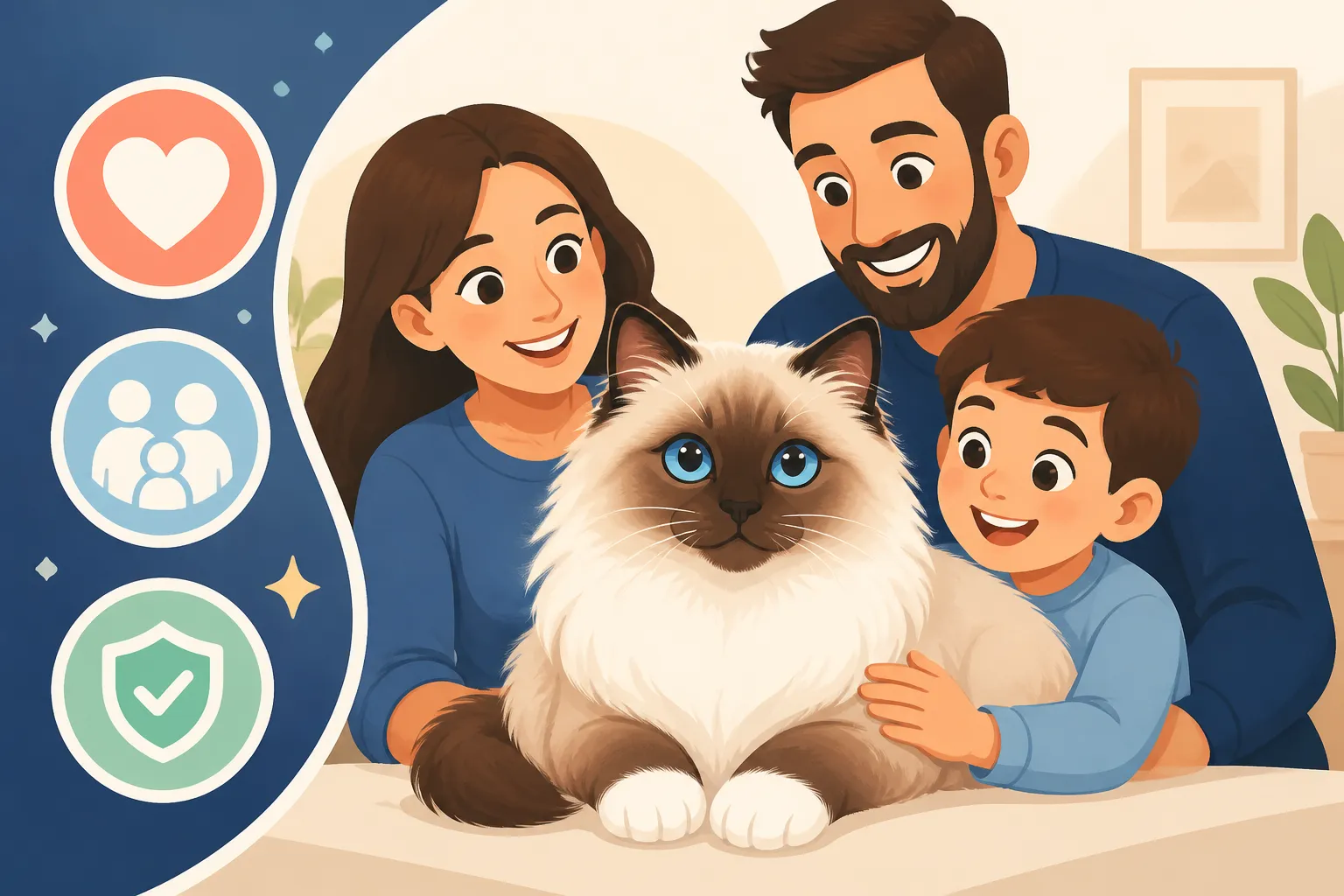
Why a Birman Is the Cat Families Are Told to Get
Choosing a new feline friend for your household can feel like an overwhelming decision, especially when you're trying to find a cat that will truly integrate into a bustling family environment with kids and perhaps other pets. Many families struggle with finding a cat that is affectionate but not overly demanding, playful but not destructive, and tolerant of the joyful chaos that family life often brings. This guide is dedicated to exploring exactly why the Birman cat has earned its stellar reputation as the quintessential family pet, highlighting the unique traits that make them such a harmonious addition to almost any home.
The Birman's Temperament: A Foundation for Family Life
When you think about the ideal family cat, a few key traits likely come to mind: gentle, patient, adaptable, and not prone to dramatics. It's often difficult to find all these qualities in one furry package, but the Birman cat truly comes remarkably close. Their inherent disposition is a huge part of why they slot so effortlessly into family dynamics, often becoming the serene heart of the home.
The Gentle Giant Reputation
Birmans are often described as "gentle giants," and it's a reputation they wear incredibly well. They possess a placid, even-keeled nature that makes them remarkably tolerant of the unpredictable energy of a busy household. Unlike some breeds that might be prone to nervousness or quick swats when startled, a Birman typically maintains its composure. This isn't to say they're oblivious; they're very aware of their surroundings, but their reaction is usually one of calm observation rather than alarm.
Imagine a scene: a small child, full of innocent enthusiasm, perhaps stumbles a bit too close or tries to offer an awkward pat. A Birman's first instinct isn't to bolt or retaliate. Instead, they might simply shift away slowly, maintaining their dignified composure, or even lean into the gentle touch. This innate gentleness means fewer worries for parents about accidental scratches or stressed-out pets, allowing for a more relaxed and joyful coexistence.
Their calmness extends to general household noise and activity, too. The clatter of pots, the rumble of a vacuum cleaner, or even a sudden burst of laughter rarely sends a Birman scrambling for cover. They tend to take things in stride, much like a seasoned, wise observer, making them less prone to stress in an environment that might overwhelm a more highly strung cat.
A People-Oriented, Not Lap-Oriented Cat
One of the most endearing qualities of the Birman for families is their strong attachment to their human companions without being overly demanding of constant physical contact. If you've ever had a cat that constantly needs to be on your lap, or one that completely ignores you, you know the frustration of finding that sweet spot. Birmans often hit it perfectly. They are wonderfully people-oriented, meaning they thrive on being near you, part of your activities, and sharing your space.
You'll often find a Birman curled up on the sofa next to you, stretched out on a desk while you work, or even just lounging on the floor nearby as you go about your day. They have a subtle way of "following" you from room to room, not necessarily for attention, but simply because they want to be wherever their family is. It's a comforting, constant presence that adds a quiet warmth to the home. They don't usually jump on your lap the second you sit down, but they will absolutely settle in beside you, a paw perhaps gently touching your leg, or just a contented gaze in your direction. This allows for plenty of interaction without feeling smothered, which is often ideal for busy families who appreciate companionship without intense clinginess.
This subtle companionship can be particularly wonderful for older children or teenagers who want a pet to connect with, but perhaps don't want the constant interruption of a cat demanding to be held. The Birman's quiet presence offers a unique blend of affection and independence, proving that love doesn't always have to be expressed loudly.
Low Vocal Demands
If you've ever lived with a Siamese, you know what a truly vocal cat sounds like – a constant symphony of meows and demands! While some people adore this chatty nature, many families, especially those with young children or those who prefer a quieter home, find it can be a bit much. This is another area where the Birman shines, offering a remarkably gentle presence that doesn't rely on loud pronouncements.
Birmans are notoriously quiet cats. They possess a soft, melodic voice, often expressed as a gentle trill or a very subtle meow, almost as if they're having a private conversation with themselves. It's a sweet, understated sound that conveys their needs without ever being intrusive or irritating. You might hear it when they greet you at the door, or perhaps when they're gently reminding you it's mealtime, but it's rarely a full-blown yowl.
This quiet demeanor makes them wonderful companions in households where loud noises might startle small children or where a peaceful atmosphere is treasured. You won't find yourself constantly trying to quiet your Birman or explaining their vocalizations to guests. They communicate their desires with subtle body language, a soft glance, or that characteristic little trill. It's truly a testament to their calm and undemanding nature, allowing them to be a part of the family without dominating the soundscape. How Many Times a Day a Birman Actually Speaks offers more insight into their subtle communication style.
Compatibility with Children: Patience and Play
One of the biggest concerns for families considering a cat is how well the feline will interact with children. Will they be patient with a toddler's clumsy affection? Will they engage in safe, fun play with older kids? The Birman's temperament makes them an outstanding choice in this regard, often excelling where other breeds might struggle.
Tolerating Toddlers and Playful Hands
Let's face it, toddlers aren't always the most graceful creatures. Their movements can be unpredictable, their enthusiasm boundless, and their understanding of a cat's personal space still developing. Many cats would find this overwhelming, leading to stress, hiding, or even defensive swatting. The Birman, however, stands out for its remarkable patience and tolerance, especially with the youngest members of the family.
Their gentle nature means they are far more likely to simply remove themselves from an uncomfortable situation rather than resort to aggression. If a little hand pulls a bit too hard, or an energetic hug is a bit too tight, a Birman will typically just slide away, finding a calmer spot rather than using their claws. This isn't to say children shouldn't be taught how to interact respectfully with a cat – responsible pet ownership always includes supervision and education – but the Birman's inherent disposition makes these learning moments much safer and less fraught with worry. Why a Birman Tolerates Toddlers delves deeper into this impressive trait.
This resilience to the less-than-perfect handling of young children is a huge relief for parents. It means less anxiety about potential accidents and more opportunities for positive interactions, fostering a loving bond between child and cat from an early age. They truly seem to understand the innocent intentions behind a child's actions, responding with a quiet, forgiving spirit.
Engaging in Gentle Play
While Birmans are not known for being frenetic or overly energetic, they certainly enjoy playtime, and their play style is perfectly suited for children. They tend to engage in gentle, interactive play, often preferring wand toys, feather teasers, or soft balls that can be batted around. Their play isn't usually rough or aggressive; instead, it's a delightful dance of chasing, pouncing, and batting, often with their claws safely sheathed.
This gentle approach to play means children can safely participate without fear of being scratched or overwhelmed. Imagine an older child dangling a feather wand, and the Birman gracefully leaping and batting at it, always careful not to make direct, hard contact. This creates a wonderful opportunity for children to bond with their pet, teaching them about animal interaction and the joy of shared activity. These playful moments are not just fun; they're crucial for a child's development of empathy and understanding of animal behavior.
Their willingness to engage in these calm, interactive games means they're not just a decoration but an active, enjoyable part of the family's daily life. For more ideas on appropriate play, Which Toys Suit a Birman That Plays Quietly offers great suggestions for keeping them entertained in a way that’s safe for everyone. Look for durable, interactive toys on platforms like Amazon that can withstand enthusiastic play from both cats and kids.
Teaching Respectful Interaction
Beyond their direct interactions, Birmans indirectly teach children invaluable lessons about respectful animal interaction. Because they are so gentle and non-confrontational, children quickly learn that a soft touch, a quiet voice, and an understanding of the cat's mood yield the most positive responses. If a child is too loud or rough, the Birman simply walks away, offering a natural consequence without any aggression.
This teaches children the importance of observing an animal's body language and respecting their boundaries. It's a real-world lesson in empathy and gentle handling that sticks with them, fostering a deeper understanding and appreciation for all animals. Parents often find that the Birman's calm demeanor helps create a serene learning environment, making it easier to teach proper pet etiquette.
Furthermore, a Birman's placid temperament means they're less likely to develop fear-based behaviors towards children, as long as they are treated with kindness. This positive foundation is crucial for building a strong, trusting relationship where both child and cat feel safe and loved. The Birman becomes not just a pet, but a silent, furry teacher in the art of gentle companionship.
Integrating with Other Pets: A Peaceful Coexistence
Adding a new pet to a household that already has furry residents can be a source of stress, especially if personalities clash. However, the Birman's harmonious nature extends not only to humans but also to other animals, making them an excellent choice for multi-pet families.
Making Friends with Dogs
One of the most remarkable traits of the Birman is their ability to form friendships with dogs. While individual personalities always play a role, Birmans generally possess a calm and adaptable temperament that helps them navigate the initial awkwardness of meeting a canine companion. They're not prone to being overly territorial or aggressive, and their quiet confidence often puts dogs at ease.
They tend to approach new interactions with curiosity rather than fear, carefully observing before engaging. If a dog is boisterous, a Birman will typically retreat gracefully rather than confronting the energy. However, if the dog is gentle and respectful, you might find them sharing sunbeams, napping in close proximity, or even engaging in a soft play session. Many Birman owners report finding their cats and dogs curled up together, a testament to their ability to foster cross-species friendships.
Of course, introducing any cat to a dog requires patience and supervision, ensuring the dog is also calm and well-behaved. But with a Birman, you often start with a cat that is already predisposed to peaceful coexistence, greatly increasing the chances of a successful integration. Why a Birman Settles Next to a Dog Within a Week offers compelling insights into how quickly these bonds can form.
Welcoming Other Cats
For families considering a second cat, or those who already have a feline resident, a Birman can be an ideal companion. They are social creatures who often thrive on companionship, and many breeders even recommend getting Birmans in pairs because they do so well together. If your family is often out of the house, another Birman can provide essential company, preventing loneliness and boredom.
Their non-confrontational nature means they are generally very accepting of other cats. Introductions still need to be handled carefully and gradually, allowing both cats time to adjust to each other's scent and presence. But once accustomed, Birmans are known for their ability to share space, toys, and even sleeping spots harmoniously. They're not typically ones to instigate squabbles over resources or prime napping locations.
This makes them a fantastic choice for families wanting to expand their feline family without introducing significant stress or conflict. Their desire for companionship, coupled with their gentle demeanor, creates a dynamic where two Birmans (or a Birman and another calm cat) can genuinely enrich each other's lives and bring double the joy to the household. Read Bringing a Second Cat Home to a Birman That Wants One for tips on how to manage this exciting addition.
Establishing Hierarchy Without Drama
In any multi-pet household, there's usually a subtle social hierarchy that forms. With some breeds, this can involve tense stand-offs, resource guarding, or even outright fights. Birmans, true to their placid nature, tend to establish their place within a group with minimal fuss or drama. They are not typically dominant cats seeking to assert control aggressively.
Instead, they often find their niche by being agreeable and non-threatening. They are more likely to observe and adapt, gracefully navigating the social landscape of the home. This means less stress for the pets themselves and less worry for the family. You won't typically find a Birman engaging in loud arguments over a favorite sleeping spot or blocking another pet from the food bowl. They prefer peace and quiet, and their actions reflect this preference.
This ability to integrate smoothly into an existing pet family makes the Birman an incredibly low-stress addition. They contribute to a calm home environment, demonstrating that even with multiple animals, tranquility is achievable. Their laid-back approach to social dynamics is a significant advantage for any family looking for a harmonious multi-pet household.
Adaptability to Environment and Lifestyle
A family's life can be dynamic, with changes in routine, new furniture, or even moving to a new home. Finding a cat that can roll with these changes, rather than becoming unduly stressed, is a huge benefit. Birmans possess a remarkable degree of adaptability, making them suitable for a variety of living situations and lifestyles.
Thriving in Indoor Environments
For many families, an indoor-only cat is the safest choice, protecting them from traffic, predators, and illnesses. The Birman is perfectly suited to an indoor lifestyle, showing little desire to roam outdoors. Their gentle, trusting nature, combined with their striking appearance, makes them particularly vulnerable if allowed outside unsupervised. They are simply too trusting to navigate the dangers of the street.
Fortunately, Birmans are content to be indoor companions. They find ample stimulation within the home, enjoying window perches, interaction with family members, and their array of toys. Their moderate activity level means they don't necessarily need vast outdoor spaces to expend energy; regular play sessions and climbing on a cat tree are often sufficient. This preference for indoor life provides peace of mind for families who want to keep their beloved pet safe and secure.
Their low-maintenance coat also means less worry about picking up outdoor debris or parasites. By keeping them indoors, families can enjoy the Birman's companionship without the constant concern for their safety or the extra grooming demands that an outdoor lifestyle might entail. For a Birman, the warmest, safest, and most loved place is right inside with their human family. Why an Indoor Birman Reaches Sixteen More Often shows how beneficial this can be for their longevity.
Handling Changes and Routines
Life with a family is rarely static. There are new babies, new jobs, house moves, and changes in daily schedules. Some cats find any deviation from their routine deeply unsettling, leading to stress behaviors. While no cat loves drastic changes, Birmans tend to handle them with more grace and resilience than many other breeds. Their strong bond with their human family often acts as a comfort anchor during times of upheaval.
If you're moving house, for example, a Birman might initially be a bit shy, exploring their new surroundings with cautious curiosity. However, their focus remains on their people. As long as their familiar family members are present and providing comfort and reassurance, they will typically adjust much more quickly than a cat whose primary bond is to a specific territory. Providing a quiet, secure "base camp" room initially, filled with their familiar items, can significantly aid in their transition.
Similarly, changes in a family's daily routine – a new work schedule, children starting school – are usually absorbed with minimal fuss. They adapt to new feeding times or quiet hours, as long as they still receive their cherished attention and companionship when the family is available. This adaptability is a huge boon for busy families who need a pet that can be a comforting constant, even as life around them shifts and evolves. How Long a Birman Takes to Settle After a Move offers practical advice for big transitions.
Solo Time vs. Social Needs
While Birmans adore company, they are also capable of handling reasonable periods of time alone, which is a common reality for many working families. They are not typically prone to destructive separation anxiety, provided they have adequate enrichment and feel secure in their environment. The key is balance: while they love being part of the family action, they also value their quiet naps and independent exploration.
For families where adults work outside the home or children are at school, a Birman will often spend the day napping in various sunbeams, watching the world outside the window, or engaging in quiet play with their favorite toys. Providing engaging environmental enrichment, such as puzzle feeders, a comfy cat tree, or a rotating selection of toys, can help keep them mentally stimulated during solo hours. Amazon offers a fantastic array of such enrichment items, from automated laser pointers to treat-dispensing balls that can keep a Birman happily occupied.
However, it's important to remember that "alone time" for a Birman should be reasonable. Prolonged, consistent isolation can lead to loneliness, which can manifest as changes in appetite or behavior. This is one reason why many Birman owners, particularly those who are out of the house for long hours, opt for two Birmans. They provide each other with companionship, ensuring neither cat feels truly alone. Why a Birman Should Not Be Left in an Empty House discusses the importance of companionship for this breed.
Ease of Care for Busy Families
When you're juggling work, kids' activities, and household chores, the last thing you need is a pet that adds significantly to your workload. The Birman truly shines in its relatively easy care requirements, making them an ideal choice for busy families looking for companionship without overwhelming demands.
Minimal Grooming Requirements
Despite their luxurious, medium-long coat, Birmans are surprisingly low-maintenance in the grooming department. This is largely due to their unique coat texture: a single coat with no dense undercoat. Unlike many other long-haired breeds, which can be prone to matting and require daily intensive grooming, a Birman's silky fur is less likely to tangle.
A good brushing session two or three times a week is usually sufficient to keep their coat in pristine condition, remove loose hairs, and prevent any mats from forming. This is a far cry from the daily, hour-long grooming sessions often required by breeds like Persians. This manageable grooming schedule means families can easily incorporate it into their routine, perhaps turning it into a relaxing bonding activity rather than a chore. Even children can often participate in the gentle brushing of a Birman, further strengthening their bond.
The reduced shedding (compared to double-coated breeds) is another bonus for busy families, meaning less fur around the house and less time spent vacuuming. This combination of a beautiful coat with minimal upkeep is a significant advantage for anyone seeking a low-fuss feline companion. No Undercoat Is What Makes a Birman Easy to Groom provides an excellent overview of their distinctive coat.
Generally Robust Health
While all purebred cats have certain predispositions, Birmans are generally considered a robust and healthy breed, especially when sourced from reputable breeders who prioritize health testing. A well-bred Birman typically enjoys a long and healthy life, often reaching 12 to 16 years, or even more. This longevity and general good health mean fewer unexpected vet visits and less heartbreak for families, allowing for many years of joyful companionship.
Responsible Birman breeders are diligent about screening for potential genetic issues, such as Hypertrophic Cardiomyopathy (HCM) and Polycystic Kidney Disease (PKD1), though the latter is now quite rare in the breed due to extensive testing. By choosing a kitten from health-tested lines, families significantly reduce the risk of encountering serious health problems, providing peace of mind and financial predictability. The breed's sturdy build also contributes to their general resilience.
Of course, regular veterinary check-ups, a high-quality diet, and a loving home environment are crucial for any cat's well-being. But with a Birman, families often find that their commitment to preventative care pays off in a long, healthy life for their cherished pet, minimizing unexpected burdens. The Twelve to Sixteen Years a Birman Usually Gets illustrates the kind of lifespan you can expect from a healthy Birman.
Training and Management
Birmans are intelligent cats who are eager to please, making them surprisingly amenable to training and easy to manage within a household. Their calm and cooperative nature makes routine tasks, like nail trimming or vet visits, much less stressful than with more resistant breeds. They generally accept handling with good grace, especially if introduced early and consistently.
Litter box training is usually a breeze for Birmans, as they are naturally fastidious creatures. Many owners also find them responsive to positive reinforcement training, capable of learning tricks or even walking on a leash, if introduced gently. Their intelligence means they quickly understand household rules and boundaries, contributing to a well-behaved and harmonious living situation. You might be surprised at how quickly they pick up on routines or respond to their names.
For families, this translates to a pet that is less likely to create behavioral problems, requiring less time and effort devoted to corrective training. Instead, the focus can be on positive interactions and enjoyment of their companionship. How to Get a Birman Used to Grooming offers practical tips on making essential care tasks a positive experience from kittenhood.
The Joy a Birman Brings to a Family Home
Ultimately, the most important aspect of any family pet is the joy and enrichment they bring to daily life. In this regard, the Birman truly excels, offering a unique blend of affection, serenity, and companionship that profoundly enhances a family home.
A Constant, Undemanding Presence
The quiet, constant presence of a Birman is one of its most cherished qualities for families. They don't demand attention loudly, but their gentle companionship is always available. Whether you're relaxing on the couch, working at your desk, or bustling around the kitchen, your Birman will likely be nearby, a comforting, unobtrusive shadow. This steady presence adds a layer of peace and warmth to the home that is truly special.
For children, this means having a loyal, soft companion who is always there, ready for a gentle pet or a quiet cuddle. For adults, it's the comfort of knowing there's a loving, beautiful creature who is content just to share your space, asking for little but offering so much in return. In the sometimes-chaotic world of family life, a Birman provides a welcome sense of calm and continuity, a serene anchor amidst the daily bustle.
They have a way of filling a room with their quiet grace, enriching the atmosphere without ever being overbearing. It’s a subtle yet profound addition to family dynamics, fostering a sense of togetherness and warmth.
Teaching Responsibility and Empathy
Owning a Birman can be an incredibly enriching experience for children, serving as a gentle teacher of responsibility and empathy. Because Birmans are so tolerant and responsive to kind handling, children quickly learn that gentle actions lead to positive interactions. They learn to feed, groom, and play with their cat in a way that benefits both pet and child.
This direct experience of caring for a living creature teaches invaluable lessons about compassion, understanding the needs of others, and the importance of gentle stewardship. Children learn that their actions have consequences, and that a loving approach fosters a strong, trusting bond. These lessons extend beyond the pet, shaping how children interact with people and the world around them.
The Birman's calm nature makes this learning process particularly smooth, as children are less likely to encounter negative reactions that might deter them. Instead, they are met with soft purrs and contented gazes, reinforcing the positive outcomes of their caring behavior. It's a beautiful cycle of giving and receiving that nurtures both the cat and the developing child.
A Lifetime of Devotion
One of the most profound gifts a Birman gives to a family is a lifetime of devotion. With their impressive lifespan, often extending well into their teens, Birmans become truly integral members of the family, growing with the children and being a steadfast companion through many stages of life. They witness first steps, celebrate birthdays, and offer quiet comfort during difficult times.
The bond formed with a Birman is deep and enduring, a testament to their loyalty and affectionate nature. They remember their family members, greeting them with soft trills and happy wiggles of their tail. This longevity means many years of shared memories, stories, and the unique joy that only a beloved pet can bring. For a family, investing in a Birman is an investment in countless moments of quiet happiness and unwavering companionship.
This enduring presence makes them more than just pets; they become cherished family members, weaving themselves into the very fabric of daily life. The memories created with a Birman last a lifetime, long after their passing, leaving an indelible mark on the hearts of every family member. For an idea of the long future you can share, check out How Many Years a Birman From Echo Scanned Lines Lives.
| Trait / Characteristic | Birman Cat | General "Family Cat" Expectation |
|---|---|---|
| Temperament | Gentle, placid, even-keeled, tolerant | Varies widely; can be aloof, shy, or aggressive |
| Vocal Level | Low, soft trills, quiet meows | Can be very vocal, demanding, or loud |
| Interaction with Kids | Highly patient, walks away instead of swatting, enjoys gentle play | Can be intolerant, prone to scratching if overwhelmed, may hide |
| Interaction with Dogs | Adaptable, settles well with calm dogs, peaceful coexistence | Can be fearful, aggressive, or require extensive introduction |
| Social Needs | People-oriented, prefers to be near family, thrives with companion cat | Varies from highly independent to extremely clingy |
| Grooming Needs | Low; single coat, minimal matting, 2-3 brushings/week | Varies; can be high (long-hairs) or low (short-hairs) |
| Adaptability to Change | Relatively good; copes well with routine shifts, new environments with support | Often stresses with changes, requires long adjustment periods |
| Indoor Suitability | Excellent; content indoors, safer, less prone to roaming | Varies; some need outdoor access, some are perfectly content indoors |
| Play Style | Gentle, interactive, uses claws minimally | Can be rough, prone to nipping, or overly energetic |
| Longevity | Generally robust, 12-16+ years with good care | Average 10-15 years, depends on breed and health |
Disclaimer
This article is for general informational purposes only and does not constitute professional advice. Laws, prices and regulations vary by location and change over time. Consult a qualified professional for guidance on your specific situation.