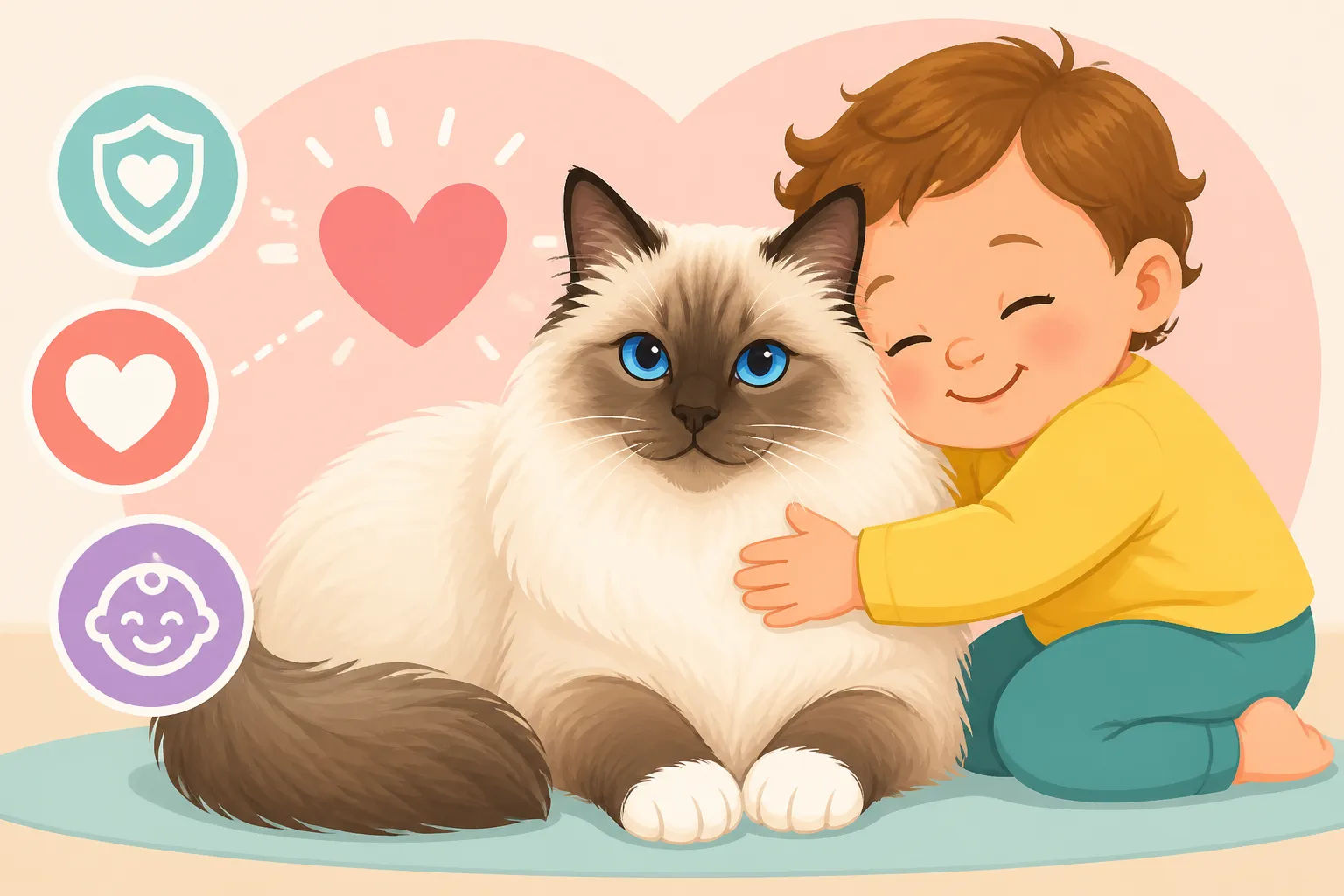
Why a Birman Tolerates Toddlers
Many families yearn for the comfort and companionship of a cat, but the idea of introducing a sophisticated feline to the boundless energy and unpredictable nature of toddlers can fill even the most seasoned parent with dread. Visions of scratched furniture, stressed pets, and constant supervision often deter people from adopting. However, if you're looking at a Birman, you might be surprised to learn that these gentle giants are renowned for their exceptional patience and adaptability, making them one of the best choices for homes with young children. This guide delves into the unique qualities that make the Birman cat such a wonderful and tolerant companion for your little ones.
The Birman's Innate Calmness: A Temperament Tailored for Toddlers
The Birman cat is often described as the "Sacred Cat of Burma," and while its origins are steeped in legend, its temperament is a very real, tangible gift to owners. These cats possess a calm, almost serene disposition that sets them apart from many other breeds. This inherent peacefulness is arguably the single most important factor in their ability to tolerate the unpredictable, often loud, and sometimes clumsy antics of toddlers. It’s not about training them to be patient; it’s simply who they are.
Gentle by Nature, Not by Training
Unlike some breeds that might be prone to nervousness or quick reactions, Birmans come pre-programmed, so to speak, with a tranquil spirit. They are not easily startled, and their responses to unexpected situations are typically measured and calm. Think of a scenario where a toddler, mid-play, accidentally sends a toy car careening into your Birman’s side. Many cats would bolt, hiss, or even lash out defensively. A Birman, however, is far more likely to simply blink slowly, shift positions, and perhaps give a soft, inquiring trill. They seem to process these minor intrusions with a remarkable sense of understanding, almost as if they innately grasp that no harm was intended. This gentle default means less stress for the cat, and crucially, less worry for you, the parent. They don't need extensive socialization just to tolerate toddlers; they arrive with the disposition to coexist peacefully. This natural inclination to be docile and sweet is Why a Birman Is the Cat Families Are Told to Get.
A Dislike for Drama and Confrontation
Birmans are not the type of cat to pick a fight or make a fuss. They prefer harmony and quiet companionship. If a situation becomes too overwhelming or uncomfortable for them, their primary response is usually to simply remove themselves from the scene rather than to escalate. This "flight, not fight" instinct is invaluable in a home with toddlers. Imagine your little one, full of innocent curiosity, deciding to investigate your Birman's magnificent tail a bit too enthusiastically. Instead of a swift scratch or an angry growl, a Birman will typically gracefully walk away, seeking a calmer spot. They rarely resort to claws or bites, even when provoked beyond what most cats would consider their limit. This peaceful approach minimizes any potential for injury to the child and avoids creating a negative association between the cat and the toddler. How Rarely a Birman Puts a Claw Into Anyone really speaks volumes about their nature. They truly embodied the characteristic that Why every standard calls the Birman a gentle breed.
Understanding Birman Reactions to Toddler Behavior
Toddlers, bless their hearts, are a whirlwind of sensory input. They can be loud, fast, and often don't understand personal space or gentle touches. A cat living with a toddler needs to be robust, not just physically, but emotionally, to navigate this unique environment. Birmans demonstrate an impressive capacity to adapt to these challenges without becoming overly stressed.
Adapting to Unexpected Sounds and Movements
One of the biggest challenges with toddlers is their unpredictability. A quiet moment can instantly transform into a burst of shrieks, laughter, or the clatter of dropped toys. Many cats find such sudden changes incredibly unsettling, leading to anxiety and hiding. Birmans, however, tend to take these auditory and kinetic surprises in stride. Their placid nature allows them to process these events without going into overdrive. They might lift an ear, perhaps glance in the direction of the noise, but it's rare to see a full-blown panic response. They seem to possess a remarkable inner calm that filters out much of the toddler-induced chaos. This doesn't mean they love a cacophony, but they certainly handle it better than many breeds. You'll find that while they might not be the loudest cat themselves – How Many Times a Day a Birman Actually Speaks is a testament to their quiet nature – they are also not easily bothered by external noise.
How the Birman Handles Physical Interaction
Toddlers explore with their hands, and sometimes those hands aren't always gentle. They might try to pick up the cat, pull a tail, or give an unexpected hug. A Birman’s dense, silky coat and sturdy build offer a degree of resilience, but it’s their temperament that truly shines here. While no cat enjoys being manhandled, Birmans are remarkably tolerant. If a toddler attempts to pick them up, they are more likely to go limp or try to slide away calmly rather than scratch. They seem to understand the difference between malicious intent and clumsy affection. This means you often won't have to worry about your cat reacting violently if your toddler oversteps. Of course, supervision is always key, but the Birman's forgiving nature gives you a much wider margin for error, reducing those heart-stopping moments when a child gets too close. You'll notice that Whether a Birman Tolerates Being Carried is more about their preference than any fear of the child.
| Birman Trait | Typical Toddler Behavior | Birman's Response | Impact on Household Harmony |
|---|---|---|---|
| Calm Demeanor | Sudden loud noises, excited shouts | Slight ear twitch, slow blink, remains still | Minimal startling, reduced stress for cat and child |
| Gentle Play | Grabbing, clumsy petting, tail pulls | Walks away, goes limp, avoids confrontation | Prevents scratches, teaches child gentle interaction |
| Placid Nature | Unpredictable movements, running | Watches calmly, might shift position, stays relaxed | Less anxiety, cat remains visible and integrated |
| Loves Company | Seeks interaction, constant presence | Observes nearby, might rub legs, enjoys proximity | Fosters bond, child feels accepted by the cat |
Cultivating a Positive Relationship Between Your Birman and Toddlers
Even with the Birman's amazing temperament, a little intentional effort from you can go a long way in ensuring a safe, respectful, and loving relationship between your cat and your toddlers. It's about setting the stage for success and teaching everyone, human and feline, how to interact appropriately.
Establishing Boundaries and Respectful Play
While Birmans are incredibly patient, it’s still crucial to teach toddlers how to interact with them respectfully. From a young age, children can learn to stroke gently, understand that tails are not toys, and recognize when the cat needs space. One effective method is to demonstrate the "two-finger stroke" – showing your child to pet the cat with only two fingers, lightly. This encourages gentle touches and prevents grabbing or rough handling. It’s also important to use positive reinforcement. When your toddler is gentle, praise them! When the Birman responds positively, praise the cat too. For play, interactive toys like wand toys can be great. These allow the child to play with the Birman from a distance, satisfying the cat's hunting instincts without direct physical contact. You can find a fantastic array of wand toys on platforms like Amazon that are sturdy enough to withstand enthusiastic toddler play. Remember, Teaching a Child to Support a Birman's Long Back is vital, as improper handling can still cause discomfort.
Creating Retreats and Safe Zones
Every Birman, no matter how tolerant, needs its own sanctuary where it can escape the hustle and bustle of family life. These safe spaces are not just about physical safety; they're about mental well-being. A cat tree placed in a quiet corner, a cozy bed under a table, or even a room that is off-limits to toddlers (perhaps with a baby gate that the cat can easily jump over) can provide this much-needed retreat. Make sure these spots are consistently respected by your children. Teach them that when the cat is in its "safe spot," it's time to leave them alone. Having vertical spaces is particularly helpful, as Birmans enjoy perching higher up to observe their surroundings without being directly in the fray. Many stylish and stable cat trees are available on Amazon, perfectly suited for a Birman's size and elegant demeanor. By giving your Birman control over its environment and the ability to choose when to interact and when to rest, you reinforce its sense of security and happiness. This is a crucial step in preventing your Birman from feeling overwhelmed or resorting to avoidance behaviors like those described in How a Birman Behaves When Ignored.
The Lasting Impact of a Birman in a Toddler's Life
Beyond simply tolerating toddlers, a Birman can actively enrich their lives, becoming more than just a pet. They can be a silent teacher, a comforting presence, and a loyal friend, helping children grow into compassionate and responsible individuals.
Building Empathy and Gentle Nurturing Skills
Having a Birman in the home offers a unique opportunity to teach young children about empathy and respect for living creatures. Witnessing the Birman's gentle nature and learning to interact with it carefully helps toddlers develop a sense of responsibility and nurturing. They learn to recognize the cat’s subtle cues – a slow blink, a quiet walk away – and understand that their actions have an impact on another being. This early exposure to caring for a pet can lay the groundwork for a lifelong appreciation of animals and a greater capacity for kindness. Over time, children will understand that Why a Birman Walks Away Instead of Swiping isn't a sign of aloofness, but rather a gentle boundary. This fosters a quiet understanding and respect that is truly beautiful to behold. The Birman's passive nature means that these lessons are often learned through observation and gentle guidance, rather than through harsh disciplinary experiences.
A Cherished Companion Through Childhood Milestones
A Birman often becomes an integral part of a child's world, a constant, comforting presence as they grow. They're there for the first steps, the first words, the quiet moments of reading on the sofa, and the imaginative games played on the floor. While not a demanding cat, a Birman enjoys being near its human family, observing and participating in its own quiet way. This shared journey from toddlerhood through childhood can create an incredibly strong bond. The Birman isn't just tolerating; it's sharing life. This is why Why a Birman is the cat people keep after a baby arrives is so often true – they fit seamlessly into the rhythm of a growing family. The memories created with a patient, gentle Birman are often some of the most cherished childhood memories, proving that sometimes, the quietest companions leave the biggest paw prints on our hearts. After all, A Birman Would Rather Be Near You Than On You, providing a comforting, unobtrusive presence.
Disclaimer
This article is for general informational purposes only and does not constitute professional advice. Laws, prices and regulations vary by location and change over time. Consult a qualified professional for guidance on your specific situation.