What the CFA Birman Standard Weights Most
The CFA Birman standard assigns thirty points to the head, twenty to the body, and twenty to color for show judging.
Is this the right one for you?
Origins and temperament, size and coat, what living with one is actually like, and how it compares to the breeds people weigh against it.

The CFA Birman standard assigns thirty points to the head, twenty to the body, and twenty to color for show judging.

Selective breeding for Birman cat white paws influences general family tendencies but cannot guarantee precise glove symmetry or exact marking shapes.

Birman cat white gloves and their variable symmetry are explained by the KIT gene and possible modifier genes.

Birman gloves vary in height and symmetry because the KIT gene creates white feet without drawing exact borders.
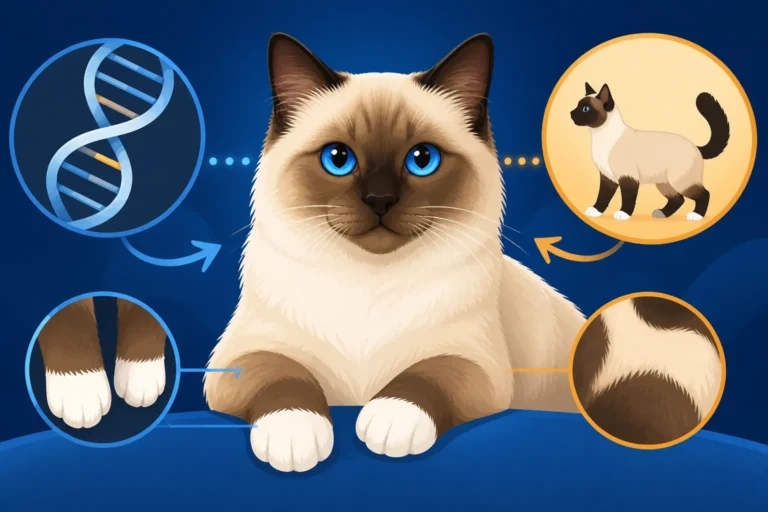
The gloving variant of the KIT gene and the temperature-sensitive TYR gene create the white paws and darker points of a Birman cat.

Birman cat genetics explain why typical parents cannot produce a completely ungloved kitten, detailing uneven paw markings.

Birman white paws and the KIT gene explain why the gloving variant is common in the breed gene pool despite varied markings.

The Birman gloving variant in the KIT gene explains white paw inheritance, though DNA results cannot predict exact markings.

The KIT gloving variant sits within the KIT gene on feline chromosome B1, influencing white paw markings in cats.

Cat registries use names like Birman, Sacre de Birmanie, and Sacred Birman to identify the exact same cat breed.