Why the Birman Was Recognized So Quickly in America
American cat registry recognition for the Birman cat followed years of European rebuilding and established breed standards.
Is this the right one for you?
Origins and temperament, size and coat, what living with one is actually like, and how it compares to the breeds people weigh against it.
American cat registry recognition for the Birman cat followed years of European rebuilding and established breed standards.
The Purr-Puss cattery introduced the earliest Birman cats to the United States, launching the breed in America after European populations recovered.
The history of the Birman cat explains how wartime European survivors crossed the Atlantic to establish American breeding.
British recognition of the Birman cat in 1966 followed its postwar population recovery and earlier origins in France.
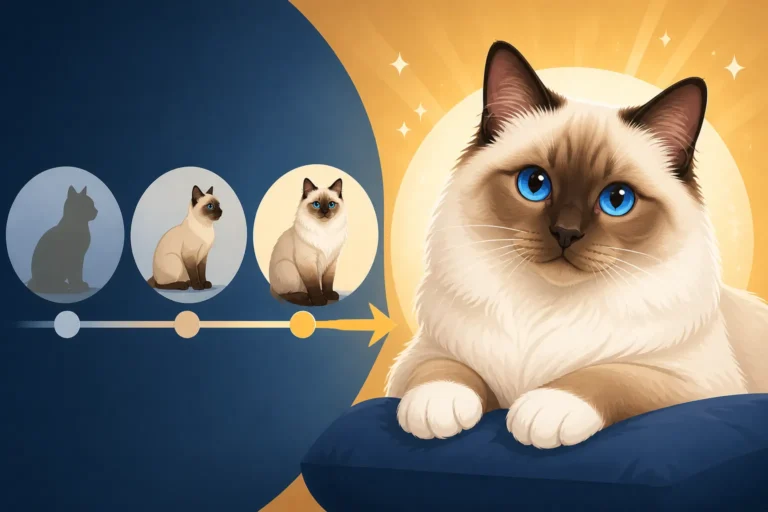
Postwar Birman cat breeders used outcrossing and multi-generational selection to restore the rare breed after World War Two.
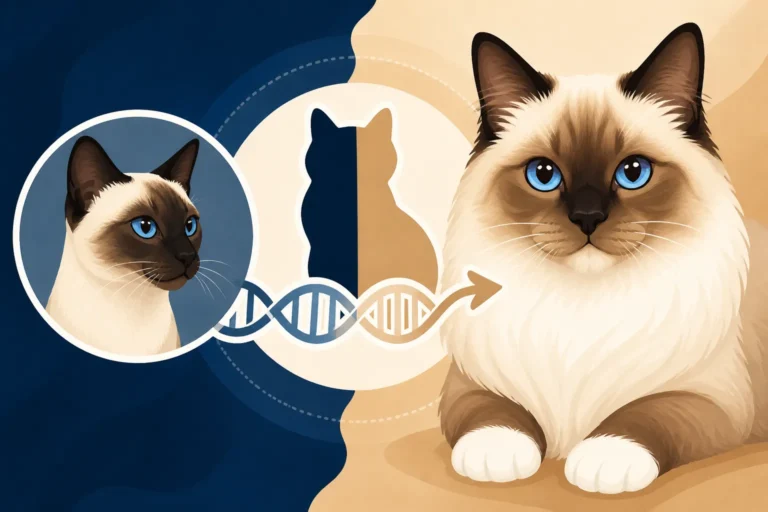
Birman ancestry history explains how genetic traits, reconstruction after World War Two, and outcrossing shape modern cat pedigrees.
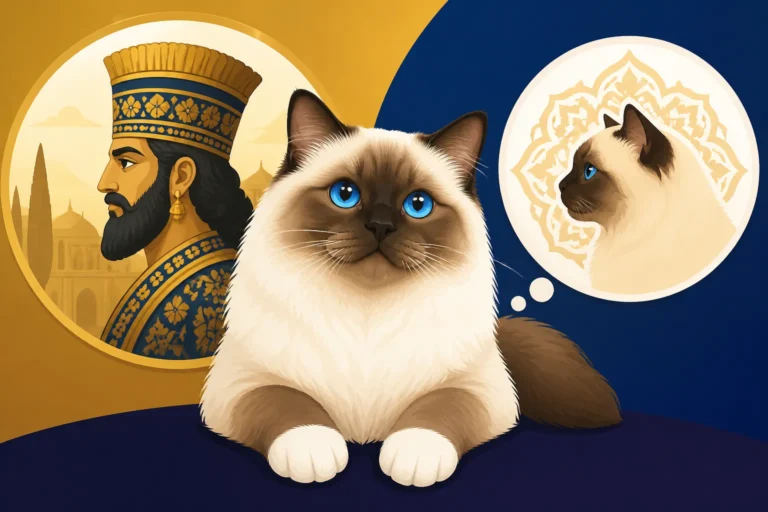
Birman cat ancestry explains how postwar outcrosses rebuilt the breed using Persians and Siamese without creating modern hybrids.
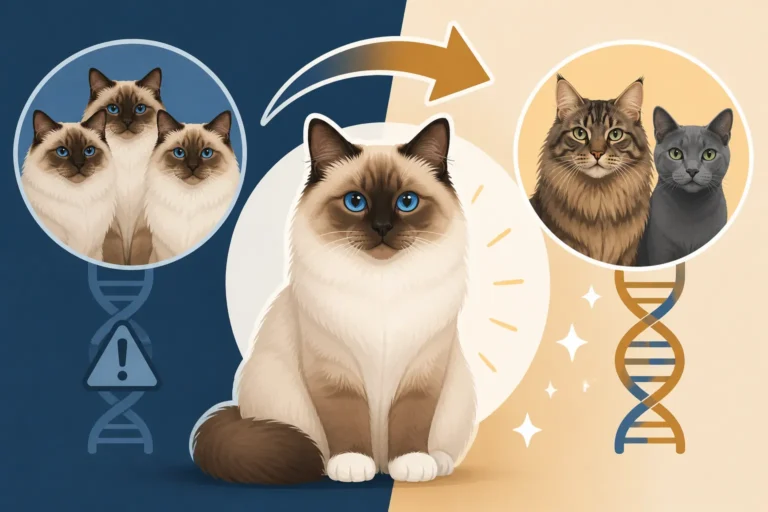
Postwar European Birman breeding relied on outcrosses with Persians and Siamese to rebuild narrow populations and restore health.
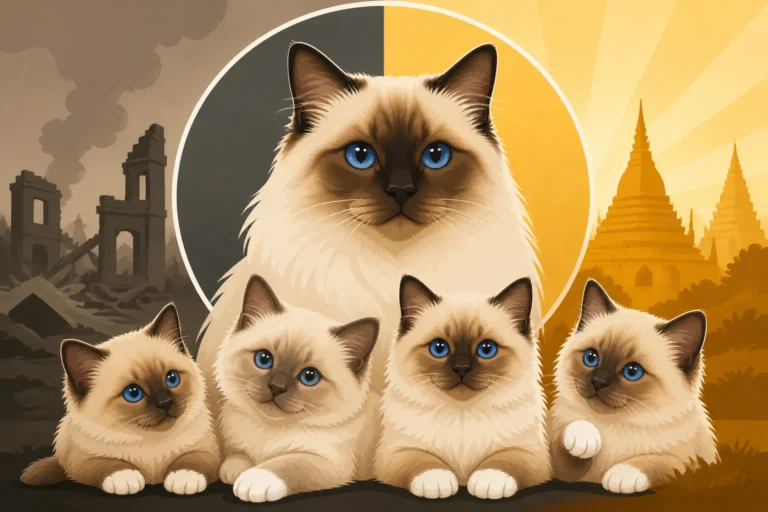
Postwar Birman cat recovery depended on Orloff and Xenia de Kaabaa, careful outcrossing, and successive generations.
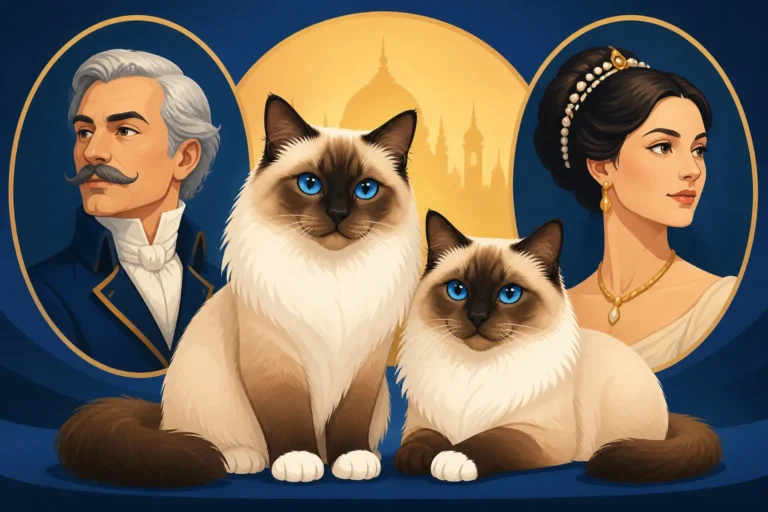
Orloff and Xenia de Kaabaa were two Birman cats that helped rebuild the breed in France after the Second World War.