How Narrow the Birman’s Founder Base Really Was
It's easy to look at our beautiful Birman companions today, with their striking blue eyes and luxurious, silky coats, and assume they've always been around, thriving in abundance. But the truth is far more dramatic and, frankly, quite precarious. Many Birman enthusiasts don't realize just how close the breed came to vanishing entirely, or how incredibly few cats formed the genetic bedrock from which every modern Birman descends. This guide will take you on a journey through the Birman's harrowing past, explaining the shockingly narrow founder base that shaped the breed and why understanding this history is absolutely essential for appreciating its unique genetic heritage and the ongoing responsibilities of every Birman guardian.
The Myth Versus the Reality of Early Birman History
For a breed so steeped in ancient mystique, it’s easy to get lost in the romance of the Birman’s origin story. We often hear tales of the Sacred Cat of Burma, a mystical guardian with sapphire eyes and white ‘gloves’ that appeared almost miraculously. While these legends certainly add to the breed's allure, the actual historical and genetic origins are a little more grounded in reality – and, in some ways, even more miraculous.
The Romantic Legend and its Genetic Gaps
The most famous legend, the one about the Temple of Lao-Tsun and the goddess Tsim-Kyan-Kse, paints a picture of a white temple cat named Sinh whose eyes turned blue and paws turned white in devotion to his murdered priest. It’s a beautiful story that explains the Birman’s distinctive markings, and it’s truly captured the imagination of cat lovers for generations. But, as captivating as it is, this legend doesn't offer us any concrete genetic data or a detailed lineage. It provides a cultural foundation, not a breeding record.
The reality of how the Birman breed began to establish itself in the Western world, particularly in France, is a much more recent development. Records suggest that a pair of these cats, or perhaps their direct descendants, were somehow acquired from Burma in the early 20th century. One often hears the story of Auguste Pavie or Major Gordon Russell, who were said to have either acquired or been gifted the cats. Sadly, the male cat reportedly died on the journey, leaving the female, named Sita, pregnant. Her offspring, born in France, became the starting point for the breed in Europe. This early period was fragile, with very few cats to work with, meaning the initial gene pool was already quite limited, even before the really tough times hit.
The Arrival in Europe and Early Breeding Efforts
Once these first Birman cats arrived and successfully produced kittens in France, serious breeding efforts began. This wasn't just a casual endeavor; it was a deliberate attempt to establish and standardize a new, exotic breed. The initial breeders faced significant challenges, primarily the extremely small number of foundation animals available. Imagine trying to create a robust, healthy population from just a handful of individuals! It meant that the early breeders had to be incredibly careful, making the most of every kitten and trying to ensure genetic viability where possible.
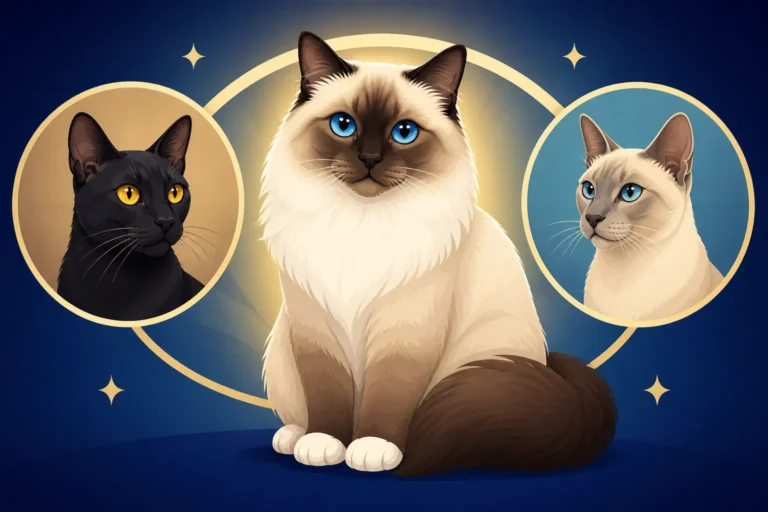
They aimed to reproduce the stunning characteristics that made the Birman so unique: the colorpoint pattern, the deep blue eyes, the semi-long silky coat, and, of course, those signature white "gloves" on all four paws, ideally with "laces" running up the back of the hind legs. To solidify these traits and, importantly, to increase the genetic diversity that was so desperately lacking, it’s understood that some outcrossing to other longhaired breeds, particularly Persians, and possibly even Siamese, occurred in the early days. This was a necessary step to build numbers and introduce new genes, but it also meant carefully managing what those outcrosses brought into the nascent Birman gene pool. You can learn more about What Persian Blood Brought Into the Birman and What Siamese Blood Brought Into the Birman in other resources.
World War Devastation and the Brink of Extinction
If the early days of the Birman breed were precarious, the mid-20th century brought it to the very precipice of extinction. The sheer scale of the devastation wrought by World War II on human populations, infrastructure, and societies also extended its cruel grasp to animal breeds, particularly those with small, geographically concentrated populations like the Birman.
The Catastrophic Impact of Conflict
The years of World War II were brutal for many cat breeds in Europe. With resources scarce, travel restricted, and homes destroyed, maintaining a cattery or even individual pedigree cats became an unimaginable luxury for most. Breeders were often forced to abandon their efforts, unable to feed, house, or protect their animals. Many cats simply perished from starvation, disease, or bombings, or were lost in the chaos. For a breed like the Birman, which had only just begun to establish itself with limited numbers, the war was an existential threat.
Imagine living through those times, trying to keep yourself and your family safe, let alone preserving a rare breed of cat. It was an impossible task for many. The war severely decimated the fledgling Birman population, wiping out entire lines and catteries. The infrastructure for breeding – the ability to travel to stud cats, share breeding stock, or even keep meticulous records – simply ceased to exist. Many breeders also fled or were killed, taking their invaluable knowledge and their breeding lines with them. The question wasn't just about the founder base anymore; it was about whether there would be any Birmans left at all. The number of Birmans that survived the Second World War was tragically small.
The Desperate Need for Reconstruction
As the war finally drew to a close in 1945, the situation for the Birman breed was dire. It wasn't just a setback; it was nearly a complete wipeout. Breeders emerging from the conflict faced the grim reality that the breed they loved was on the verge of disappearing forever. There was a desperate, urgent need to rebuild, but with so few animals remaining, the task seemed almost insurmountable. This period represented the true bottleneck for the breed, far more severe than its initial introduction to Europe.
The remaining breeders, scattered and isolated, began to assess what was left. They faced the monumental challenge of finding enough genetically viable cats to restart the breed. This wasn't merely about finding a Birman, but finding cats that could healthily reproduce without immediately leading to severe inbreeding depression or passing on detrimental genetic traits that would undermine the breed's future. It required incredible dedication, cooperation, and a deep understanding of genetics, even in an era before advanced DNA testing. The thought of losing such a beautiful and unique breed spurred them on, knowing that every single surviving cat was precious beyond measure.
The Two Pivotal Founders Who Saved the Breed
The post-war landscape for Birmans was incredibly bleak. The breed had been pushed to the very brink. But from this near-total devastation emerged a singular, almost miraculous, effort to save it. This is where the concept of the "narrow founder base" truly comes into stark relief, because the entire modern Birman population can, quite literally, be traced back to just two individuals.
Orloff and Xenia de Kaabaa: The Last Hope
After the war, a thorough search across Europe revealed that the Birman breed had been reduced to an astonishingly small number of surviving individuals. It was largely through the tireless work of French breeders, particularly Madame Baudot, that the remaining cats were identified and brought together. The most critical pair, the linchpins of the entire breed's survival, were a male named Orloff and a female named Xenia de Kaabaa.
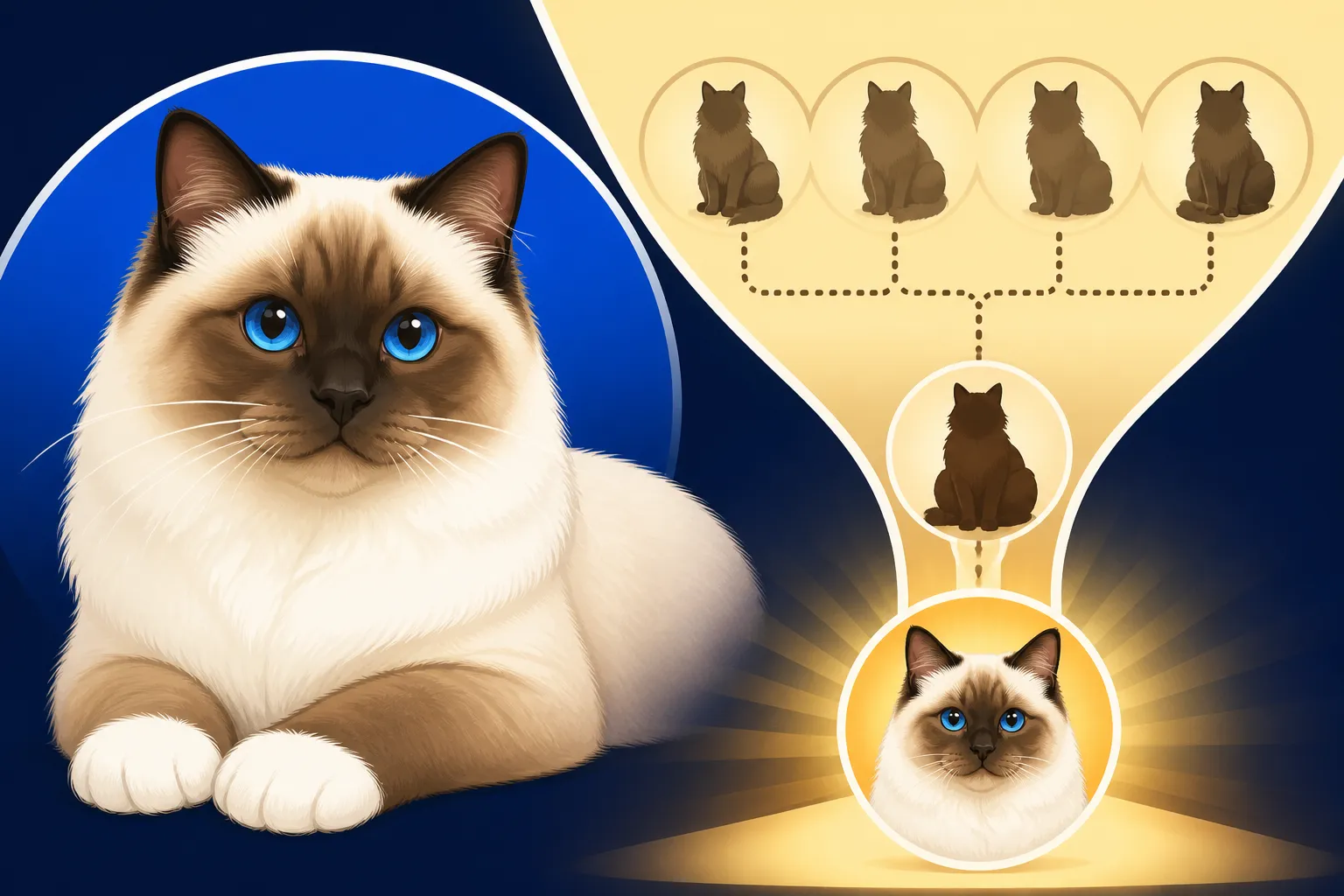
These two cats became the foundation of all modern Birmans. Think about that for a moment: every single Birman cat you see today, from the cherished pet lounging on your sofa to the champion in the show ring, shares a direct lineage with Orloff and Xenia. This is an almost unparalleled example of a genetic bottleneck in a domestic animal breed. They were the last viable breeding pair known, and their offspring were the literal lifeline for the future of the Birman. Their genetic contribution is immense, but also highlights the extreme fragility of the breed's continued existence. This history is why understanding Which Two Cats Every Birman Descends From is so vital.
Genetic Bottleneck and Inbreeding Challenges
When a breed's entire population descends from such a tiny number of individuals, it creates what's known as a severe genetic bottleneck. This means that the genetic diversity within the breed becomes incredibly narrow. Orloff and Xenia, along with a few other survivors and carefully selected outcrosses, carried a limited set of genes between them. While this allowed the breed to continue, it also meant that certain genes, both desirable and potentially undesirable, became fixed or highly prevalent within the population.
The immediate consequence of such a narrow founder base is an elevated level of inbreeding, even if breeders are careful to avoid immediate parent-offspring or sibling matings. Over generations, the relatedness of individuals increases. This isn't inherently bad, as it helps to fix desired breed traits quickly, but it also means that recessive genes for certain health conditions can become more widespread. If both Orloff and Xenia, or their immediate outcross descendants, carried a recessive gene for a particular illness, then there's a much higher chance that their descendants would inherit two copies of that gene and express the disease. This is a primary concern for responsible breeders today, who carefully screen their cats for inherited conditions. Pet insurance providers like Healthy Paws can be a real lifeline when unexpected genetic conditions arise, helping owners manage veterinary costs that can quickly add up.
To illustrate the sheer impact, consider this simplified view of genetic contribution:
| Ancestral Generation | Number of Unique Ancestors (Theoretical) | Number of Unique Ancestors (Birman Post-WWII) |
|---|---|---|
| Parent | 2 | 2 (Orloff & Xenia) |
| Grandparent | 4 | ~3-4 (including early outcrosses) |
| Great-Grandparent | 8 | ~5-8 (limited outcross lines) |
| Further Generations | Exponential increase | Remains extremely limited |
This table clearly shows how the theoretical ideal of diverse ancestors quickly bottlenecks to a very small number for the Birman, making the phrase "How narrow the Birman's founder base really was" starkly clear.
The Unavoidable Path of Outcrossing
Given the dire situation after the war, with only Orloff and Xenia de Kaabaa as the primary genetic source, outcrossing became not just an option, but an absolute necessity for the survival of the breed. Pure Birman-to-Birman matings at that point would have led to an unsustainable level of inbreeding, resulting in weakened immune systems, smaller litter sizes, and the rapid expression of any hidden genetic flaws. Breeders knew they had to introduce new bloodlines to inject vitality and genetic diversity back into the breed. This crucial period, sometimes referred to as the post-war bottleneck, really hammered home Why Post War Outcrossing Was Unavoidable for the Birman.
The breeds chosen for this critical outcrossing were primarily Persians and, to a lesser extent, Siamese. Persian cats were selected for their long, luxurious coats and placid temperaments, traits that aligned well with the Birman standard. Siamese cats likely contributed to solidifying the colorpoint gene and perhaps some of the Birman’s vocalizations, though Birmans are far less talkative than their Siamese cousins. These outcrosses were then carefully bred back to Birman-type cats over several generations, with the aim of restoring the distinctive Birman look and temperament while broadening the gene pool. It was a painstaking process, requiring immense dedication and a keen eye for type, to ensure the kittens retained the core Birman characteristics while gaining much-needed genetic strength. This process is how The Birman Was Rebuilt From Two Cats and It Shows.
Long-Term Legacy of a Limited Gene Pool
The legacy of the Birman’s incredibly narrow founder base, particularly the post-war bottleneck, is something that continues to resonate through the breed to this very day. While the breed was successfully saved from extinction, the genetic consequences are a crucial part of its ongoing story and something every Birman owner or prospective owner should understand.
Enduring Health Concerns from the Founder Effect
The "founder effect" refers to the loss of genetic variation that occurs when a new population is established by a very small number of individuals from a larger population. In the Birman's case, this effect was compounded by the severe bottleneck of the post-war era. What this means in practical terms is that certain genetic conditions, if present in those few founding cats or their immediate outcrosses, could become disproportionately common within the breed.
One well-known example is the predisposition to certain health issues that can be more prevalent in Birmans. Conditions like Hypertrophic Cardiomyopathy (HCM), a common heart disease in cats, or Polycystic Kidney Disease (PKD), which likely entered the breed through Persian outcrosses, require diligent screening by responsible breeders. While not all Birmans will suffer from these, the breed's history means that careful genetic testing and health clearances are absolutely vital. A good breeder will be transparent about their testing protocols and share results from organizations like Optimal Selection or Langford Vets. Insurance from providers like Healthy Paws can help manage the costs associated with monitoring and treating these conditions, providing peace of mind to owners. For more information on this, check out What a Narrow Founder Base Left in the Birman.
The Ongoing Efforts to Broaden Genetic Diversity
Today, dedicated Birman breeders worldwide are keenly aware of the breed's unique genetic history and the challenges it presents. The goal is no longer just to survive, but to thrive with a healthy, robust genetic base. Efforts are continuously made to expand the gene pool while carefully maintaining the distinctive Birman type. This often involves collaborating internationally, sharing breeding lines, and meticulously tracking pedigrees to avoid excessive inbreeding.
Some breeders might even consider strategic, limited outcrossing to a non-pedigree cat or another suitable breed, under strict guidance from breed councils, to introduce truly novel genes – though this is a complex and highly regulated process. The focus is on selecting cats for breeding that not only meet the physical standard but also boast excellent health and diverse genetic markers. This ongoing work is crucial for the long-term vitality of the breed, ensuring that future generations of Birmans are as healthy as they are beautiful. You might be interested in whether The Birman Gene Pool Has Widened Since the immediate post-war period.
Supporting the Future Health of the Birman
As a Birman owner or enthusiast, you play a role in supporting the breed's future health. Choosing a kitten from a reputable breeder who conducts thorough health screenings for conditions like HCM and PKD, and is transparent about their breeding practices, is paramount. These breeders invest significant time and resources into ensuring the health of their lines, and this commitment is reflected in the price and the quality of the kittens they produce.
Beyond initial purchase, providing your Birman with excellent veterinary care throughout its life, including regular check-ups and preventative health measures, is essential. Be mindful of their diet, exercise, and mental enrichment. Discuss any health concerns immediately with your vet. Given the breed’s specific history, being proactive about their health can make a significant difference. Considering pet insurance, such as a policy from Healthy Paws, can also be a wise decision. It can help cover unexpected veterinary expenses, ensuring you can provide the best care without financial strain, especially if a genetic predisposition does manifest later in life. Understanding How Two Cats in 1945 Shaped the Birman's Health puts these considerations into sharp perspective.
Disclaimer
This article is for general informational purposes only and does not constitute professional advice. Laws, prices and regulations vary by location and change over time. Consult a qualified professional for guidance on your specific situation.