Why a Birman Is Always Pointed and Never Solid
A Birman may look nearly white as a kitten, then gradually develop darker color on its face, ears, legs, and tail. That change can make the breed’s coat confusing, especially when an adult’s body looks dark enough to seem solid-colored. This guide explains why Birmans are pointed, what “pointed” means genetically, and how their distinctive color pattern develops.
What pointed means in a Birman
Color is concentrated on the cooler parts of the body
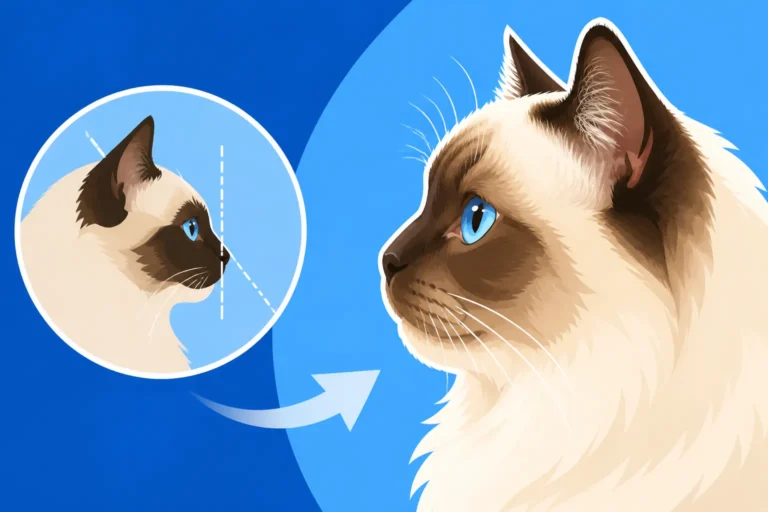
A pointed cat has a lighter-colored body and darker fur on its cooler extremities, usually the face, ears, legs, and tail. In a Birman, those darker areas are called the points. The pattern is not a marking laid over an otherwise solid-colored coat; it is part of how pigment develops across the cat’s body.
This pattern is linked to a temperature-sensitive form of the enzyme tyrosinase, which helps produce pigment. In the warmer parts of the body, the enzyme works less effectively, so the fur grows paler. In cooler areas, it can produce more pigment, which is why points become darker.
The result is a coat with a noticeable contrast, although that contrast can vary. A young cat may have a pale body and sharply defined points, while an older cat’s body can darken until the difference looks less dramatic. The cat is still pointed even if, at a glance, its coat appears nearly uniform.
Birmans inherit the colorpoint pattern
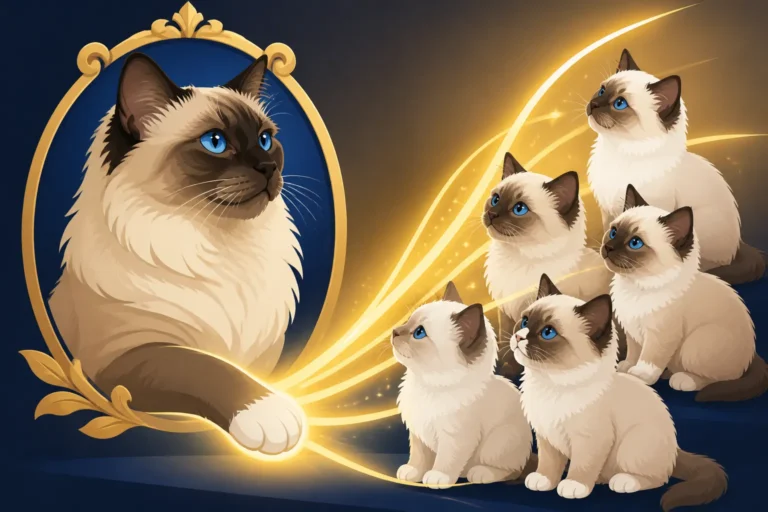
The colorpoint pattern is associated with a recessive variant of the TYR gene. A Birman inherits the relevant colorpoint form from both parents, allowing the temperature-sensitive pigment pattern to show. The same basic colorpoint mechanism appears in other pointed breeds, but that does not make a Birman simply a Siamese or a Persian cross. Breed identity involves more than one coat-color gene.
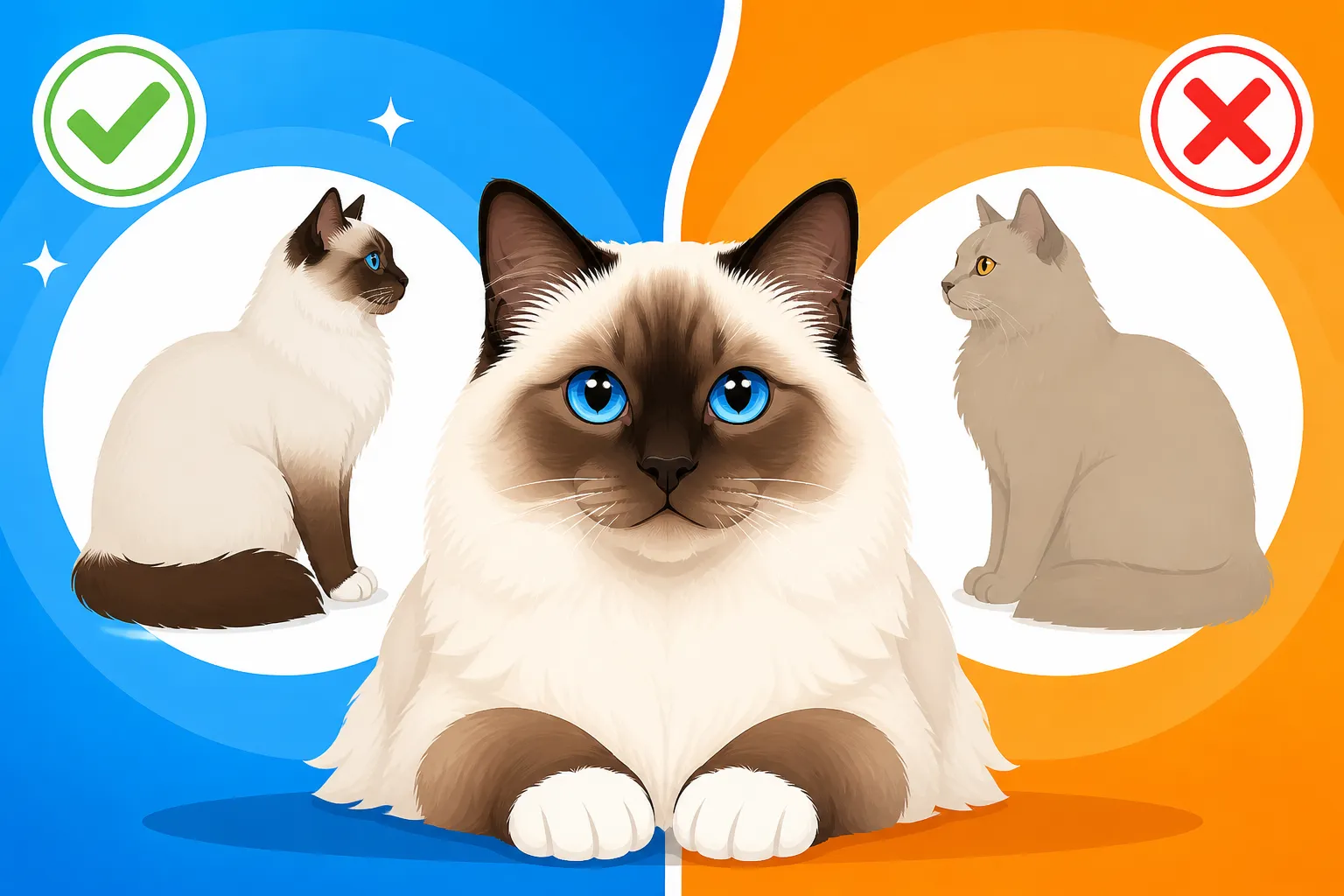
This inherited pattern is why a solid-colored cat is not considered a standard Birman. A Birman can have different point colors and patterns, but the lighter body and darker points remain fundamental to the breed’s appearance. For a broader comparison, Which Point Colors the Birman Standard Allows explains how recognized point colors fit within the breed standard.
The word “solid” can cause confusion because people sometimes use it casually to mean “dark all over.” In cat-color terminology, solid usually describes an even, non-pointed distribution of color. A seal-point Birman can grow quite dark across the body, but the underlying coat pattern remains pointed.
Blue eyes are part of the pointed appearance
Birmans are known for their blue eyes, which are associated with the colorpoint pattern. Pigment is limited in the iris, leaving the eyes blue. The shade can range from a lighter blue to a deeper, more saturated tone, and lighting can make the same eyes look different from one room to another.
Blue eyes do not mean the cat is a solid white cat, nor do they indicate that its points have failed to develop. Eye color and coat color are related parts of the colorpoint look, but they are not the same feature. If you are comparing breeds, How a Birman Differs From a Ragdoll on Sight can help separate their similar-looking blue eyes and long coats from their other distinguishing traits.
Why a Birman kitten starts out so pale
The womb keeps the coat warm
Birman kittens are generally born very pale, often close to white. That surprises people who expect a seal-point kitten to arrive with a dark face and paws already in place. The reason is temperature: while developing in the warm womb, the areas that will later become points are not cool enough to produce their full darker pigment.
After birth, the kitten’s extremities are exposed to cooler air. Pigment gradually becomes more visible in the face, ears, feet, and tail. The change takes time, so a kitten’s appearance in its first days or weeks is not a finished version of its adult coat. Why a Birman Kitten Is Born Almost White looks more closely at that early pale stage.
Point color develops gradually
The points do not necessarily appear all at once or darken at the same pace. The face may begin to show color before the tail looks fully developed, and the body may remain pale while the extremities deepen. Lighting, coat length, and the kitten’s individual coloring can make these changes harder to judge in photographs.
As a kitten grows, its point color becomes easier to see, but it continues to change. A new owner might notice a warmer or darker face several months after bringing the kitten home. This is normal coat development rather than a sudden change in breed type. For more on the timeline, see How a Birman Kitten's Points Come In.
| Coat feature | What you may notice | Why it happens |
|---|---|---|
| Body | Paler than the points, though it may darken with age | Warmer body areas produce less pigment |
| Face and ears | Darker mask and ear color | Cooler areas allow more pigment to develop |
| Legs and tail | Point color becomes more visible as the kitten matures | These extremities are cooler than the torso |
| Eyes | Blue in the typical Birman appearance | Pigment is limited in the iris |
| White feet | Distinct white gloves | A separate marking from the pointed color pattern |
White gloves are a separate feature
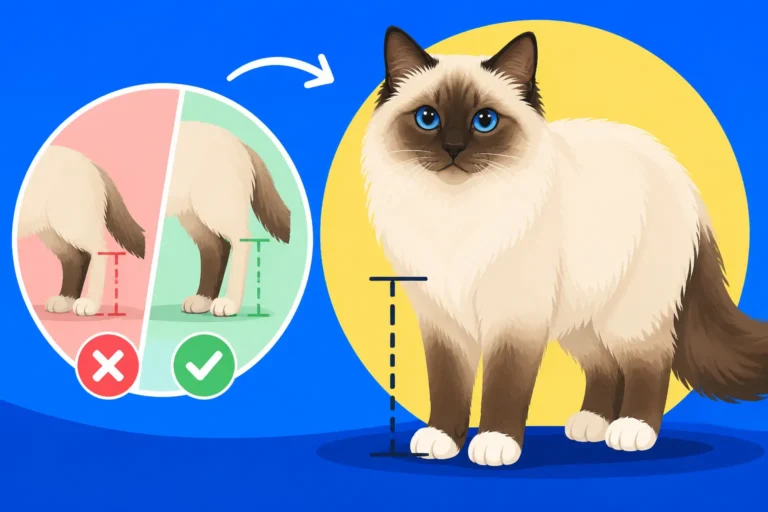
The Birman’s white feet are especially recognizable, but they are not the reason the breed is pointed. The colorpoint pattern determines where the darker pigment appears. The gloves are a separate white marking that appears on the paws and is part of the breed’s characteristic look.
That distinction helps explain why two parts of the coat can behave differently. A kitten’s point color may develop gradually, while its white gloves remain white. The shape and symmetry of those gloves can vary from cat to cat. How the Birman Gloving Variant Was Identified explores the separate genetics behind the breed’s gloving.
The gloves can also look less bright if litter dust, dirt, or staining gathers around the feet. That affects their appearance, not the cat’s point pattern. If you are choosing supplies, a retailer such as Chewy can be one place to compare cat-safe combs and low-dust litter options; check that any grooming or cleaning product is intended for cats.
Why a grown Birman can look almost solid
Age can soften the contrast
A Birman’s body color can deepen as the cat matures. The body may become beige, warm cream, or a darker shade, depending on the cat’s point color and individual coat. In an older seal-point Birman, the torso can darken enough that the contrast between body and points looks subtle.
This is one reason a person might mistake a mature Birman for a solid-colored longhair. Look carefully at the face, ears, legs, and tail rather than judging only the back or sides. Even when the overall coat looks dark, the point pattern can still be visible in the extremities, especially in natural light.
Age-related darkening does not turn a pointed Birman into a solid cat. It changes how strongly the pattern is expressed to the eye. Why a Birman's Points Darken as It Ages discusses the gradual change and why a cat’s coat may look different from its kitten photographs.
Temperature can influence how dark the coat looks
Because the colorpoint pattern responds to temperature, a cat living in a cooler environment may develop darker fur than one living in a warmer setting. This is a gradual effect, not a reliable way to deliberately change a coat, and it does not alter the cat’s identity or turn its pattern into another type.
Seasonal coat changes can add to the impression. A winter coat may look fuller or different in tone, while shedding and changing light can make the points appear more or less distinct. If you take photos for comparison, use similar lighting and angles; a warm indoor bulb can make cream fur look more golden, while daylight may reveal the contrast more clearly.
Other patterns can appear within the points
Pointed does not mean every Birman has identical-looking markings. The points can come in different recognized colors, and some cats have tabby-like striping within the points, often described as lynx point. The body remains lighter than the points, even when the face has stripes or the point color differs from a classic seal.
These variations do not make the cat solid. They describe the color and pattern of its points. A red or cream point, for example, may have softer-looking contrast than a dark seal point, while a lynx-point pattern can make the face appear striped. The underlying pointed coat pattern is still present.
The gloves also vary independently. One Birman may have crisp, evenly matched white feet, while another may have small differences in the height or shape of its markings. Those differences concern the gloves, not whether the cat is pointed. Why Birman Gloves Vary Despite the Fixed Gene explains why the same general gloving feature does not produce identical paws in every cat.
How to recognize a pointed Birman in everyday life
Check the whole coat rather than one patch
If you are unsure whether a Birman is pointed, examine the coat as a whole. Compare the torso with the face, ears, lower legs, and tail. A pointed pattern is most apparent when the points are darker than the main body, but that contrast can be subtle in an older or very dark cat.
The white gloves are a useful clue that you may be looking at a Birman, but they are not proof by themselves. Other cats can have white paws, and a cat’s breed cannot be confirmed from coat appearance alone. Pedigree records and other breed characteristics matter when identifying a registered purebred.
A phone photograph can also be misleading. Automatic exposure may brighten the body or deepen the face, and shadows can hide the transition between colors. If you are comparing pictures, look for the same areas in each image and avoid relying on a single close-up of the paws.
Keep coat care separate from coat color
Combing helps remove loose hair and small tangles; it does not make points lighter or change the pattern. A gentle comb worked through the ruff, sides, and britches can help keep the coat comfortable without rough handling. If you are shopping for supplies, Chewy may offer a way to compare basic cat combs, but choose one suited to a fine, silky coat rather than assuming a more aggressive tool is better.
White feet may show dirt more readily than darker fur. Regularly checking the paws and litter area can help you spot debris, staining, or irritation. Avoid using household cleaners, human whitening products, or unfamiliar grooming treatments on the coat. If the feet become persistently discolored or the skin looks sore, ask a veterinarian what is appropriate.
Litter choice can make a practical difference to how much dust or debris clings to a cat’s paws. Chewy is one retailer where owners can compare litter types, but the best option depends on the cat’s habits, sensitivities, and household setup. Introduce a new litter gradually if your cat is reluctant to use a changed box.
Remember that pointed is a pattern, not a temporary phase
A Birman’s point color may begin pale, deepen as the kitten grows, and continue to change with age and temperature. Those shifts can make the coat look very different across the cat’s life, but they do not make a standard Birman solid-colored. The breed’s hallmark is the pointed pattern together with its other characteristic features, including blue eyes and white gloves.
If a cat appears dark from nose to tail, check the cooler extremities and compare them with the body before deciding that it is solid. A mature coat can make the distinction less obvious, but the pattern’s development explains why Birmans are described as pointed throughout life. If coat color changes suddenly or comes with hair loss, itching, or other signs of illness, treat that as a health concern rather than ordinary color development.
Disclaimer
This article is for general informational purposes only and does not constitute professional advice. Laws, prices and regulations vary by location and change over time. Consult a qualified professional for guidance on your specific situation.