How Fast the Claws in a Birman’s Gloves Grow
One of the most common worries for Birman owners, especially those new to this beautiful breed, is keeping those glorious white paws looking their best without letting their claws become an issue. It can feel like your Birman’s claws sprout overnight, growing fast and sharp, which isn't just uncomfortable for them, but also a challenge for your furniture and even your own skin! This guide is here to walk you through understanding why those claws seem to grow so quickly and, more importantly, how to manage them effectively and lovingly.
Understanding Your Birman's Claws: A Look at Natural Growth
It’s easy to feel like you just trimmed your Birman’s claws, only to find them sharp again a week later. There’s a good reason for this perceived speed, rooted in feline biology and the unique characteristics of the Birman itself. Understanding how cat claws grow and what makes your Birman’s particular situation unique is the first step toward effective care.
The Anatomy of a Birman's Claw
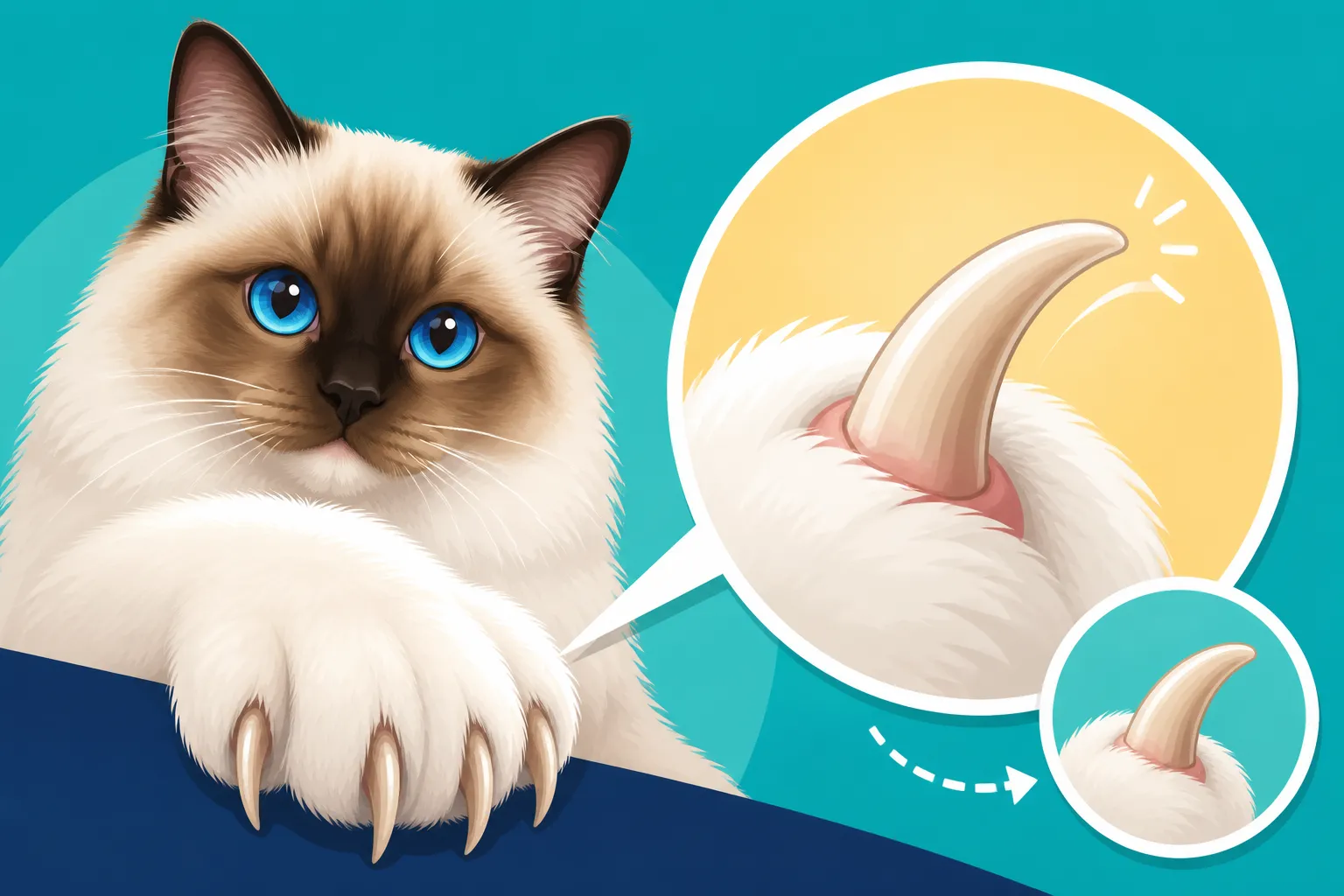
Think of your Birman's claw not just as a single nail, but as a complex structure designed for climbing, gripping, and self-defense. Each claw consists of a hard, keratinized outer sheath and a sensitive inner core called the quick. The quick contains blood vessels and nerves, making it a crucial area to avoid when trimming. Birman claws, like those of all cats, are retractable, meaning they can pull them back into sheaths in their paws. This keeps them sharp for when they're needed and protects the quick from injury during normal movement.
The outer layer of the claw, the part you see and trim, grows continuously from the nail bed. As new layers form, the older, duller outer layers are shed, a process known as "shedding the husk." You might sometimes find these transparent, hollow claw sheaths around your home, especially near scratching posts. This isn’t a sign of a problem; it’s just your Birman naturally sharpening its tools and making way for new, strong claw growth. However, if the old husk isn't shed efficiently, the claw can become too long and thick, potentially causing discomfort or even ingrown nails.
How Quickly Claws Naturally Regenerate
Just like human fingernails, a cat’s claws are always growing. The rate can vary, but generally, a healthy cat's claws regenerate quite steadily. For a Birman, with their often less active, indoor lifestyle compared to a feral cat that might wear down its claws constantly through hunting and climbing, this growth can seem particularly rapid. Without natural abrasive surfaces like tree bark or rough ground to help file them down, those claws can quickly become quite long and sharp.
It's not that Birman claws are genetically programmed to grow faster than, say, a domestic shorthair, but rather that their environment often contributes less to natural wear and tear. This means that if you're not proactively managing their claw length, you'll definitely notice them getting sharp and potentially problematic much sooner than you might with a cat that spends a lot of time outdoors. Regular trimming becomes even more essential for our gentle, indoor Birman companions to keep them comfortable and prevent issues.
What Influences the Rate of Growth?
While claws grow continuously, several factors can influence the rate and quality of that growth. Age, for example, plays a role; younger, growing Birmans might exhibit slightly faster growth as their bodies are still developing. On the flip side, very senior Birmans might experience slower growth or even more brittle claws. Their metabolism changes, and sometimes their ability to groom themselves or use scratching posts effectively diminishes, leading to different claw care needs.
Beyond age, a cat's overall health and nutrition are hugely impactful. A Birman on a high-quality diet, rich in essential fatty acids and proteins, will generally have healthier, stronger claws that grow at a consistent rate. What a Birman's Coat Texture Should Be and What a Birman's Ruff Is Its Longest Fur demonstrate how proper nutrition influences hair, and the same principles apply to claws. Conversely, nutritional deficiencies or underlying health issues can manifest in brittle, slow-growing, or even abnormally fast-growing claws. It’s always a good idea to chat with your vet if you notice a sudden, drastic change in your Birman's claw growth or appearance, as it could be a subtle sign of an internal problem.
The Impact of Lifestyle and Diet on Claw Health
It’s often said that you are what you eat, and the same goes for our beloved Birmans! Their lifestyle and the food they consume have a profound effect not just on their glorious coats and overall energy levels, but also on the strength, health, and growth rate of their claws. Since Birmans are typically indoor cats, we need to be extra mindful of these factors to ensure their paws stay in tip-top shape.
Indoor vs. Outdoor Lifestyles and Wear
For most Birmans, their world is primarily indoors, a safe haven from the dangers of the outside world. While this keeps them protected from traffic, predators, and contagious diseases, it also means they miss out on the natural abrasion that helps keep outdoor cats' claws filed down. An outdoor cat might regularly climb trees, traverse rough terrain, or use their claws to grip various surfaces, which naturally wears down the sharp tips and helps shed the old claw husks.
An indoor Birman, however, relies almost entirely on us for claw maintenance. Without access to natural scratching surfaces like tree bark, or without engaging in the strenuous activities that wear down claws, their nails will inevitably grow longer and sharper. This is why providing appropriate scratching outlets and committing to a regular trimming schedule is not just a nice-to-have, but an absolute necessity for an indoor Birman. Think of it as compensating for their cushy, protected lifestyle. Where to Put a Post a Birman Will Actually Use offers great tips on how to get them to actually use those posts!
The Role of Nutrition in Nail Strength and Growth
Just like a luxurious coat, healthy claws are a strong indicator of a Birman’s overall nutritional status. A diet rich in high-quality animal protein, essential fatty acids (like Omega-3s and Omega-6s), and vitamins like biotin can promote strong, healthy claw growth. These nutrients are the building blocks for keratin, the protein that makes up both hair and claws. If your Birman's diet is lacking in these crucial elements, you might notice their claws becoming brittle, flaky, or growing abnormally.
Consider the quality of the food you're offering. Premium cat foods formulated for skin and coat health often contain the ideal balance of nutrients for strong claws too. Fresh, high-quality ingredients can make a real difference. If you're seeing issues like excessive brittleness or splitting, it might be worth discussing your Birman's diet with your veterinarian. Sometimes, a simple dietary adjustment or the addition of a vet-approved supplement can work wonders for claw health, and subsequently, for how quickly they seem to grow and become problematic.
Health Conditions Affecting Claw Quality
While diet is a significant factor, certain health conditions can also directly impact the quality and growth rate of your Birman's claws. For instance, fungal infections or bacterial infections can cause claws to become brittle, discolored, or grow irregularly. Hormonal imbalances, though less common, can also affect nail health. In older Birmans, metabolic conditions or arthritis can sometimes lead to thicker, more misshapen claws that are harder for them to maintain themselves through scratching. What an Ageing Birman Slows Down From can provide further context on how age affects their physical capabilities.
If you observe any sudden changes in your Birman's claws—such as excessive flaking, unusual thickness, discoloration, or signs of pain when they walk or scratch—it's crucial to consult your veterinarian. These symptoms could be indicative of an underlying health issue that requires medical attention. A vet can accurately diagnose the problem and recommend appropriate treatment, which might range from dietary changes to medication or specialized claw care. Never ignore persistent changes, as early intervention can prevent more severe complications for your cherished companion.
Maintaining Those Pristine Birman Paws: The Importance of Regular Trimming
Given that Birman cats typically live indoors and don't get the same natural claw wear as their outdoor counterparts, regular nail trimming isn't just a cosmetic chore – it's a vital part of their health and well-being. Overgrown claws can snag on carpets, grow into paw pads, cause pain when walking, and even impact their posture. Learning to trim your Birman's claws effectively will save you a lot of hassle, and them a lot of discomfort.
Recognizing When It's Time for a Trim
Knowing when to trim your Birman's claws is key. A good rule of thumb is that if you can hear their claws clicking on hard floors as they walk, they're too long. Ideally, when your Birman is standing, their claws should not be touching the ground at all. They should be retracted neatly into their paw pads. If you gently press on your Birman's paw pads, the claws should extend fully, revealing their length.
For most Birmans, a trim every 2-4 weeks is a good starting point, but this can vary depending on their activity level, age, and individual growth rate. Some might need it more frequently, especially if they have How Many Times a Day a Birman Actually Speaks by using their paws to get your attention! Getting into a routine is more important than sticking to an exact number of days. If you establish a regular schedule, say, every other Sunday afternoon, it becomes a predictable and less stressful experience for both of you. You'll also find that regular trimming encourages the quick to recede, making future trims easier and safer.
Choosing the Right Tools for Your Birman's Claws
Having the right tools makes all the difference when it comes to claw trimming. You want something sharp, safe, and comfortable to use. There are a few main types of cat nail clippers:
- Scissor-style clippers: These resemble small scissors with an indentation for the claw. Many owners find these easy to handle, especially for smaller cats or those with delicate claws.
- Guillotine-style clippers: These have a small hole where you insert the claw, and a blade that slices through when you squeeze the handles. They can be very efficient but require a bit more precision to ensure the claw is inserted correctly.
- Pliers-style clippers: Similar to scissor-style but with a spring-loaded mechanism, offering good leverage.
No matter which type you choose, ensure they are specifically designed for cats. Human nail clippers can split or crush a cat's claw, causing pain and damage. A good pair of clippers for your Birman, such as those readily available on Amazon or Chewy, will have sharp blades that make a clean cut. You'll also want to have some styptic powder (or cornstarch) on hand in case you accidentally cut too far and nick the quick. It happens to the best of us, and a quick application will stop the bleeding. For specific advice, check out Which Clippers Suit a Cat as Still as a Birman.
Step-by-Step Guide to Trimming Your Birman's Claws Safely
Trimming your Birman's claws doesn't have to be a battle. Patience, a gentle approach, and positive reinforcement are key. Here’s how you can do it safely:
- Gather Your Supplies: Have your clippers, styptic powder (just in case), and some delicious treats ready.
- Choose the Right Time: Pick a moment when your Birman is relaxed, perhaps after a nap or during a quiet cuddle session. Avoid times when they're playful or stressed.
- Get Comfortable: Sit in a comfortable position with your Birman on your lap, facing away from you, or next to you on a sofa. Talk to them in a calm, soothing voice.
- Isolate a Paw: Gently take one of your Birman’s paws. Using your thumb on top of the paw and your index finger underneath, gently push on the paw pad to extend a single claw.
- Identify the Quick: The quick is the pinkish area visible through the translucent part of the claw. On Birmans with clear claws, it's quite easy to see. For darker claws, it's trickier; you'll typically only want to trim the very tip, where the claw starts to curve, well away from the quick.
- Make a Clean Cut: Position the clippers perpendicular to the claw, not parallel. Trim only the very sharp, clear tip of the claw, just before the quick begins. Aim for a quick, confident snip.
- Reward and Repeat: After each successful snip (or even just for allowing you to hold their paw), offer a treat and praise. Don't feel pressured to do all claws at once. If your Birman gets stressed, stop and try again later, or even another day. It’s better to do a few claws at a time over several days than to traumatize your cat. How to Handle a Birman for Nail Trimming offers more hands-on advice.
| Claw Trimming Tip | Why It Matters |
|---|---|
| Start Young | Kittens adapt faster to handling. |
| Positive Reinforcement | Treats and praise make it a good experience. |
| Short Sessions | Don't overwhelm your Birman; few claws at a time. |
| Identify the Quick | Prevents pain and bleeding. |
| Use Sharp Clippers | Ensures a clean cut, no splitting. |
| Be Patient | Rushing can lead to injury and fear. |
| Consistent Schedule | Helps maintain optimal length and quick recession. |
Remember, consistency is crucial. The more often you trim, the more accustomed your Birman will become to the process. If you find yourself struggling, your vet or a professional groomer can always help demonstrate the technique or perform the trimming for you. Don’t ever consider Why Declawing Would Ruin a Birman's Gloves and Its Life as an alternative, as it’s a painful and debilitating procedure.
Beyond the Clipper: Holistic Approaches to Paw Care
While regular claw trimming is undoubtedly a cornerstone of Birman paw care, it's just one piece of the puzzle. A truly holistic approach considers all aspects of your Birman's environment, behavior, and overall health to ensure those beautiful gloved paws stay healthy, comfortable, and happy. It's about empowering your Birman to contribute to their own paw maintenance, too!
The Value of Scratching Posts and Surfaces
You might think a scratching post is just for saving your sofa, but for your Birman, it's a vital tool for claw health and mental enrichment. Scratching helps cats shed the outer layers of their claws, revealing the sharper, healthier claw underneath. It also allows them to stretch their muscles and mark their territory. For a Birman that doesn't roam outdoors, appropriate scratching surfaces are non-negotiable.
The key is providing scratching options that your Birman will actually use. Cats have preferences! Some Birmans prefer vertical posts covered in sisal rope, while others might gravitate towards horizontal cardboard scratchers. Some even enjoy an inclined scratcher. The texture, stability, and location of the post all matter. Make sure the post is tall enough for your Birman to stretch out fully when scratching. Place them in prominent areas where your Birman naturally likes to hang out or mark, such as near their favorite napping spot or by an entryway. You can even try different types, like a sturdy sisal post and a cardboard lounge scratcher, to see which your Birman prefers. Sprinkle a little catnip on a new post to encourage investigation! Whether a Birman Prefers Sisal or Cardboard delves deeper into these preferences.
Addressing Common Claw-Related Issues
Even with diligent care, your Birman might occasionally experience a claw-related issue. One common problem, especially in older or less active cats, is an ingrown claw. This happens when the claw grows so long it curves and pierces the paw pad, causing pain, infection, and lameness. Regular checks of your Birman's paws are essential to catch this early. If you spot an ingrown claw, please don't try to fix it yourself; a vet visit is needed to safely remove the embedded claw and treat any infection.
Another issue can be brittle or splitting claws, which we touched upon earlier. While it can be a sign of nutritional deficiency, it could also indicate an underlying health problem or even just environmental factors like excessive dryness. If you notice persistent brittleness, combined with other symptoms like changes in coat quality or appetite, it's time to consult your vet. They can rule out medical causes and suggest appropriate interventions, which might include dietary supplements or specific paw balms. Regularly checking your Birman’s paws is a simple habit that can prevent a lot of pain and costly vet bills down the line.
Integrating Paw Care into Your Birman's Routine
The most successful paw care regimens are those that become a natural, low-stress part of your Birman's life. Think of it less as a dreaded task and more as a bonding opportunity. When your Birman is still a kitten, gently handle their paws frequently. Touch their toes, extend their claws, and offer praise and treats. This early socialization makes future grooming tasks much easier. How to Handle a Birman Kitten From Day One and Why Early Grooming Habits Decide a Birman's Life really highlight the importance of starting these practices early.
Beyond trimming and scratching posts, consider regular paw massages. This not only feels good for your Birman but also allows you to check for any abnormalities, cuts, or foreign objects stuck between their paw pads. A simple routine could involve a quick paw check and gentle massage during your evening cuddle session. For Birmans, with their long fur, sometimes debris can get caught in their toe tufts. A light trim of the fur around the paw pads can also help keep them clean and prevent mats. By making paw care a consistent, positive experience, you'll ensure your Birman’s "gloves" remain as beautiful and healthy as the rest of them.
Disclaimer
This article is for general informational purposes only and does not constitute professional advice. Laws, prices and regulations vary by location and change over time. Consult a qualified professional for guidance on your specific situation.