Cutting a Birman’s Claws Without a Second Pair of Hands
The thought of trimming your Birman's claws can feel like a daunting task, especially when you're flying solo, juggling clippers, a wriggling cat, and trying to avoid any accidental nicks. It's a common struggle for many cat parents who want to keep their beloved Birman healthy and comfortable without turning the process into a wrestling match. This guide is here to walk you through making solo Birman claw trimming a manageable, and dare we say, even calm experience.
Understanding Your Birman's Claws and Temperament
Birmans are famously gentle and placid, but even the most serene feline can suddenly decide they're not on board with having their paws manipulated. Understanding their unique traits, and why claw care is so important, is your first step to success.
Why Solo Trimming Feels Like a Herculean Task
You might look at your calm Birman, curled up peacefully, and think, "This will be easy!" Then you try to hold a paw, and suddenly, those usually relaxed limbs become surprisingly strong and uncooperative. It often feels like you need an extra set of hands just to keep them still, another to hold the paw, and a third for the clippers! The inherent challenge lies in simultaneously maintaining a gentle but firm hold, extending the claw, and making a precise cut, all while your cat expresses their displeasure, often with a subtle withdrawal rather than outright aggression. This isn't a reflection on your Birman's good nature; it's simply a natural instinct for most cats to dislike having their paws constrained.
The Importance of Regular Claw Care
Regular claw trimming isn't just about protecting your furniture from enthusiastic kneading sessions; it's a vital part of your Birman's overall health and comfort. Overgrown claws can curl and grow into their paw pads, causing excruciating pain and potential infection. They can also snag on carpets, blankets, or even their own luxurious fur, leading to painful tears or broken claws. While Birmans are known for their generally robust health, neglecting basic care like claws can lead to secondary issues. Remember that a cat, even one as placid as a Birman, will Why a Birman Hides Illness Behind a Placid Temperament, so preventing discomfort is always better than reacting to it. Keeping their claws at an appropriate length ensures they can walk, jump, and play comfortably, maintaining their happy, elegant stride.
Getting Your Birman Used to Handling
The key to successful solo trimming starts long before the clippers even come out: it's all about desensitization and positive association. Begin by regularly handling your Birman's paws, even when you're not planning a trim. Gently touch their toes, press lightly on their paw pads to extend a claw, and immediately follow with a high-value treat and praise. Do this for just a few seconds at a time, several times a day. If you have a Birman kitten, this is particularly crucial. How to Handle a Birman Kitten From Day One explains how to build this foundation of trust and acceptance from the very beginning. The goal is for them to associate paw handling with positive rewards, making the actual trimming session less of a shock and more of an expected, albeit slightly annoying, part of their routine.
Essential Tools and Creating the Right Environment
Having the right tools and setting up a calm space can dramatically increase your chances of a successful, single-handed claw trim. Don't underestimate the power of preparation!
Choosing the Best Clippers for Solo Use
The type of clippers you choose can make a real difference, especially when you're working with only two hands. For a Birman, whose claws are generally not excessively thick, a good pair of sharp, scissor-style clippers is often ideal. They offer precise control, allowing you to see exactly what you're cutting. Guillotine-style clippers can sometimes be trickier to maneuver solo, as they require a firm grip and a specific angle that might be hard to achieve while also holding your cat. Plier-style clippers are usually overkill for a Birman, generally reserved for much thicker, tougher claws. The most important factor is sharpness; dull clippers can crush the claw rather than cut it cleanly, causing pain and splintering. Many reputable pet supply retailers, like Chewy and Amazon, offer a wide variety of high-quality, sharp cat clippers specifically designed for ease of use. You're looking for something comfortable in your hand that gives you a clear view of the claw. If you're wondering Which Clippers Suit a Cat as Still as a Birman, the answer is usually a small, sharp scissor-style pair.
Gathering Your Supplies Beyond Just Clippers
Before you even call your Birman over, lay out everything you'll need. This prevents frantic scrambling mid-trim and helps keep the process calm.
- Styptic Powder: This is your absolute best friend. Accidents happen, and even the most careful person can sometimes cut a bit too far, nicking the quick (the sensitive pink part containing blood vessels and nerves). Styptic powder quickly stops bleeding. Keep it within arm's reach.
- High-Value Treats: Think irresistible! Small pieces of cooked chicken, salmon, or their absolute favorite commercial cat treats. These are crucial for positive reinforcement.
- Good Lighting: You need to clearly see the quick, especially if your Birman has darker claws where it's less obvious. Natural daylight is often best, or a bright lamp.
- A Soft Towel or Blanket: Sometimes, a gentle "towel burrito" can provide just enough security to keep a slightly squirmy Birman contained without causing distress. It's a last resort, but good to have handy.
- A Comfortable Surface: Your lap, a non-slip mat on a table, or a soft cushion can all work. The goal is to make your Birman feel secure.
Setting the Scene for Success
The environment plays a huge role in how cooperative your Birman will be. Choose a quiet, familiar spot in your home where both you and your cat feel relaxed. Avoid loud noises, other pets, or bustling activity. The best time to attempt a trim is when your Birman is already calm and sleepy – perhaps after a meal, during a quiet cuddle session, or when they're drowsing on a sunny windowsill. This is about working with their natural rhythm, not against it. Your Birman thrives on routine and calm, so creating a predictable, peaceful atmosphere signals to them that this is not a threatening event. Remember, your calm demeanor will directly influence theirs.
Step-by-Step Guide to Solo Birman Claw Trimming
Now that you're prepared, let's get into the actual technique for clipping those claws with just one pair of hands. Patience and gentle confidence are your superpowers here.
Positioning Your Birman: The Art of the Gentle Hold
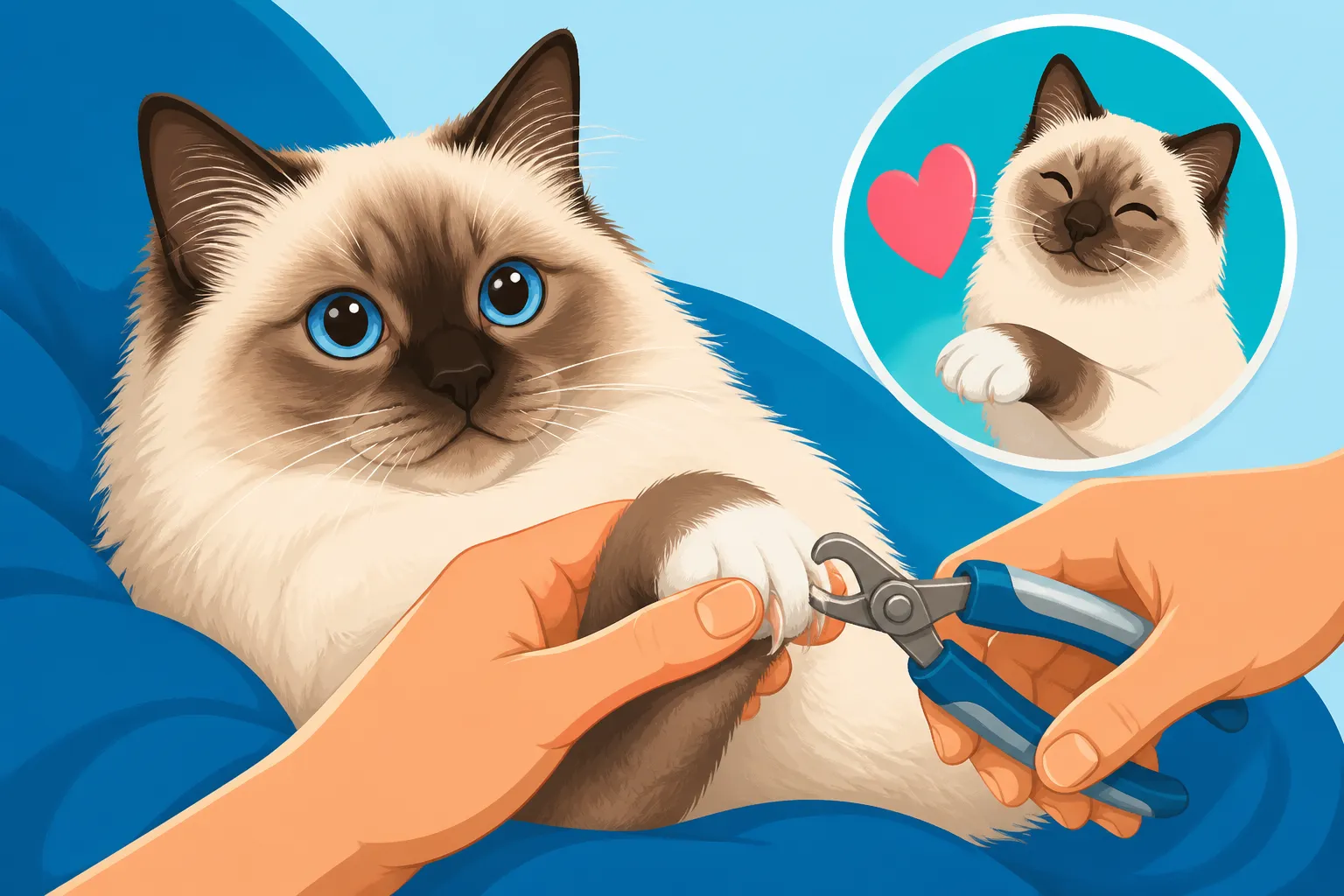
The trick to solo trimming is to use your body to provide gentle, non-threatening security. Often, having your Birman sit in your lap, facing away from you, is effective. You can cradle them gently against your chest with one arm, leaving your dominant hand free for clipping and your other hand for paw manipulation. This allows them to feel safe and close to you, which aligns with their nature as a cat that Why a Birman Would Rather Be Near You Than On You.
Alternatively, if your Birman is particularly comfortable on a high surface, you might try having them on a table or countertop, wrapped loosely in a towel if needed. The key is never to force a hold. If they struggle violently, stop and try again later. With Birmans, soft encouragement and a calm tone often work better than brute force. Start with one paw, gently taking it in your non-dominant hand.
Identifying the Quick and Making the Cut
Once you have a paw, gently press on the top of the paw and the pad underneath to extend a single claw. For clear or light-colored claws, you'll see a pink area – that's the quick. Your aim is to cut only the clear, hooked tip, staying well away from the quick. It's always better to cut too little than too much. If your Birman has darker claws where the quick isn't visible, cut only the very tip, where the claw starts to hook downwards. You can make several tiny snips if you're unsure, rather than one large cut.
Hold the clippers firmly and make a quick, clean snip. Don't dally, as this can make your Birman nervous. After each successful clip, immediately release the paw, offer praise, and give a tiny treat. If you accidentally hit the quick, don't panic! It will bleed, but it's rarely serious. Apply styptic powder firmly to the tip of the claw. Your Birman might yelp or pull away, but focus on stopping the bleeding calmly. This is also why having that powder at arm's reach is so important.
Making it a Positive Experience (Even if it's Not Perfect)
The goal isn't to trim every single claw in one sitting, especially when you're alone. If you manage just one claw, or one paw, and your Birman tolerates it well, celebrate that! Stop there, offer a big reward, and engage in some play. This reinforces the idea that claw trimming isn't an endless torment. You can always come back later in the day, or the next day, for another claw or paw. Breaking it down into small, manageable sessions makes it less stressful for both of you and builds positive associations over time. Remember, consistency in gentle handling and rewards will eventually lead to smoother sessions. This approach is similar to how you would How to Get a Birman Used to a Comb, focusing on short, pleasant interactions rather than long, drawn-out struggles.
Troubleshooting and Long-Term Success
Even with the best intentions and techniques, sometimes things don't go as planned. It's okay! Learning to read your Birman and adapting your approach is part of the journey.
When Your Birman Just Won't Cooperate
There will be days when your Birman simply isn't in the mood, and that's perfectly normal. If they start growling, hissing (rare for Birmans, but possible if truly distressed), batting your hand away, or constantly pulling their paw back forcefully, it's a clear sign to stop. Pushing through will only create a negative association and make future attempts even harder. Take a break. Try again in an hour, or the next day. Sometimes, a gentle swaddling in a soft blanket – creating a "burrito" – can provide enough security to get a few claws done, but only use this if your cat tolerates it without extreme stress. Remember, Birmans are generally known for being quite amenable to handling, as described in Why a Birman Rarely Fights Handling, but every cat has their limits and their off days. If you find your cat consistently resisting, especially if they are usually placid, it might be worth considering if there's any underlying discomfort that's making them sensitive to paw handling.
Maintaining a Regular Routine
Consistency is paramount for making claw trimming a stress-free part of your Birman's life. Aim for a regular schedule, typically every 2-4 weeks. This prevents the claws from getting too long and makes each session quicker and easier. Think of it as part of their regular grooming, much like their silky coat. Early Grooming Habits Decide a Birman's Life emphasizes how crucial it is to establish these routines from a young age. Keep a small note in your calendar or on your phone to remind you when the last trim was. Over time, your Birman will become accustomed to the routine, understanding that it's a quick, minor inconvenience followed by praise and treats. A consistent routine also allows you to track How Fast the Claws in a Birman's Gloves Grow, helping you anticipate when the next session is due.
| Step | Description | Solo Tip |
|---|---|---|
| 1. Gather Supplies | Clippers, styptic powder, high-value treats, good light, towel. | Have everything within arm's reach before you start. |
| 2. Choose a Quiet Spot | Low-stress environment, no distractions. | Pick a time when your Birman is naturally calm, e.g., after a nap. |
| 3. Gentle Positioning | Birman in lap, facing away, or on a comfortable surface. | Use your body to gently secure without restraint; one hand holds, one clips. |
| 4. Extend One Claw | Gently press top of paw and pad to expose the claw. | Work on one claw at a time, releasing the paw for a breath if needed. |
| 5. Identify the Quick | Locate the pink quick (or simply the hooked tip on dark claws). | Always cut too little rather than too much; small snips are safer. |
| 6. Clip Quickly | Make a sharp, clean cut on the clear tip. | Be swift and confident; hesitation can make your Birman nervous. |
| 7. Praise & Reward | Immediately offer treats and verbal praise after each successful snip. | Stop after one paw or even one claw if your Birman is getting restless. |
| 8. Check for Bleeding | If a quick is nicked, apply styptic powder immediately. | Keep powder open and ready; don't panic, just apply pressure. |
| 9. Repeat (if tolerated) | Move to the next claw or paw if your Birman is still calm. | Don't force it. Short, positive sessions are better than long, stressful ones. |
Seeking Professional Help (No Shame in It!)
Despite your best efforts, some Birmans may simply never tolerate solo claw trimming, and that's absolutely fine. There's no shame in admitting you need a little help! Many veterinary clinics offer nail trimming services, and professional groomers are also adept at handling even the most resistant felines. These professionals have experience, specialized tools, and often a calm, efficient approach that can get the job done quickly and with minimal stress for your Birman. In rare cases, if a cat becomes extremely stressed or aggressive during trims, a vet might even suggest mild sedation for a more humane experience. Remember, the ultimate goal is your Birman's well-being and comfort, not proving you can do everything yourself. Don't hesitate to reach out for professional assistance if it means a less stressful life for both you and your cherished Birman.
Disclaimer
This article is for general informational purposes only and does not constitute professional advice. Laws, prices and regulations vary by location and change over time. Consult a qualified professional for guidance on your specific situation.