Why Declawing Would Ruin a Birman’s Gloves and Its Life
It’s a common scenario: you’ve just welcomed a beautiful Birman cat into your home, perhaps a sweet kitten, and suddenly, those tiny claws are digging into your favorite sofa. The frustration is real, and for many cat owners, the thought of declawing can cross their minds as a quick fix. However, for a Birman, a breed known for its distinctive "gloves" and gentle disposition, this procedure isn't just a simple manicure; it's a painful amputation that profoundly impacts their unique physical traits and overall quality of life, which this guide will explore in detail.
Understanding the Birman's Unique "Gloves" and Their Importance
The Birman is a truly special breed, instantly recognizable by its striking color points and, most notably, its pristine white "gloves" on all four paws. These aren't just pretty markings; they're a defining characteristic of the breed, as central to their identity as their sapphire-blue eyes and silky coat.
What Makes a Birman's Gloves Special
Imagine a Birman without its signature white paws – it's almost impossible, isn't it? These "gloves" are a direct result of a specific genetic trait, carried by The Gloving Gene Every Birman Carries Two Copies Of. This gene ensures that Birmans are born with a unique white spotting pattern primarily limited to their feet. The ideal Birman glove should be symmetrical, stopping at the "break" of the paw, and forming distinct "laces" or "gauntlets" on the back legs, running higher up the hocks. This pattern is meticulously defined in breed standards, and judges scrutinize these markings with great care. What Judges Look For on a Birman's Paws First. When a declawing procedure is performed, it involves the amputation of the last bone of each toe. This isn't just removing the nail; it's removing the bone from which the nail grows. For a Birman, this means fundamentally altering the very structure that supports their distinctive white gloves, often leading to a jagged, unnatural appearance where the white fur should be pristine.
The Aesthetic and Genetic Value of Birman Gloves
Beyond the visual appeal, the gloves hold immense genetic and historical significance for the Birman breed. They are a testament to careful selective breeding and what makes a Birman, a Birman. Destroying these through declawing isn't just a cosmetic issue; it's a direct assault on the breed's integrity. For Birmans bred for show or even those intended simply as beautiful pets, the pristine condition of their gloves is paramount. A cat that has been declawed would be immediately disqualified from any legitimate cat show, as the physical alteration is considered disfiguring and unethical. Furthermore, a Birman kitten born without these characteristic white markings, or with severe irregularities, cannot be registered as a proper Birman and is referred to as "mismarked." This gives you a clear indication of how vital these white paws are to the breed's very definition. To deliberately compromise them through declawing is to strip a Birman of one of its most cherished and recognized features, effectively making it a Why a Gloveless Birman Kitten Cannot Be Registered.
The Physical and Behavioral Trauma of Declawing
It’s easy to misunderstand declawing, often thinking of it as a quick, painless solution to furniture scratching. However, the reality is far from it, especially for a sensitive and elegant breed like the Birman. This procedure carries significant physical and psychological burdens that can irrevocably alter your cat's life.
It's Not Just a Nail Trim: The Surgical Reality
Let's be clear: declawing, or onychectomy, is not a simple clipping of the nails. It is a major surgical procedure involving the amputation of the last bone (phalanx) of each toe on a cat's paw. Imagine having the tips of your fingers or toes surgically removed – that's essentially what a declawed cat experiences. The procedure can be done with a scalpel, guillotine clipper, or laser, but regardless of the method, it severs tendons, nerves, and blood vessels. The recovery is often painful, requiring strong painkillers, and involves a period of bandaging and restricted movement. For a Birman, a breed that usually moves with a quiet grace and enjoys gentle play, this initial trauma can be particularly jarring. They are already a cat that prefers to play gently, with their claws in, and suddenly their primary tool for interaction and defense is gone.
Long-Term Physical Complications for a Birman
The pain doesn't always end with recovery from surgery. Many declawed cats suffer from chronic pain, often described as phantom limb pain, similar to what humans experience after amputation. This persistent discomfort can lead to a host of other physical issues. A declawed Birman's gait is fundamentally altered because they can no longer walk on their toes as nature intended; they are forced to walk on different parts of their paw. This unnatural posture can lead to severe back and joint pain, contributing to arthritis later in life. You might notice your once-agile Birman hesitating to jump, or even Why a Birman Skips a Step Going Up the Stairs, because the impact on their paws is now painful. Their balance, which relies on the ability to grip and spread their toes, is compromised. This impacts their ability to jump onto shelves, play with toys, or even groom themselves comfortably. For a cat whose life revolves around a peaceful home environment, these constant physical discomforts can cast a long shadow over their existence.
Psychological and Behavioral Changes
The emotional and psychological toll of declawing can be even more devastating for a Birman, a breed known for its gentle, trusting, and placid temperament. When a cat loses its primary defense mechanism, it can become anxious, fearful, or even aggressive. Many declawed cats resort to biting as their only remaining form of self-defense, a stark contrast to the typical Birman's calm and rarely aggressive nature.
Another common and heartbreaking consequence is litter box aversion. Walking on surgically altered, often tender paws through grainy litter can be incredibly painful. This leads cats to seek softer, less painful spots to relieve themselves, such as carpets, laundry piles, or even your bed. This is not a malicious act but a direct result of pain and discomfort. For an owner, this creates a new, frustrating problem that could have been avoided. Moreover, a Birman that suddenly becomes withdrawn, irritable, or even hides more often could be experiencing the psychological distress of declawing. A Birman is typically a cat that craves companionship and will follow you quietly from room to room, but persistent pain or anxiety can lead them to retreat. Why a Birman Hides Illness Behind a Placid Temperament. This can severely impact their ability to thrive in a home environment and enjoy their innate need for companionship, which for a Birman, is often more important than intense stimulation. Why a Birman Needs Company More Than Stimulation.
Humane Alternatives to Declawing for Birman Owners
If you're dealing with a Birman who's decided your sofa is their personal scratching post, rest assured, there are many effective and humane alternatives to declawing that protect both your furniture and your beloved cat's well-being. These methods focus on understanding and redirecting your Birman's natural instincts.
Effective Scratching Post Training
The key to preventing destructive scratching is to provide attractive, appropriate outlets for this natural behavior. Cats scratch to stretch, mark territory, and shed old claw sheaths. Your Birman needs options that appeal to them.
Start by offering a variety of scratching posts. Cats have preferences! Some prefer sisal rope posts, others love corrugated cardboard, and some like carpeting. The height and stability matter too; a Birman, with its long, elegant body, needs a post tall enough to fully stretch vertically, without wobbling over. Consider both vertical posts and horizontal scratchers, which can be particularly appealing.
Placement is crucial. Put scratching posts in prominent areas where your Birman likes to hang out or near objects they've previously targeted. Often, placing one right next to the "forbidden" furniture is very effective. You can make posts more appealing by sprinkling them with catnip or using pheromone sprays designed to encourage scratching. When your Birman uses a post, offer praise and a treat. If you see them scratching inappropriately, gently redirect them to the post. Never punish them, as this can create fear and anxiety. For more ideas on where to put them, check out Where to Put a Post a Birman Will Actually Use. Many excellent options for various textures and styles can be found on retailers like Chewy or Amazon.
Regular Nail Trimming and Soft Paws
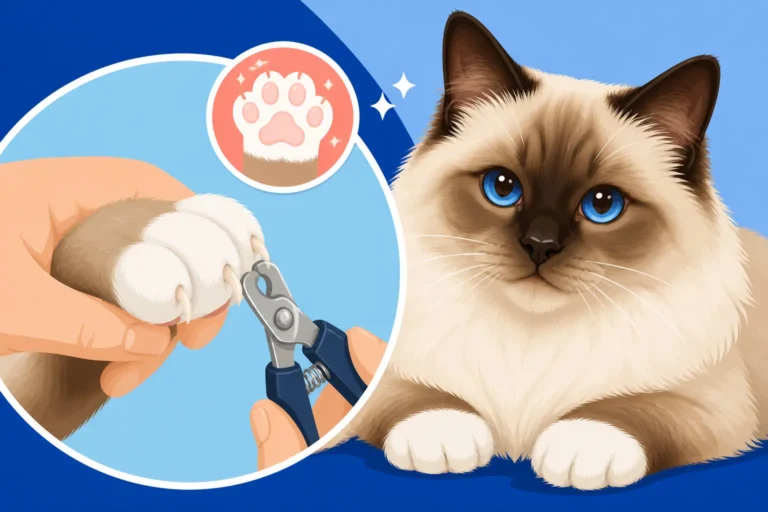
Keeping your Birman's claws trimmed short is one of the easiest ways to mitigate damage. This isn't about removing the claw; it's about keeping the sharp tip blunt. Start this routine when your Birman is a kitten to get them accustomed to it. How to Handle a Birman for Nail Trimming. Aim for a schedule of every 2-4 weeks. You'll need a good pair of cat-specific nail clippers – a scissor-style or guillotine-style clipper works well for a cat as calm as a Birman. Which Clippers Suit a Cat as Still as a Birman. Gently press on the paw pad to extend the claw, identify the quick (the pink part), and trim only the sharp, clear tip, avoiding the quick to prevent pain and bleeding.
If regular trimming isn't quite enough, consider soft claw caps. These are vinyl caps that are glued onto your cat's claws. They effectively blunt the claw, preventing damage to furniture, and typically last for 4-6 weeks before needing replacement. They're a humane, temporary solution that allows your Birman to keep their claws and all the natural behaviors associated with them. You can find these at most pet stores or online retailers like Amazon.
Enrichment and Environmental Management
A bored or stressed Birman is more likely to engage in destructive behaviors, including inappropriate scratching. Ensure your home environment is enriching and stimulating. This doesn't mean constant activity, as Birmans are generally more laid-back than some other breeds. But they do enjoy company and gentle play. Provide a variety of toys, rotate them regularly to keep things interesting, and engage in interactive play sessions with wand toys that mimic prey.
Consider vertical space, even if your Birman doesn't climb as high as some cats. A sturdy cat tree or a window perch can provide a sense of security and a vantage point. Address any underlying stress factors, such as changes in routine or new pets, which can sometimes manifest as increased scratching. Ensure they have access to their preferred litter type and that their litter boxes are clean and appealing – this can prevent issues like Why a Birman's Coat Carries Litter Out of the Box. Providing ample positive outlets for their natural instincts will help keep your Birman happy, healthy, and your furniture intact. High-quality cat toys and accessories can help enrich your Birman's environment.
The Ethical and Legal Landscape of Declawing
The debate around declawing has shifted dramatically over the years, moving from a common practice to one increasingly seen as unethical and even cruel. Understanding this evolving perspective is crucial for any responsible Birman owner.
A Global Perspective on Declawing
Across the globe, the practice of declawing cats is becoming a relic of the past. It is banned or severely restricted in many countries, including most of Europe (like the UK, Germany, and France), Australia, New Zealand, and parts of Canada. These bans reflect a growing understanding of animal welfare and the recognition that declawing is a painful, unnecessary surgical amputation rather than a mere cosmetic procedure. Veterinary organizations in many regions also condemn the practice, advocating for humane alternatives instead. The increasing legal restrictions and ethical consensus highlight that declawing is not a widely accepted or compassionate solution for managing cat behavior. It underscores a societal shift towards prioritizing the well-being and natural instincts of our feline companions.
Protecting Your Birman's Well-being
As responsible pet owners, our role is to provide a safe, healthy, and enriching environment for our animals, respecting their natural behaviors while guiding them towards harmonious coexistence in our homes. For a Birman, a breed universally praised for its gentle nature, choosing not to declaw aligns perfectly with their inherent temperament and physical needs. Why Every Standard Calls the Birman a Gentle Breed.
Destructive scratching in a Birman is rarely a sign of malice or defiance. Instead, it’s often a clear indicator that their natural scratching needs are not being met, or that they are experiencing stress, boredom, or discomfort. By opting for humane alternatives like providing appropriate scratching posts, regular nail trims, and environmental enrichment, you are not only safeguarding your furniture but, more importantly, protecting your Birman from unnecessary pain, potential long-term health complications, and behavioral issues. You are allowing them to live a full, natural, and happy life, complete with their beautiful, functional gloves.
| Feature / Aspect | Declawing (Onychectomy) | Humane Alternatives |
|---|---|---|
| Procedure Type | Surgical Amputation (removal of toe bones) | Training, management, non-surgical applications |
| Pain Level | Severe acute pain, potential for chronic pain | Minimal (nail trimming) to none (scratching posts, caps) |
| Physical Impact | Altered gait, arthritis risk, balance issues, paw pain | None, natural paw function preserved |
| Behavioral Impact | Biting, litter box aversion, anxiety, aggression | Positive reinforcement, natural scratching, reduced stress |
| Birman Gloves | Irreparably ruined, aesthetic damage, loss of breed trait | Preserved, maintained, celebrated |
| Ethical Standing | Widely condemned by vets & animal welfare organizations | Promoted as responsible pet ownership |
| Cost (Initial) | High (surgical fees, anesthesia, medication) | Low (scratching posts, clippers, claw caps, treats) |
| Long-Term Costs | Potential for ongoing vet care for complications | Occasional replacement of posts/caps, continued trimming supplies |
| Recovery Time | Weeks of painful recovery | Immediate, no recovery needed beyond training period |
Disclaimer
This article is for general informational purposes only and does not constitute professional advice. Laws, prices and regulations vary by location and change over time. Consult a qualified professional for guidance on your specific situation.