Which Goddess the Birman Legend Names
Many Birman cat owners are enchanted by the breed's serene beauty and wonder about the origin of their distinctive markings, especially the famous white "gloves." It's a question that often leads to the captivating tale of their mythical past, a legend that speaks of divine intervention and sacred transformation. This guide will take you on a journey through the heart of the Birman legend, revealing the specific goddess believed to have bestowed these beautiful traits upon the breed and exploring how this ancient story continues to shape our appreciation for these gentle felines.
The Ancient Tale of the Birman and Its Divine Patroness
The Birman cat is often referred to as the "Sacred Cat of Burma," and this title isn't just for show; it hails directly from a captivating legend that tells of their mystical origins. This isn't just a quaint bedtime story; it's a foundational myth that colors how many perceive the breed even today, connecting their unique appearance to a powerful spiritual narrative.
Who is the Goddess Tsun-Kyan-Kse?
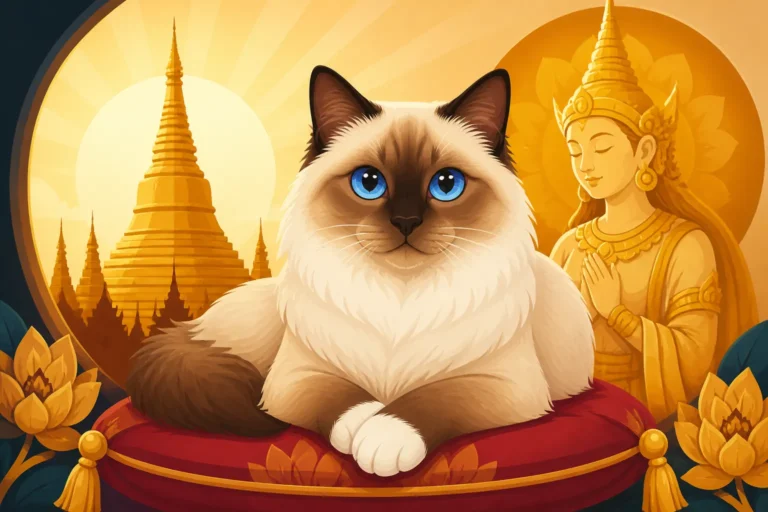
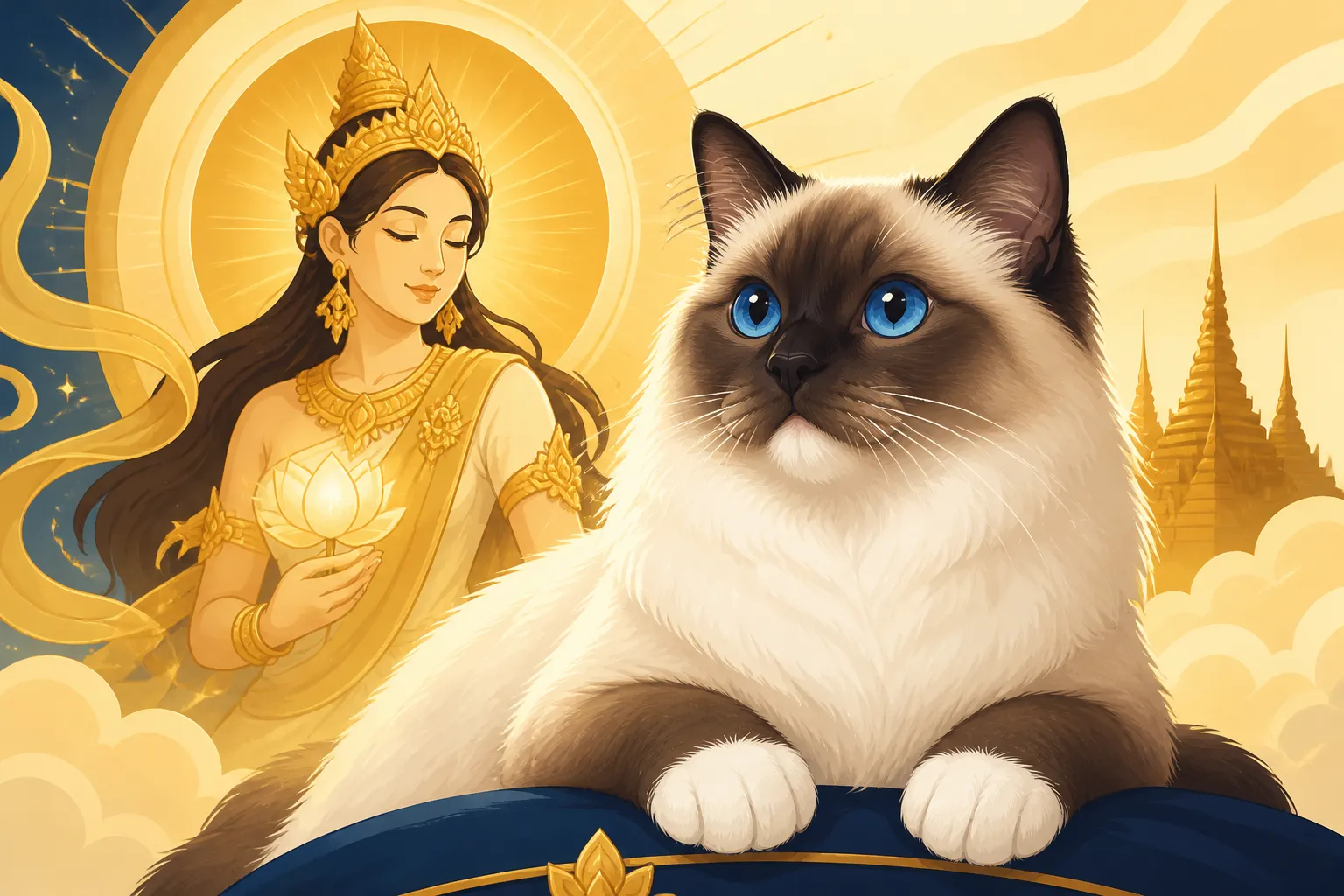
At the heart of the Birman legend stands the revered golden goddess, Tsun-Kyan-Kse. She is depicted as a deity with sapphire-blue eyes, embodying purity, wisdom, and eternal spiritual well-being. According to the tale, she presided over the Temple of Lao-Tsun, a magnificent sanctuary high in the mountains of ancient Burma. This temple was a place of profound reverence, where saffron-robed Kittahs (priests) devoted their lives to worship and meditation, always in the company of the temple's beloved, long-haired cats. These cats, while beautiful, did not yet possess the distinctive white "gloves" that we associate with the Birman today. They were guardians of the temple's sacred treasures and cherished companions to the priests, living lives of quiet contemplation alongside their human counterparts. The goddess Tsun-Kyan-Kse's spiritual influence was said to permeate the very air of the temple, offering protection and grace to all who dwelled within its hallowed walls.
Unpacking the Legend of the Temple of Lao-Tsun
The central narrative of the legend revolves around a pivotal moment within the Temple of Lao-Tsun. It tells of an elderly, deeply revered high priest named Mun-Ha, whose greatest devotion was reserved for the golden goddess and his beloved white temple cat, Sinh. Mun-Ha would meditate daily before the golden statue of Tsun-Kyan-Kse, with Sinh faithfully by his side.
One fateful night, the peaceful sanctity of the temple was shattered by invaders. Pirates, with no regard for the sacred space, attacked the temple, seeking its golden treasures. In the chaos, the venerable Mun-Ha was struck down. As his life ebbed away, Sinh, his faithful feline companion, sprang onto his master's head, gazing into the sapphire eyes of the goddess statue. In that profound moment, a miraculous transformation occurred. Sinh's eyes, previously yellow, turned a brilliant sapphire blue, reflecting the goddess's gaze. His coat, a golden color, immediately deepened into a rich, creamy gold, and his face, ears, legs, and tail took on the deep, rich brown points characteristic of today's Birman. But the most striking change was his paws: where they touched his dying master, they remained pure, pristine white, symbolizing Mun-Ha's purity and holiness as his soul ascended to the goddess. These pure white paws became the iconic "gloves" of the Birman cat.
The legend recounts that as Sinh gazed at the goddess, all the other temple cats underwent the same miraculous transformation, reflecting the beauty and sacred markings bestowed upon Sinh. This powerful moment solidified the physical characteristics of the Birman breed within the legendary narrative. It's a story that beautifully explains The Birman Is the Sacred Cat of Burma, and the Story Is a Legend and specifically Why the Birman Legend Explains the White Gloves.
The Symbolism Behind the Birman's Sacred Markings
Every distinctive feature of the Birman, as described in the legend, carries profound symbolic weight. The sapphire blue eyes are said to be a direct reflection of the goddess Tsun-Kyan-Kse herself, symbolizing divine wisdom and a connection to the heavens. The dark points on the face, ears, legs, and tail are often seen as a mark of their sacred lineage, a deepening of color that signifies their transformation from ordinary temple cats to revered companions.
However, it is the pristine white "gloves" that hold the most significant symbolic meaning. These paws, remaining untouched by the darkening points, are said to represent the purity of the priest Mun-Ha's soul. They are a constant reminder of his holiness and his ascension, a physical manifestation of divine grace. The legend also imparts a gentle and placid temperament to the breed, suggesting that the cats, having witnessed such a sacred event, inherited a calm and compassionate nature. This connection to a peaceful past aligns with traits observed in the breed today; indeed, Why Every Standard Calls the Birman a Gentle Breed. These symbolic ties add a layer of mystique and respect to the Birman, making them more than just beautiful pets but living echoes of an ancient, sacred tale.
The Legend's Journey from Burma to the Western World
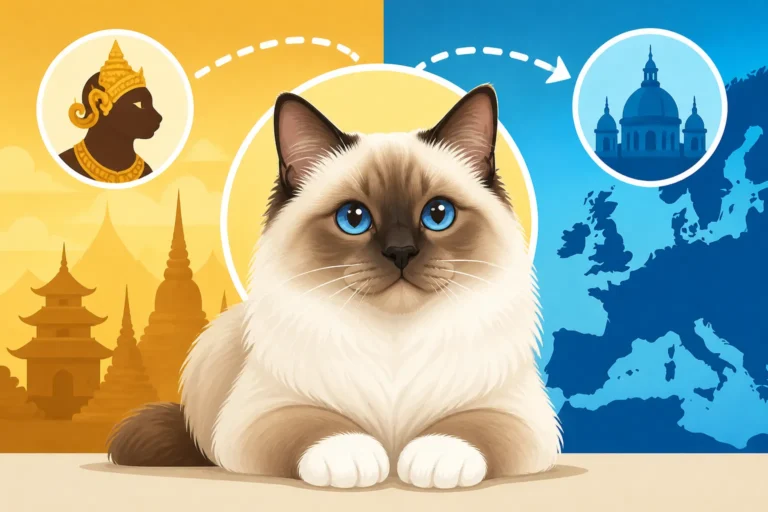
While the legend places the Birman's origins in ancient Burma, the reality of its journey to global recognition is a little more complex and, perhaps, more European in its immediate genesis. The power of a good story, however, can transcend geographical and historical facts, weaving itself into the very fabric of a breed's identity.
The French Connection and the Legend's Genesis
Interestingly, the detailed legend of the Temple of Lao-Tsun and the goddess Tsun-Kyan-Kse wasn't recorded in ancient Burmese texts. Instead, it seems to have been articulated and popularized in France during the early 20th century, around the time the breed itself was first being established and registered in the West. This doesn't diminish its charm or its importance to the breed's lore, but it does highlight an intriguing aspect of how breed histories are often shaped. The narrative was expertly crafted to give the Birman a rich, exotic backstory that would captivate European cat fanciers. It provided a romantic, spiritual justification for the cat's striking appearance, distinguishing it from other pointed breeds. Why the Birman Legend Was Written Down in France is a fascinating piece of this puzzle, as it suggests a deliberate effort to imbue the breed with a noble and ancient heritage at a crucial time in its development.
The timing was perfect for such a story to take root. The early 20th century was a period when exotic breeds from distant lands were highly prized, and a compelling origin story only added to their allure. The legend served not just as a cultural embellishment but as a foundational narrative that helped solidify the Birman's identity and appeal among a burgeoning community of cat enthusiasts.
The Appeal of a Mythical Origin
Why would a relatively new breed, developed in Europe, embrace such an elaborate "ancient" legend? The answer lies in the potent appeal of romanticism and mystique. In a world increasingly driven by science and reason, the idea of a cat breed with a divine origin offered a captivating escape. It elevated the Birman beyond a mere companion animal, transforming it into a living relic of a sacred past. This mythical origin served several practical purposes as well. It provided a cohesive and memorable narrative for breeders to share, making the Birman stand out in a crowded field of emerging breeds.
Furthermore, the legend provided a neat, albeit supernatural, explanation for the Birman's most distinguishing physical features—its blue eyes, pointed coloration, and, most notably, its pristine white gloves. Without a clear genetic understanding at the time, attributing these traits to a goddess made them seem all the more special and unique. It fostered a sense of awe and reverence, making prospective owners feel they weren't just acquiring a pet, but a piece of living history. This powerful storytelling resonated deeply with people and undoubtedly contributed to the breed's growing popularity.
Separating Myth from Modern Birman History
While the legend of the goddess Tsun-Kyan-Kse is undeniably beautiful and integral to the Birman's identity, it’s also important to understand the more documented history of the breed. Genetic studies and historical records suggest that the Birman, as we know it today, was primarily developed in France. Early records indicate that the breed's distinct characteristics were achieved through careful selective breeding, likely involving crosses between other long-haired, pointed cats such as Persians and perhaps Siamese, during the early 20th century. This effort was crucial, especially after World War II, which severely depleted the breed's numbers, leaving only two Birman cats, Orloff and Xenia de Kaabaa, as the foundation for the modern breed. Which Two Cats Every Birman Descends From delves into this more factual, but equally fascinating, aspect of their ancestry.
The legend, therefore, acts as a cultural overlay, a beautiful narrative that enhances the breed's appeal without necessarily reflecting its genetic pathway. It's a testament to the human desire to imbue our beloved animals with deeper meaning and extraordinary origins. Understanding both the legend and the historical development allows for a richer appreciation of the Birman cat—a creature both mythic and real. As an informational guide, it’s valuable to explore Whether the Birman Was Bred in Europe From the Start to gain a full perspective.
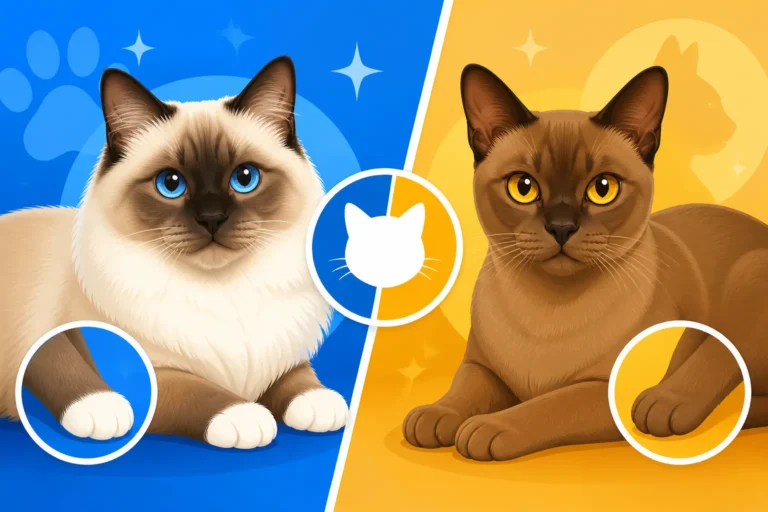
Here's a quick comparison to help distinguish between the legendary and documented aspects of the Birman's traits:
| Trait / Feature | Legendary Origin (Goddess Tsun-Kyan-Kse) | Documented/Genetic Origin |
|---|---|---|
| White Gloves (Paws) | Represent the purity of the priest Mun-Ha's soul; divine blessing. | Result of specific modifier genes interacting with the colorpoint gene. |
| Sapphire Blue Eyes | Reflection of the goddess's own eyes; divine wisdom. | Directly linked to the colorpoint gene (tyrosinase deficiency). |
| Golden Body Coat | Transformed from Sinh's original golden fur by the goddess's power. | Selective breeding to enhance the dilute cream/gold tones within the point pattern. |
| Darker Points | Deepened color as a mark of sacred lineage and transformation. | Temperature-sensitive enzyme in the colorpoint gene expresses darker pigment in cooler body extremities. |
| Placid Temperament | Inherited from witnessing the sacred transformation and temple life. | Result of generations of selective breeding for calm and gentle disposition. |
| Long Hair | Attributed to the general appearance of the temple cats. | Inherited from long-haired ancestors like Persians. |
The Enduring Impact of the Goddess on the Birman's Identity
Even in our modern world, where geneticists can trace a cat's lineage and pinpoint specific gene mutations, the legend of the goddess Tsun-Kyan-Kse remains deeply intertwined with the Birman's identity. It's more than just a charming story; it's a narrative that informs perceptions, shapes expectations, and deepens the bond between Birmans and their human companions.
How the Legend Shapes Perceptions of the Birman
The legend of the Sacred Cat of Burma bestows a certain gravitas and nobility upon the Birman breed. Owners often feel a heightened sense of responsibility and reverence for their cats, viewing them not just as pets, but as descendants of a mystical lineage. This perception translates into a gentle handling, an appreciation for their calm demeanor, and a readiness to provide a home environment that reflects the breed's legendary tranquility. People are often drawn to Birmans precisely because of this backstory, envisioning a wise, serene companion rather than a boisterous, demanding feline. It adds a layer of emotional depth to the ownership experience, making the Birman feel even more special and unique.
Furthermore, the legend fosters a sense of guardianship over the breed's distinct features, particularly the coveted white gloves. Breeders and enthusiasts strive to maintain these markings, understanding that they are not merely aesthetic traits but symbols of a divine past. This perception subtly influences everything from breeding practices to how the cats are presented in shows and even how they are named.
The Birman's Calm Demeanor and Its Legendary Roots
One of the most cherished traits of the Birman cat is its famously calm, gentle, and affectionate temperament. They are known for being quiet companions, often described as "soft" in nature, preferring to be near their human family rather than demanding constant attention. This placid disposition is often linked back to their legendary origins as temple cats, living lives of peace and contemplation alongside Buddhist monks. The story suggests that this serene environment, coupled with the divine transformation, instilled in them a unique tranquility.
While modern breeding has undoubtedly reinforced these behavioral traits through careful selection, the legend provides a beautiful narrative explanation. It’s comforting to imagine that the calm presence of your Birman stems from a deep, ancient wisdom. This connection helps solidify the breed's reputation as an ideal family pet, known for its patience with children and its ability to get along with other animals. Indeed, Why a Birman Follows You Without Demanding Anything and Why a Birman Is the Cat Families Are Told to Get are reflections of this temperament that aligns so well with the legendary peaceful existence.
Continuing the Legacy: Caring for Your Sacred Companion
Understanding the Birman's legendary background naturally leads to a desire to provide the best possible care for these "sacred" companions. While we no longer expect them to guard ancient temples, we certainly want to ensure their health, comfort, and well-being. This means paying attention to their unique needs, from grooming their beautiful, single coat to providing a nutritious diet that supports their long lifespan.
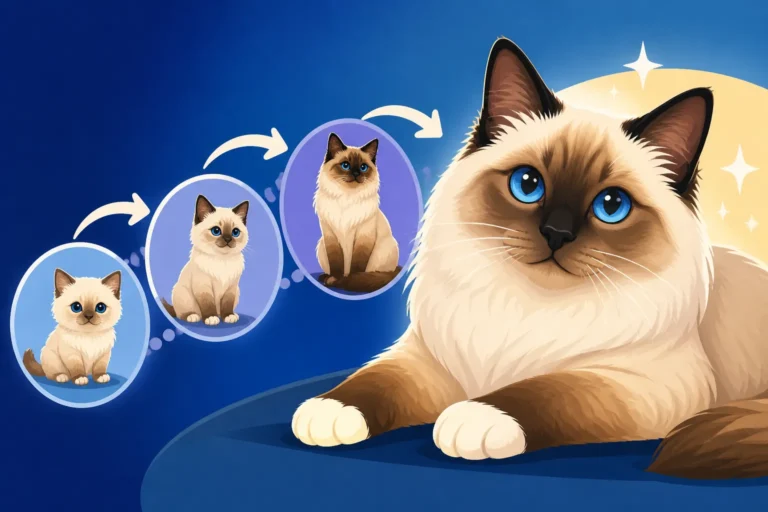
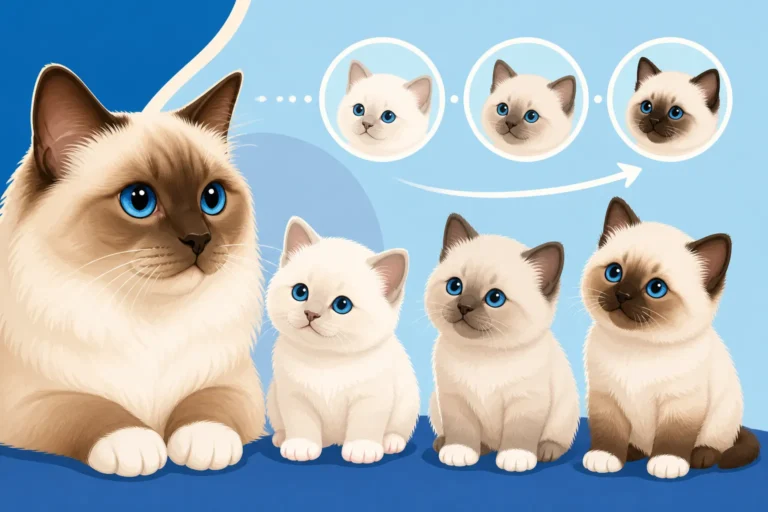
Their long, silky fur, while relatively easy to care for due to the lack of an undercoat, still requires regular combing to prevent tangles and keep it looking its best. Products found at reputable pet supply retailers like Chewy can help keep that magnificent coat pristine. Providing a diet rich in high-quality protein and essential fatty acids is also vital, especially for maintaining the lushness of their ruff and tail plume. Because of their calm nature, Birmans thrive in stable, loving environments, and consistent care contributes to their overall happiness. Learning about aspects like Caring for a Birman Once Its Points Have Gone Dark can help you adapt your care routine as your Birman matures. Ensuring they have comfortable resting spots, clean litter boxes (perhaps with low-dust litter from Chewy to protect their white gloves), and plenty of gentle interaction are all ways we continue to honor the legacy of the sacred cat. Their enduring health and happiness are a testament to both dedicated breeding efforts and the loving care they receive from their families today.
Disclaimer
This article is for general informational purposes only and does not constitute professional advice. Laws, prices and regulations vary by location and change over time. Consult a qualified professional for guidance on your specific situation.