Which Year a Pair of Birmans Was Shipped From Burma
It can feel a little like detective work sometimes, trying to trace the true origins of our beloved Birman cats. So much of their early story is intertwined with captivating legends, and it’s easy to get lost in the romance of it all. But for those of us who appreciate the actual historical journey these magnificent felines made, pinning down the precise moments can be incredibly satisfying. This guide will walk you through the documented arrival of the Birman cat in the Western world, focusing on the pivotal year when a foundational pair was first shipped from Burma, separating the known facts from the charming myths.
Unraveling the Birman's Journey: The 1919 Shipment
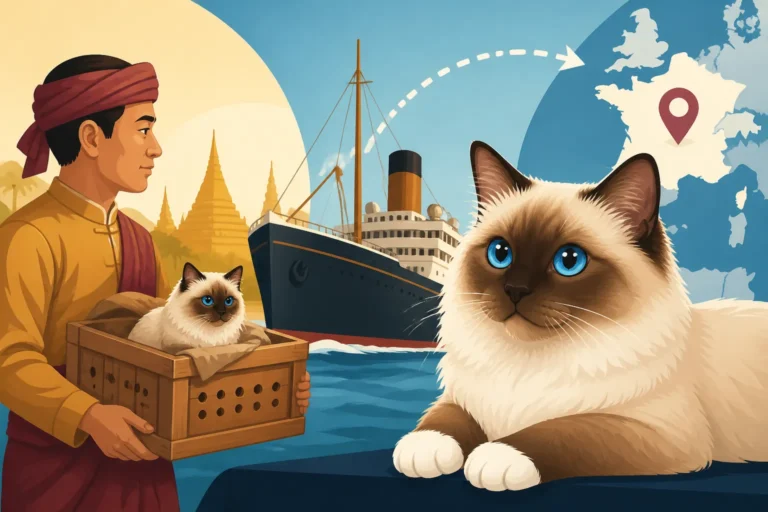
For years, the Birman's origin story has been wrapped in a beautiful, almost mystical legend involving a sacred temple, golden-eyed priests, and a goddess bestowing white paws upon a devoted cat. While that narrative is utterly enchanting, the documented historical account of how these cats actually reached Europe is equally fascinating, though perhaps a touch less dramatic. The widely accepted historical record, supported by early breed registries and accounts, points to 1919 as the year a pair of Birmans was first shipped from what was then Burma (modern-day Myanmar) to France.
This wasn't some grand, official expedition, but rather a more clandestine, perhaps even daring, endeavor. The story goes that a pair of Birmans was smuggled out of a temple or similar sacred site. The individuals credited with this monumental task were often cited as a Major Gordon Russell and Auguste Pavie, a French diplomat. Pavie, in particular, had a long history in Indochina and was well-positioned to facilitate such a journey. It’s important to remember that in those days, getting exotic animals from far-flung lands to Europe was no small feat. It involved lengthy, dangerous sea voyages, and the survival rate for such delicate cargo was never guaranteed. This particular shipment marks the true, verifiable beginning of the Birman breed’s establishment outside its rumored homeland, a far cry from the mythical transformations described in legend.
The Perilous Voyage and a Solitary Survivor
Imagine the conditions on a ship in the early 20th century, making the long journey from Southeast Asia to Europe. It was certainly no luxury cruise, especially not for animals confined to crates. The pair of Birmans, male and female, embarked on this arduous voyage in 1919. Unfortunately, the journey proved too much for one of them. The male cat did not survive the trip, succumbing to the harsh realities of sea travel, perhaps due to illness, stress, or inadequate conditions. This tragic loss underscores the immense challenges involved in establishing new breeds from imported stock back then. It's a sobering reminder that even with the best intentions, such endeavors were fraught with risk.
However, against the odds, the female Birman did survive. Her survival was nothing short of miraculous and absolutely critical for the future of the entire breed in the Western world. This surviving queen, often referred to as Sita (though various names have appeared in different accounts), arrived in France, exhausted but alive. Her resilience alone speaks volumes about the tenacity of these cats. Upon arrival, she was reportedly pregnant, or soon became so, carrying the precious genetics that would ultimately restart the breed's lineage. This single female cat became the bottleneck, the absolute foundation upon which all modern Birmans outside of Burma would be built. The fragility of this moment cannot be overstated; had she not survived, or had her subsequent litter not thrived, the Birman as we know it today might not exist. Why Only One of the First Two Birmans Survived tells more of this perilous tale.
Laying the Foundations: The Birman's French Legacy
Once the surviving Birman queen, Sita, made it to France, the real work of establishing the breed began. It was a painstaking process, requiring dedication, knowledge, and probably a little bit of luck. Sita was carefully bred, and it is from her offspring that the foundational lines of the Western Birman cat truly emerged. The most famous and undeniably crucial descendant was a female kitten named Poupee de Madalpour. This cat, along with a male named Dieu d'Arakan (who was either from Sita's subsequent litters or another carefully chosen early import/outcross), became the breeding pair that solidified the Birman's presence in France.
These early French breeders faced immense challenges. With such a limited gene pool stemming from a single surviving female, outcrossing was almost certainly necessary to broaden genetic diversity and strengthen the lineage. This meant carefully selecting cats of other breeds, likely Persians and Siamese, that shared some desirable traits, to infuse new blood while trying to maintain the Birman's distinctive characteristics. The goal was to produce kittens that consistently displayed the Birman's unique combination of color points, deep blue eyes, and, of course, those iconic white "gloves" on their paws. Sita, Poupee and the Founding of the Birman in France delves into the specifics of these early breeding efforts. It wasn't just about mating cats; it was a visionary project to preserve and develop a rare and beautiful animal.
Understanding the Historic Birman Shipment of 1919
When people first become enchanted by the Birman, they often find themselves deep in the breed's captivating history, trying to understand where these beautiful cats truly came from. There's a romantic aura around their origins, a blend of legend and fact that can make it tricky to piece together the specific timeline. One of the most common questions that comes up, often leading to a good deal of delightful confusion, is about the exact year the first Birmans made their way from Southeast Asia to the Western world. It's a key moment that set the stage for the breed we know and love today, and it’s important to understand the specifics.
The Journey Begins: A Pivotal Year for Birman Ancestors
The historical records and anecdotal accounts largely converge on a single, significant year when the Birman cat officially began its global journey: 1919. This wasn't just any year; it was a time when global exploration and exotic animal collection were still very much in vogue, though often without the ethical considerations we hold today. The story of these first Birmans leaving their native lands is as fascinating as it is critical to the breed's development.
Who Was Behind the Initial Shipment?
While the legends speak of goddesses and temple guardians, the practical reality of the Birman's arrival in the West points to human intervention. The individuals most frequently cited in the historic accounts as being responsible for bringing the first pair of Birmans from Burma to France are Auguste Pavie and Major Gordon Russell. Pavie was a French diplomat and explorer with extensive experience in French Indochina, a region that included modern-day Vietnam, Cambodia, and Laos, and bordered Burma. His connections and presence in the region would have provided the means for such an undertaking. Major Russell, a British officer, is also often mentioned as having acquired the cats.
It’s worth noting that the exact circumstances of their acquisition are shrouded in a bit of mystery. Was it a gift? Was it an exchange? Was it, as some accounts suggest, something more akin to smuggling? The truth is likely a blend of adventure and intrigue, reflective of the times. What is clear is that these individuals recognized the unique beauty and charm of these cats and sought to introduce them to Europe. This wasn't a casual acquisition; it was an intentional effort to bring a distinctive breed across continents. Who Shipped the First Birmans to France explores these figures and their roles in greater detail.
Why Was 1919 Such a Crucial Date?
The year 1919 marks the first documented instance of a pair of Birmans successfully embarking on the journey to establish the breed outside of its supposed country of origin. Before this, there are whispers and legends, but no concrete evidence of the breed being recognized or developed in the West. This shipment was the genesis of what would become the internationally recognized Birman cat breed.
Think about it: without this initial, incredibly risky transport, the Birman breed as we know it might never have developed in Europe or North America. It set off a chain of events – the breeding programs, the careful selection for specific traits like the unique white gloves and blue eyes, and eventually, the formal recognition by cat registries. It's the starting gun for their Western story, a moment that collectors and enthusiasts meticulously trace back to. This foundational shipment wasn't just about moving two cats; it was about laying the groundwork for an entire lineage.
The Perilous Journey Across Continents
Transporting animals across vast oceans in the early 20th century was an incredibly challenging and often perilous undertaking. There were no climate-controlled cargo holds or specialized animal care facilities readily available on merchant ships. The journey from Southeast Asia to France would have been long, enduring weeks or even months at sea, exposed to unpredictable weather, limited fresh food and water, and the constant stress of confinement.
The Tragic Loss of the Male Birman
This fraught journey took its toll. While a pair of Birmans embarked on the voyage in 1919, tragedy struck en route: the male cat did not survive. Imagine the heartbreak and the immense pressure placed on the remaining cat. This loss was a significant setback for the nascent breeding program, as it immediately limited the genetic diversity available. The survival of both cats would have certainly made the subsequent breeding efforts less challenging.
The reasons for his death could have been numerous – illness exacerbated by stress, poor diet, inadequate sanitation, or simply the sheer physical toll of such a lengthy and uncomfortable confinement. Regardless of the exact cause, his passing meant that the entire future of the Birman breed in the West would hinge on the sole surviving female. This is a dramatic turn of events that deeply affected the breed's foundational gene pool. Why Only One of the First Two Birmans Survived gives more context to this unfortunate event.
The Lone Survivor: Sita's Arrival in France
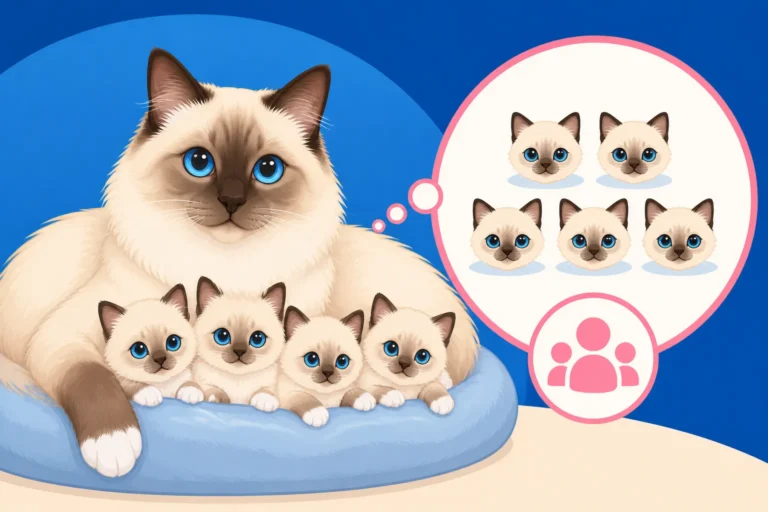
Against all odds, the female Birman, often called Sita in early accounts, made it to France alive. Her resilience speaks volumes about the breed's inherent hardiness, despite the challenges she must have faced. She arrived, weary but carrying the hope of the entire breed within her. It’s believed she was pregnant upon arrival, or conceived shortly thereafter, which was incredibly fortunate. This meant that although one of the original pair was lost, her offspring would carry forward the precious Birman genes.
Sita's arrival was not just a small victory; it was the foundation. Every Birman cat alive in the Western world today can trace its lineage back to this single, courageous queen and her immediate descendants. Her genetic contribution was immense, forming the cornerstone of the breed's establishment. Breeders had to work diligently from this incredibly narrow base, a stark reminder of the challenges and dedication involved in those early days.
Establishing the Birman Lineage in France
With Sita's arrival and the subsequent birth of her kittens, the task of establishing the Birman as a recognized breed in France began in earnest. This was a dedicated effort by early cat fanciers who were determined to preserve and promote these unique felines. The key was to carefully manage breeding to highlight the desired traits while ensuring the health and viability of the nascent population.
The Rise of Poupee de Madalpour
Among Sita's offspring, one particular female kitten stands out in the Birman's early history: Poupee de Madalpour. She, along with a male named Dieu d'Arakan (whose exact origin is sometimes debated, possibly another early import or a carefully selected outcross), became the breeding pair most widely credited with solidifying the Birman's genetic lines in France. Poupee de Madalpour is often cited as the direct ancestor of all modern Birmans. Her importance cannot be overstated; she carried forward the torch passed down by her mother, ensuring the propagation of the breed's distinctive characteristics.
The genetic legacy What Poupee de Madalpour Passed to Every Birman is truly remarkable, considering the limited starting point. Early breeders focused on selectively breeding for the characteristic long, silky coat, the striking blue eyes, and, of course, the signature white 'gloves' on the paws and 'laces' on the back legs. These were the hallmarks that set the Birman apart and captivated enthusiasts. To widen the gene pool and prevent excessive inbreeding, responsible outcrossing with other long-haired, color-pointed breeds like Persians and Siamese was likely employed in the early stages, gradually breeding back to pure Birman type.
Formal Recognition and Breed Development
The dedication of these early French breeders paid off. The unique beauty and placid temperament of the Birmans quickly gained admirers. By 1925, just six years after the initial shipment, the Birman cat was officially recognized by the French cat registry, the Federation Feline Française. This formal recognition under the name "Sacre de Birmanie" (Sacred Cat of Burma) was a crucial milestone. It validated the breed's existence and established a standard against which future Birmans would be judged. When France Registered the Sacre de Birmanie marks this important moment.
This period of early development wasn't without its challenges, however. The breed's population was still very small, making it vulnerable to genetic issues and the impacts of external events, as would be devastatingly demonstrated during World War II. Yet, the foundational work done in the years immediately following the 1919 shipment and Sita's arrival laid the essential groundwork for the Birman to survive and eventually thrive. Breeders were not only preserving a lineage but also shaping the future characteristics of the breed.
Beyond Legend: The Birman's Documented History and Modern Care
While the mythical stories of the Birman's origins are beautiful and add to their mystique, understanding the documented historical journey from that 1919 shipment gives us a more grounded appreciation for these cats. It highlights the immense effort and careful breeding that went into establishing and preserving the breed. Knowing this history helps modern Birman owners appreciate the lineage of their companions and understand the importance of ongoing responsible care.
Connecting History to Modern Breeding Practices
The challenges faced by those early breeders, stemming from a very small founder population, have implications even today. It underscores why reputable Birman breeders today are so meticulous about genetic health testing. Conditions like Hypotrichosis (FOXN1) and Polycystic Kidney Disease (PKD) are areas where breeders actively test to ensure the health of their lines, preventing the passing on of undesirable traits that can become more prevalent in breeds with a narrow genetic base. This historical context emphasizes the importance of transparency in breeding.
When looking for a Birman kitten, it's wise to engage with breeders who are open about their cat's pedigrees and health clearances. They often use resources like Chewy to source specialized kitten food for their growing youngsters, ensuring optimal nutrition during those crucial early months. They understand that a healthy start is paramount for a long, happy life, especially for a breed with such a unique, concentrated lineage.
Ensuring Your Birman's Well-being Today
Even though the era of perilous sea voyages for cats is thankfully behind us, caring for a Birman still requires dedication. Their beautiful, silky single coat, for example, needs regular grooming to prevent tangles and mats. While it's generally easier to maintain than some other longhaired breeds, a good quality comb and brush, perhaps from Chewy, are essential tools. Their placid nature, while endearing, can sometimes lead them to hide discomfort, making regular vet check-ups important.
Furthermore, ensuring your Birman has a stimulating and comfortable environment is key. They are social cats who thrive on companionship. While they might not be as boisterous as some breeds, they benefit greatly from interactive play, cozy sleeping spots, and a nutritious diet. Many owners find a good selection of high-quality cat food, toys, and even specialized low-dust litter (essential for keeping those white gloves pristine!) readily available through online retailers like Chewy, making it easier to meet all their Birman's needs. Understanding their history, from that brave 1919 journey to their development in France, really helps us appreciate the magnificent, gentle creatures they are today and reminds us of our responsibility to continue their legacy of health and happiness.
Disclaimer
This article is for general informational purposes only and does not constitute professional advice. Laws, prices and regulations vary by location and change over time. Consult a qualified professional for guidance on your specific situation.