How Deep a Birman’s Blue Eyes Should Be
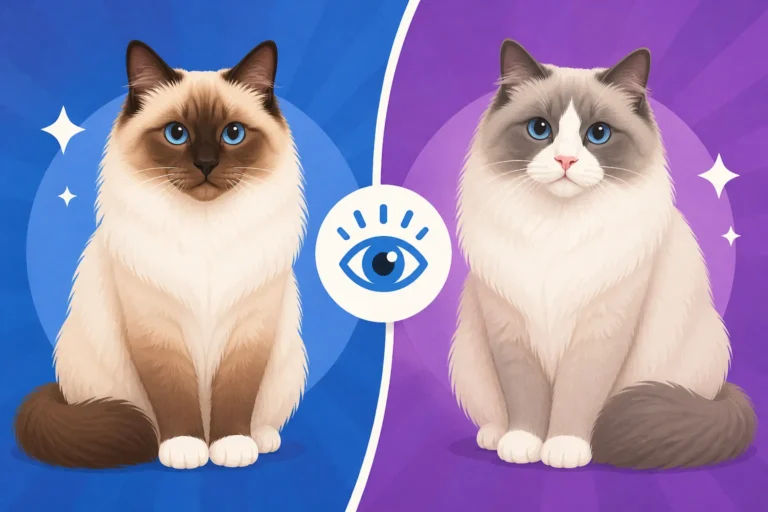
A Birman’s eyes should be a clear, vivid blue, with deeper sapphire tones generally preferred in the show ring. But the color can look lighter or darker depending on lighting, age, and the angle you’re viewing it from. This guide explains what “deep blue” means, how to assess it fairly, and when a change deserves a veterinary check.
What deep blue means in a Birman
The breed standard favors vivid color
Birman standards call for blue eyes, and show standards commonly favor a deep, rich shade. “Deep” does not mean the eyes should look dark navy or nearly black. The ideal is a noticeable, saturated blue that remains easy to see across the iris, rather than a washed-out pale blue.
The wording and judging details can differ among registry standards, so “deep blue” is best understood as a description of quality rather than a precise color measurement. There is no household test, color chart, or phone app that can determine whether a Birman’s eyes meet a show standard. Lighting, camera processing, and screen settings can all shift how blue looks in a photograph.
For an overview of the breed’s expected eye color, see Which Eye Color a Birman Must Have. The key point is simple: a Birman’s eyes should be blue, but the exact shade can vary from cat to cat.
Eye color is part of the pointed pattern
The Birman’s blue eyes are associated with the same temperature-sensitive pigmentation pattern that gives the breed its darker points. The body is generally lighter, while cooler areas such as the face, ears, paws, and tail develop darker color. The eyes have reduced pigment, which contributes to their blue appearance.
This is why the blue is not simply a decorative feature that can be judged independently of the rest of the cat. It is part of the breed’s overall look, alongside the point color, coat, and distinctive white feet. Still, a particularly deep eye color does not prove that a cat is healthier, better bred, or more suitable as a pet.
If you are comparing a Birman with another blue-eyed breed, remember that eye color alone is not a reliable way to identify breed. Pedigree, body type, coat, and markings all matter. A cat with pale blue eyes is not automatically a Birman, and a Birman’s eyes do not need to look identical to another Birman’s to be normal.
Show preference and pet health are different questions
A judge may prefer a richer blue than another judge, and a pale shade may be considered less desirable under a particular standard. That is a matter of conformation and presentation, not a diagnosis. A pet Birman with lighter blue eyes can be perfectly well.
The distinction matters if you are choosing a kitten. It is easy to focus on eye shade in photographs, especially when comparing littermates, but a kitten’s health, temperament, and care history are much more important than whether its eyes look especially dark in one picture. A breeder should be willing to discuss health and provide relevant records rather than relying on eye color as proof of quality.
For the show-ring perspective, Why a Pale Eyed Birman Is Penalized explains why a lighter shade may affect judging. That does not mean a pale-eyed Birman is unwell or less deserving of a loving home.
Why a Birman’s eyes can look lighter or darker
Lighting changes what you see
Blue eyes can look strikingly different under warm indoor bulbs, cool daylight, shade, or direct sun. A Birman’s eyes may appear pale blue in a dim room, then look much richer near a window. Reflections from walls and furniture can also affect the color you perceive.
When comparing eye color, look at your cat in soft, indirect daylight. Avoid drawing conclusions from flash photographs: flash can create glare, flatten detail, or make the iris appear unusually light. A close-up taken on a phone may also apply automatic color correction, so it is not a dependable way to compare one cat with another.
A simple observation routine can help. Look at both eyes in similar natural lighting, from a comfortable distance, and compare them with what is usual for your cat. The aim is not to grade the shade at home; it is to notice whether the eyes look consistently clear and familiar.
Kittens’ eyes develop as they grow
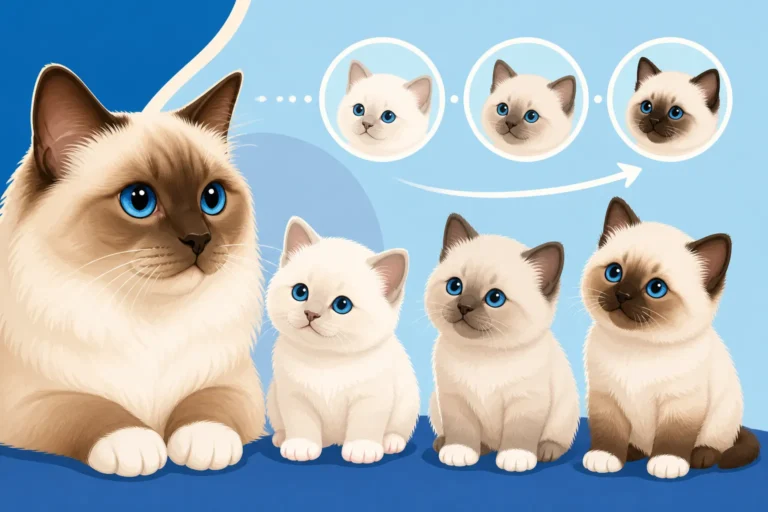
A kitten’s eye color can change as it matures. The shade may become more established over time, so a young Birman’s eyes should not be judged as though they were already at their adult appearance. The timing and final intensity can vary between individuals.
This can be confusing when a kitten’s eyes seem lighter than the deep blue you expected from breed photos. Photographs online often show adult cats in carefully chosen lighting, while a young kitten may still be developing. A breeder can explain what they observe in the kitten and its relatives, but no one can guarantee an exact adult shade from a single early photograph.
For more on the timing, read When a Birman's Eye Color Reaches Full Blue. Even after the color looks established, ordinary changes in lighting can make the eyes appear different from one day to the next.
Age and photography can affect comparisons
Adult eye color should generally remain recognizable, but an older cat may look different in photographs because of lighting, camera exposure, or changes elsewhere in the eye. A pale-looking image is not enough to conclude that the iris itself has changed.
A gradual difference in apparent brightness may also be easier to notice when comparing current photos with older ones. Before worrying, take a fresh look in natural light and check whether both eyes are clear, comfortable, and similar to their usual appearance. If the change is genuinely new, one-sided, or accompanied by other symptoms, contact your veterinarian rather than treating it as a breed-standard issue.
| What you notice | Possible explanation | Sensible next step |
|---|---|---|
| Eyes look paler in a dim room | Lighting or reflection | Recheck in soft natural daylight |
| A kitten’s eyes look lighter than an adult’s | Normal development may still be underway | Ask the breeder or veterinarian about the kitten’s age and exam |
| Eyes look different in a phone photo | Flash, exposure, or color processing | Compare in person rather than relying on the image |
| One adult eye changes noticeably | A change that needs professional assessment | Arrange a veterinary examination |
| Cloudiness, redness, squinting, or discharge appears | Possible eye discomfort or illness | Contact a veterinarian promptly |
When eye appearance is a health concern
A shade difference is not the same as an eye problem
A Birman can have eyes that look lighter or darker than the breed ideal and still have healthy eyes. Conversely, eyes that appear beautifully deep blue are not proof that everything is medically well. Color is one visual feature; comfort, clarity, and normal function matter more when you are thinking about health.
Pay attention to changes from your cat’s own normal appearance. A sudden shift, one eye that looks different from the other, cloudiness, redness, swelling, frequent blinking, squinting, or unusual discharge should not be dismissed as a simple variation in blue shade. Cats often hide discomfort, so subtle signs can be easy to miss.
If an eye looks painful or the change is sudden, seek veterinary advice promptly. Do not put human eye drops, leftover pet medication, or home remedies into the eye unless a veterinarian has specifically advised you to do so. Eye problems can have different causes, and the wrong product may make matters worse or delay appropriate care.
Blue eyes are not, by themselves, a health risk
Birman blue eyes are a normal feature of the breed, not a warning sign on their own. Their color does not mean a cat is automatically deaf, visually impaired, or prone to a particular eye disease. If you have concerns about vision or hearing, judge those concerns by the cat’s behavior and veterinary examination, not by eye color alone.
That distinction can be reassuring for owners who have heard broad claims about blue-eyed cats. The Birman’s coat pattern and eye color are part of its breed appearance, but they should not be confused with an illness. For a closer look at this concern, see Why a Birman's Blue Eyes Are Not a Health Risk.
Routine veterinary visits are still important. A veterinarian can assess the eyes as part of a general examination and advise you if something needs follow-up. For a broader overview of what to watch for, Why a Birman's Eyes Should Be Checked at Every Visit covers why regular checks are useful even when your cat seems comfortable.
Keep home care gentle and limited
Most Birmans do not need their eyes cleaned on a schedule just because they are blue. If there is a small amount of debris at the corner, use a clean, soft pad dampened with warm water and wipe gently around the eye. Use a separate clean pad for each eye, and do not rub the surface of the eyeball.
If your veterinarian recommends a specific eye-cleaning product, follow their instructions and check that the product is intended for cats and suitable for the reason you are using it. If you order pet supplies through a retailer such as Chewy, read the label carefully and confirm any product choice with your veterinary clinic when there is active redness, discharge, or irritation. A retailer can help you obtain supplies; it cannot determine what is causing an eye symptom.
Avoid cotton swabs near the eye, fragranced wipes, human contact-lens products, and whitening products intended for fur. These are not substitutes for an examination. For gentle routine cleaning guidance, see How to Clean a Birman's Eye Corners. If the discharge keeps returning or the eye looks sore, arrange a veterinary check rather than repeatedly wiping it away.
Assessing eye color when choosing or caring for a Birman
Look at both eyes in person
If you are visiting a kitten or adult cat, observe both eyes in steady, natural light. Look for clear, evenly colored irises and a comfortable expression. Don’t rely on a single close-up image, and don’t ask a breeder to promise an exact shade that a young kitten will have as an adult.
A good breeder should be comfortable answering questions about the kitten’s development and veterinary care. Ask what examinations have been completed, whether the kitten has shown any eye symptoms, and what records will come with the cat. Eye color is one small part of the picture; the cat’s overall condition and the breeder’s transparency deserve more attention.
If a seller uses “rare deep blue eyes” as a reason to pressure you into a quick decision, slow down. Eye shade does not replace documentation, careful kitten care, or a responsible discussion of health. Make your choice based on the whole cat and the information you can review.
Record changes without trying to diagnose them
Once your Birman is home, it can help to take occasional photographs in similar lighting. The purpose is not to score color or to create a medical diagnosis. Consistent pictures can make it easier to notice a genuine change that might otherwise be hard to remember.
If something looks different, note when you first noticed it and whether it affects one eye or both. Also pay attention to behavior: rubbing the face, keeping an eye partly closed, avoiding bright light, or seeming less comfortable can be useful details to share with the veterinarian. A photograph may help explain what you saw, but it should not delay care if the eye seems painful.
Owners who use Chewy or another pet-supply retailer for routine needs can keep basic, vet-approved cleaning supplies on hand, but there is no need to stock up on medicated products “just in case.” If your cat develops persistent discharge or irritation, ask the clinic what to use and whether an appointment is needed. Chewy may be a convenient place to obtain recommended nonprescription supplies, but the treatment decision belongs with your veterinarian.
Choose health and comfort over a perfect shade
It is natural to admire the intense blue eyes shown in breed portraits. Still, a Birman’s eye color can be a matter of individual variation, and the show ideal is not a measure of affection, quality of life, or suitability as a companion. A gentle, healthy cat with somewhat lighter blue eyes can be every bit as much a Birman as one with a deeper shade.
If you are already living with a Birman, enjoy the eyes you have rather than comparing them constantly with edited photos. Watch for comfort and clarity, keep routine veterinary visits, and ask for help when a real change appears. That is a more useful standard for everyday care than trying to decide whether the blue is dark enough.
Disclaimer
This article is for general informational purposes only and does not constitute professional advice. Laws, prices and regulations vary by location and change over time. Consult a qualified professional for guidance on your specific situation.