Whether the Birman’s Legend Still Helps It Sell
A temple-cat story can make the Birman feel more captivating than an ordinary breed profile, but it cannot tell you whether a kitten is healthy, well raised, or genuinely pedigreed. This guide explains what the legend says, how it shapes the Birman’s appeal, and how to separate an evocative origin story from the practical facts worth checking before you bring a cat home.
What the Birman legend says
The story of Sinh and the temple
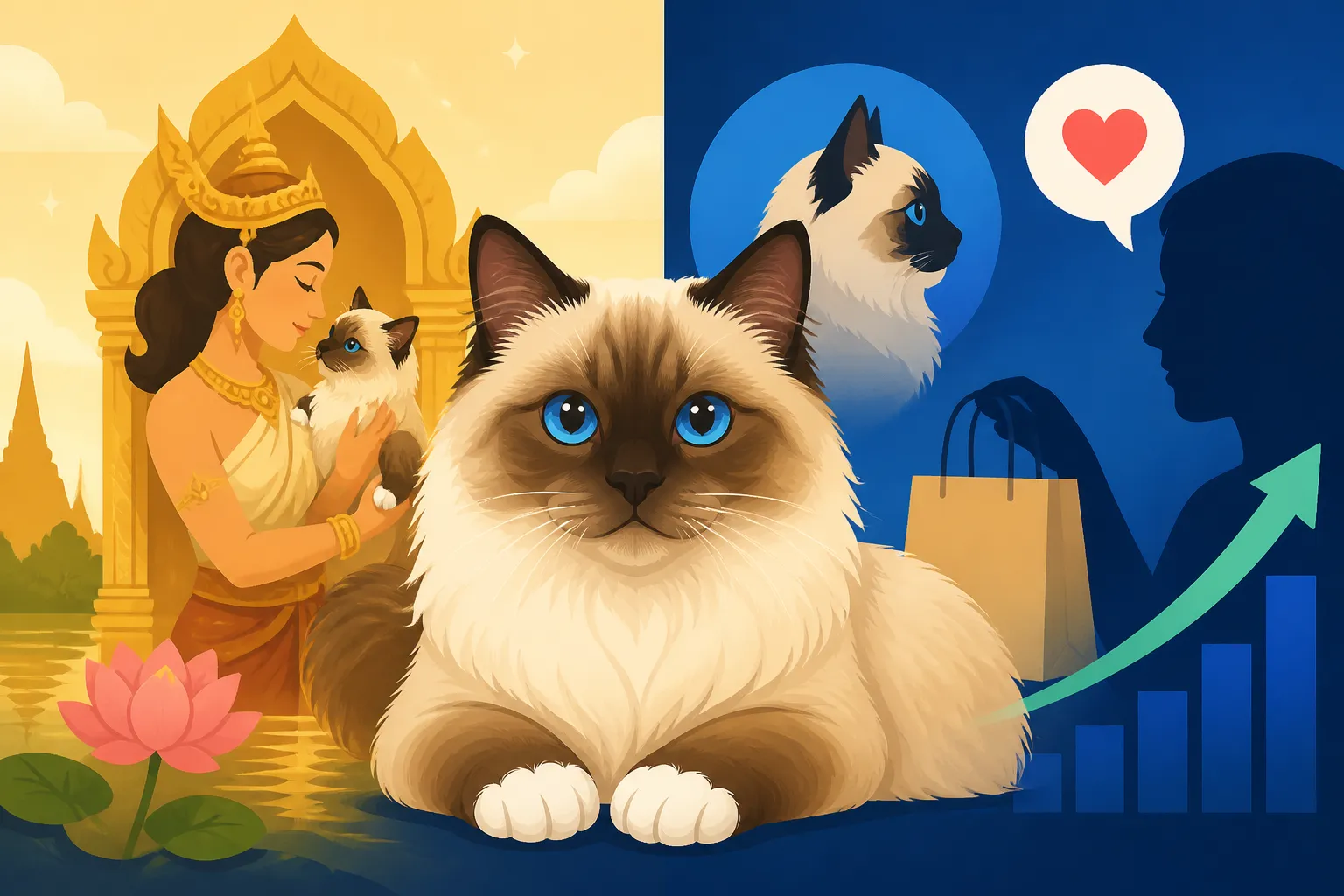
The Birman’s familiar legend is set in a temple in Burma, now Myanmar. In the tale, a priest named Mun-Ha worships the goddess Tsun-Kyan-Kse, and his white temple cat, Sinh, stays close beside him. When the priest is attacked, Sinh places his paws on his body and faces the goddess’s image.
The transformation that follows explains the Birman’s distinctive appearance. Sinh’s white coat becomes golden, his eyes turn a vivid blue, and his face, ears, legs, and tail darken. His paws remain white where they touched the priest. The story connects the breed’s dark points and white gloves with a sacred act of loyalty.
There are versions of the tale in which Sinh dies beside his owner, and the other temple cats take on similar coloring. It is a memorable piece of storytelling, especially when paired with a real Birman’s blue eyes and white feet. But it is a legend, not a verifiable record of how the breed was created. For more on the story itself, see Why the Birman Is Called the Sacred Cat of Burma.
What the legend does and does not explain
The legend gives the breed a narrative identity. It makes the Birman’s markings feel symbolic rather than merely decorative: the white gloves become part of a story about devotion, while the pointed coat and blue eyes seem linked to a sacred transformation. That can make the breed especially appealing to people who enjoy a strong story alongside a striking appearance.
It does not provide reliable historical evidence that Birmans lived in Burmese temples, or that the modern breed descends from a specific group of temple cats. A story may preserve cultural imagination or a breed’s cherished folklore without documenting its ancestry. The distinction matters because a compelling origin tale can sound factual when it is repeated in breeder descriptions, social posts, or casual conversations.
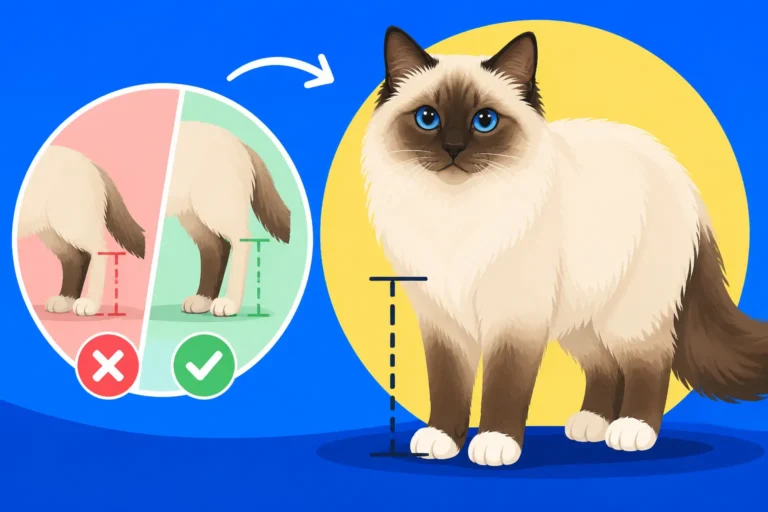
The legend also cannot explain the detailed genetics behind a Birman’s coat and markings. Its white gloves are a defining breed feature, but their appearance is not proof of sacred ancestry. For the genetics and breed-standard side of the question, The Gloving Gene Every Birman Carries Two Copies Of and What Judges Look For on a Birman's Paws First offer useful context.
How the legend became part of the Birman’s appeal
A story that makes a recognizable cat memorable
Many breeds are described through physical traits: coat length, body shape, eye color, or temperament. The Birman has those features too, but the temple legend gives people a ready-made story to remember. Someone might forget a list of coat colors, but remember a blue-eyed cat whose white paws are said to have been changed by a moment of devotion.
That story can shape first impressions. A person browsing breed profiles may feel drawn to the Birman not only because it is beautiful, but because the folklore suggests gentleness, loyalty, and a calm presence. Those associations are emotionally attractive, especially to someone hoping for a companion who feels like a meaningful addition to the household.
Still, a legend is not a temperament guarantee. Individual cats vary, and the way a kitten is socialized, cared for, and matched to a home matters far more than folklore when you are trying to predict day-to-day behavior. If the story is part of what attracts you, it is perfectly reasonable to enjoy it; just treat it as cultural color rather than a promise about the cat you will meet.
Where folklore ends and breed history begins
The Birman’s documented history is usually discussed through its development and recognition in Europe, rather than through a confirmed line of temple cats. That documented history is less magical than the legend, but it is more useful for understanding how the modern breed came to be. The Birman Is the Sacred Cat of Burma, and the Story Is a Legend explores the difference between the traditional tale and what can be established as breed history.
The distinction is especially important because the story is sometimes presented as if it proves the breed’s ancient origin. A careful account should identify the temple narrative as legend and describe the breed’s documented history separately. That approach does not take anything away from the story; it simply lets readers enjoy the folklore without confusing it with records of breeding and recognition.
| Question | What the legend can offer | What it cannot establish |
|---|---|---|
| Why are the Birman’s paws white? | A memorable symbolic explanation | The genetic cause of the markings |
| Did Birmans live in Burmese temples? | A traditional story about sacred cats | Verifiable evidence of the modern breed’s ancestry |
| Is a Birman naturally gentle because of the legend? | A charming association with devotion | The temperament of a particular cat |
| Is a kitten authentic because its seller repeats the tale? | A sense of breed identity | Pedigree, health screening, or responsible breeding |
Does the legend still help the Birman sell
It can attract attention, but it should not make the decision
The legend can help a breed stand out in a crowded search for a companion animal. A distinctive story is easy to retell, and the Birman’s appearance gives that story an immediate visual hook. For a prospective owner, the combination of blue eyes, pointed coloring, white gloves, and temple folklore can make the breed feel unusually memorable.
But attracting attention is not the same as being a sound reason to choose a cat. A buyer may be captivated by the story and then discover that their home, schedule, or expectations do not suit the individual animal. The practical questions remain the same: Can you provide companionship, routine veterinary care, safe indoor living, and the grooming and attention this particular cat needs?
It also helps to separate the story from sales language. If a seller uses the legend to create urgency or to imply that a kitten is more valuable, more authentic, or spiritually special, pause and ask for verifiable information. A lovely tale should add interest to a conversation, not replace clear answers about a kitten’s background and care.
What matters more when choosing a Birman
A responsible decision starts with the cat’s welfare and the breeder’s transparency. Ask what health screening has been done in the family line, what veterinary care the kitten has received, how the kittens are socialized, and what records will accompany the kitten. Be cautious if a seller answers basic questions with folklore, grand claims, or pressure to send money quickly.
Also ask to see relevant paperwork and understand what it does and does not prove. Registration documents, health records, and a written agreement each serve different purposes. No single story or certificate answers every question about health, temperament, or future care. Which Registries Recognize the Birman Today can help explain the role of registration, while What Nobody Tells You Before Buying a Birman is a useful companion read for thinking through ownership beyond the first impression.
If you are comparing kittens, pay attention to how the animals are being raised and how the breeder talks about their needs. A careful breeder should be willing to discuss the breed’s ordinary realities, not just its most romantic features. The Birman can be an affectionate companion, but no cat comes with a guaranteed personality simply because a legend calls it sacred.
How to enjoy the folklore without being misled
Use the story as a starting point for better questions
The temple tale can be a pleasant way to begin learning about the Birman. From there, follow up with questions about the breed’s documented history, appearance, care, and health. That gives you a fuller picture than relying on a dramatic origin story alone.
For example, if a profile says the white paws are a sign of divine blessing, you can enjoy the image and then learn how white gloves are assessed in the breed standard. If a seller describes Birmans as naturally calm, ask how the kittens have been handled and exposed to everyday household experiences. Turning a romantic claim into a practical question keeps the conversation grounded without requiring you to dismiss the folklore.
The same approach applies after you bring a cat home. You can tell the legend to guests and still treat your Birman as an individual, with preferences and needs that may not match the story. Maybe your cat is confident with visitors; maybe it prefers a quiet room. Its behavior is worth observing on its own terms.
Keep shopping and care decisions separate from breed mythology
Folklore may make someone curious about the breed, but it is not a guide to feeding, grooming, or veterinary care. For example, Chewy can be one place owners browse for general cat supplies, but a retailer’s product listings are not a substitute for veterinary advice or a breeder’s health records. When considering food or litter, focus on your cat’s actual needs, any advice from your veterinarian, and whether a product suits your household.
That distinction is useful when browsing online. A breed article may help you understand common coat traits, while a retailer such as Chewy may help you look at practical supply options. Neither source, by itself, verifies a kitten’s pedigree or predicts its health. For day-to-day care questions, speak with your veterinarian and use reliable, breed-specific guidance such as No Undercoat Is What Makes a Birman Easy to Groom.
If you enjoy ordering ordinary supplies from Chewy, keep that task separate from evaluating a breeder. Compare options based on your cat’s needs rather than assumptions based on the sacred-cat story. A Birman’s legend can enrich your appreciation of the breed; it should not determine which food, health plan, breeder, or kitten is right for you.
Ultimately, the legend still helps the Birman sell in the broad sense that a memorable story can make people notice and remember the breed. Whether it should influence an individual purchase is another matter. Let the tale spark your curiosity, then base your decision on the cat in front of you, the care it has received, and the realistic fit between its needs and your home.
Disclaimer
This article is for general informational purposes only and does not constitute professional advice. Laws, prices and regulations vary by location and change over time. Consult a qualified professional for guidance on your specific situation.