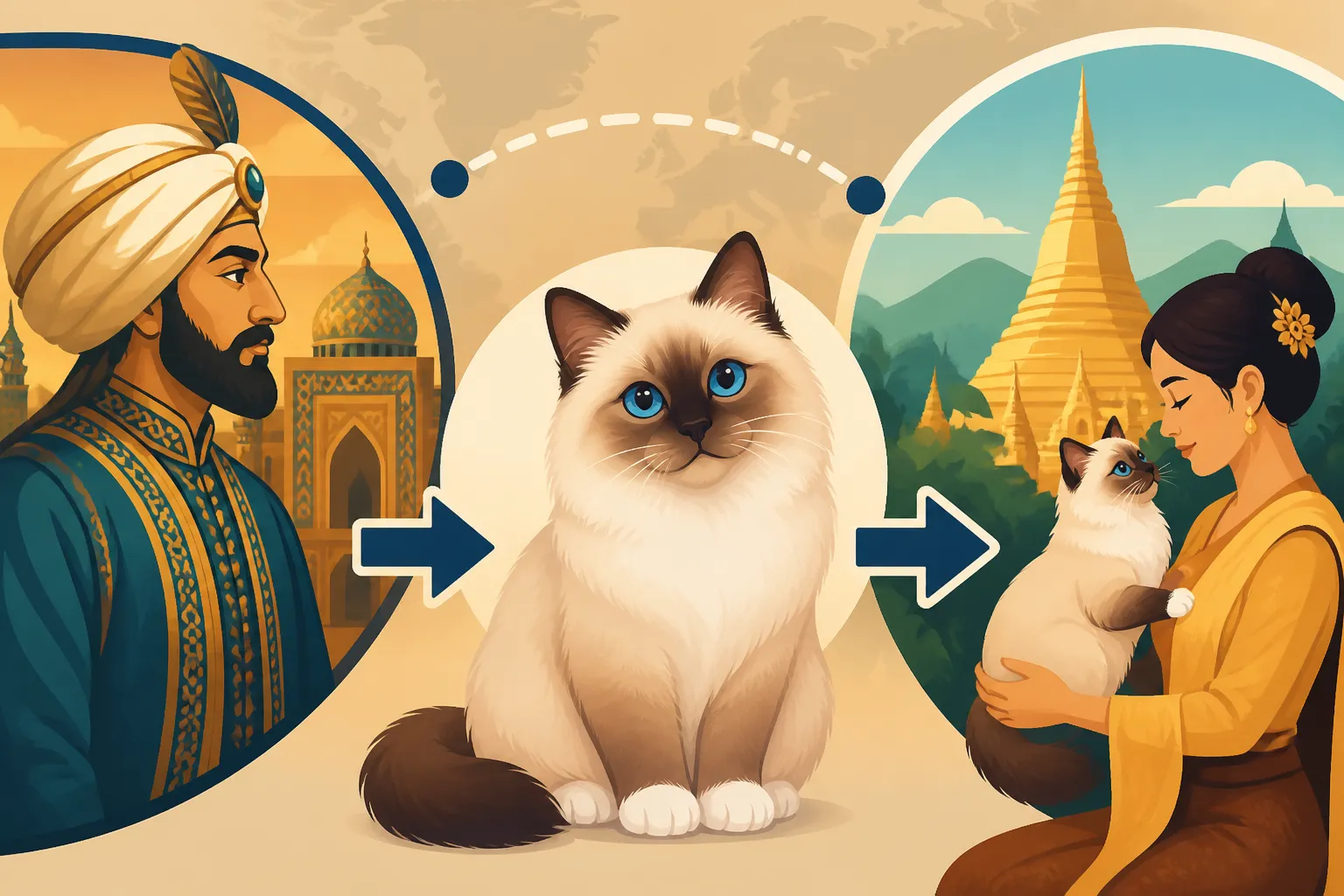
Why PKD Reached the Birman Through the Persian
It's a disheartening thing for any Birman cat owner to discover that their beloved feline friend might be at risk for a serious inherited kidney condition. We fall in love with their gentle natures and stunning blue eyes, often unaware of the intricate genetic history that shapes their health. Today, we're going to dive deep into understanding Polycystic Kidney Disease (PKD) in Birmans, specifically tracing its surprising connection back to the Persian cat breed and how historical events unintentionally brought this challenge into their lineage.
Understanding Polycystic Kidney Disease in Cats
Polycystic Kidney Disease, or PKD, is a genetic disorder that affects various cat breeds, most notably the Persian and Persian-derived breeds. It’s a condition where numerous fluid-filled cysts form in the kidneys, gradually enlarging and ultimately leading to kidney failure. This isn't just a minor inconvenience; it's a progressive, debilitating disease that can significantly impact a cat's quality of life and lifespan.
What PKD Is and How It Progresses
Imagine your cat's kidneys, those vital organs that filter waste from the blood, slowly being taken over by tiny, then larger, fluid-filled sacs. That's essentially what happens with PKD. These cysts are present from birth, but they are often microscopic and don't cause problems in young kittens. As the cat ages, these cysts grow in size and number, eventually crowding out healthy kidney tissue. This progressive destruction leads to impaired kidney function, which can manifest as increased thirst, frequent urination, weight loss, lethargy, and a dull coat. The sad reality is that once these symptoms become obvious, a significant amount of kidney damage has often already occurred. This silent progression is one of the most frustrating aspects of the disease for pet parents.
The disease's severity can vary greatly between individual cats, even within the same litter. Some cats might develop kidney failure by age three or four, while others might not show significant signs until much later in life, perhaps around seven to ten years old, or even longer. This variability makes it particularly insidious and challenging to predict without proper genetic testing. When these cysts do finally cause problems, the symptoms are similar to those of chronic kidney disease from any other cause, making early diagnosis through specific PKD screening all the more crucial. Knowing what kidney cysts do to a Birman is essential for proactive care.
The Genetic Basis of PKD1
The good news, if there can be any in such a situation, is that PKD in cats is caused by a single, dominant gene mutation, specifically PKD1. What does "dominant" mean in this context? It means that a cat only needs to inherit one copy of the mutated gene from either parent to develop the disease. If a cat inherits two copies of the normal gene, it will not have PKD. If it inherits one normal and one mutated gene, it will develop PKD and is considered "affected." And here's the kicker: if it's affected, it will pass that mutated gene on to approximately 50% of its offspring, regardless of whether it shows severe symptoms itself.
This dominant inheritance pattern is a double-edged sword. On one hand, it means that if a cat tests negative for the PKD1 mutation, it is truly clear and cannot pass the disease on. On the other hand, it means that every affected cat, even those with mild symptoms, carries the potential to spread the gene through breeding if not tested. This makes responsible breeding practices absolutely paramount. There is a clear genetic test available, usually done via a simple cheek swab, that can definitively determine a cat's PKD1 status. This test, often performed alongside others, reveals What Testing a Birman for FOXN1 and PKD1 Together Costs, making it an accessible screening tool for breeders.
The Birman's Post-War Rebuilding and Outcrossing
To understand why PKD became a concern for Birmans, we need to take a historical detour back to the aftermath of World War II. The Birman breed, like many others, faced near extinction during this tumultuous period. This historical bottleneck is a crucial piece of the puzzle.
The Dire State of the Birman Breed Post-WWII
World War II devastated Europe, and its impact wasn't limited to human populations and infrastructure; it profoundly affected many pedigreed animal breeds, including the Birman. Before the war, Birmans were relatively rare even in their adopted homeland of France, let alone elsewhere. The chaos, rationing, and destruction of the war made it incredibly difficult, if not impossible, for breeders to maintain their catteries, feed their animals, and ensure safe breeding conditions. Many lines simply died out.
By the end of the war, the Birman breed was on the brink of vanishing entirely. It's widely understood that the entire modern Birman population can be traced back to just two surviving cats, Orloff and Xenia de Kaabaa, born in 1945. This tiny gene pool, often referred to as a "bottleneck," meant an extreme lack of genetic diversity. While these two cats and their descendants were instrumental in preserving the breed's distinct characteristics, they also inherited all of the genetic strengths and weaknesses of those few surviving individuals. This period critically shaped How Two Cats in 1945 Shaped the Birman's Health, setting the stage for challenges later on.
The Necessity of Outcrossing to Save the Breed
With such a severely limited number of cats, pure breeding was not a sustainable option. Continued breeding from such a small pool would have led to severe inbreeding depression, manifesting as weakened immune systems, reduced fertility, smaller litter sizes, and an increased prevalence of other undesirable genetic health issues. To prevent the breed from fading away and to infuse much-needed genetic variety, Birman breeders made the difficult but necessary decision to engage in "outcrossing."
Outcrossing involves breeding purebred Birmans with cats from other breeds that shared some similar physical traits or temperaments, and then carefully breeding back to the Birman standard. This strategic infusion of outside genes was a desperate measure to widen the gene pool and bring vigor back into the struggling breed. Without it, the Birman as we know it today likely wouldn't exist. This period directly addresses Which Breeds Were Crossed In to Save the Birman.
The Role of Persian Cats in Birman Reconstruction
Among the breeds chosen for outcrossing, the Persian cat played a significant role. Persians were selected for a few key reasons: their long, luxurious coats, their placid temperaments, and their generally similar facial structure (though not as extreme as some modern Persians). Breeders hoped to maintain the Birman's distinctive silky fur and gentle disposition while introducing new genetic material. Other breeds like the Siamese were also used, but the Persian's contribution to coat and body type was particularly valuable in trying to recreate the classic Birman look.
While the outcrossing achieved its primary goal of saving the Birman breed from extinction and widening its gene pool, it came with an unforeseen consequence. Along with the desirable traits and genetic diversity, these introduced cats also brought their own genetic baggage. Many Persian lines, even then, carried the PKD1 mutation. This means that What Persian Blood Brought Into the Birman wasn't just physical characteristics; it was also a predisposition to certain genetic diseases.
Tracing the Introduction of PKD1 into the Birman Gene Pool
The introduction of the PKD1 gene into the Birman population wasn't a malicious act but an unfortunate consequence of necessary historical decisions and the limited genetic understanding of the time.
How Persian Genes Entered the Birman Lineage
When Persian cats were bred with the few remaining Birmans, their offspring were a mix of both breeds. These first-generation crosses didn't necessarily look exactly like Birmans, nor did they completely fit the Persian standard. The subsequent breeding strategy involved carefully selecting individuals from these mixed litters that most closely resembled the Birman ideal and then breeding them back to pure Birmans over several generations. The goal was to dilute the "non-Birman" traits while retaining the genetic diversity and vigor.
Each time a cat with Persian ancestry was incorporated into the Birman breeding program, it brought with it a proportion of the Persian gene pool. If any of those foundation Persian cats carried the dominant PKD1 gene, then 50% of their offspring would also carry it, regardless of their appearance. As these "restored" Birmans, now carrying a blend of original Birman and outcross genes, continued to reproduce, the PKD1 gene had the opportunity to spread quietly through the emerging Birman population. At the time, genetic testing for PKD didn't exist, so breeders had no way of knowing they were inadvertently introducing this challenging health issue. This is a clear example of What the Outcrossing Brought Into the Birman.
The Silent Spread of the PKD1 Gene
The insidious nature of PKD's spread lies in its late onset and dominant inheritance pattern. A cat carrying one copy of the PKD1 gene might not show any signs of illness until well into adulthood, if at all. This means a breeder could have a cat that appears perfectly healthy, is of excellent temperament, and has all the desired physical characteristics, yet it is silently passing on the PKD1 gene to half of its kittens. Without visible symptoms or a genetic test, there was no red flag.
For many years, breeders would simply see some of their Birman cats develop kidney issues later in life, perhaps attributing it to general aging or other common kidney ailments, without realizing a specific genetic link. It wasn't until the 1990s, when DNA testing for PKD1 became available, primarily for Persian cats, that the connection started to be made in other breeds. Researchers and conscientious breeders then began to investigate how deeply the gene had penetrated the Birman gene pool, realizing that it was a direct legacy of the post-war outcrossing with PKD-affected Persian lines. This explains Why a Birman Drinking More Points at Its Persian Ancestry, as increased thirst is a common sign of kidney issues.
The Impact and Management of PKD in Birmans
The discovery of PKD in Birmans was a wake-up call, but it also provided a clear path forward for responsible breeders and owners.
Screening and Diagnosis in Birman Cats
Thankfully, we now have excellent tools to identify PKD in Birmans. The primary and most reliable method is a DNA test. This test, usually performed on a simple cheek swab, identifies the specific PKD1 gene mutation. A cat can be clear (N/N), meaning it has two normal genes and will not develop PKD nor pass it on; or affected (N/PKD), meaning it has one normal and one mutated gene, will develop PKD, and will pass it on to half its offspring. Since the PKD1 gene is dominant, there's no "carrier" status in the traditional sense where a cat carries the gene but doesn't get the disease; if they have the gene, they will have the disease to some degree.
Beyond DNA testing, ultrasound can also be used to visualize the cysts in the kidneys. While ultrasound can detect the presence of cysts, especially in older cats, it's not as definitive as a DNA test for younger animals or for determining genetic status. A young cat might have cysts too small to be seen on ultrasound but still carry the gene. Therefore, DNA testing is considered the gold standard for screening breeding cats. For pet owners, knowing their cat's genetic status allows for proactive health monitoring and management. Veterinary clinics like those supported by Healthy Paws pet insurance often cover the diagnostic costs of such conditions, emphasizing the importance of early detection.
Living with a PKD Positive Birman
If your Birman tests positive for PKD, it doesn't mean immediate despair. Many PKD-positive cats live long, relatively comfortable lives, especially with early diagnosis and diligent management. The focus shifts to slowing the progression of kidney disease and managing symptoms as they arise. This typically involves several key strategies:
- Dietary Management: Special prescription renal diets are often recommended. These diets are formulated with controlled protein levels, reduced phosphorus, and increased omega-3 fatty acids, all of which can help reduce the workload on the kidneys and slow disease progression.
- Hydration: Encouraging water intake is crucial. This might mean feeding wet food exclusively, adding water to kibble, offering multiple water bowls, or using a pet water fountain. Good hydration helps flush waste products from the kidneys.
- Regular Veterinary Check-ups: Frequent vet visits are essential to monitor kidney function through blood and urine tests. Your vet will track parameters like BUN, creatinine, and phosphorus levels, along with urine specific gravity, to catch any declines early.
- Symptomatic Treatment: Medications can be prescribed to manage specific symptoms such as nausea, appetite loss, or high blood pressure, which often accompanies kidney disease.
While living with a PKD positive Birman requires commitment, it's about providing the best possible quality of life. Many Birmans continue to be their gentle, affectionate selves for years after diagnosis with proper care. It truly highlights the bond we share with these wonderful creatures.
Responsible Breeding Practices for Birmans
The existence of a reliable DNA test for PKD1 places a clear responsibility on Birman breeders. The primary goal of any ethical breeder should be to eliminate this debilitating disease from their lines. This is achieved through strict adherence to testing protocols:
- Test All Breeding Stock: Every Birman intended for breeding, both male and female, should be DNA tested for PKD1 before being bred. This is non-negotiable.
- Breed Only Clear Cats: The ideal scenario is to breed only cats that are genetically "clear" (N/N) of PKD1. If both parents are clear, all their kittens will also be clear and will never develop PKD.
- Strategic Management of Affected Lines: In rare cases, if an otherwise exceptional breeding cat is N/PKD (affected), it could theoretically be bred to a clear (N/N) cat to produce 50% clear offspring and 50% affected offspring. However, this is generally discouraged and should only be considered under strict veterinary and genetic counseling, with all affected offspring being placed in pet homes on neuter contracts. The ultimate goal remains to phase out the affected gene.
- Transparency: Responsible breeders should be completely transparent about their cats' PKD status, providing genetic test certificates to prospective kitten buyers. This is why a Birman breeder still tests for PKD, as it's a mark of integrity.
By consistently applying these practices, breeders can ensure that future generations of Birmans are free from the burden of PKD. This demonstrates a deep commitment to the health and longevity of the breed.
Broader Health Implications of the Birman's Founder Effect
The story of PKD in Birmans isn't just about one disease; it's a powerful illustration of the consequences of genetic bottlenecks and the importance of understanding a breed's entire health history.
The Limited Gene Pool and Other Genetic Concerns
The "founder effect" from which the Birman breed was rebuilt after the war meant that What a Narrow Founder Base Left in the Birman was not just a predisposition to PKD. Any genetic mutations, both good and bad, present in those few surviving foundation cats would have been amplified within the new population. This means that if those cats carried other recessive or dominant genetic predispositions, those too would have been passed down and become more prevalent than they might have been in a broader, more diverse gene pool.
This limited genetic diversity can potentially increase the risk for other inherited conditions or even make the breed more susceptible to common diseases due to a less robust immune system. While the Birman is generally considered a healthy breed with a good lifespan, understanding its historical genetic vulnerabilities is key. It's a testament to the dedication of generations of breeders that the breed has thrived despite these initial challenges. This broader understanding helps us appreciate the complexity of inherited health in purebred cats and why continuous genetic screening is so vital.
The Importance of Genetic Testing Beyond PKD1
The success in identifying and managing PKD1 in Birmans highlights the crucial role of genetic testing for all pedigreed breeds. It's not just about addressing existing known issues, but also about proactively preventing the spread of other potential problems. For Birmans, beyond PKD1, breeders and owners often consider screening for conditions like Hypotrophic Cardiomyopathy (HCM), a common heart disease in many breeds, and sometimes even the FOXN1 mutation (which causes Birman Hypotrichosis or 'naked kitten syndrome'). While HCM doesn't have a reliable DNA test yet and relies on echocardiograms, proactive screening for all known genetic issues is paramount.
A comprehensive approach to health includes not just genetic tests but also regular veterinary check-ups, appropriate vaccinations, and preventative care. For instance, reputable pet insurance providers like Healthy Paws often encourage and cover many of these diagnostic tests, demonstrating the industry's commitment to proactive pet health. By embracing modern veterinary medicine and genetic science, Birman enthusiasts can continue to strengthen the health of this beloved breed, ensuring that its future is as radiant as its past is legendary. The commitment to understanding and managing these genetic legacies is what truly allows the Birman to thrive for generations to come.
Disclaimer
This guide is intended for informational purposes only and does not constitute professional veterinary advice. Always consult with a qualified veterinarian for any health concerns or before making any decisions about your pet's health or treatment.