Which Two Cats Every Birman Descends From
It’s a truly heartbreaking thought to imagine a beloved cat breed on the brink of extinction, but that's precisely the grim reality the Birman cat faced not too long ago. Many Birman enthusiasts adore their quiet, affectionate companions, yet few truly grasp the dramatic, almost miraculous, story of how this entire lineage was saved by a mere two individuals. This guide will delve into the profound impact of World War II on the Birman breed and reveal the names of the two incredible cats from whom every single Birman walking the earth today descends.
The Birman's Pre-War History and Near Annihilation
Before we talk about the two pivotal cats, it’s important to understand the context of how the Birman arrived in Europe and the catastrophe that almost wiped them out entirely. The breed, often associated with the temples of Burma through its enchanting legend, first made its way to the Western world in the early 20th century, specifically to France. There's a captivating tale, often embellished, about how a pair was supposedly shipped from Burma, with only the female, Sita, surviving the journey to give birth to a litter in Nice in 1920.
From these initial imports and subsequent breeding efforts, the Birman started to establish a small but cherished presence in Europe. They were admired for their stunning blue eyes, striking color points, and the signature white "gloves" on their paws. Enthusiasts worked diligently to define the breed standard and expand their numbers, gradually spreading the Birman's gentle charm across France, Germany, and eventually, the UK. However, the shadow of World War II loomed large, and the subsequent years of conflict, hardship, and displacement proved devastating for many animal breeds, including the still-fragile Birman population. Keeping cats fed and safe was a luxury few could afford, and breeding efforts ground to a halt. The careful work of dedicated fanciers was undone, and the breed's very existence hung by a thread.
How Many Birmans Survived the Second World War
The stark reality is that the Birman breed was almost entirely lost during the chaotic years of World War II. Imagine a world where your favorite breed might simply cease to exist because of global turmoil. That was the peril faced by the Birman. Resources were scarce, catteries were abandoned or destroyed, and the focus of human survival left little room for the intricate care and breeding required for pedigreed cats. Records from that era are understandably sparse, but what is known paints a grim picture. It's widely accepted that the breed was reduced to an alarmingly small number of individuals. In fact, many historians and breed enthusiasts agree that only two documented Birman cats survived the war relatively unscathed and remained capable of contributing to the future of the breed. This near-total wipeout highlights the incredible vulnerability of purebred lines during times of crisis and underscores the monumental task faced by those who sought to resurrect the breed.
The Bottleneck That Defined the Birman's Future
This drastic reduction to just two known breeding cats created what is known as a genetic bottleneck. Think of it like pouring an entire ocean through a tiny funnel – a massive amount of genetic diversity is lost, and only a very small, often unrepresentative, sample makes it through to the other side. This bottleneck in the Birman's history meant that all future Birmans would inherit their genetic blueprint from this extremely limited foundation. It’s a profound moment in any breed's history, but for the Birman, it was truly a make-or-break situation. The characteristics, both desirable and potentially problematic, of these two surviving cats would become amplified across generations. Without careful management and dedicated efforts, the breed might not have recovered at all, or it could have emerged with significant health issues due to extreme inbreeding. The choices made by breeders immediately after the war would forever How Two Cats in 1945 Shaped the Birman's Health.
Orloff and Xenia de Kaabaa: The Architects of the Modern Birman
Emerging from the ashes of World War II, two cats stand as the undisputed foundation of every single Birman alive today. Their names are Orloff and Xenia de Kaabaa. These two incredible felines carried the sole genetic hope for the entire breed, a responsibility they unknowingly bore on their silky shoulders. They weren’t just any Birmans; they were the last Birmans, and their survival meant everything.
Orloff and Xenia de Kaabaa belonged to the Baudoin family, who were instrumental in sheltering these precious animals during the war years. Their dedication to the breed, even amidst personal hardship, is a testament to the enduring love and commitment of cat fanciers. These cats were not merely pets; they were living legacies, carrying the potential to revive a breed that had all but vanished. Without their resilience and the unwavering care provided by the Baudoins, the Birman as we know it today simply wouldn't exist.
Who Orloff and Xenia de Kaabaa Were
Orloff and Xenia de Kaabaa were a breeding pair, a male and a female, who managed to survive the conflict. Orloff was a majestic seal point Birman male, while Xenia de Kaabaa was a beautiful blue point Birman female. Their pedigrees, though somewhat difficult to trace due to wartime disruptions, connected them to the pre-war French Birman lines. They embodied the breed's characteristics that had captivated fanciers before the war: the distinct color points, the striking blue eyes, the semi-long, silky coat, and, of course, the iconic white gloves and laces.
Their importance cannot be overstated. When we discuss Which Two Cats Rebuilt the Birman, we are talking about Orloff and Xenia de Kaabaa. Every single Birman you see today, whether it's a pampered pet curled up on a sofa or a champion in the show ring, can trace its ancestry directly back to this resilient duo. They were, quite literally, the lifeline of the breed, a testament to endurance and the power of dedicated preservation efforts. It's an inspiring thought, knowing that the gentle cat purring on your lap is a direct descendant of such a crucial lineage.
The Immediate Genetic Impact of Their Lineage
The immediate consequence of rebuilding a breed from just two cats was an incredibly narrow genetic foundation. Imagine starting an entire population with only two individuals. Their genes, and only their genes, would form the entire gene pool for all subsequent generations. This means that any genetic traits, both good and bad, carried by Orloff and Xenia de Kaabaa would be passed down and fixed within the breed. This dramatically increased the coefficient of inbreeding within the Birman population.
While this narrowness ensured the survival of the core Birman type, it also meant that the breed was susceptible to any inherent genetic predispositions these two cats carried. For example, if either Orloff or Xenia had a recessive gene for a particular health condition, that gene would become much more prevalent in the population than it would have been in a larger, more diverse gene pool. This reality would shape the breed's health challenges for decades to come, leading to proactive health screening efforts that are still crucial today. Breeders had to proceed with extreme caution, carefully selecting subsequent mates to try and diversify the lines as much as possible, a delicate balance between preserving the breed and improving its genetic health. This is why understanding What Two Founder Cats Did to the Birman's Inbreeding Figure is vital for any prospective owner.
Rebuilding the Birman: Outcrossing and Diversification
With only Orloff and Xenia de Kaabaa as the foundation, the task of rebuilding the Birman breed was monumental. It wasn't enough to just breed them together; that would have led to an unsustainable level of inbreeding. To expand the gene pool and ensure genetic viability, careful outcrossing to other breeds was deemed necessary and became a critical strategy. This was a painstaking process, meticulously managed by dedicated breeders who understood the immense responsibility they carried. They weren't just breeding cats; they were safeguarding an entire heritage.
This period of recovery was truly a testament to human determination and passion. Breeders, working primarily in France, diligently recorded pedigrees, tracked traits, and made calculated decisions about which other breeds to introduce. The goal was to infuse new genetic material while maintaining the distinctive Birman look and temperament. It wasn't a quick fix, but a multi-generational project that slowly, but surely, brought the Birman back from the brink. Companies like Healthy Paws, providing pet insurance, understand the value of a well-documented genetic history, which began with these meticulous post-war efforts.
Why Post-War Outcrossing Was Unavoidable
Outcrossing, the practice of breeding a purebred animal with one of another breed, was absolutely essential for the Birman's survival. Imagine trying to bake a cake with only two ingredients for the rest of time – it wouldn't be very diverse or healthy. The genetic bottleneck created by having only Orloff and Xenia de Kaabaa meant that the breed's gene pool was dangerously shallow. Without introducing new genes, the risks of severe inbreeding depression – leading to reduced fertility, smaller litter sizes, weaker immune systems, and increased prevalence of genetic health conditions – would have been catastrophic.
Breeders had to make tough, strategic decisions. They needed to widen the genetic foundation while meticulously selecting cats that would not compromise the Birman's unique physical traits, such as its body type, coat texture, blue eyes, and those defining white gloves. This balancing act was critical for the long-term health and vitality of the breed, ensuring that the Birman not only survived but thrived once more. It's a prime example of Why Post War Outcrossing Was Unavoidable for the Birman.
What the Outcrossing Brought into the Birman
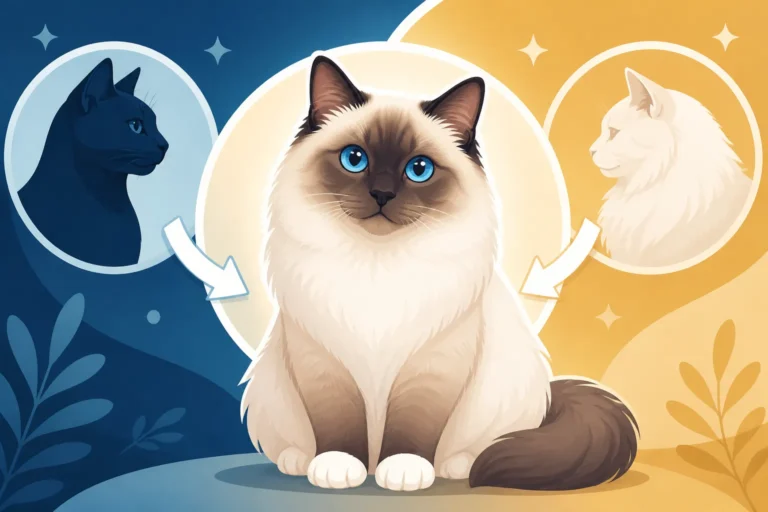
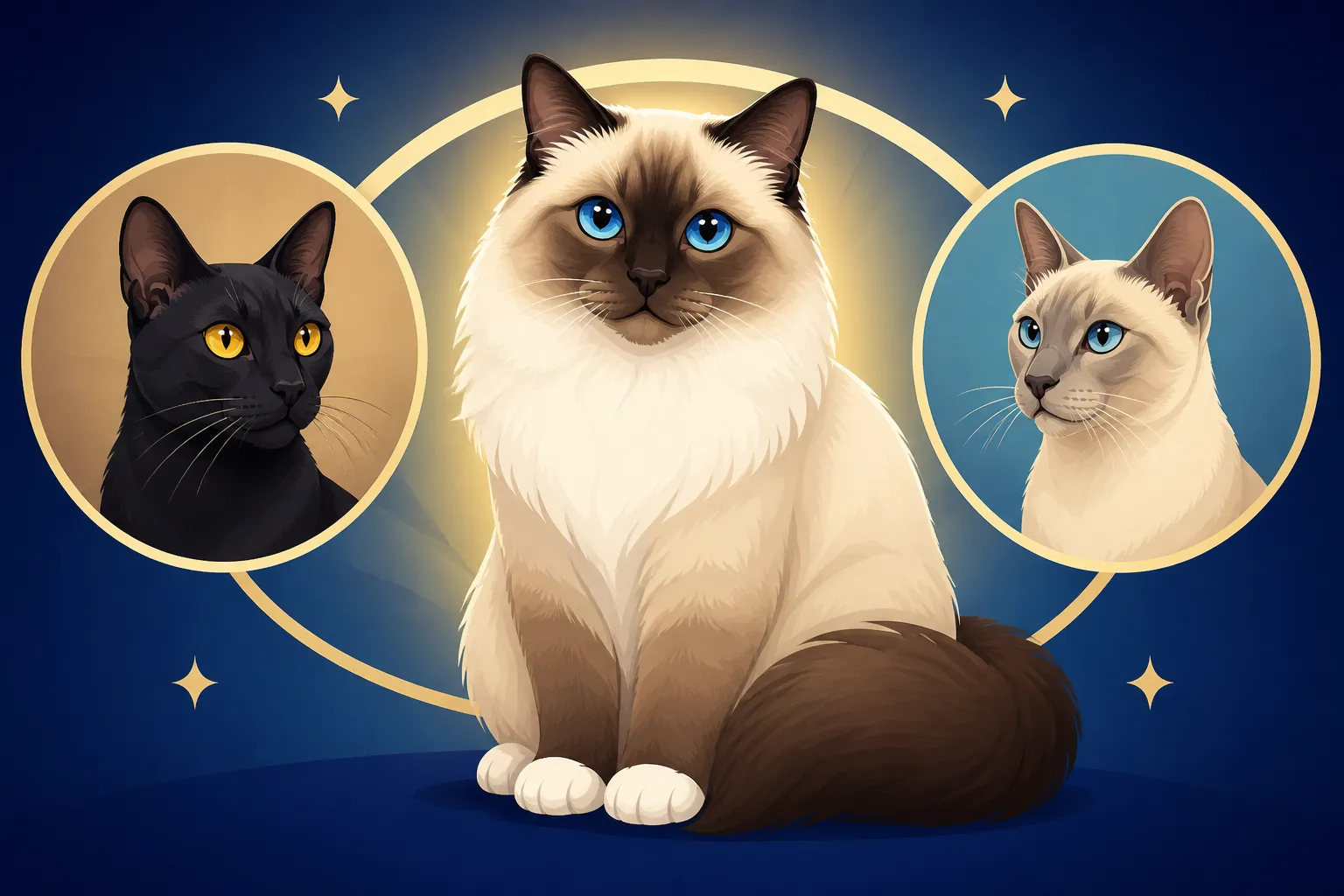
The most commonly accepted breeds used for outcrossing were the Persian and, to a lesser extent, the Siamese. These choices were logical: Persians offered a long, plush coat and a docile temperament, while Siamese contributed to the color point genetics and elegant body structure. However, these infusions weren't without their complexities.
The Persian cross, while providing much-needed genetic diversity and contributing to the Birman’s luxurious coat and rounder head shape, also introduced some genetic traits that breeders had to manage. For instance, the Persian gene pool brought in the potential for polycystic kidney disease (PKD), which is why testing for Why a Birman Breeder Still Tests for PKD remains important. Similarly, the Siamese influence reinforced the point coloration but also added to the task of refining the Birman’s specific facial structure and temperament, ensuring it remained distinct from its more vocal cousin.
The process of reintegrating these outcrossed lines back into the core Birman stock involved multiple generations of careful selective breeding. Breeders would cross an outcross cat with a Birman, then breed the offspring back to a Birman, and so on, until the distinctive Birman phenotype was re-established, along with an expanded, healthier gene pool. This extensive effort highlights why The Birman Was Rebuilt From Two Cats and It Shows in its enduring resilience and the careful management of its genetic heritage.
Today, while the Birman has a significantly wider gene pool than immediately after the war, its origins mean that a good understanding of its genetic history and potential predispositions is still paramount for responsible ownership. Regular veterinary check-ups and preventative care, perhaps supported by a strong pet insurance plan from providers like Healthy Paws, are always recommended for any purebred cat, but especially for breeds with such a compelling historical journey.
Understanding the Birman's Genetic Heritage
The story of Orloff and Xenia de Kaabaa is more than just a historical anecdote; it has tangible implications for every Birman cat and owner today. Understanding this narrow foundation helps us appreciate the breed's unique characteristics and the ongoing efforts to maintain its health and vitality.
| Aspect | Pre-War Birman Population | Post-War Bottleneck (Orloff & Xenia) | Post-Outcrossing Modern Birman |
|---|---|---|---|
| Number of Founders | Small but growing | 2 | Expanded via careful outcrossing |
| Genetic Diversity | Moderate | Extremely Low | Improved, but still managed |
| Inbreeding Coefficient | Manageable | Extremely High | Reduced, with ongoing monitoring |
| Disease Predisposition Risk | Varied | Amplified | Carefully screened and managed |
| Key Health Concerns | Undocumented extensively | Potential for inherited conditions | HCM, PKD, dental issues, etc. |
| Breeding Strategy | Expansion | Survival & Outcrossing | Preservation & Health Screening |
This table clearly illustrates the dramatic shift in the Birman's genetic landscape. The dedication of early breeders to carefully select and outcross saved the breed, but it also means that today's owners and breeders must remain vigilant about genetic health.
The diligent work done by breeders in the decades following the war has been incredibly successful. Today, the Birman is a robust and beloved breed, known for its generally good health and longevity, often reaching The Twelve to Sixteen Years a Birman Usually Gets. However, this success is built upon a foundation of careful health screening and responsible breeding practices, which trace their roots back to that critical post-war period. Knowing that your Birman shares a direct lineage with Orloff and Xenia de Kaabaa gives a deeper appreciation for the unique journey this breed has undertaken.
Disclaimer
This article provides general information and is not a substitute for professional veterinary advice. Always consult with a qualified veterinarian for any health concerns or before making decisions about your cat's care or treatment.