Why an Uneven Birman Glove Is a Show Fault
It's incredibly frustrating when you're trying to understand the intricacies of a purebred cat, especially something as specific as the Birman's "gloves," only to feel like you're navigating a secret society with its own unwritten rules. You hear whispers of "faults" and "mismarkings," but what does it all really mean, and why is an uneven glove such a big deal in the show ring? This guide is here to shed light on exactly why the careful balance and purity of a Birman's white paws are so crucial in the world of cat showing and what makes an uneven glove a significant show fault.
The Immaculate Birman Glove Standard: A Breeder's Obsession
The Birman cat is renowned for many things: its docile temperament, its striking blue eyes, and, of course, its perfectly white "gloves" on all four paws. These gloves are perhaps the most iconic and defining characteristic of the breed, a feature so central to its identity that it's woven into the very legends of its origin. For breeders, these gloves are not just a pretty detail; they are a hallmark of careful breeding and adherence to the breed standard, something they dedicate generations to perfecting.
What Defines the Perfect Birman Glove?
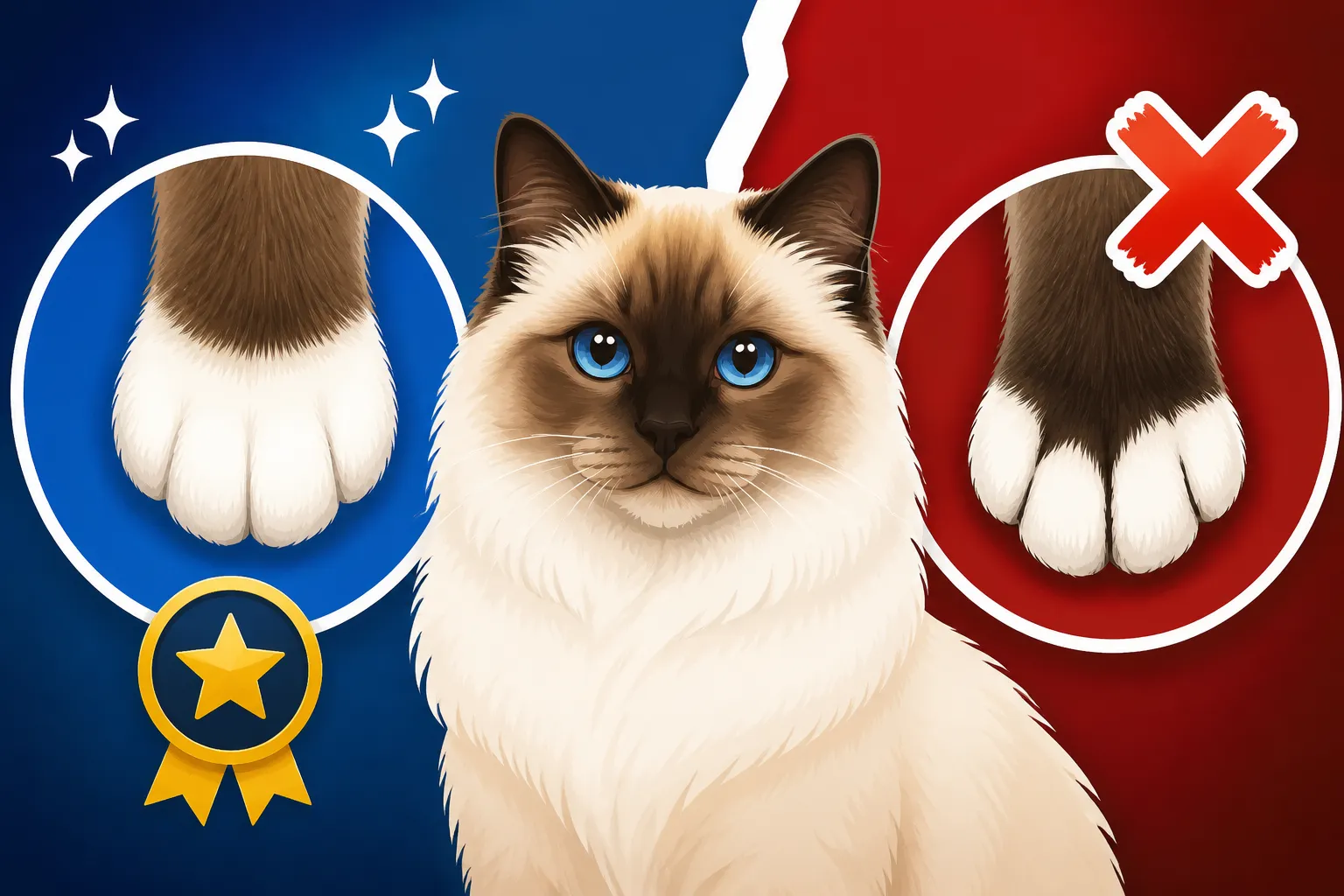
To understand an uneven glove as a fault, we first need to appreciate what constitutes the ideal. Imagine a Birman's paw dipped in pure white cream, stopping abruptly and evenly at a specific point. On the front paws, the white should be perfectly symmetrical and uniform, ideally ending in a straight line at the metacarpal-phalangeal joint, essentially where the toes meet the main part of the paw. There should be no breaks in the white, no stray spots of color, and the definition should be crisp and clean.
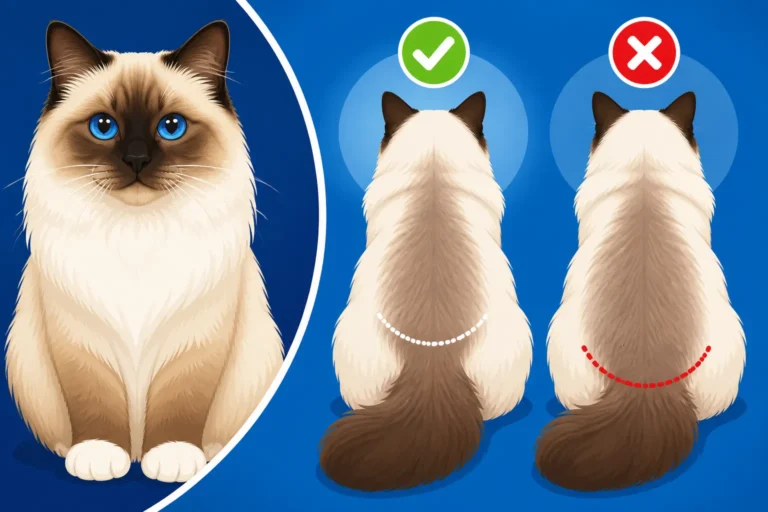
The back paws add another layer of complexity, featuring what are called "laces." These are extensions of the white gloves that run up the back of the hind legs. A perfect lace should be a clear, upward-pointing V-shape, extending roughly one-half to two-thirds up the hock (the ankle joint) and, critically, both laces must be of equal length and shape. The white on the pads of the paws should also be pristine, unblemished by any color. This combination of front gloves and back laces creates a unique and beautiful pattern that breeders strive tirelessly to achieve, often making it the most challenging aspect of their breeding program. Why Perfect Birman Gloves Are Almost Impossible to Breed delves deeper into these challenges.
The Importance of Symmetry and Purity in Show Birmans
Symmetry isn't just a preference; it's a non-negotiable requirement for a show-quality Birman. The breed standard, meticulously outlined by various cat associations, allocates a significant portion of points specifically to the gloves and laces. When a judge evaluates a Birman, one of the first things they'll look at is the balance and clarity of these white markings. This emphasis stems from the breed's history and its aesthetic appeal. The legend of the Birman cat often speaks of the goddess Tsen-Kyan-Kse granting a sacred cat golden fur and sapphire eyes, but leaving its paws pure white as a symbol of its purity and sacred duty. While a lovely story, it underpins the deeply ingrained expectation for unblemished, balanced white paws.
The purity of the white color is equally vital. Any yellowing, creaminess, or staining in the gloves is seen as a defect, as is any color bleeding into the white. This means even the choice of litter can impact a Birman's show readiness, leading many owners to select specific, low-dust, non-staining varieties. The expectation is that the white should be brilliant, crisp, and distinctly separate from the body color, creating a stark and beautiful contrast that highlights the Birman's unique appearance.
Understanding What Constitutes an "Uneven" Glove
So, with the ideal in mind, what exactly makes a glove "uneven" and thus a fault in the show ring? It's often subtle, but even a slight deviation from the standard can mean the difference between a champion and a pet-quality cat.
Common Variations That Lead to Faults
There's a whole spectrum of variations that can cause a Birman's gloves to be deemed uneven. On the front paws, you might see one glove extend higher up the leg than the other, or one might have a more rounded top edge while the other is straighter. Sometimes, a tiny "runner" – a thin streak of color – might extend into the white, or conversely, a small patch of white might appear higher on the leg, separate from the main glove. Any blotches of color within the white area, often referred to as "smudges," are also considered serious faults, disrupting the desired purity.
The back paws, with their laces, offer even more opportunities for unevenness. The laces might differ significantly in length, with one extending much higher or lower than the other. Their V-shape might be distorted on one leg, appearing more like a straight line or an irregular blotch. Sometimes, a back lace might be entirely absent on one leg, or perhaps a small spot of color breaks through the white on one hock, but not the other. These inconsistencies undermine the visual balance that judges are trained to look for. For a deeper dive, What Laces and Gauntlets Mean on a Birman's Price Tag explains how specific markings can influence value.
How Judges Assess Glove Evenness in the Show Ring
When a Birman enters the show ring, the judge performs a thorough, systematic examination. They will gently lift each paw, turning it to inspect the white markings from all angles. They'll compare the front gloves to each other, looking for symmetry in height and shape. Then, they'll turn their attention to the back paws, meticulously comparing the length, shape, and purity of the laces. They're looking for that perfect mirror image.
Each breed standard assigns a specific number of points to different physical attributes, and the gloves often carry a significant weight – sometimes as much as 10-20% of the total score. Even a minor unevenness, like one lace being slightly longer, or a tiny colored spot on a white glove, can result in point deductions. More significant faults, such as severely uneven gloves, distinct gauntlets (white extending too high up the leg like a sock), or large colored patches, can lead to disqualification from the winners' circle or, in extreme cases, from the competition entirely. This rigorous assessment ensures that only cats closest to the ideal breed standard receive top honors.
Table: Ideal Birman Gloves vs. Common Faults
| Feature | Ideal Standard | Common Uneven Faults |
|---|---|---|
| Front Paws | Pure white, even length, straight line at paw pad junction | One glove higher/lower, irregular top edge, colored smudges |
| Back Paws | Pure white, even V-shaped laces, extending ½-⅔ up hock | Laces unequal in length/shape, broken V-shape, no lace on one leg |
| Symmetry | All four paws and laces match perfectly in size and shape | Obvious imbalance between any two paws or laces |
| Color | Brilliant, unblemished white, no stray color | Yellowing, creaminess, colored spots, "runners" into white |
Beyond the Show Ring: The Impact of Uneven Gloves
While the focus on perfectly even gloves might seem overly particular to those outside the show circuit, these standards have real-world implications for breeders, the breed's genetic health, and even the price of a Birman kitten.
Uneven Gloves and Breeding Programs
For dedicated Birman breeders, the goal isn't just to produce a pretty cat; it's to breed cats that consistently meet and ideally exceed the breed standard. This means striving for perfection in glove markings, among other traits. A cat with uneven gloves, even if otherwise healthy and beautiful, would generally not be used in a show breeding program, as the goal is to improve the line with each generation. Breeders meticulously track the glove patterns of their breeding cats and their offspring, hoping to identify pairings that produce the most ideal markings. Whether Show Marking Can Be Predicted From Birman Parents highlights the difficulty in achieving this.
This isn't to say a cat with uneven gloves is somehow "lesser" or unhealthy. Often, these cats are robust, affectionate, and everything you could want in a companion. However, their genetic contribution to the purity of the glove standard might be seen as a step backward for a show-focused cattery. Breeders carefully select for certain traits, and glove perfection is high on that list. This careful selection helps maintain the distinctive look of the Birman over time, ensuring future generations carry the iconic white paws.
The Effect on a Birman's Price and Pet Ownership
This is where the rubber meets the road for many prospective Birman owners. The price of a Birman kitten can vary significantly, and glove markings are a major factor. A kitten with perfectly symmetrical, clean gloves and laces that closely adhere to the breed standard will command a higher price, often reserved for potential show or breeding prospects. These are the "show quality" kittens.
Conversely, a kitten with uneven gloves, or other "mismarkings" such as "gauntlets" (white extending too high up the back legs, past the hock), or even small spots of color on the white, will generally be sold as a "pet quality" cat. This doesn't mean there's anything wrong with them! They are just as loving, playful, and healthy as their perfectly marked siblings. They simply don't meet the strict aesthetic criteria for the show ring. Pet-quality Birmans are typically sold on a spay/neuter contract, ensuring they won't contribute to the breeding gene pool in a way that might dilute the breed standard. This distinction allows people to enjoy the wonderful temperament and beauty of a Birman at a more accessible price point. When it comes to everyday care, whether your Birman has perfect gloves or not, you'll still need quality food, perhaps from a reputable supplier like Chewy, and good health insurance, which a company like Healthy Paws can provide, for those unexpected vet visits.
The Genetic Nuances Behind Birman Gloving
It might seem like a simple trait – white paws or not – but the genetics behind Birman gloving are actually quite complex, which explains why achieving those perfect, even markings is such a challenge.
The Complexities of the Gloving Gene (KIT Variant)
The distinctive white gloves of the Birman are thanks to a specific genetic mutation. Specifically, it's a variant of the KIT gene that causes the white spotting pattern, but in the Birman, it's expressed in a very particular way, primarily affecting the paws. Unlike other white spotting genes that can create large patches or overall white cats, the Birman's variant restricts the white almost exclusively to the feet. Every Birman cat carries two copies of this specific gloving gene, making it a fixed trait within the breed. The Gloving Gene Every Birman Carries Two Copies Of explores this in more detail.
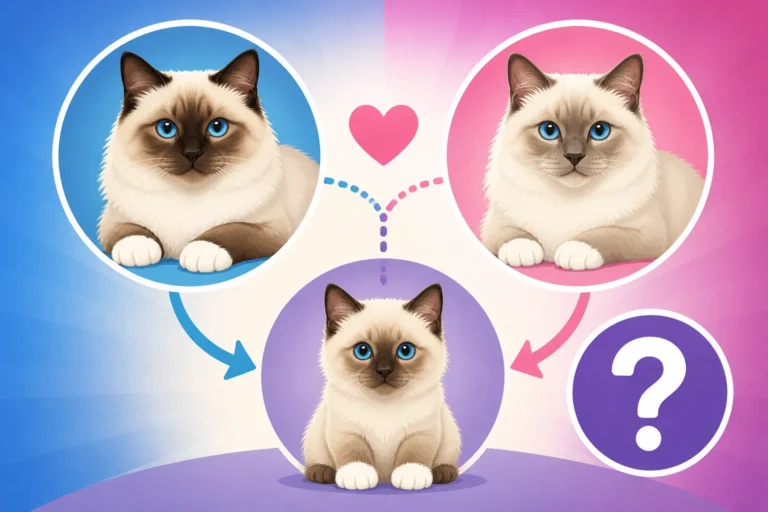
However, it's not quite as straightforward as a simple "on/off" switch. While the core gloving gene ensures white feet, the expression of that white – its precise borders, its symmetry, and the length of the laces – is influenced by other "modifier genes." These modifier genes can subtly alter how the main gloving gene manifests, leading to variations in markings even within the same litter from the same parents. It's a testament to the intricate dance of feline genetics.
Why Achieving Perfect Symmetry is So Difficult
This interplay of the primary gloving gene and numerous modifier genes is precisely why achieving perfect symmetry is such an uphill battle for breeders. You can breed two Birmans with seemingly perfect gloves, and still end up with kittens that have uneven markings. The modifier genes might express themselves differently in each individual kitten, leading to slight variations in glove length, lace height, or the appearance of those pesky "runners."
Breeders spend years studying pedigrees, observing the progeny of different pairings, and making careful choices to try and consistently produce cats that meet the exacting standards. It's a constant learning process, and even the most experienced breeders will acknowledge the unpredictable nature of glove genetics. It's truly an art and a science combined, highlighting the dedication required to uphold the Birman breed's unique visual signature. This genetic lottery means that even with all the best intentions and selective breeding, sometimes those little imperfections simply can't be avoided.
Ultimately, while an uneven Birman glove is indeed considered a fault in the highly competitive world of cat showing, it doesn't diminish the charm, health, or delightful personality of the cat itself. These standards exist to preserve the aesthetic purity of the breed for exhibition, but a Birman with slightly mismatched paws will still greet you at the door, quietly demand your attention, and fill your home with joy. Whether show-quality or pet-quality, the Birman remains a truly special companion, and the slight imperfections in their gloves are often just another unique detail to love about them.
Disclaimer
This article is for general informational purposes only and does not constitute professional advice. Laws, prices and regulations vary by location and change over time. Consult a qualified professional for guidance on your specific situation.