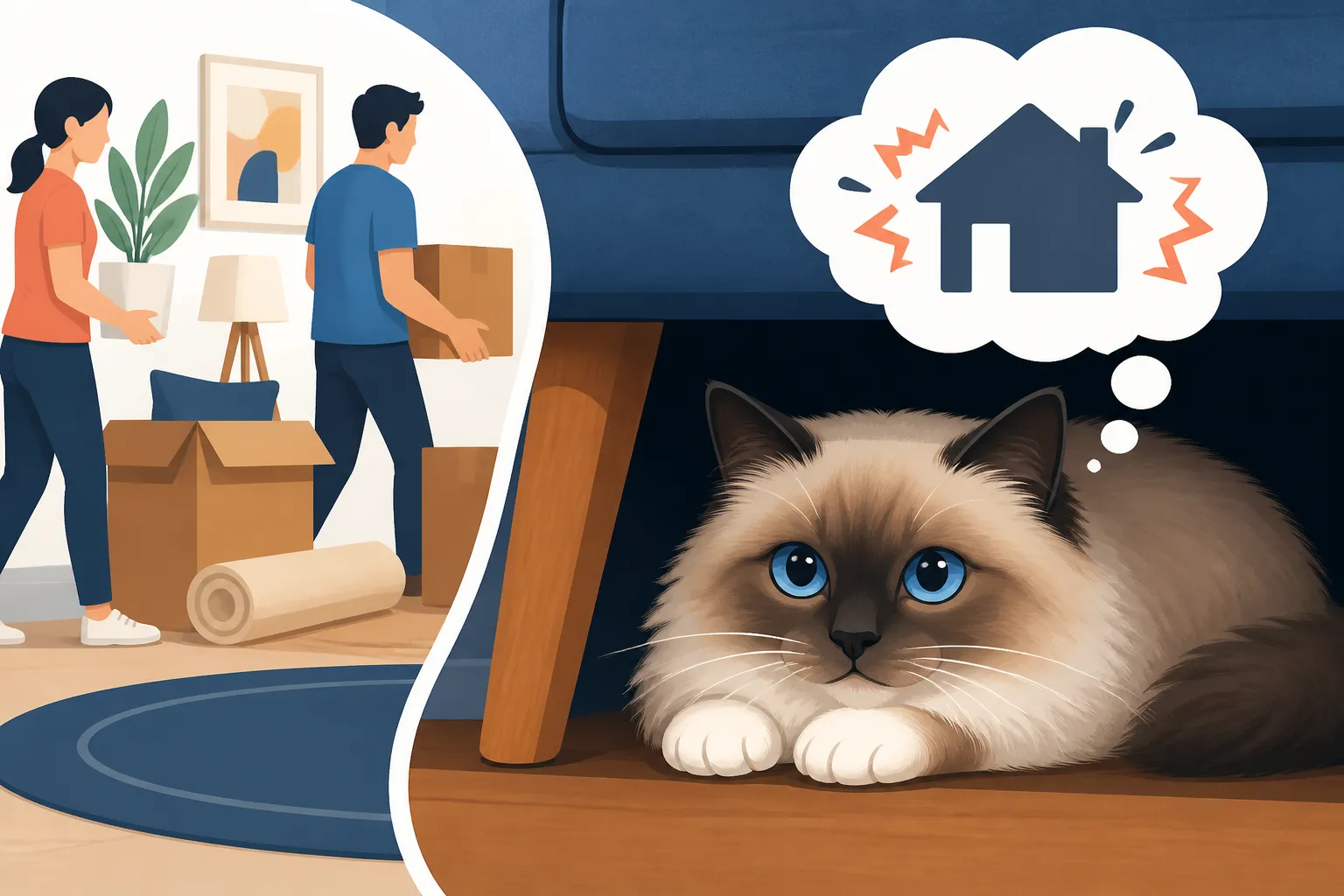
Why a Birman Hides When the House Changes
It’s incredibly disheartening when your usually placid and affectionate Birman suddenly disappears, only to be found tucked away under the bed or hidden in the back of a closet. As devoted Birman parents, we cherish their gentle presence, so when their familiar routines are disrupted by something as seemingly innocuous as moving a piece of furniture or having guests over, their instinct to retreat can leave us feeling confused and a little helpless. This guide is here to shed light on why your Birman hides when the house changes and, more importantly, how you can gently support them through these unsettling periods.
Understanding Your Birman's Sensitivity to Change
Birmans, with their incredibly sweet and easygoing nature, are often touted as the perfect family cat. They're known for their gentle purrs and their quiet, watchful companionship. But this very placid temperament also means they can be surprisingly sensitive to disruptions in their environment and routine. They thrive on predictability, and when their world shifts, even in small ways, it can trigger a strong need for security.
The Birman's Gentle and Routine-Oriented Nature
Think about how your Birman typically spends their day. They probably have their preferred nap spots, a specific time they expect their meals, and a routine for greeting you at the door. They’re creatures of habit, and this isn't a flaw; it's part of what makes them such calm and comforting companions. Unlike some more boisterous breeds, a Birman often internalizes stress rather than acting out overtly. They're not prone to loud yowling or destructive behavior when upset. Instead, they often withdraw, seeking solitude in a quiet corner or a hidden nook. This subtle shift can be easy to miss if you're not attuned to their quiet communication style. Their deep bond with their home environment means any change can feel like a breach of their safe space.
Common Environmental Changes That Trigger Hiding
It might surprise you what constitutes a "change" to a sensitive Birman. It's not just big moves or major renovations. Sometimes, it's as simple as:
- Rearranging Furniture: Even a new sofa or moving a bookshelf can alter their scent map and sightlines, making their familiar territory feel foreign. Why a Birman Dislikes a New Piece of Furniture explores this in more detail.
- New People: Whether it's a houseguest, a new roommate, or a baby arriving, the introduction of unfamiliar scents, sounds, and routines can be overwhelming. A Birman generally loves company, but new faces can still be a lot to process all at once.
- New Pets: Bringing another animal into the home, even another cat, is a huge shift. Your Birman's territory is suddenly shared, and their established pecking order might be challenged. This is where you might see them trying to reclaim safety by hiding.
- Renovations or Construction: The noise, strange smells, and constant human presence from builders or repair people can be incredibly stressful. Power tools, dust, and disrupted spaces are a recipe for a Birman to disappear.
- Sudden Loud Noises: While a one-off loud bang might cause a startled jump, prolonged or frequent loud noises (like from a party or neighborhood construction) can lead to sustained anxiety and hiding.
- Changes in Your Schedule: If you suddenly start working longer hours, travel more, or have an inconsistent daily routine, your Birman can feel unsettled by the shift in human presence and interaction. What a Lonely Birman Does further illustrates this impact.
Signs Your Birman is Feeling Overwhelmed
Hiding is certainly a primary indicator, but it’s rarely the only one. Your Birman might exhibit a range of behaviors that signal their discomfort. It's vital to recognize these signs, as they can sometimes mask underlying health issues, especially with a breed so prone to stoicism. As discussed in Why a Birman Hides Illness Behind a Placid Temperament, their placid nature means they often keep pain or distress to themselves.
Beyond simply being out of sight, look for:
- Changes in Appetite or Thirst: They might eat less, or even stop eating entirely, which can quickly lead to serious health issues like fatty liver disease. Conversely, some stressed cats might overeat.
- Litter Box Aversions: Stress can cause a cat to suddenly stop using their litter box, opting for inappropriate places instead. This is rarely out of spite and almost always a sign of distress or discomfort.
- Increased or Decreased Vocalization: Your usually quiet Birman might become even quieter, or, less commonly, start making unusual sounds. The Small Trill a Birman Uses Instead of a Meow is their usual communication, so any deviation is notable.
- Over-grooming or Under-grooming: Excessive licking or pulling out fur can be a self-soothing behavior, while a lack of grooming can indicate they're too withdrawn or unwell to care for themselves.
- Aggression or Fear: While rare for a Birman, an overwhelmed cat might hiss, swat, or become unusually fearful even of familiar family members. This is often a last resort when they feel trapped or cornered.
- Changes in Sleep Patterns: They might sleep even more than usual, or conversely, seem restless and unable to settle.
- Lack of Interest in Play: A Birman normally enjoys quiet play. If they ignore their favorite wand toy or don’t engage in their usual games, it's a red flag.
When you observe these signs alongside hiding, it’s a clear indication that your Birman is struggling to cope with the changes.
Why Hiding is a Birman's Coping Mechanism
It’s easy to feel personally rejected when your beloved Birman vanishes. We worry they’re unhappy or even angry with us. But understand that hiding is a deep-seated, instinctual behavior for cats, a primary survival strategy that kicks in when they feel vulnerable or unsafe. For a gentle breed like the Birman, it’s their go-to method for dealing with perceived threats.
Instinctual Response to Perceived Threat
Imagine your Birman in the wild (it's a stretch, given their pampered lives, but bear with me!). When faced with a larger predator or an unfamiliar situation, their instinct wouldn't be to confront it. Instead, it would be to find a secure, inconspicuous spot to observe from, out of harm's way. This primal urge is hardwired into their DNA. When your home environment changes, it creates a sense of the "unknown," which can be interpreted as a potential threat.
Hiding allows them to:
- Feel Physically Safe: Being out of sight often means feeling out of reach, providing a sense of physical protection.
- Observe Without Being Seen: From their vantage point, they can monitor the situation, assess the new "threat" (be it a new person, furniture, or sound), and decide when it's safe to emerge.
- Avoid Conflict: Birmans are not fighters. If they perceive a change as potentially confrontational or overwhelming, hiding is their way to completely opt out of the situation. It’s a peaceful retreat.
It's not about them not loving you; it's about self-preservation in the face of perceived instability.
The Need for Security and Control
Cats, perhaps more than many pets, crave a sense of control over their environment. They patrol their territory, mark it with scent, and create predictable routines. When this control is compromised by changes—whether it's the sudden appearance of a new person or the rearrangement of their favorite sleeping spot—it can trigger anxiety. Hiding gives them back a measure of control.
- A Predictable Haven: A hidden spot, whether it's under your bed or inside a closet, is a small, predictable pocket of space that they control. They know it's safe, quiet, and familiar, even if the rest of the house feels chaotic. This is especially true during big events like moving house. How a Birman Takes to Settle After a Move details the importance of creating such spaces early on.
- Reducing Sensory Overload: New environments often come with new smells, sounds, and visual stimuli. Hiding provides a much-needed break from this sensory overload, allowing them to process things at their own pace in a less stimulating environment.
- Regaining Calm: For a sensitive Birman, a quiet retreat is essential for regulating their emotions and bringing their stress levels down. It’s their way of hitting the reset button.
Impact of Stress Hormones on Behavior
Just like humans, cats experience a physiological response to stress. When a Birman feels overwhelmed or threatened, their body releases stress hormones, such as cortisol. These hormones are designed for short-term "fight or flight" responses, but chronic stress can have detrimental effects.
Elevated stress hormones can lead to:
- Increased Anxiety: Making them more prone to hiding and withdrawal.
- Suppressed Immune System: Leaving them more susceptible to illness.
- Digestive Issues: Leading to changes in appetite, vomiting, or diarrhea.
- Changes in Heart Rate and Blood Pressure: Contributing to overall physical strain.
Understanding this physiological aspect helps us approach their hiding not as a behavioral defiance, but as a genuine sign of distress that requires our empathy and support.
Practical Steps to Help Your Birman Adjust
The good news is that you can do a lot to help your Birman feel more secure and less inclined to hide when changes occur. It requires patience, understanding, and a proactive approach to their environment.
Creating Safe Havens and Retreats
One of the most important things you can do is provide designated safe spaces where your Birman can retreat and feel completely undisturbed. These should be available before any major changes, if possible, so they are already familiar.
- Quiet Rooms: Designate a specific room (like a spare bedroom or office) as your Birman's sanctuary. Equip it with their food, water, litter box, favorite bed, and toys. This room should be off-limits to rambunctious kids or unfamiliar guests during stressful times.
- Covered Beds and Tunnels: Cats feel safer in enclosed spaces. A covered cat bed, an igloo-style bed, or a cat tunnel can provide that sense of security. You can find a wonderful selection of these, along with cozy blankets, on Amazon to give them plenty of options.
- Vertical Spaces: While Birmans aren't typically extreme climbers, a mid-height cat tree or a sturdy shelf can offer a sense of elevation and a vantage point from which to observe safely. They prefer to be near you but not necessarily on you, and a slightly elevated spot allows them to oversee their domain.
- Open Carriers: Keep a soft-sided or hard-sided carrier open and accessible in a quiet corner. Line it with a familiar blanket. Many cats will use their carrier as a safe hideaway, making vet visits less stressful too.
Ensure these spots are not in high-traffic areas and are always available for them to access.
Gradual Introductions to New Elements
Sudden changes are the most jarring. Whenever possible, introduce new elements or people gradually, allowing your Birman time to adapt at their own pace.
- New Furniture: If you're getting a new sofa, bring it into a different room first for a day or two, or cover it with a familiar blanket. Allow your Birman to investigate it at their leisure before placing it in its permanent spot. Similarly, when rearranging, move one piece at a time over several days.
- New People: When guests arrive, ensure your Birman has their safe room to retreat to. Ask guests to ignore the cat initially, allowing the Birman to approach them on their own terms. Offering treats from a distance can help build positive associations.
- New Pets: This is probably the most delicate introduction. Start with scent swapping (rubbing a cloth on each animal and exchanging it), then supervised, brief visual introductions through a screen door or baby gate. Keep the new pet confined to one area of the house initially. Patience is key here. Bringing a Second Cat Home to a Birman That Wants One offers further advice on this.
- Renovations: If possible, confine your Birman to one safe, quiet room farthest away from the noise and activity. Use sound-dampening materials like blankets over the door. Offer extra attention and comfort during quiet times. How to Move House With a Birman details principles that can be applied to other major environmental changes.
Maintaining Routine and Comfort
Consistency is a Birman's best friend. Sticking to a predictable routine, even amidst chaos, can provide immense comfort and reassurance.
- Fixed Feeding Times: Keep their meal schedule as regular as possible. This predictability signals that all is well in their world.
- Consistent Play Sessions: Dedicate time each day for a gentle play session with their favorite toys. This not only provides mental and physical enrichment but also strengthens your bond and helps alleviate stress. How Much Play a Birman Needs Daily outlines appropriate play levels.
- Grooming: Continue your regular combing sessions. The familiar touch and routine can be very calming, even if they're a little tense at first.
- Familiar Scents: Don't wash all their bedding at once during a stressful period. Keep some familiar blankets or items around that smell like "home" and like them.
- Calming Music or White Noise: Playing soft classical music or a white noise machine can help mask unsettling sounds from outside or other parts of the house. What Calms a Stressed Birman has more ideas.
Utilizing Calming Aids and Enrichment
Beyond routine, some aids can help take the edge off your Birman's anxiety.
- Pheromone Diffusers: Products that release synthetic feline facial pheromones can help create a sense of calm and familiarity in the environment. These are often plugged into outlets in rooms where your Birman spends the most time. While I can't name specific brands, you can easily explore various options and read reviews on Amazon to find one that might work for your home. Whether Pheromone Diffusers Help a Birman provides more insights.
- Interactive Toys: Puzzle feeders or toys that dispense treats can provide mental stimulation and distraction, redirecting their focus from the stressful changes.
- Catnip/Silvervine: For some Birmans, a little catnip or silvervine can provide a temporary mood boost and encourage playful behavior, easing tension.
- Extra Attention (on their terms): Offer gentle petting, soft words, and quiet companionship. If your Birman is hiding, don't force them out, but sit nearby and speak softly. Let them choose when to emerge and engage.
When to Seek Professional Guidance
While most Birmans will eventually adjust to changes with your support, there are times when hiding and other stress behaviors warrant professional intervention. It’s always better to be safe than sorry when it comes to your beloved cat’s well-being.
Identifying Persistent or Worsening Hiding Behavior
You know your Birman best. If their hiding behavior doesn't resolve within a few days to a week after a minor change, or if it intensifies or is accompanied by other worrying symptoms, it's time to take action.
Look out for:
- Prolonged Hiding: If your Birman remains hidden for days on end, barely eating or drinking, this is a serious concern.
- Weight Loss: Any noticeable drop in weight needs immediate attention. Why Rapid Weight Loss Gives a Birman Fatty Liver highlights a severe consequence of not eating.
- Consistent Litter Box Issues: Urinating or defecating outside the box is often a clear signal of stress or an underlying medical issue.
- Aggression: If your gentle Birman starts hissing, swatting, or showing any signs of aggression, it indicates severe distress.
- Changes in Grooming: Excessive licking leading to bald patches, or a complete cessation of grooming, are both red flags.
These persistent issues suggest that your Birman is not simply adjusting; they are genuinely struggling. What a Stressed Birman Does can help you recognize the broader spectrum of stress indicators.
Consulting Your Veterinarian
Your first point of contact should always be your veterinarian. Many behavioral changes, including hiding and appetite loss, can be symptoms of an underlying health problem.
- Rule Out Medical Issues: Your vet can perform a thorough examination and recommend blood tests or other diagnostics to ensure there isn't a physical cause for your Birman's behavior. Conditions like dental pain, urinary tract infections, kidney issues (which Birmans can be prone to), or even hyperthyroidism can manifest as withdrawal and hiding. Why a Birman That Hides Under the Bed Needs a Vet explains the urgency of this.
- Discuss Stress Management: Even if no physical ailment is found, your vet can offer advice on environmental enrichment, stress-reducing diets, or even discuss anti-anxiety medications or supplements if the situation is severe and prolonged.
- Referral to a Specialist: If your vet believes the issue is purely behavioral and complex, they may refer you to a board-certified veterinary behaviorist.
Be honest and detailed with your vet about all the changes you've observed, even the subtle ones.
Engaging a Certified Feline Behaviorist
For complex or deeply ingrained behavioral problems that don't respond to initial interventions, a certified feline behaviorist can be an invaluable resource. These specialists have advanced training in animal behavior and can help identify the root cause of the stress and develop a tailored modification plan.
- Comprehensive Assessment: A behaviorist will conduct a detailed history, often observing your Birman in their home environment. They will look at every aspect of your cat's life – diet, routine, environmental setup, interactions, and any recent changes.
- Personalized Plan: They'll create a step-by-step plan that might include further environmental modifications, behavioral exercises, desensitization techniques, and counter-conditioning.
- Long-term Support: They'll guide you through the process, helping you implement the plan and adjust it as your Birman progresses. This can be a long journey, but with professional guidance, many Birmans can learn to cope better with change.
Remember, seeking help is a sign of a responsible pet parent, not a failure. Your Birman relies on you to be their advocate, especially when they are too quiet to tell you what's wrong.
Disclaimer
This article is for general informational purposes only and does not constitute professional advice. Laws, prices and regulations vary by location and change over time. Consult a qualified professional for guidance on your specific situation.