How a Birman’s Kidney Numbers Are Tracked From Middle Age
Birman kidney numbers are tracked from ages seven to ten to monitor waste filtration and catch subtle health changes early.

Birman kidney numbers are tracked from ages seven to ten to monitor waste filtration and catch subtle health changes early.

Increased Birman cat thirst linked to Persian ancestry, normal water intake levels, and potential kidney health conditions.

Prescription diets for polycystic kidney disease in Birmans explain how to manage symptoms and support remaining kidney tissue.

Polycystic kidney disease in Birmans involves inherited genetic cysts that slowly impact kidney function over many years.
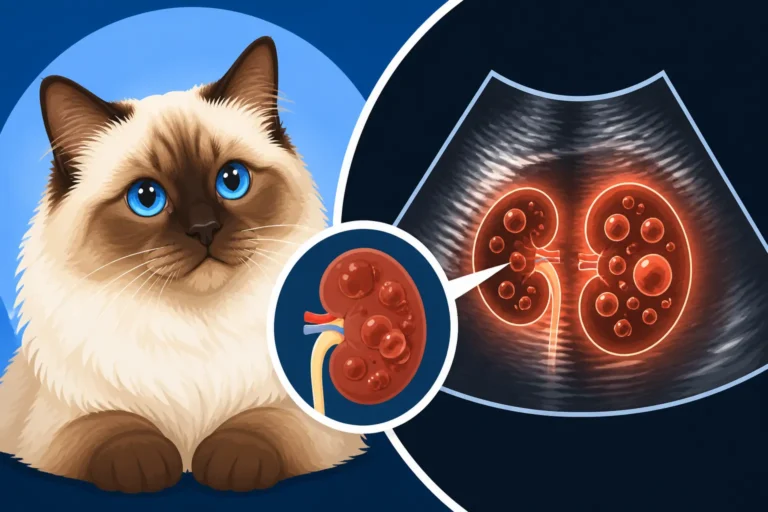
Polycystic kidney disease in Birmans involves fluid-filled cysts, a genetic link to Persians, and timely veterinary scans.

Polycystic kidney disease in Birmans traces back to Persian outcrosses, but DNA testing confirms that clear lineages exist today.

Post-war Persian outcrosses saved Birmans from extinction by two surviving cats, but introduced hereditary Polycystic Kidney Disease.

Polycystic Kidney Disease prevalence in Birmans, its history from Persian outcrossing, and modern genetic screening decline rates.

Birman cat breeders publish echocardiogram results to screen for Hypertrophic Cardiomyopathy because no DNA test exists for the breed.

Hypertrophic Cardiomyopathy in Birmans affects lifespan after diagnosis, with survival varying from weeks to several years based on severity.