How a Birman Behaves When Ignored
Birman cat behavioral changes reveal deep unhappiness when neglected, showing owners subtle signs of stress and withdrawal.
Change the room, not the cat.
Litter box avoidance, scratching and furniture, multi-cat tension and night activity — and the vertical space, play routines and feeding puzzles that solve more than correction does.
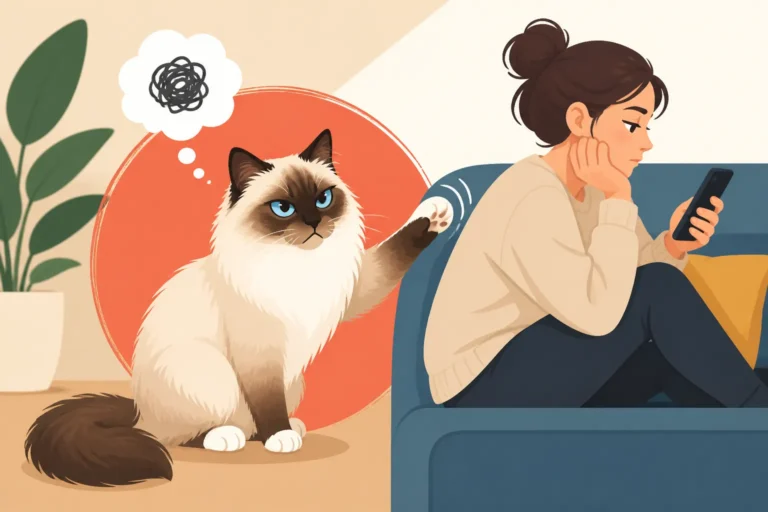
Birman cat behavioral changes reveal deep unhappiness when neglected, showing owners subtle signs of stress and withdrawal.

Birman cat vocalizations are rarely loud, featuring soft trills, gentle chirps, and delicate meows instead of true yowls.

The delicate trill a Birman cat uses instead of a meow provides a quiet, gentle way to greet owners and request attention.

The Birman cat breed history, genetics, and gentle temperament explain why these animals are remarkably quiet compared to Siamese cats.

Birman communication relies on soft murmurs, gentle gestures, and quiet retreats instead of loud meows or aggressive scratching.

Birman cat greeting behaviors feature silent door waiting, soft ankle rubs, and gentle invitations to shared living spaces.

Birman cat sleep and activity patterns balance the calm Persian and the energetic Siamese through daily routines and play sessions.

Birman and Persian cat energy levels compared, showing how Birman playful bursts differ from Persian relaxation for owners.

Birman and Siamese cat energy levels compared, detailing the calm demeanor, gentle play style, and short bursts of activity of Birmans.

The Birman cat breed combines Siamese energy with Persian calm, earning the nickname middle cat for its balanced temperament.