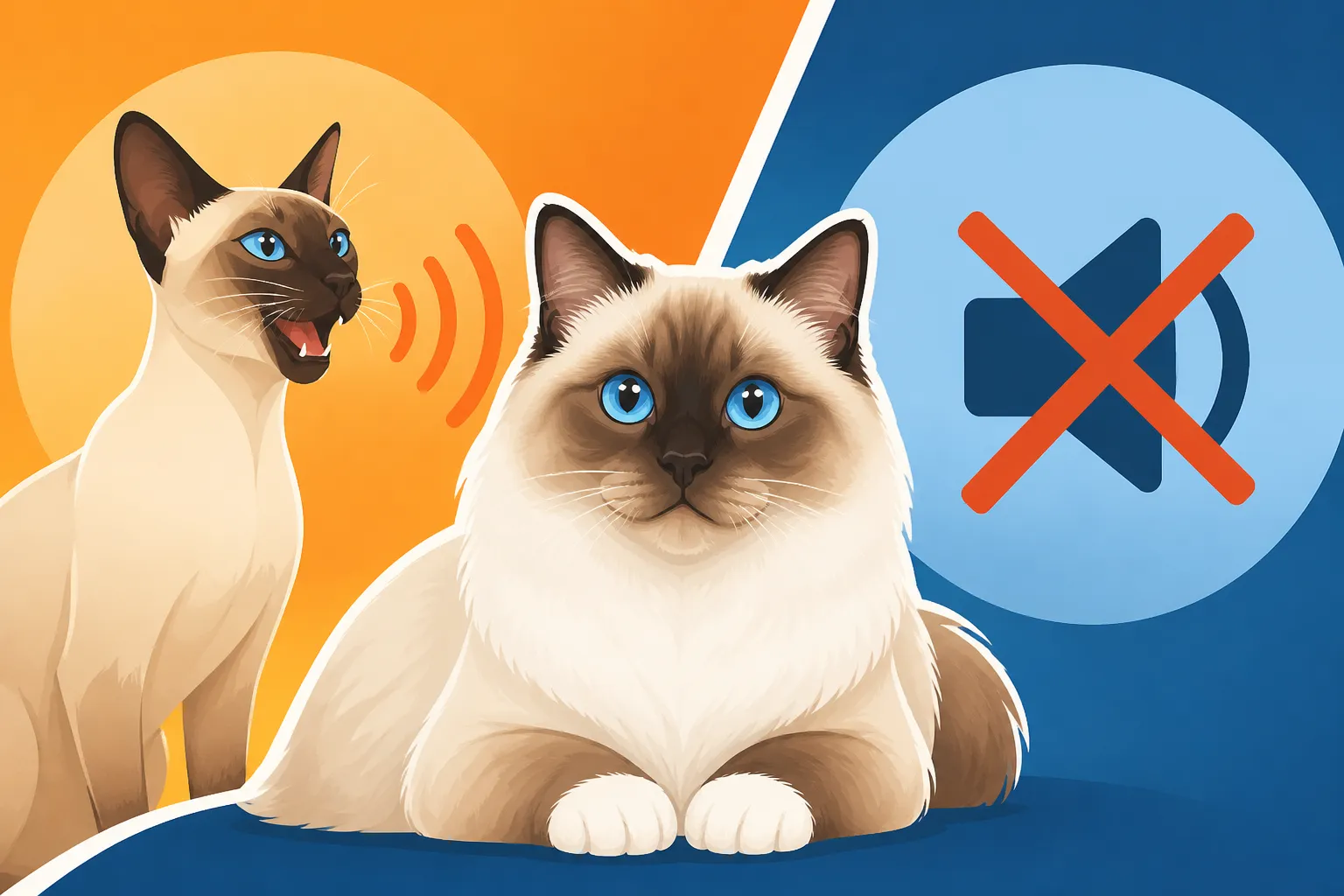
Why the Birman Never Inherited the Siamese Voice
One of the first things you might notice about a Birman cat, especially if you're used to more vocally expressive breeds, is their remarkably quiet demeanor. Many people expect a Birman to have inherited the loud, insistent "Siamese voice" due to shared ancestral lines, leading to a surprise when they encounter a Birman that communicates mostly through soft trills and gentle purrs. This guide will explore the fascinating reasons behind the Birman's serene vocalization, delving into their unique temperament, genetic background, and the subtle ways they choose to connect with their human companions.
Understanding the Birman's Unique Temperament and Voice
The Birman cat is renowned not just for its stunning appearance—those captivating blue eyes and silky, gloved paws—but also for its incredibly gentle and placid nature. This extends directly to their communication style, which is often a delightful contrast to the more boisterous feline personalities out there.
The Birman's Gentle Nature and Communication Style
Imagine a cat that greets you at the door with a soft, questioning trill, perhaps rubbing against your legs, but rarely launching into a full-blown vocal soliloquy. That's a Birman for you. Their voice is typically soft, melodic, and used sparingly, more as an invitation to interact than a demand. Instead of persistent meows that can sometimes grate on the nerves, a Birman often uses a range of quiet sounds, almost like soft chirps or coos, to express contentment, curiosity, or a desire for attention. It's a truly charming characteristic that endears them to many, making them feel like a calm, unobtrusive presence in the home rather than a furry alarm clock. They simply don't possess that inherent need to command attention with sheer volume. You might even find yourself leaning in to catch their quiet declarations. If you're wondering How Many Times a Day a Birman Actually Speaks, you'll likely find it's far less than you'd expect from other pointed breeds.
When a Birman wants something, whether it's a cuddle, a meal, or just for you to acknowledge their presence, they tend to employ subtler tactics first. They might weave through your legs, hop onto a nearby surface to be at eye level, or simply sit and gaze at you with those deep blue eyes, patiently waiting for you to notice their quiet request. It’s an approach that speaks volumes about their trusting and patient personality, allowing you to engage with them on their terms without feeling overwhelmed by constant vocal pressure. Their whole being exudes a sense of calm, and their voice perfectly reflects that inner tranquility.
A History of Calm: The Birman's Ancestral Influences
To understand why the Birman is so quiet, we need to take a little trip back in time to their origins. While the full story is somewhat shrouded in legend, it's widely accepted that the Birman breed, particularly after World War II, faced a severe genetic bottleneck. To prevent extinction and rebuild the population, breeders had to introduce other breeds. This included Persians and Siamese, among others, to stabilize the gene pool and re-establish the desired traits. This pivotal period, where The Birman Was Rebuilt From Two Cats and It Shows, had a profound impact on the breed's characteristics, including its vocalization.
The Persian cat is famously known for its quiet, dignified nature, often described as the "lap decoration" of the cat world. They are not known for being vocal and typically express themselves through purrs and quiet murmurs. The Siamese, on the other hand, is infamous for its loud, insistent, and often dramatic vocalizations—a voice that breeders sometimes affectionately refer to as a "Meezer wail." When Birmans were being rebuilt, breeders were very deliberate in selecting for the placid, gentle temperament that defines the breed today. This careful selection process likely favored cats with quieter vocal traits, effectively diluting or breeding out the more boisterous vocal tendencies that might have come from the Siamese lines. It was a conscious effort to create a cat that was companionable and loving, but also serene and undemanding, traits that are perfectly encapsulated in their soft, melodic voices today.
The Genetic Factors Behind Vocalization in Cats
Have you ever wondered why some cats are chatterboxes and others are as quiet as a mouse? It’s not just personality; there are fascinating genetic underpinnings that contribute to a cat's propensity for vocalization. Understanding these factors helps us appreciate why the Birman stands apart from its more talkative relatives.
The Loudness Gene: Why Some Cats Are More Vocal
While there isn't a single, easily identifiable "loudness gene" that dictates a cat's vocal volume, feline vocalization is definitely influenced by a complex interplay of genetic traits and selective breeding. Think of it more as a spectrum, where some breeds have been developed over generations to be highly communicative through sound, and others for their quiet elegance. Breeds like the Siamese, Oriental Shorthair, and even some Bengals often fall into the highly vocal camp. Their ancestors, through natural selection or early human intervention, may have found vocalization to be an effective tool for communication, whether with other cats or with humans. This could involve signaling for food, attracting mates, or warning off rivals.
Over time, certain genetic predispositions for louder, more frequent, and more varied vocalizations became more prevalent in specific lines. It’s not about a single switch, but rather a collection of genetic markers that contribute to the development of vocal cords, the brain's processing of vocal cues, and even the cat's overall energy and assertiveness levels. Environmental factors and early socialization certainly play a role in how much a cat chooses to use its voice, but the baseline capacity and tendency for vocal expression often have a strong genetic component. Cats, much like people, have varying vocal ranges and personalities shaped by their lineage.
Decoding the Birman's Quiet Genetic Inheritance
The Birman's calm vocalization is a testament to careful selective breeding, particularly given the historical necessity of outcrossing with other breeds, including the highly vocal Siamese, to save the breed from extinction. While the Siamese contributed its stunning pointed pattern and beautiful blue eyes, breeders meticulously worked to retain and enhance the Birman's gentle temperament and, by extension, its quiet voice. The influence of the Persian, a breed known for its quiet nature, played a significant role here. Persian cats are not known for their vocal antics; their communication is often restricted to soft purrs and subtle body language, a trait highly desirable in the development of the Birman.
Breeders, through generations of thoughtful pairing, selected for offspring that exhibited the desired placid disposition and low vocal tendencies. They essentially filtered out the more insistent and piercing meows associated with the Siamese lines, while embracing the serene quietness of the Persian influence. This doesn't mean a Birman never makes a sound; rather, their genetic inheritance guides them toward a preference for soft, almost melodic trills and chirps, reserving louder vocalizations for moments of genuine distress or excitement. It’s a beautifully balanced inheritance, blending the striking beauty of pointed cats with a serene disposition and a truly gentle voice, ensuring that the Birman remains a calm and comforting presence in any home.
The Birman's Behavior: A Preference for Subtle Communication
When you live with a Birman, you quickly learn that communication isn't always about sound. These beautiful cats have mastered the art of subtle cues, making their companionship a gentle, ever-present joy rather than a demanding performance. Their placid temperament translates directly into how they interact with the world around them.
More Than Just a Meow: How Birmans Truly Connect
A Birman's vocabulary extends far beyond traditional meows. They are masters of body language, purrs, and those soft, characteristic trills that are almost unique to the breed. If your Birman wants your attention, you might find them gracefully weaving figure-eights around your legs in the kitchen, or perhaps sitting quietly on the sofa armrest, simply gazing at you with those piercing blue eyes. Head bunting, where they gently rub their head against yours or your hand, is a common and incredibly affectionate way they show love and claim you as their own. When you hear The Small Trill a Birman Uses Instead of a Meow, you know it's often a sign of contentment or a gentle invitation to interact.
They often follow you from room to room, not making a sound, but just wanting to be in the same space, a quiet shadow of companionship. This is a cat that is happy to be near you, perhaps curled up on a nearby chair or even against your leg, rather than demanding to be a lap cat at all times. Their purrs, while deep and rumbling, are often surprisingly quiet, almost as if they're purring just for themselves, a low vibration of pure happiness. It’s these quiet gestures that really define How a Birman Shows Affection Without Making Demands, creating a bond that is felt deeply rather than heard loudly. They teach you to listen with your eyes and your heart, to pick up on the nuanced language of a truly gentle soul.
Why a Birman Rarely Yowls or Demands Attention Loudly
The reason a Birman rarely yowls or makes loud, insistent demands ties directly back to their inherently placid temperament. Unlike some breeds that might vocalize loudly out of boredom, frustration, or a strong desire for interaction, Birmans tend to process these emotions with a quieter grace. Their nature is one of calm observation and gentle presence. If they're feeling overlooked, they're more likely to approach you with a soft head-nuzzle or a gentle paw tap than to unleash a piercing yowl. Whether a Birman Ever Yowls is a common question, and while any cat can yowl in extreme distress or pain, it's certainly not their go-to communication method.
This characteristic makes them particularly well-suited for households seeking a peaceful companion. They don't crave constant, high-energy interaction or feel the need to loudly assert themselves within the household hierarchy. Instead, they prefer a harmonious existence, where their quiet presence is their strongest statement. When a Birman does make a louder-than-usual sound, it's often a significant indicator that something is truly amiss—perhaps they're accidentally locked in a room, or they're genuinely uncomfortable. This rarity of loud vocalization means that when they do speak up, you know it's important and requires your immediate attention, making their quiet nature an advantage in deciphering their needs.
Living with a Quiet Birman: Expectations and Enrichment
Bringing a Birman into your home is a truly unique experience. Their quiet nature doesn't mean they're aloof; it simply means they express themselves differently, offering a serene companionship that many find incredibly rewarding. Understanding how to interact with and enrich the life of a quiet cat is key to a happy home.
The Joys of a Companionable, Undemanding Cat
One of the greatest joys of living with a Birman is their truly companionable and undemanding nature. They are often described as having the perfect "middle ground" temperament—not as intensely active and vocal as a Siamese, nor as utterly sedentary as some extreme Persians. This makes them wonderfully adaptable to various living situations. Whether you live in a bustling family home with children and other pets, or a quieter apartment, a Birman often fits in beautifully. They are celebrated as "the cat families are told to get," and for good reason. Why a Birman Is the Cat Families Are Told to Get really speaks to their gentle patience and tolerance, making them an ideal pet for households with young children or even other calm animals like dogs.
They offer a constant, comforting presence without ever feeling overwhelming. You'll find them curled up on a chair nearby while you read, or perhaps gently kneading your leg as you watch television. Their quietness isn't a sign of disinterest; it's simply their way of being present. They thrive on routine and stability, appreciating a calm environment. Their unobtrusive nature means they rarely interrupt your activities with insistent meows or demands, yet they are always ready for a gentle pet or a quiet cuddle when you initiate it. This allows for a deeper, more mindful connection, where their subtle cues become a cherished part of your daily rhythm.
Encouraging Interaction Without Over-Vocalization
Just because Birmans are quiet doesn't mean they don't enjoy playtime and affection. In fact, they absolutely thrive on interaction, but it's typically on their terms and in their gentle style. The key is to engage them with activities that match their preference for calm and focused play, rather than high-octane pursuits that might elicit loud vocalizations in other breeds. Wand toys that mimic a bird or mouse are often a huge hit, allowing them to stalk and pounce quietly. Puzzle feeders can engage their minds without requiring much vocal input. You can find a fantastic selection of quiet, engaging toys on Amazon that cater specifically to a Birman's play style, ensuring they get the mental and physical stimulation they need.
It's also important to remember that a Birman's quietness can sometimes be a double-edged sword. While their gentle nature is appealing, it can also mask underlying issues. If your usually quiet Birman suddenly becomes even quieter or withdrawn, it's a sign that something might be wrong. They are prone to hiding discomfort or illness, so paying close attention to any subtle changes in behavior, appetite, or energy levels is crucial. Knowing Why a Quiet Birman Is Easy to Misread can help you stay vigilant and ensure your cherished companion receives the care they need, even when they aren't loudly asking for it. Regular, gentle grooming sessions also provide excellent bonding opportunities and a chance to check them over.
Comparing the Birman's Voice to Other Breeds
To truly appreciate the Birman's vocal nature, it's helpful to compare it to other popular cat breeds. This comparison highlights not only the Birman's unique qualities but also how selective breeding has shaped the diverse range of feline communication we see today.
Birman vs. Siamese: A Study in Vocal Contrasts
The contrast between the Birman and the Siamese when it comes to vocalization is perhaps the most striking. Both breeds share a heritage of striking blue eyes and color-pointed coats, suggesting a historical connection. However, their voices couldn't be more different. The Siamese is renowned, almost famously, for its loud, insistent, and often startlingly deep voice, sometimes described as a "baby's cry" or a "foghorn." They are not shy about expressing their opinions, desires, or even just their presence, often engaging in lengthy, dramatic conversations with their humans. This strong vocalization is a hallmark of the breed, deeply ingrained in their genetic makeup and personality.
The Birman, by stark contrast, seems to have consciously shed these loud vocal tendencies. While they may have a distant link to the Siamese through their ancestry during the post-war rebuilding efforts, breeders carefully selected for a much softer, more melodic, and far less frequent vocal output. The Birman's voice is often a gentle trill, a soft chirp, or a quiet meow, used sparingly and with a clear intention, never to simply fill the silence or demand attention. They communicate with grace and subtlety, making their presence felt through proximity and gentle gestures rather than an auditory assault. It's a testament to how specific traits can be emphasized or diminished through dedicated breeding programs.
Here's a quick comparison of their typical vocal habits:
| Feature | Birman | Siamese |
|---|---|---|
| Volume | Soft, quiet, often barely audible | Loud, resonant, often piercing |
| Frequency | Infrequent, used for specific communication | Frequent, often continuous "conversations" |
| Types of Sounds | Trills, chirps, soft meows, purrs | Yowls, loud meows, demanding cries, purrs |
| Communication Style | Subtle, gentle, body language-focused | Assertive, demanding, vocal-focused |
| Purpose | Invitation, contentment, soft request | Demand, opinion, attention-seeking, declaration |
The Birman's Voice in the Broader Feline Spectrum
When you consider the vast array of cat breeds, the Birman truly occupies a unique and cherished space on the vocalization spectrum. On one end, you have the highly vocal, extroverted breeds like the Siamese or the Oriental, whose meows are a constant soundtrack to their lives. On the other end, you have breeds like the Persian or the British Shorthair, which are generally very quiet, communicating mostly through purrs and body language. The Birman comfortably sits in the middle, leaning distinctly towards the quieter side. This makes them a perfect fit for those who appreciate the companionship of a cat but prefer a more serene home environment.
Their vocal behavior reflects their overall temperament: balanced, gentle, and utterly charming. They are not prone to extreme behaviors, whether in play, social interaction, or vocal output. This balanced nature is why you often hear the phrase The Birman Sits Between the Siamese and the Persian. They offer the beauty and warmth of a long-haired, pointed cat without the high-maintenance grooming of some Persians and certainly without the persistent vocal demands of the Siamese. A Birman's voice is a gentle whisper in a world that can often feel too loud, a constant reminder of their peaceful and loving disposition. It’s a breed that truly offers the best of both worlds for those seeking a tranquil yet deeply affectionate feline companion.
Disclaimer
This article is for general informational purposes only and does not constitute professional advice. Laws, prices and regulations vary by location and change over time. Consult a qualified professional for guidance on your specific situation.