How Long a Birman’s Single Coat Takes to Dry
It’s a scenario many Birman parents know well: you’ve just given your beautiful feline companion a much-needed bath, and now you’re faced with a seemingly endless wait for that gorgeous, silky coat to dry. You might be wondering if your Birman will ever truly be fluffy again, or how long you need to keep them contained before they decide to roll in every speck of dust. This guide is here to break down exactly what contributes to your Birman’s drying time, why their unique coat behaves the way it does, and how you can make the process smoother and quicker for both of you.
Understanding the Birman's Unique Single Coat Structure
The Birman's coat is one of its most defining and beloved features – that luxurious, soft, semi-longhair that just flows. But unlike many other longhaired breeds, a Birman possesses a single coat, meaning it lacks the dense, woolly undercoat found in breeds like Persians or Maine Coons. This characteristic is a double-edged sword when it comes to bath time and drying. On one hand, it significantly reduces the likelihood of matting and makes grooming less arduous on a daily basis. You can literally run your fingers through their fur, and it just slips through. This is part of What Makes a Birman's Coat Silky Rather Than Woolly.
The absence of an undercoat is a huge factor in why some people assume Birmans will dry super fast. After all, there isn't that thick, insulating layer to trap moisture. And to an extent, they're right. A Birman generally dries faster than a Persian, for instance, whose dense undercoat can hold water like a sponge. However, the Birman's guard hairs, while silky and fine, are still quite long, especially around the ruff, on their britches, and their magnificent tail plume. These longer strands, despite their delicate texture, can still hold a surprising amount of water.
Think of it this way: imagine a very fine, long silk scarf versus a thick wool blanket. The silk scarf might feel lighter and more ethereal, but if it gets thoroughly soaked, it can still take a good while to air dry completely simply due to its surface area. The Birman's coat is similar; it doesn't absorb water deep into a dense layer, but the sheer length and volume of those individual hairs mean there's a lot of surface area for water to cling to. No Undercoat Is What Makes a Birman Easy to Groom, but that doesn't mean it's instant-dry.
Why a Single Coat Still Holds Water
Even without a dense undercoat, the individual hairs of a Birman's coat are still absorbent. Each strand, from the shortest fur on their face to the longest plume on their tail, is designed to provide warmth and protection, and part of that involves its ability to interact with moisture. When your Birman gets thoroughly wet, every single one of those beautiful hairs becomes saturated. While water won't get trapped deep within a thick, fluffy underlayer, it will still adhere to the surface of each individual hair.
Furthermore, the Birman's coat has a natural oils and texture that, while preventing excessive matting, can also cause water droplets to cling rather than run off completely. It's not a waterproof outer layer; it's designed to be soft and protective. The semi-long nature of the fur means there's simply more of it to get wet. You might notice after a bath that the fur becomes quite flat and clumped together with water, and these larger clumps take longer for the air to penetrate and wick away moisture. This is especially true for the more generously furnished areas of their body, like the ruff and britches.
The common misconception is that "no undercoat" means "dries instantly." In reality, it means "dries less slowly than breeds with undercoats," but it's far from an overnight process. You'll still need patience and some active intervention to get your Birman completely dry. The luxurious length of their coat, particularly around the mane, can make it feel like you're drying a small lion, even if it's just fine hair. You might be surprised at How Long a Birman's Coat Actually Is when it's wet and flattened.
How Its Structure Impacts Matting During Drying
One of the great joys of owning a Birman is that they are generally quite low-maintenance in terms of matting, especially compared to their Persian cousins. This is directly attributable to their single coat. Why a Birman Mats Far Less Than It Looks Like It Should is a common question, and the answer lies in that smooth, flowing texture without the woolly undercoat tangles. However, "less matting" doesn't mean "no matting," particularly during the drying process if not handled correctly.
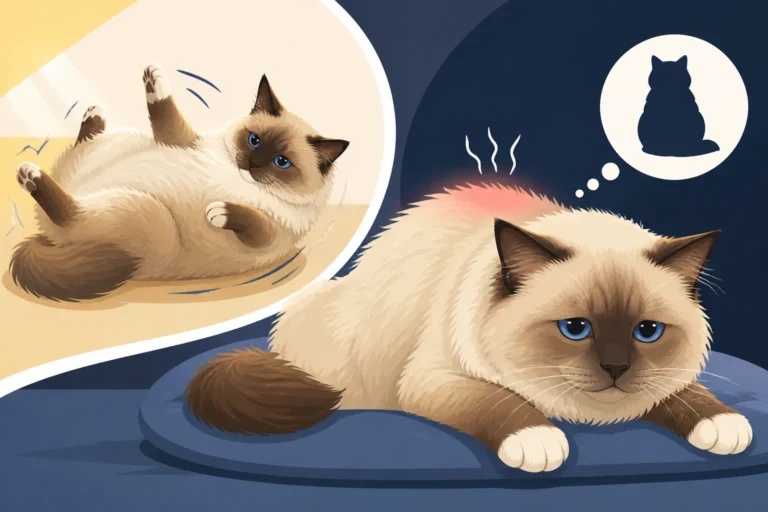
When a Birman's coat is wet, the individual hairs tend to clump together. If these clumps are left to dry without being brushed out, they can still form tangles, particularly in areas of friction or where the fur is naturally longer and denser. The ruff, behind the ears, under the "armpits," and on the britches are common spots where mats can sneak in. If your Birman likes to rub against furniture or roll around while damp, these actions can exacerbate the problem.
Active, gentle grooming during drying is crucial to prevent these wet clumps from cementing into small mats. Running a wide-toothed comb through the fur as it dries will help separate the hairs, allow air to circulate more effectively, and ensure that when the coat is fully dry, it remains soft, silky, and tangle-free. Neglecting this step can lead to minor knots that, while not as severe as those in an undercoated breed, can still be uncomfortable for your cat and require extra effort to remove later. You're trying to avoid even Where a Birman's Few Mats Form.
Key Factors Affecting Drying Time
Several elements play a significant role in how quickly your Birman’s coat goes from sopping wet to perfectly dry. It’s not just about the coat type; environmental conditions and your drying technique are equally important. Understanding these factors can help you optimize your approach and reduce the overall drying time, making the post-bath experience more pleasant for your Birman.
Environmental Conditions: Temperature and Humidity
The ambient temperature and humidity in your home can dramatically influence how long your Birman takes to dry. In a warm, dry room with good air circulation, moisture evaporates much more quickly from their fur. Think about how clothes dry faster on a sunny, breezy day compared to a damp, muggy one. The same principles apply to your cat’s coat.
If you’re bathing your Birman in a cool or humid bathroom, the drying process will naturally be prolonged. The air is already saturated with moisture, making it harder for the water in their fur to evaporate. Conversely, a cozy, well-ventilated room, perhaps with a gentle fan (not directly blowing on your cat, but circulating air), can accelerate drying. During colder months, it's particularly important to ensure the room is warm enough to prevent your Birman from getting a chill, as Why a Coat With No Undercoat Leaves a Birman Cold is a real concern. Their single coat offers less insulation when wet.
Consider setting up a dedicated drying area in a warmer part of your home, like a heated utility room or a sunny spot, immediately after the bath. This simple adjustment can shave a surprising amount of time off the drying process and keep your Birman more comfortable.
Your Towel-Drying Technique
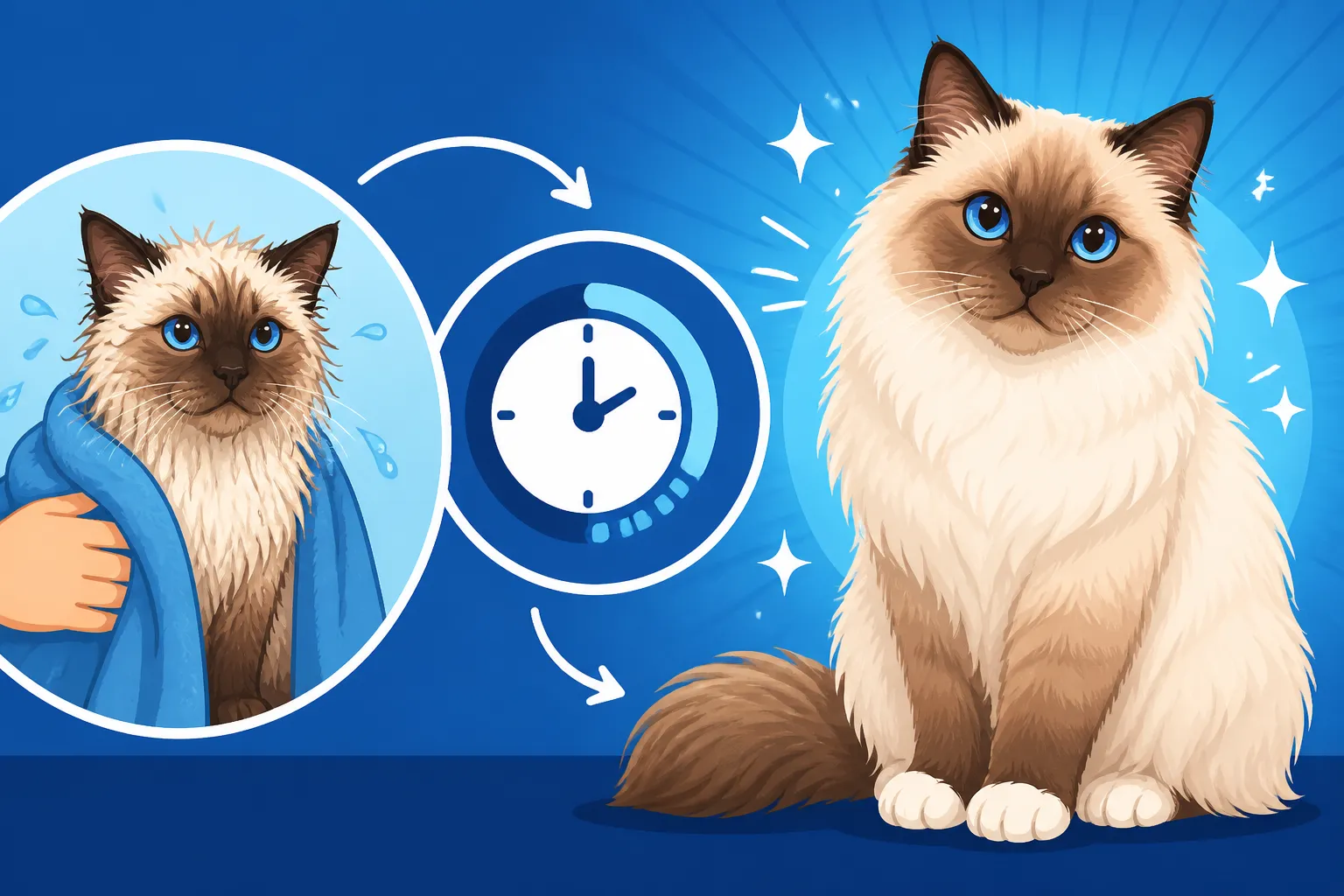
The initial towel-drying phase is arguably the most crucial step in minimizing overall drying time. A thorough and effective towel-dry can remove a significant amount of water from your Birman's coat before you even consider air drying or using a blow dryer.
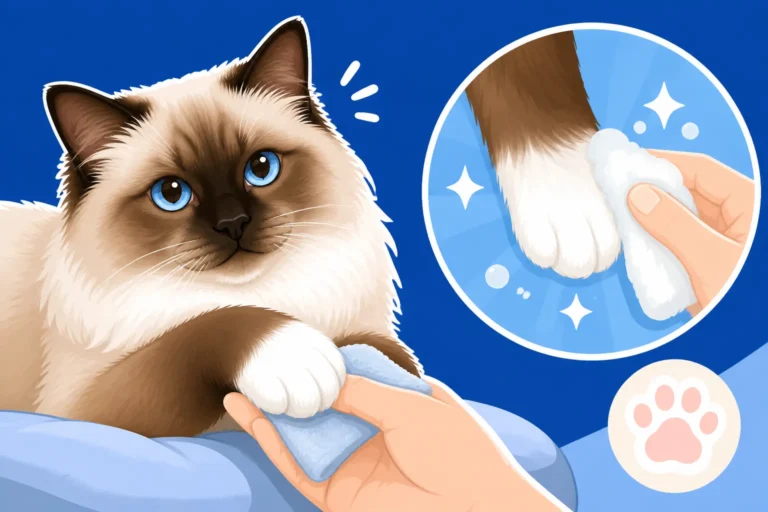
The key is to gently squeeze and blot the fur rather than vigorously rubbing it. Rubbing can tangle the hair, potentially leading to mats, and it can also damage the delicate hair shafts. Instead, use a highly absorbent microfiber towel and gently press it against sections of your Birman’s coat, squeezing the water out. Repeat this process, replacing wet towels with dry ones if necessary, until you feel the majority of the surface water has been absorbed. Don't forget to pay special attention to the longer fur on their ruff, britches, and tail, as these areas hold the most water. You can find excellent quality, super absorbent pet towels on platforms like Chewy or Amazon. These towels are often designed with special textures to absorb more moisture from pet fur without causing static or damage.
A good, ten-minute session of attentive towel drying can make an enormous difference, reducing the remaining moisture to a level that air drying or a low-heat dryer can handle much more efficiently. It's a small investment of time upfront that pays dividends in the long run.
Coat Length and Density Variations
While the Birman is known for its "single coat," there are still individual variations in coat length and density among cats, which can impact drying time. Some Birmans might have a slightly thicker ruff, or longer fur on their tail and britches, simply due to genetics. These areas, with their increased hair volume, will naturally take longer to dry than the shorter fur on their back or sides.
Similarly, a younger Birman kitten might dry faster than a fully mature adult tom cat who has reached his full glorious coat potential. Birman cats often continue to grow and fill out their coats until they are around three years old, so a two-year-old might take longer to dry than the same cat did at one year old. This variation means that while general guidelines apply, you'll get to know your individual Birman's unique coat characteristics and how they respond to drying over time. Why a Birman's Ruff Is Its Longest Fur explains why that area is always the last to dry.
Always ensure you’re checking these denser, longer areas thoroughly, feeling for any dampness at the roots of the hair. It’s easy to assume the coat is dry when the top layer feels fluffy, only to discover lingering moisture closer to the skin, which can lead to chills or skin irritation.
Strategies for Efficient and Comfortable Drying
After the initial towel dry, you have a few options to get your Birman completely dry. The goal is always efficiency combined with your cat's comfort and safety. Rushing the process or using inappropriate methods can cause stress, damage their coat, or even lead to health issues.
Air Drying Techniques
For many Birmans, especially those who aren't keen on noisy appliances, air drying is a viable option after a good towel dry. However, it requires a controlled environment and a bit of patience.
- Warm, Draft-Free Room: As mentioned, ensure your Birman is in a warm, comfortable room free from drafts. A cold draft on damp fur can make them shiver and get sick.
- Gentle Brushing: Throughout the air-drying process, periodically brush your Birman's coat with a wide-toothed comb or a soft slicker brush (used very gently, as a regular slicker can damage their fine guard hairs) to separate the fur. This allows air to circulate more effectively through the individual strands, speeding up evaporation and preventing any wet clumps from forming mats. Which Comb Gets Through a Birman's Ruff Without Pulling is essential for this step.
- Supervision: Don't leave your damp Birman unsupervised, especially if they are prone to rolling on carpets or other surfaces that could re-dampen their fur or pick up debris. Offer a comfortable, clean bed or towel for them to lounge on.
- Timeframe: Depending on how wet they still are after toweling and the ambient conditions, full air drying can take anywhere from 2 to 4 hours, sometimes longer for a truly plush Birman. You need to be prepared for this extended period of monitoring.
Using a Pet-Specific Blow Dryer
For faster drying, especially for Birmans who tolerate it, a pet-specific blow dryer can be a game-changer. It's important to use a dryer designed for animals, as human hair dryers can get too hot and damage their delicate skin and fur.
- Low Heat, Low Speed: Always use the lowest heat setting and a gentle airflow. High heat can burn your cat's skin, cause discomfort, and dry out their coat, leading to breakage. The goal is to gently warm the air around them to aid evaporation, not blast them with hot air.
- Acclimation is Key: If your Birman isn't used to a blow dryer, introduce it slowly. Start by turning it on at a distance, letting them get used to the sound. Reward them with treats for calm behavior. Gradually move it closer, always keeping it on a low setting and never pointing it directly at their face.
- Continuous Movement: Keep the dryer moving constantly, never focusing on one spot for too long. Work in sections, gently lifting the fur with your free hand or a comb to allow the air to penetrate to the roots.
- Brush While Drying: As you dry, continue to brush the coat gently. This helps to separate the hairs and ensures an even dry. Pay attention to the paws; How Often to Check Between a Birman's Toes applies to drying too, as moisture can linger there.
- Listen to Your Cat: If your Birman shows signs of distress – flattened ears, tail tucked, trying to escape – stop immediately. Their comfort and safety are paramount. You can resume later or opt for air drying.
- Timeframe: With a pet-specific blow dryer and an accommodating Birman, you can often get them completely dry within 30 minutes to an hour, depending on the coat and how wet they were to begin with. Brands like Chewy and Amazon offer a variety of quiet, low-heat pet dryers that are much safer and more comfortable for your cat than a human hair dryer.
Grooming Tools for the Drying Process
Having the right tools on hand can significantly improve the drying experience and outcome.
- Microfiber Towels: Essential for the initial absorbency. Have several clean, dry ones ready.
- Wide-toothed Comb: Perfect for gently detangling wet fur and separating strands to allow air penetration. Avoid fine-toothed combs on wet fur as they can pull and cause damage.
- Soft Slicker Brush: Use with extreme caution and a very light hand, especially on a Birman's fine fur. Its purpose is to gently lift and separate hairs, not to tug. Many Birman owners prefer a good quality comb.
- Pet Blow Dryer: As discussed, for faster results. Look for models with variable heat and speed settings, and a quiet motor.
- Grooming Table (Optional but helpful): For those Birmans who are accustomed to it, a non-slip grooming table can elevate your cat to a comfortable working height, saving your back and making the process easier. Remember, Why a Birman Owner Never Books a Grooming Appointment is often because their cats are so amenable to home grooming.
| Drying Method | Pros | Cons | Estimated Time (Post-Towel Dry) |
|---|---|---|---|
| Air Drying | Least stressful, no equipment needed | Longest drying time, requires continuous monitoring | 2-4 hours |
| Pet Blow Dryer | Fastest, ensures thorough drying, prevents mats | Requires acclimation, can be noisy, risks overheating if misused | 30-60 minutes |
| Towel Drying Only | Gentle, low stress, good for quick touch-ups | Not sufficient for full drying, leaves coat damp | Not applicable (initial step) |
| Combination (Towel + Air/Dryer) | Optimal balance of speed and comfort, thorough | Requires both patience and some tools | 1-3 hours (depending on dryer use) |
Avoiding Common Drying Mistakes
Even with the best intentions, it's easy to fall into certain habits that can make the drying process longer, less effective, or even detrimental to your Birman's health and coat. Being aware of these common pitfalls can help you avoid them.
Overheating or Burning the Skin
This is perhaps the most dangerous mistake when using a blow dryer. A Birman’s skin is delicate and much thinner than human skin. What feels like a comfortable warm setting on your hand can quickly become scalding hot on their skin, especially if the dryer is held too close or focused on one spot for too long. This can cause severe burns, discomfort, and trauma, making your cat terrified of future grooming.
Always use the lowest heat setting available on your pet-specific dryer. If your dryer doesn't have a "cool" or "low heat" option, or if you're unsure, it's safer to use the "cool" or "no heat" setting altogether. Keep the dryer moving continuously, maintaining a safe distance from your Birman’s body. Periodically check the temperature of their skin with your hand, especially on thinner-skinned areas like the ears and belly. If it feels too warm for you, it's definitely too warm for them. Prioritize their safety and comfort over speed.
Not Drying Thoroughly Enough
It's tempting to stop drying once your Birman's coat looks dry and fluffy on the surface. However, residual dampness, especially at the roots of the longer fur or in denser areas, can lead to several problems. A damp coat can become a breeding ground for bacteria or fungi, potentially leading to skin infections. It can also cause skin irritation, itching, and general discomfort for your cat.
Furthermore, any lingering moisture can quickly turn into a chill, especially in a cooler environment. Remember, their single coat doesn't offer much insulation when wet. Always run your fingers deep into the fur, especially on the ruff, armpits, britches, and tail, checking for any coolness or dampness at the skin level. If you're air drying, this might mean a slightly longer waiting period. If using a dryer, ensure you’ve worked through all sections of the body thoroughly. A fully dry Birman is a happy and healthy Birman.
Skipping Brushing During Drying
Forgetting to brush your Birman's coat while it dries is another common mistake that can prolong the process and potentially lead to matting. When wet, a Birman's silky hairs tend to clump together. If these clumps are allowed to dry in place, they can form tangles or small mats, particularly in areas of movement or friction.
Brushing during drying, whether you're air drying or using a blow dryer, serves multiple purposes. It separates the individual hair strands, allowing air to circulate more freely and speeding up evaporation. It also ensures that the coat dries smoothly and evenly, preventing any tangles from forming as the fur dries. Use a wide-toothed comb or a very gentle brush, working in small sections. Start at the ends of the fur and gently work your way up to the roots. This proactive approach ensures that when your Birman is completely dry, their coat will be as soft, fluffy, and tangle-free as it should be. This attention helps prevent even the small knots that can form, unlike a double-coated breed where mats can be severe.
Conclusion
Getting your Birman cat’s beautiful single coat to dry after a bath doesn't have to be a daunting task, but it does require understanding their unique fur and employing the right techniques. While their lack of an undercoat means they generally dry faster than many other longhaired breeds, the length and silkiness of their fur still mean it's not an instant process. Expect anywhere from 30 minutes with a pet-specific dryer to a few hours for a complete air dry after a thorough towel session.
By preparing a warm, draft-free environment, mastering your towel-drying technique, and making smart choices about air drying or using a pet-safe blow dryer, you can ensure your Birman remains comfortable and safe throughout the process. Don't forget the power of gentle, consistent brushing during drying to prevent mats and promote even evaporation. With a little patience and the right approach, your Birman will be back to their regal, fluffy self in no time, ready to grace your home with their serene presence.
Disclaimer
This article is for general informational purposes only and does not constitute professional advice. Laws, prices and regulations vary by location and change over time. Consult a qualified professional for guidance on your specific situation.