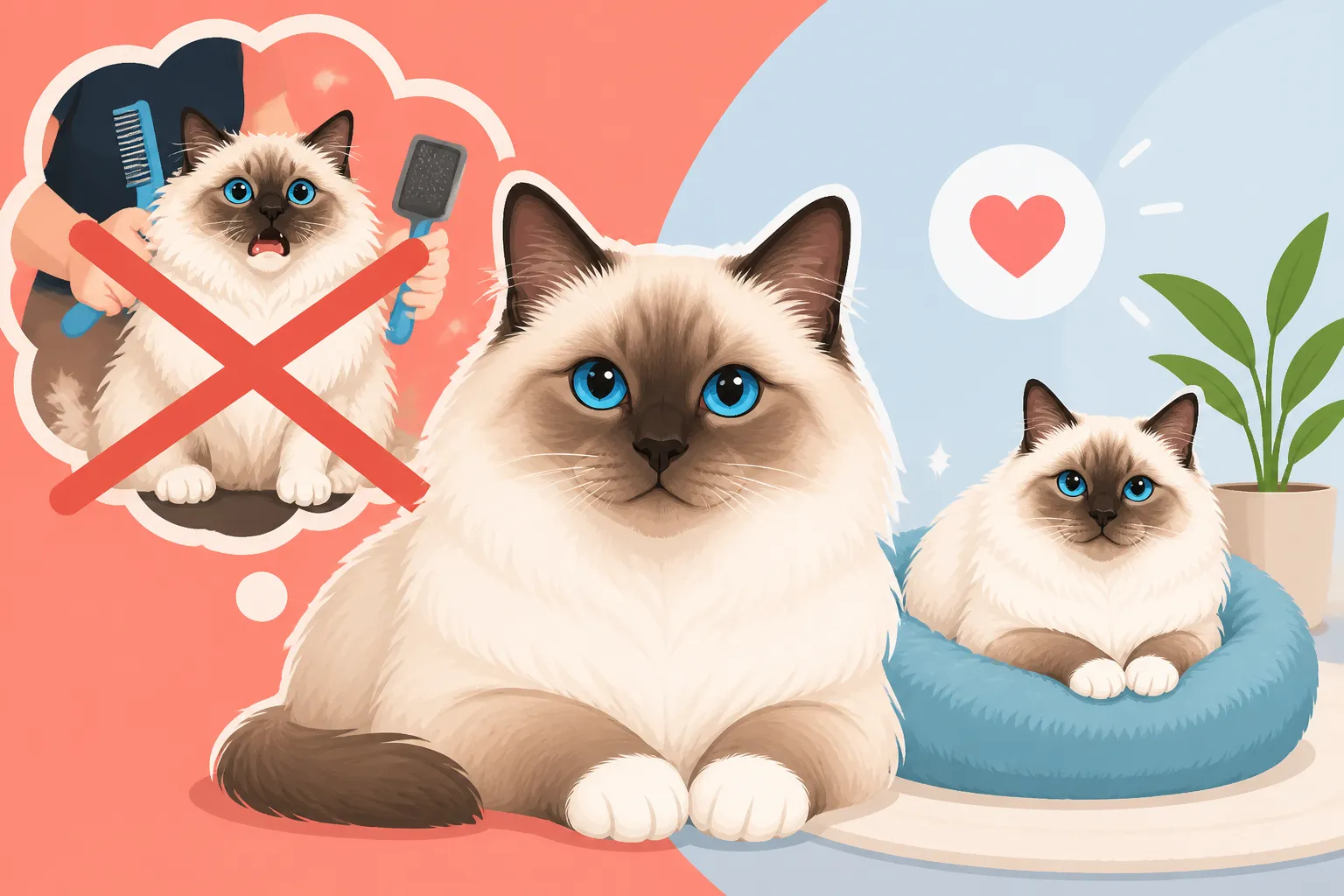
Why a Birman Owner Never Books a Grooming Appointment
One of the most common questions I get from people considering a Birman is about grooming. They see that gorgeous, flowing coat and immediately imagine a lifetime of expensive professional grooming appointments. It’s a completely fair concern, especially if you’ve had experience with other long-haired breeds that do require frequent trips to the groomer. But here’s a little secret from us Birman owners: we almost never book a grooming appointment. This guide will dive into exactly why these stunning cats are so surprisingly low-maintenance in the grooming department and how you can easily handle their care at home.
The Birman's Surprisingly Manageable Coat
It’s true, the Birman looks like a cat that would require endless hours of brushing and professional intervention to keep from becoming a matted mess. Their striking pointed coats, complete with that magnificent ruff and glorious plume of a tail, certainly give the impression of high maintenance. But the reality is wonderfully different. The Birman coat is actually quite unique, setting them apart from many other long-haired breeds and making professional grooming largely unnecessary for most owners.
What Makes a Birman's Coat Different
Unlike many other long-haired cats, such as Persians, the Birman possesses what is often referred to as a "single coat." What does this mean in practical terms? It means they lack a dense, woolly undercoat. That thick, fluffy layer beneath the guard hairs is typically the culprit for matting in other breeds, trapping loose fur and forming stubborn tangles close to the skin. Without this undercoat, a Birman's fur is incredibly soft, silky, and flows beautifully. It's truly a tactile delight to run your hands through, and more importantly, it resists matting in a way that truly surprises new owners. You’ll find that their fur is far less prone to the kind of painful knots that often necessitate a trip to a professional for shaving or extensive de-matting. No Undercoat Is What Makes a Birman Easy to Groom delves deeper into this unique characteristic.
Think of it this way: a Persian's coat is like a thick, double-layered wool blanket, designed for insulation and prone to tangles if not diligently combed. A Birman's coat, on the other hand, is more akin to a fine silk scarf – elegant, flowing, and much less likely to snag or knot. This fundamental difference in coat structure is the primary reason why Birman owners rarely, if ever, feel the need to send their feline friend off to the groomer. They simply don't have the same genetic predisposition to the severe matting issues that plague other breeds. What Makes a Birman's Coat Silky Rather Than Woolly offers a more scientific breakdown of this texture.
Shedding Habits of a Birman
Now, let's talk about shedding. No cat is completely non-shedding, and the Birman is no exception. However, their shedding is generally quite manageable. Because they don't have that dense undercoat, the amount of loose fur they drop tends to be less voluminous than what you might expect from a double-coated breed. When they do shed, it's typically fine, silky hairs that are easily picked up with a lint roller or vacuum. You won't find yourself wading through drifts of cat fur, which is a huge relief for anyone who values a clean home!
Seasonal shedding does occur, typically in spring and fall, as their bodies adjust to temperature changes. During these times, you might notice a slight increase in the amount of hair around the house or on your clothes. However, even during peak shedding, the single coat ensures that the loose hairs are not deeply embedded or tangled within the remaining fur, making them simple to remove with a quick brush. This easy manageability means that while you'll still need to do some regular home grooming, you won't be paying a professional to handle massive shedding cycles or prevent hairballs from forming. Why a Birman Mats Far Less Than It Looks Like It Should explains how this coat type contributes to less matting even with shedding.
Embracing DIY Grooming: Your Birman's Home Spa
Since professional grooming isn't a regular necessity, Birman owners become adept at managing their cat's needs at home. And honestly, it's a lovely bonding experience! Your Birman will likely appreciate the gentle attention and the comfort of being groomed in their own familiar environment, rather than being subjected to the unfamiliar sounds and smells of a grooming salon.
Essential Grooming Tools for a Birman
You don't need a professional's arsenal of tools to keep your Birman looking pristine. A few key items will do the trick:
- A Good Comb: This is your most important tool. Look for a metal comb with both wide and fine-toothed sections. The wide teeth are great for the body and tail plume, while the finer teeth can be used gently on the ruff and britches. Avoid slicker brushes, which can pull and damage their delicate silky guard hairs. A simple, well-made comb is far superior for a Birman's coat. Chewy offers a great selection of high-quality metal combs that are perfect for Birman fur, ensuring you get one that lasts and does the job without snagging.
- Nail Clippers: Keep those claws trimmed to prevent snags and to protect your furniture (and your lap!).
- Toothbrush and Cat Toothpaste: Dental hygiene is crucial for all cats, and Birmans are no exception. We’ll talk more about this later.
- Soft Cloths or Wipes: These are handy for cleaning around their eyes, ears, and, of course, those famous white gloves!
Invest in good quality tools from the start. They’ll last longer and make the grooming process much more comfortable for your cat. Think of it as a small upfront investment that saves you countless professional grooming fees down the line. Which Comb Gets Through a Birman's Ruff Without Pulling provides more specific advice on choosing the right comb.
The Weekly Brushing Routine
For most Birmans, combing them just three times a week is perfectly sufficient to keep their coat in top condition. This isn't a long, arduous task; usually, about 10-15 minutes per session will do. The goal is to gently remove any loose hair and prevent the very few mats that might occasionally form in high-friction areas, like behind the ears, in the armpits, or on the britches.
Here’s a general approach:
- Start Gentle: Begin with the wide-toothed side of your comb, working from head to tail. Always comb with the direction of hair growth, not against it.
- Focus on Key Areas: Pay special attention to the ruff around their neck, the "britches" (the longer fur on their hind legs), and their tail plume. These areas tend to have slightly longer, denser fur and are more prone to tangling.
- Check for Mats: If you encounter a tiny tangle, don't yank! Gently work it out with your fingers first, then use the fine-toothed side of the comb, holding the hair closer to the skin to minimize pulling. A small amount of cornstarch can help loosen a stubborn mat if you're very careful.
- Make it Positive: Always make grooming a positive experience. Offer praise, gentle strokes, and perhaps a small treat afterwards. Many Birmans actually enjoy their grooming sessions, seeing it as extra attention from their favorite human. Combing a Birman Three Times a Week gives a full breakdown of how to approach this routine effectively.
Beyond the Comb: Comprehensive Home Care for Your Birman
While combing is a major part of Birman grooming, their overall well-being requires attention to other areas too. These are all tasks easily handled by the owner, further solidifying why professional appointments are rarely needed.
Keeping Those Famous White Gloves Pristine
The Birman's signature white paws, or "gloves," are absolutely stunning, but they can be a bit of a challenge to keep sparkling clean. Because they’re white, they tend to show dirt and litter dust more readily than darker paws. This is one area where a little proactive care at home goes a long way.
- Litter Choice is Key: The type of litter you use can make a huge difference. Dusty clay litters are notorious for staining white paws and kicking up particles that cling to their silky fur. Opt for low-dust or dust-free litters, such as paper-based pellets or crystal silica gel litter. Some owners find success with larger granule litters that don't stick as readily to their paws. Chewy's selection includes many low-dust options from brands like PrettyLitter or World's Best Cat Litter, which can help keep those gloves looking their best. Which Litter Suits a White Gloved Cat offers more specific recommendations.
- Regular Paw Checks: After your Birman uses the litter box, give their paws a quick glance. If you see any clinging litter, gently wipe it away with a pet-safe wipe or a damp cloth. Sometimes, a quick rinse under lukewarm running water for their paws can be necessary if they’ve stepped in something particularly messy, followed by a thorough towel dry.
- Spot Cleaning: For minor discoloration, a gentle, pet-safe whitening shampoo can be used just on the paws, or even a bit of cornstarch worked into the fur and then brushed out can help lift surface stains. Remember, the goal is to prevent heavy staining, which can be tougher to reverse. Consistent home care will save you the hassle and cost of trying to get a professional to "whiten" your Birman's feet. Keeping a Birman's White Gloves White has more tips for managing this unique feature.
Dental and Nail Care at Home
Dental health is paramount for a cat's overall well-being, and it’s something you, the owner, are best positioned to manage daily. Just like with humans, regular brushing can prevent plaque buildup, gum disease, and costly veterinary dental procedures down the line.
- Brushing is Best: Aim to brush your Birman's teeth a few times a week, if not daily, using a pet-specific toothbrush and toothpaste. Never use human toothpaste, as it contains ingredients that are toxic to cats. Start slowly when your Birman is a kitten to get them accustomed to the routine. Their placid nature often makes them more accepting of this than other breeds. Products from Chewy, like enzymatic toothpastes from Virbac or C.E.T., are formulated to be appealing to cats and effective at reducing plaque.
- Dental Treats and Water Additives: While not a substitute for brushing, dental treats and water additives can offer some supplementary benefits in reducing plaque and freshening breath. Look for products with the Veterinary Oral Health Council (VOHC) seal, which indicates they meet certain standards for plaque and tartar reduction. A balanced diet that supports overall health can also indirectly contribute to healthier teeth and gums.
- Nail Trimming: Trimming your Birman’s claws regularly, typically every 2-4 weeks, is an easy home task. Use sharp, cat-specific nail clippers. Gently press on their paw pad to extend the claw, and only clip the very tip, avoiding the quick (the pink part visible within the nail) which contains blood vessels and nerves. If you accidentally cut the quick, it can be painful and bleed. Having styptic powder on hand is always a good idea. Starting a Toothbrush Routine With a Placid Birman can guide you through the initial steps.
Ear and Eye Cleaning
Maintaining clean ears and eyes is also part of routine home care. Birmans typically have healthy ears and eyes, but occasional checks and gentle cleaning are still important.
- Eye Care: Birmans have beautiful blue eyes, and sometimes, a little tear staining or crust can accumulate in the corners. Use a soft, damp cloth or a vet-approved eye wipe to gently clean these areas. Always wipe away from the eye and use a fresh part of the cloth for each eye to prevent spreading any potential infection.
- Ear Care: Check your Birman's ears weekly. They should be clean and free of excessive wax, redness, or any foul odor. If their ears look a little dirty, use a pet-safe ear cleaner (your vet can recommend one) applied to a cotton ball and gently wipe the visible parts of the ear. Never insert anything into the ear canal. If you notice a lot of dark, waxy debris, or if your cat is shaking its head or scratching its ears frequently, it's time for a vet visit, as this could indicate mites or an infection.
When Professional Grooming Might Be Considered (Rarely!)
It’s important to state that while most Birman owners never need to book a grooming appointment for routine care, there are rare circumstances where professional help might be warranted.
Extreme Matting or Underlying Health Issues
Even with the Birman's easy-care coat, neglect or a sudden health issue can sometimes lead to severe matting. For example, an elderly Birman who can no longer reach certain areas of its body to groom itself, or a cat recovering from an illness that left it unable to maintain its coat, might develop mats. In such extreme cases, professional de-matting or even a sanitary clip might be necessary to alleviate discomfort and prevent skin problems. Caring for an Old Birman That Cannot Reach Its Back addresses these specific challenges in senior cats.
A professional groomer has the tools and expertise to safely remove severe mats without injuring the cat. They can also provide a "lion cut" if absolutely necessary, though this is truly a last resort for Birmans as their single coat means they can feel the cold more acutely without their fur. If your Birman develops such severe matting, it's often a sign of an underlying issue, and a vet check-up should accompany the grooming appointment. Pet insurance, like policies from Healthy Paws, can be incredibly helpful for covering unexpected veterinary costs, which could include sedated grooming if an underlying medical condition makes it necessary.
Sedation for Grooming-Related Medical Procedures
Sometimes, a vet might recommend a professional groomer who can perform services like nail trims or sanitary clips under mild sedation if a cat is particularly fearful, aggressive, or has significant pain (like severe arthritis) that makes regular handling impossible. This isn't a typical scenario for the placid Birman, but it's a possibility for any cat if medical circumstances dictate. Again, this would be a decision made in consultation with your veterinarian, and not a routine grooming appointment.
| Grooming Task | Birman Home Care Frequency | Typical Professional Grooming Necessity |
|---|---|---|
| Combing Coat | 3 times per week | Almost never; coat resists matting |
| Nail Trimming | Every 2-4 weeks | Rare, unless extreme anxiety/pain |
| Teeth Brushing | Daily to several times/week | Never; preventive daily care is key |
| Ear Cleaning | As needed (check weekly) | Rare, unless infection or mites |
| Eye Wiping | As needed (check daily) | Never; simple spot cleaning |
| Paw Cleaning | As needed (check daily) | Rarely; often tied to litter choice |
| Bathing (Full) | Very rare, only if soiled | Very rare; most spot clean at home |
| De-matting | Owners remove small tangles | Only for severe neglect/medical reason |
In conclusion, if you're drawn to the Birman's beautiful coat but intimidated by potential grooming demands, rest assured! Their unique single coat makes them one of the most low-maintenance long-haired breeds when it comes to professional grooming. With a few simple tools and a consistent home routine, you'll find that keeping your Birman looking and feeling fantastic is a wonderfully manageable, and often enjoyable, part of your bond.
Disclaimer
This article is for general informational purposes only and does not constitute professional advice. Laws, prices and regulations vary by location and change over time. Consult a qualified professional for guidance on your specific situation.