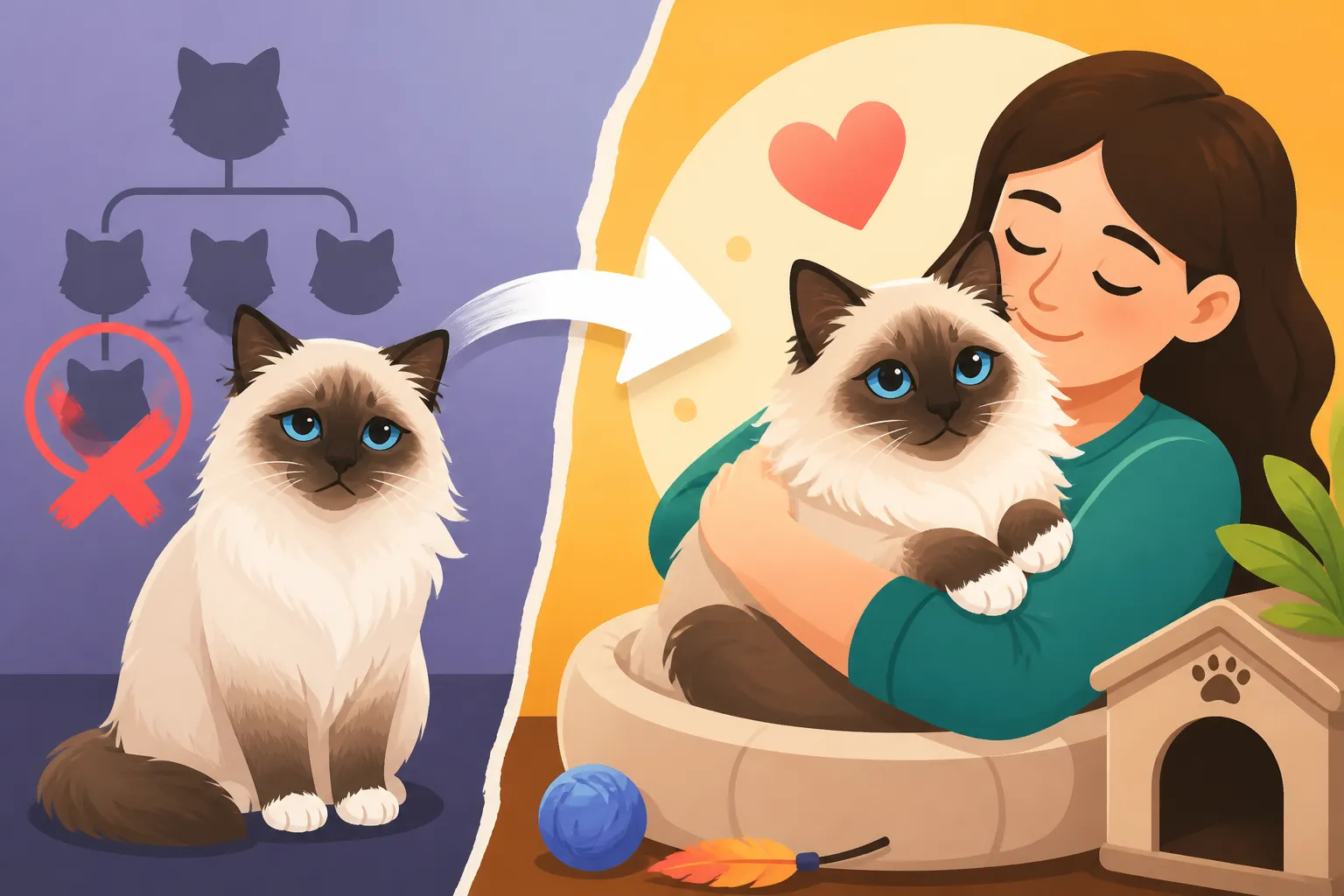
Why Mismarked Birmans End Up in Rescue First
It’s a heartbreaking reality that sometimes the most gentle souls find themselves in the toughest spots. When you envision a Birman, you probably picture that stunning, perfectly marked cat with pure white gloves and deep blue eyes, right? But the truth is, not every Birman kitten grows up to be a show-stopper, and unfortunately, those "mismarked" beauties often face a much harder path, frequently landing in rescue organizations through no fault of their own. This guide aims to shed light on why these wonderful cats, despite their loving temperaments, often find themselves needing a second chance.
The Ideal Birman Marking and Why It Matters for Price
The Birman breed standard is incredibly specific, especially when it comes to those iconic white paws, often referred to as "gloves." These markings are not just a pretty feature; they are central to the breed's identity and a huge factor in how a kitten is valued and, sadly, how some owners perceive their worth.
What Constitutes "Perfect" Birman Gloves
When breeders and judges talk about "perfect" Birman gloves, they're looking for a very precise aesthetic. The front paws should have pure white markings that end in an even line across the paw, like little socks. On the back paws, the white should cover the entire paw and extend up the back of the leg, forming "laces" or "gauntlets," which ideally reach the hock in an inverted V-shape. Symmetry is key – all four paws should be as evenly marked as possible, both in terms of length and shape. The white should be pure and clean, with no colored hairs bleeding into it. It’s a truly beautiful, almost angelic look that takes generations of careful breeding to achieve, and even then, it's never a guarantee.
The Role of Gloves in a Birman's Value from a Breeder
For breeders who dedicate their lives to improving the Birman line, producing kittens that meet the breed standard is paramount. This means that a kitten with perfectly formed gloves and laces will command a higher price, particularly if it's considered "show quality" or "breeding quality." These cats are the ones that can go on to compete in shows, potentially earn titles, and contribute to future generations of well-marked Birmans. Conversely, a kitten that deviates from these strict marking guidelines, even slightly, is typically sold as a "pet quality" cat. This often comes with a lower price tag, reflecting the fact that it won't be shown or bred. This difference in price can be significant, and it’s a big part of Why a Mismarked Birman Is a Pet Price Cat.
The Unpredictable Nature of Birman Glove Genetics
Despite decades of selective breeding, the genetics behind Birman glove markings are still wonderfully complex and, at times, unpredictable. Breeders can pair two parents with impeccable markings, and still, a kitten or two in the litter might have a "high glove" (where the white goes too far up the leg) or a "low glove" (not enough white), or perhaps asymmetrical markings. It's a roll of the genetic dice to some extent, which makes producing Why Perfect Birman Gloves Are Almost Impossible to Breed. There are modifier genes at play that can influence the final appearance of the white, even though every Birman carries the fundamental "gloving gene." This genetic lottery means that even the most experienced breeders can't guarantee perfection in every single kitten, leading to a proportion of perfectly healthy, sweet-natured kittens that simply don't fit the strict visual standard. This unpredictability means Why Glove Genetics Are Unpredictable in a Birman.
Understanding "Mismarked" and Its Impact on a Birman's Journey
The term "mismarked" carries a certain weight, often implying something is "wrong," when in reality, it simply means the cat doesn't meet specific aesthetic criteria for show or breeding. For the cat themselves, a mismarking has no bearing on their health or happiness.
Common Mismarkings That Affect Birman Show Potential
Mismarkings come in various forms, and some are more common than others. One common issue is unevenness: perhaps the white glove on one front paw goes higher than the other, or the laces on the back paws are dramatically different lengths or shapes. Another common mismarking is the presence of "runners" or "streaks" of colored fur intruding into the white areas of the gloves, or white spots appearing elsewhere on the body where they shouldn't. "Gauntlets" that extend too high up the leg, reaching past the hock or showing an incorrect inverted V, are also frequently seen. These deviations, while minor in the grand scheme of things, mean a cat cannot compete in the show ring, which is a significant factor for serious breeders and potential owners looking for show animals. This directly impacts What Counts as a Mismarked Birman and often means Why a Birman With Gauntlets Cannot Be Shown.
The Breeder's Decision: Pet Price or Rehoming
When a breeder evaluates a litter and identifies kittens with mismarkings, they have several paths. The most common is to sell these kittens as "pet quality" at a reduced price, often with a strict spay/neuter contract to prevent them from being bred. This ensures their genetics, which might produce similar mismarkings, aren't passed on intentionally. This is a responsible practice that protects the breed standard. However, sometimes, a breeder might struggle to find homes for these pet-priced kittens, especially if the demand for Birmans is lower in their area, or if potential buyers are solely focused on obtaining a "perfect" specimen. While it's rare for a reputable breeder to send a kitten to a rescue directly, sometimes circumstances can lead to such a decision, especially for older kittens or retired breeding cats with minor "faults" that might make them less desirable for the typical buyer seeking a young, perfect kitten.
The Emotional Toll of "Imperfection" on Owners
It's a sad truth that some individuals acquire a Birman kitten with the expectation of a show-quality animal, only to be disappointed if the markings aren't "perfect." For these owners, the initial excitement can wane, leading to a perception of the cat as "imperfect" or "lesser." This mindset can unfortunately sometimes contribute to a breakdown in the bond between owner and pet. While most loving owners embrace their cat regardless of its appearance, some may feel let down if their dreams of a champion show cat are dashed. This emotional disconnect, combined with other life changes, can sometimes result in the cat being surrendered to a rescue, as the owner may no longer feel the same commitment they once did to what they perceived as a "flawed" animal.
The Financial Realities of Owning a Mismarked Birman
While a mismarked Birman might come with a lower initial purchase price, the ongoing costs of care are exactly the same as for a show-quality cat. It's crucial for prospective owners to understand that a "pet price" doesn't equate to "cheaper to own."
Initial Cost Savings vs. Long-Term Commitments
The upfront savings on a mismarked Birman kitten can be quite appealing. You might pay significantly less than for a perfectly marked show prospect. However, this initial saving is often a drop in the bucket compared to the lifetime expenses of owning a cat. From high-quality food to routine vet visits, vaccinations, dental care, and potential emergency treatments, the costs add up quickly. A mismarked Birman still needs all the same preventative healthcare, enrichment, and love as any other Birman. It's important to look beyond the initial purchase price and consider What Keeping a Birman Costs Every Year – a figure that will be largely consistent regardless of markings.
Why Pet-Quality Doesn't Mean Less Care
A "pet quality" Birman, even one with a gauntlet running a bit too high or a splash of color on a white glove, is still a purebred Birman with all the breed's characteristics. This means they will still have that glorious, silky coat that needs regular grooming (though thankfully, the single coat mats far less than some other longhairs!). They'll still need premium nutrition, access to fresh water, and engaging toys. More importantly, they're still susceptible to the same potential health issues that can affect the breed, such as hypertrophic cardiomyopathy (HCM) or polycystic kidney disease (PKD), even if their parents were tested. This is why thorough vetting of the breeder, including seeing health certificates for the parents, is vital, regardless of the kitten's intended "quality." A mismarked cat is just as deserving of top-notch care as a show champion.
Considering Insurance and Ongoing Expenses
One significant ongoing expense for any cat owner is veterinary care, and for purebreds, specialized care can sometimes be necessary. This is where pet insurance can be a real lifesaver. Companies like Healthy Paws offer policies that can help mitigate the financial burden of unexpected illnesses or accidents. It’s worth noting that while some breed-specific conditions might be excluded if pre-existing, obtaining insurance early can provide peace of mind for future health concerns. Even if a Birman is sold on a Why a Mismarked Birman Is Sold on a Neuter Contract and is healthy at purchase, you still need to budget for annual vet check-ups, vaccinations, parasite control, and potentially dental cleanings as they age. A mismarked cat is no less prone to gum disease or the need for a good quality diet to maintain its coat and overall health. For example, Whether a Birman Guarantee Covers HCM is a critical question to ask, as heart conditions can arise regardless of markings.
How Mismarking Can Lead to Birman Rescues
The journey from a breeder's home to a loving family should ideally be smooth and permanent. Unfortunately, for some mismarked Birmans, this path can take an unexpected detour, leading them to animal shelters and breed-specific rescues.
Unrealistic Expectations and Breeder Contracts
Sometimes, the disconnect begins with unrealistic expectations. A new owner, perhaps unfamiliar with the nuances of breed standards, might have pictured a "perfect" Birman and then becomes disillusioned if their kitten doesn't quite fit that mental image once its full adult markings come in. Breeders often have comprehensive contracts that outline the responsibilities of ownership and the destiny of a pet-quality kitten (i.e., not to be bred). However, if an owner doesn't fully grasp these terms or the reality of what a "mismarked" cat truly means, problems can arise. They might become frustrated if they secretly hoped to breed the cat or show it, only to find they can't. This can be a factor, among others, that leads to a cat being surrendered, as the original dream doesn't align with the reality.
Changes in Owner Circumstances and the Burden of Care
Life happens. People move, families grow, jobs change, and financial situations can become strained. These shifts, combined with the perception of a cat being "just a pet" or "not quite perfect," can sometimes push a mismarked Birman into a rescue situation. For example, if a family has to relocate to a place that doesn't allow pets, or if a new baby arrives and the family struggles with the additional demands, a cat that was already seen as "less than" might be the first to be rehomed. While breed rescues always strive to place cats in loving homes, the sheer volume of animals needing help means that even wonderful, sweet-natured Birmans can get caught in this unfortunate cycle. It highlights the importance of truly understanding What Nobody Tells You Before Buying a Birman and planning for life's uncertainties.
The Role of Rescue Organizations in Placing Mismarked Birmans
Birman rescue organizations play a vital role in providing a safety net for these cats. They take in Birmans that have been surrendered due to mismarkings, owner circumstances, or simply because they were advertised without papers and ended up in a less-than-ideal situation. These rescues are dedicated to finding suitable, loving homes where the cat's temperament and individual personality are cherished above all else. They provide veterinary care, spay/neuter services, and often a foster home environment where the cat can decompress and show its true colors before being adopted. While a rescue Birman might have a past, they often come with a much lower adoption fee, reflecting Why a Rescue Birman Costs a Tenth of a Bred One, making them an accessible option for those looking to open their hearts to a Birman in need.
Table: Common Reasons a Birman May Enter Rescue
| Reason for Surrender | Description | Impact on Mismarked Birmans |
|---|---|---|
| Unmet Expectations | Owner desired a show-quality cat but received a pet-quality one due to markings or other breed standard deviations. | Mismarked Birmans are explicitly defined by not meeting show standards, making them prime candidates for owners with unrealistic goals to become disillusioned. |
| Owner Lifestyle Changes | Job loss, relocation, divorce, new baby, or developing allergies can all necessitate rehoming. | While this can affect any cat, a mismarked Birman, perceived as "less valuable" by some, might be seen as more expendable during difficult times compared to a cherished show-quality pet. |
| Financial Strain | Unexpected veterinary bills or ongoing costs of care become too burdensome. | Even if purchased for a "pet price," a mismarked Birman requires the same expensive care (food, vet, insurance). Owners who focused solely on initial savings may be ill-prepared for long-term costs. |
| Health Issues | Cat develops a chronic illness or behavior problem that the owner is unwilling or unable to manage. | Mismarked cats are just as prone to health issues as perfectly marked ones. Owners who viewed them as "imperfect" already may be less inclined to invest heavily in extensive medical treatment. |
| Breeder Policies | In rare cases, a breeder might need to rehome an older cat or one that didn't meet their breeding program goals, and if not rehomed through their network, it might end up in rescue. | Reputable breeders usually have excellent rehoming networks, but sometimes life intervenes, and a cat, especially one deemed "pet quality" or retired from breeding due to minor faults, might have a harder time finding a new "forever" home quickly. |
Embracing the Beauty of a Mismarked Birman
Ultimately, a Birman's true value lies not in the perfection of its white gloves or the exact length of its laces, but in its loving personality, its gentle nature, and the joy it brings to a home.
A Birman's Temperament Beyond Its Appearance
One of the most defining characteristics of the Birman breed is its incredible temperament. These are known as the "Sacred Cats of Burma" for a reason – they are often described as devoted, sweet, and wonderfully placid companions. A mismarked Birman will possess every bit of this incredible personality. They are typically calm, affectionate, and enjoy being close to their human companions, often following them from room to room just to be in their presence. Why Every Standard Calls the Birman a Gentle Breed isn't just a marketing ploy; it's a deeply ingrained trait. Their unique trill and quiet "voice" are just as charming, regardless of whether their gloves are perfect. These cats thrive on companionship and are incredibly adaptable, making them wonderful additions to most families. Why an Apartment Suits a Cat That Never Climbs High holds true for a mismarked Birman too, they care more about being with you than having vast vertical spaces.
Finding a Mismarked Birman Through Reputable Channels
If you're considering welcoming a Birman into your home and are open to the idea of a mismarked cat, focusing on reputable channels is key. This means starting with breed-specific rescue organizations. These groups often have Birmans of all ages, including adults retired from breeding programs or younger cats whose initial homes didn't work out. You might find a gorgeous cat with a slightly uneven glove or a high lace, but with a heart full of love to give. Reputable breeders will also often place their pet-quality, mismarked kittens with loving families. They will be transparent about the markings and ensure the kitten is spayed/neutered and comes with all necessary health clearances and vaccinations. Always ask to see the parents' health testing results for conditions like HCM and PKD, regardless of the kitten's markings.
Providing a Loving, Forever Home
Opening your home to a mismarked Birman means embracing them for exactly who they are – a beautiful, affectionate, and loyal companion. These cats often have a deep capacity for love and, having perhaps faced a bit of an uphill battle, can be incredibly grateful for a stable, caring environment. Whether their gloves are show-perfect or a bit quirky, a Birman will offer years of quiet companionship and gentle affection. Providing them with a consistent routine, high-quality food, regular grooming, and plenty of interactive play will ensure they thrive. Remember, their beauty isn't just skin deep; it's in their spirit. If you're looking for a cat that will steal your heart with its quiet devotion, a mismarked Birman might just be the perfect match, ready to prove that true beauty lies within.
Disclaimer
This article is for general informational purposes only and does not constitute professional advice. Laws, prices and regulations vary by location and change over time. Consult a qualified professional for guidance on your specific situation.